In this article
- Why you never paint a wall in direct hot sun
- Morning: wait for the dew to burn off
- Midday: work the shaded elevations
- Late afternoon: stop before the evening dew
- The ideal window, and how temperature and humidity interact
- Day of day versus time of year, kept straight
- Practical tactics for chasing the shade
- Planning the job and the cost angle
- Frequently asked questions
- What is the best time of day to paint the exterior of a house?
- Why should I not paint in direct sunlight?
- Should I wait for morning dew to dry before painting?
- How late in the day can I paint outside?
- Is time of day the same as time of year for exterior painting?
- Does the ideal painting window change with the weather?
Quick answer: The best time of day to paint exterior is mid-morning to mid or late afternoon, working the shaded side of the house so you never paint a wall in direct hot sun. Start after overnight dew burns off, and stop early enough that the last coat dries before evening dew forms. Check the label range.
Getting the time of day right on exterior work is not fussiness, it is the difference between a smooth, long-lasting finish and one covered in lap marks and blisters. The core problem is direct sun and the daily cycle of dew, and the whole method comes down to one habit: chase the shade. Paint the side of the house that is currently out of direct sun, then move around as the sun does. This post is the daily-timing companion to the seasonal one, and it is worth being clear about the difference up front. This guide is about the time of DAY to paint. A separate post covers the best time of YEAR, meaning the season and months, which lives in the best time of year to paint a house exterior. Same idea of picking your moment, different time scale, so read both when planning a full exterior job.
Why you never paint a wall in direct hot sun
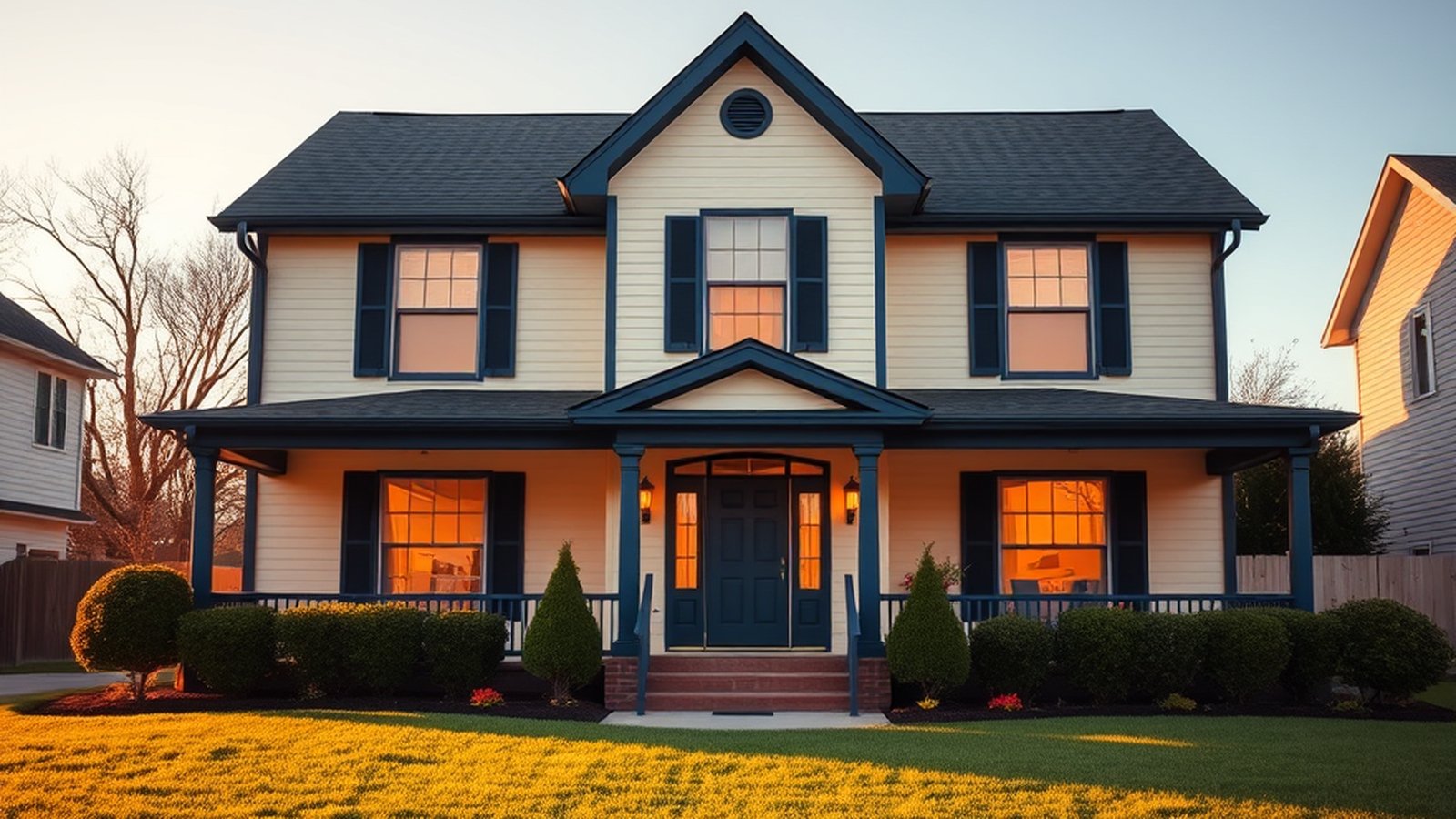
Direct sun is the enemy of a good exterior finish, and the reason is physics. Sun heats the siding well above the air temperature, and it drives the surface of the paint to skin over fast while the layer underneath is still wet. That mismatch, a hardened skin over a soft body, is what produces the classic hot-sun defects: the paint flash-dries before it can level, so brush and roller marks lock in as lap marks; the trapped carrier under the skin causes blistering and bubbling; and adhesion suffers as the film cures unevenly. On a large sunlit wall, lap marks are almost guaranteed because the leading edge dries before you can roll the next section into it, so you lose the wet edge that keeps a wall seamless. The heat and skinning story is covered in depth in painting in hot weather, and the blistering it causes in fixing bubbling paint. The solution is not to fight the sun but to avoid it, by painting whichever elevation is shaded at that hour.
Morning: wait for the dew to burn off
The temptation on a hot day is to start at first light, but early morning has its own trap: dew. Overnight the surface cools toward the dew point and condensation forms, so at dawn your siding is often damp even when it looks dry. Paint over that surface moisture and you get poor adhesion, blushing, and streaking, because the water is trapped between the siding and the film. So the morning rule is simple: wait for the overnight dew to fully burn off the surface before you start, which usually happens by mid-morning once the sun has warmed and dried the walls. Check by touch on a few elevations, not just one, since shaded north-facing walls dry later than sunny ones. Only once the surface is genuinely dry do you begin. The dew-point mechanism behind both the morning wait and the evening stop is explained fully in what dew point means when painting.
Midday: work the shaded elevations
Through the middle of the day, when the sun is highest and hottest, keep to the shaded sides of the house and let the sun-baked walls wait. This is the heart of chasing the shade. In the morning the east side catches early sun while the west is shaded, so paint the west and north first. By afternoon the sun swings west, so the east and north fall into shade and become your working walls. You are always one step ahead of the sun, painting where it is not. This keeps the surface temperature down, preserves your leveling and wet-edge window, and avoids the flash-dry defects entirely. On very hot days even the shaded surface can be warm, so check the surface temperature against the label range and take breaks during the peak heat. Temperature limits are covered in the best temperature to paint, and the humidity that often accompanies summer afternoons in painting in humidity.
| Time of day | What to do | Why |
|---|---|---|
| Dawn to mid-morning | Wait; let dew burn off | Surface is damp with overnight condensation; paint will not bond. |
| Mid-morning | Start on a shaded elevation | Dew gone, surface dry, sun not yet baking the walls. |
| Midday | Follow the shade around the house | Avoids direct hot sun, flash-dry, lap marks, and blistering. |
| Mid to late afternoon | Keep working shaded walls, plan your stop | Still good working time as long as the last coat can dry before evening. |
| Couple of hours before sunset | Stop | Last coat must set before temperatures fall toward the dew point. |
These are typical guidelines; the exact window shifts with the season, your climate, and the product, so check the label and the day’s forecast.
Late afternoon: stop before the evening dew
The end of the day matters as much as the start. As the sun drops, the air and surface cool back toward the dew point, and condensation will form on any coat that has not yet dried. Dew on fresh paint causes the same trouble as light rain: surfactant leaching, glossy brown weepy streaks, spotting, and dull patches. So the rule is to stop early enough that your last coat can dry before the evening temperature nears the dew point. A common guideline is to stop a couple of hours before sunset, though on cool or humid evenings you need to stop even earlier because the cure is slower and the dew point is closer. Do not squeeze in one last wall at dusk. The related risk of rain arriving on a not-yet-dry coat is covered in how long paint should dry before rain, and the same early-stop logic applies to beating the dew.
The ideal window, and how temperature and humidity interact
Put it together and the ideal daily window is roughly mid-morning to mid or late afternoon, on the shaded elevations, bracketed by the morning dew burn-off and the evening dew formation. Within that window, temperature and humidity still shape how it plays out. On a hot dry day the shade window may be your only comfortable working time and drying is fast, so keep the wet edge moving. On a cool humid day drying is slow, so start a little later after the dew clears and stop earlier so the final coat still beats the evening dew, which arrives sooner when humidity is high. The broader question of which days to even attempt is covered in best weather conditions for exterior painting, and how long the whole job takes across those days in how long it takes to paint a house exterior. The underlying science of how all these levers push drying is in how weather affects paint drying.
Day of day versus time of year, kept straight
Because the two questions sound alike, keep the distinction crisp. Time of DAY, this post, is about which hours to paint on a given day: after the dew, in the shade, stopping before evening. Time of YEAR is about which season and months to schedule the job, avoiding the cold of winter and the peak humidity or heat of certain months, which is the subject of the seasonal companion in the best time of year to paint a house exterior. You use both together: pick a good season, then within a good day, pick the right hours. Getting either one wrong can undermine the finish, so plan at both scales.
Practical tactics for chasing the shade
A few habits make the shade-chasing method run smoothly on a real house. Before you start the day, walk the perimeter and note which elevations are shaded now and which will fall into shade later, then sequence your work to always stay off the sunlit walls. Keep your materials mobile so you can move ladders, drop cloths, and paint around the house as the shade moves rather than setting up as if you will work one wall all day. Watch the surface, not just the sky: a wall can read as shaded to your eye while the siding is still radiating heat it soaked up an hour ago, so touch it before you commit. On the hottest days, the shaded side can still push past the label range, and that is a signal to break during peak heat and resume as things cool. Keep a wet edge by cutting in and rolling each section in a continuous sweep, because on a warm exterior wall the edge sets fast and a stalled edge is where lap marks start. All of this is easier when you have picked a reasonable day to begin with, which is the broader planning covered in best weather conditions for exterior painting.
Planning the job and the cost angle
Chasing the shade and respecting the dew windows means an exterior job unfolds over specific hours across several days rather than dawn-to-dusk marathons, and that shapes both the schedule and the budget. A cool or humid stretch narrows your daily window and adds days. Building that reality into the plan up front beats discovering it mid-project. When you want a fast, honest ballpark on materials and cost for an exterior repaint, run your numbers through the painting cost calculator, and treat any dollar figure as a typical range to verify locally rather than a fixed quote. Knowing the number ahead of time also helps you decide how much to take on yourself versus hand to a pro, especially on a two-story home where the shaded-side timing has to be balanced against ladder and fall-safety work.
Frequently asked questions
What is the best time of day to paint the exterior of a house?
Roughly mid-morning to mid or late afternoon, working the shaded side of the house so you never paint a wall in direct hot sun. Start after the overnight dew has burned off the surface, usually by mid-morning, and stop a couple of hours before sunset so the last coat dries before the evening dew forms.
Why should I not paint in direct sunlight?
Direct sun heats the siding and skins the paint over before the layer beneath dries. That traps carrier and causes blistering, and it flash-dries the surface so it cannot level, locking in lap marks. It also kills your wet edge on large walls. Following the shade around the house avoids all of this.
Should I wait for morning dew to dry before painting?
Yes. Overnight condensation leaves the surface damp even when it looks dry, and painting over that moisture causes poor adhesion, blushing, and streaking. Wait until the dew has fully burned off, usually by mid-morning, and check a few elevations by touch since shaded walls dry later than sunny ones.
How late in the day can I paint outside?
Stop early enough that your last coat can dry before the evening temperature falls toward the dew point, commonly a couple of hours before sunset. On cool or humid evenings stop even earlier, because the cure is slower and dew forms sooner. Dew on a fresh coat causes leaching, streaking, and spotting.
Is time of day the same as time of year for exterior painting?
No. Time of day is which hours to paint on a given day, chasing the shade between the morning and evening dew. Time of year is which season and months to schedule the job. They are different scales, and our separate best-time-of-year guide covers the seasonal side. Use both together for a good result.
Does the ideal painting window change with the weather?
Yes. On hot dry days drying is fast and the shade window may be your main working time. On cool humid days drying is slow, so start later after the dew clears and stop earlier so the final coat still beats the evening dew. Always check the label range and the day’s forecast before starting.