In this article
- How long it takes to paint a bedroom
- What determines how long it takes
- DIY vs hiring a pro: the timeline difference
- How painters estimate the time
- A worked timeline: average bedroom, one painter
- How to paint a bedroom faster without cutting corners
- Working time versus calendar time
- Frequently asked questions
Quick answer: A professional painter or small crew paints an average bedroom in 4 to 8 hours, which is half a day to a full working day. A DIY homeowner usually needs 1 to 2 days. The biggest factor is how many coats you apply and the drying time you wait between them.
This guide is for planning the project, not budgeting it. Whether you are a homeowner blocking out a weekend or a painter scheduling a job, the numbers below tell you how the hours actually stack up. If you want the labor time turned into a price as well, run the room through the painting estimate calculator or grab a free painting estimate once you know the scope.
How long it takes to paint a bedroom
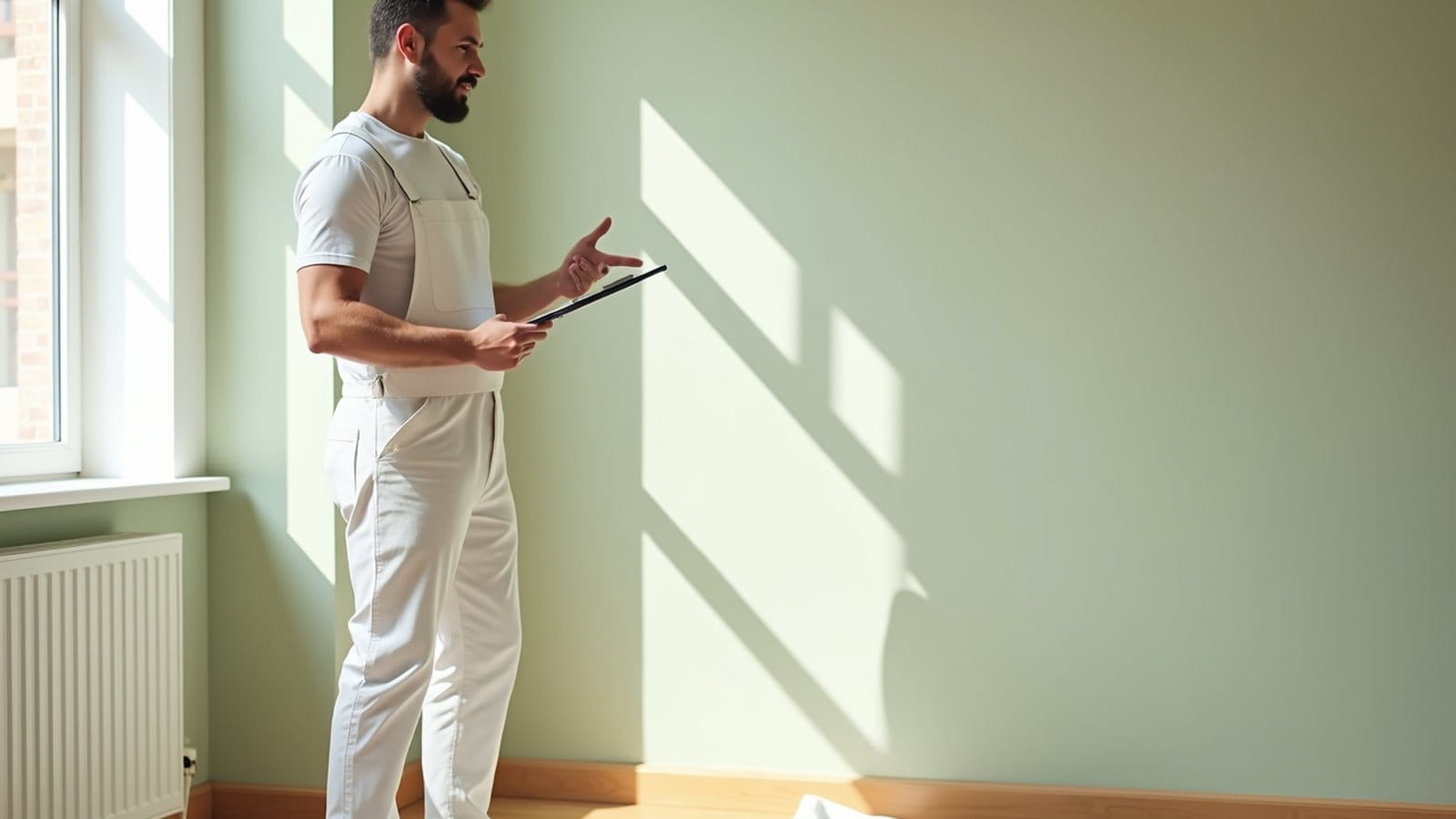
Working time depends on room size, ceiling height, surface condition, and how many surfaces you are painting. Here is how the hours break down for an average 12×12 to 12×14 bedroom, split between a pro crew and a DIY homeowner.
| Bedroom size | Pro painter / small crew | DIY homeowner | Notes |
|---|---|---|---|
| Small (10×10) | 3 to 5 hours | About 1 day | Walls only, light prep |
| Average (12×12 to 12×14) | 4 to 8 hours | 1 to 2 days | Walls plus minor patching |
| Master (14×16 and up) | 1 to 1.5 days | 2 to 3 days | High ceilings, more cut-in |
| Walls + ceiling + trim | 1 to 1.5 days | 2 to 3 days | Three coat schedules to manage |
The reason a pro finishes in a fraction of the homeowner time is not magic. It is parallel work, the right tools, and not stopping to rewatch a video. A two-person crew can have one painter cutting in while the other rolls, so the room moves twice as fast as a solo DIYer doing the same steps one at a time. For a tighter walls-only number, the dedicated how long to paint a room guide breaks it down further.
What determines how long it takes
Two identical bedrooms can take wildly different amounts of time. These are the factors that move the clock.
- Prep and repairs. Filling nail holes, sanding patches, caulking gaps, and washing walls can add 1 to 3 hours before a drop of paint goes on. A scuffed but sound wall is fast. A wall with dozens of anchor holes or peeling paint is slow.
- Number of coats. One coat over a similar color is quick. Two coats, a primer plus two coats, or covering a dark color with a light one can double the painting time on its own.
- Drying time between coats. This is dead time you cannot rush. Most latex wall paints need 2 to 4 hours before recoating. Plan around the drying time between coats, because a second coat applied too early lifts and streaks.
- Crew size. One painter does the whole sequence solo. Two or three painters split cutting in, rolling, and trim, so the calendar time drops sharply even though total labor hours barely change.
- Surface condition. Glossy, greasy, or chalky surfaces need cleaning, deglossing, or priming first. Textured walls drink more paint and slow the roller.
- Cutting in around trim and fixtures. Windows, closet doors, baseboards, outlets, and switch plates all need careful brushwork. A bedroom with lots of trim and a couple of windows has far more cut-in than a plain box room.
DIY vs hiring a pro: the timeline difference
The gap between DIY and pro is mostly about working in parallel and not relearning each step. A homeowner painting a bedroom for the first time is reading instructions, taping carefully, and pausing between phases. A crew has the sequence in muscle memory.
| Phase | Pro crew (2 painters) | DIY (solo, first time) |
|---|---|---|
| Move furniture, mask, cover floors | 30 to 45 min | 1 to 2 hours |
| Prep, patch, sand, caulk | 30 to 60 min | 2 to 4 hours |
| Cut in and first coat | 1.5 to 2 hours | 3 to 5 hours |
| Drying time before recoat | 2 to 4 hours | 2 to 4 hours |
| Second coat | 1.5 to 2 hours | 3 to 4 hours |
| Trim, touch-ups, cleanup | 1 hour | 2 to 3 hours |
Notice that drying time is the same for both. That is the one block you cannot compress. A pro fills it by working another wall or another room, while a DIYer often just waits. That single difference is why the same bedroom is half a day for a crew and a full weekend for a homeowner.
How painters estimate the time
Pros do not guess. They use production rates, which are the square feet of surface a painter can prep, prime, or coat per hour. A typical rate is 150 to 250 square feet of wall per hour for rolling, with cut-in and prep figured separately. Multiply the wall area by the rate, add prep and trim hours, and you have the labor time. The full method lives in the painting production rates guide.
That labor time is also what drives the quote. A painter takes the estimated hours, multiplies by the crew rate, adds materials and overhead, and arrives at a price. So if you want to know what a fair bedroom quote looks like from the contractor side, see how much to charge to paint a bedroom. The hours on this page are the raw input to that number. Ceiling work is its own line item, so check how long it takes to paint a ceiling if you are adding the fifth surface.
A worked timeline: average bedroom, one painter
Here is a realistic single-day schedule for a solo painter doing two coats on an average 12×14 bedroom with walls and ceiling.
- 8:00 to 8:45. Move and center furniture, lay drop cloths, mask trim, windows, and outlets.
- 8:45 to 9:45. Patch nail holes, sand smooth, caulk gaps, wipe dust.
- 9:45 to 11:15. Cut in ceiling edges, roll the ceiling first coat.
- 11:15 to 1:00. Cut in wall corners and trim lines, roll walls first coat.
- 1:00 to 1:45. Lunch while the first coat dries.
- 1:45 to 3:15. Second coat on ceiling and walls (the surface is dry to recoat).
- 3:15 to 4:00. Pull tape, paint trim and baseboards, touch up.
- 4:00 to 4:30. Final inspection, cleanup, move furniture back.
That is roughly 8 hours start to finish for one person. Add a second painter and you compress it to about half a day. Skip prep or add a third surface and the clock shifts accordingly.
How to paint a bedroom faster without cutting corners
Most of the lost time in a bedroom is avoidable. It comes from disorganized prep, waiting on slow-drying paint, and redoing sloppy edges. Here is where a homeowner can claw back hours and still get a clean result.
- Gather everything before you open a can. Brushes, rollers, trays, tape, filler, sandpaper, a damp rag, and a stir stick laid out in advance saves the dozens of small trips that quietly eat an hour. Painters call this staging, and it is the cheapest speed gain you can make.
- Do all your prep in one pass. Patch every nail hole, then sand them all, then caulk every gap, then wipe down once. Bouncing between prep and painting forces you to wash brushes and lose your rhythm. Batch the boring work and the painting flows.
- Cut in all four walls before you roll any of them. Cutting in the brush line at the ceiling, corners, and baseboards across the whole room, then rolling, is faster than doing one wall start to finish at a time. The roller never has to wait on the brush.
- Use the drying window, do not stare at it. While the first coat dries for its 2 to 4 hours, paint the closet, do the trim prep, or clean tools. Treat that block the way a crew does, as productive time on another surface.
- Buy the right sheen and quality paint. A good self-priming paint can cut a three-coat job to two. Cheap paint streaks and needs an extra coat, which adds a coat plus a full drying window to your day.
- Keep a wet edge. Rolling into paint that has already started to skin over leaves lap marks you will have to recoat. Working in sections and keeping the leading edge wet means one clean coat instead of two patchy ones.
None of this is about rushing. It is about removing the stalls. A homeowner who stages tools, batches prep, and uses the drying window can turn a two-day first-timer job into a single long day, which is exactly how a pro hits half a day on the same room.
Time is only half the plan. Once you know the hours, you still need to budget money and buy enough paint. For the dollars, see the cost to paint a bedroom. For materials, the how much paint for a room guide tells you how many gallons to buy so you are not running to the store mid-coat.
One last planning tip: decide your scope before you start, because adding surfaces midway is what turns a tidy one-day bedroom into a multi-day project. If you commit to walls only, you can be done and sleeping in the room that night. If you decide halfway through to also do the ceiling, trim, and closet, each of those brings its own prep, coats, and drying window, and you have effectively signed up for a different job. Settle the scope first, then schedule the hours to match it.
Working time versus calendar time
The single biggest planning mistake is confusing hands-on hours with how long the room is actually out of use. A bedroom might only need 5 or 6 hours of real labor, but you cannot sleep in it until the second coat has dried and the smell has cleared. Those are two very different clocks.
Here is the gap in plain numbers. Active painting on an average walls-only bedroom runs about 4 to 6 hours. But you have to fit a 2 to 4 hour drying window in the middle for the first coat, and after the final coat the paint is dry to the touch in an hour yet still soft for another day. So a job with 6 hours of labor still ties up the room for the better part of a calendar day, and you should not move furniture back hard against fresh walls or hang pictures until the next morning.
This matters most when the bedroom is in use. If it is a child’s room or the only guest room, plan to start early so the second coat is on by mid-afternoon and the room can air out overnight with a window cracked. Skipping ahead and putting the bed back against a wall that is only touch-dry is how you end up with a fabric print pressed into the finish. The labor is half a day. The calendar commitment is a full day, and you should budget for it. The drying time between coats guide explains how temperature and humidity stretch that window further.
Ready to schedule it? Get a fast, no-pressure free painting estimate, or size the job yourself in two minutes with the painting estimate calculator. Knowing the timeline before you start is what keeps a one-day job from sprawling into a one-week project.
Frequently asked questions
How long does it take to paint a bedroom by yourself?
A solo DIY homeowner usually needs 1 to 2 days for an average bedroom, including prep, two coats, and drying time. First-timers should plan a full weekend so they are not rushing the second coat or the trim. Most of the calendar time is spent prepping and waiting for the first coat to dry, not actually rolling paint.
Can a bedroom be painted in one day?
Yes. A professional or a confident DIYer can paint an average bedroom in a single day if the prep is light and only two coats are needed. A two-person crew often finishes in half a day. The limiting factor is drying time between coats, so an early start lets the first coat dry while you cut in elsewhere.
How long should you wait between coats in a bedroom?
Most latex wall paints are ready to recoat in 2 to 4 hours, though humidity and cool temperatures stretch that out. Always check the can, and see our guide on drying time between coats. Recoating too early drags the wet film below and leaves streaks or peeling, which costs you far more time to fix than the wait would have.
Does a second coat add much time?
The second coat itself is faster than the first because the cut-in lines are already set and you are just refreshing coverage. Plan on 60 to 75 percent of the first-coat painting time, plus the mandatory drying wait beforehand. The real time cost of a second coat is the drying window, not the rolling.
What slows a bedroom paint job down the most?
Heavy prep is the usual culprit: lots of nail holes, peeling paint, a glossy surface that needs deglossing, or a dark color that needs an extra coat to cover. Detailed trim, multiple windows, and closet doors also add cut-in time. A clean, sound, walls-only repaint is the fastest possible bedroom.