In this article
Quick answer: A quart of paint covers roughly 90 to 100 square feet per coat, about a quarter of what a gallon does, and less on porous or textured surfaces. It suits small jobs like trim, a door or two, an accent wall, or touch ups. For anything larger, size it with the paint calculator.
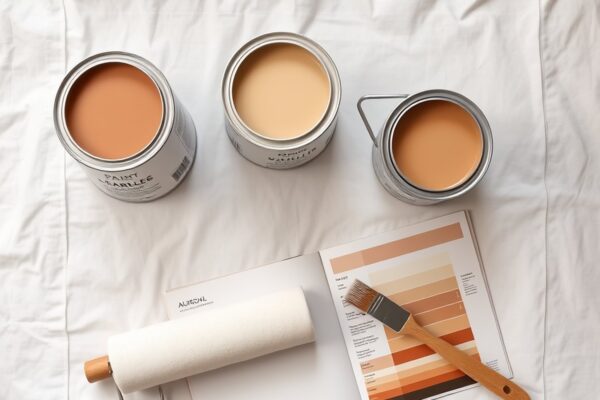
A quart is the small can, one quarter of a gallon, and it is the right unit for a surprising number of painting jobs. Not every project needs a full gallon, and buying one when a quart would do means a mostly full can drying out in the garage. Knowing what a quart actually covers lets you buy the right size, which saves both money and clutter. This guide explains the coverage, walks through the jobs a quart handles well, compares quart and gallon economics, and gives you a simple rule for deciding between them. It complements our gallon coverage cornerstone, which handles the bigger unit, so here we stay focused on the small can.
How Far a Quart Really Stretches
A quart covers roughly 90 to 100 square feet per coat on a smooth, sealed surface. That tracks neatly with the gallon figure, since a gallon covers about 350 to 400 square feet and a quart is a quarter of a gallon. The same rules that move gallon coverage apply here in miniature. On porous, textured, bare, or dark surfaces the quart drinks in faster and covers less, so the 90 to 100 figure is a smooth surface starting point, not a guarantee.
Because it is a small unit, the coverage swing feels sharper in practice. Ninety square feet is not a lot of wall, so a surface that only knocks the coverage down by 20 percent still leaves you noticeably short if you bought exactly one quart with no margin. The honest way to plan is the same as with gallons: measure the paintable area, pick a spread rate that matches the surface, multiply by coats, and add a little waste. For a single small job that math is quick, and it keeps you from guessing.
The Jobs a Quart Is Made For
Quarts shine on small, contained surfaces. Trim and baseboards are a classic quart job, since a room’s worth of trim is a thin strip of surface area even though it runs a long way. Our trim and baseboard quantity guide shows how little area trim actually adds up to, and how to figure paint for it is covered in the trim and doors calculation guide.
A door or two is another natural quart purchase. A single interior door has roughly 40 to 45 square feet of surface counting both sides, so a quart typically handles one or two doors for a coat or two, depending on the surface and color. Our paint for a door guide gets specific. Beyond that, quarts are ideal for a single accent wall, a small closet, a powder room, or a batch of touch ups where you just need to freshen up scuffs and nail holes. Any job where the total paintable area is well under a couple hundred square feet is quart territory.
Quart Versus Gallon Economics
Here is the counterintuitive part. A quart costs less than a gallon per can, but usually more per square foot of coverage. Because a gallon is four quarts of paint but rarely four times the price, buying a gallon is generally the cheaper way to cover a given area. If your job needs three quarts of paint, a single gallon is often both cheaper and less wasteful than three separate quart cans.
So the quart wins on economics only when your job is genuinely small, small enough that a full gallon would leave most of the can unused. Paint does not last forever once opened, and a barely touched gallon slowly skinning over in storage is money you did not need to spend. The break even is roughly this: if you would use less than a third of a gallon, a quart or two is the smart, frugal buy; if you would use more than that, the gallon usually pays for itself. The exact crossover depends on local pricing, so treat that as a guide rather than a fixed rule.
A Simple Way to Decide
Start by estimating your paintable area and the gallons it implies, using the standard method of area divided by spread rate, times coats, plus a margin. Our square feet to gallons guide walks that conversion, and the master calculate paint needed method covers measuring first. Once you have a gallon figure, the decision is easy. If the number lands well under a gallon, say a quarter or a third of a gallon, buy quarts. If it is close to or above a gallon, buy the gallon.
For example, suppose you are repainting the trim in one average room and you estimate about 80 square feet of trim needing two coats. Two coats of 80 square feet is 160 square feet of coverage. At roughly 90 to 100 square feet per quart, that is just under two quarts, so you might buy two quarts, or a single gallon if the price per quart makes the gallon the better deal. Now suppose instead you are painting a small accent wall of about 120 square feet, two coats, which is 240 square feet of coverage. That is between two and three quarts, and at that point a single gallon is usually cheaper and leaves a useful bit for touch ups. These numbers are illustrative; your surface and color will shift them, so confirm with the calculator.
Matching the Quart to the Surface and Color
The same variables that change gallon coverage change quart coverage, only the stakes feel higher because you have less paint to spare. A textured accent wall or a bare wood door will pull the coverage below the 90 to 100 figure, so plan on the low end. A bold or deep color over a light base may need an extra coat, which doubles your paint before you have even accounted for the surface. Dark and vivid colors in particular can surprise people, so give them a coat of margin in your head.
Primer is its own separate quantity here too. If you are priming a bare door or a patched accent wall, that primer is a different can with its own coverage, so buy it separately rather than assuming your finish quart will stretch to cover priming as well. Keeping primer and finish paint as separate buys is the same discipline that keeps larger jobs from running short.
Common Quart Mistakes
The most frequent mistake is buying a single quart for a job that quietly needs a gallon, then making a second trip mid project. The fix is to run the quick area math before you shop rather than eyeballing the can size. The opposite error is buying a gallon for a job that only needs a quart, which wastes money and leaves a can to dry out. Both come from skipping the estimate.
Other slips mirror the gallon world. Forgetting the second coat halves your real need. Using an optimistic spread rate on a rough or dark surface leaves you short. Buying the exact amount with no margin means one spill sends you back to the store. And confusing primer with finish paint muddies the count. Do the small estimate, add a little margin, and round up to whole cans whether those cans are quarts or gallons. When the job grows past a wall or two, a free painting estimate gives you a full picture rather than a paint count alone.
Storing and Reusing a Partial Quart
One quiet advantage of the quart is that it doubles as your touch up supply once the main job is done. Even when a gallon would have been the cheaper way to cover the walls, a matching quart of the same color and sheen kept sealed on a shelf is worth having, because it lets you dab out scuffs, nail holes, and dings months later without repainting a whole wall. If you do keep one, press the lid down firmly, store it somewhere that does not freeze or bake, and label it with the room and color name so you are not guessing later.
That said, paint does have a shelf life. An opened can that has skinned over, separated badly, or gone lumpy is past its useful point, and forcing old paint onto a wall gives a patchy, uneven result that looks worse than the scuff you were fixing. So the honest plan is to buy the right size for the job now, keep a small, well sealed quart for future touch ups if the color is one you will want to match, and accept that anything much older than a couple of years may need replacing. Buying a fresh quart to match is cheap insurance compared to repainting a wall because the touch up did not blend.
Scaling Up From a Quart to a Gallon
If your small job keeps growing as you plan it, that is the signal to switch units rather than stacking quarts. Say you started thinking about one accent wall, then decided to do the adjoining wall too, and now you are eyeing the trim in the same room. Each addition nudges the area up, and three or four quarts almost always costs more than the single gallon that would cover the same combined surface. Run the total area through the standard conversion once, look at the gallon figure, and let that decide the can size instead of buying piecemeal. It is the same estimate either way; only the size of the can you carry to the register changes. The habit worth building is to settle the full scope of the job before you shop, so you buy one right sized batch of paint rather than a scattered handful of small cans that add up to more than a gallon anyway.
Frequently asked questions
How many square feet does a quart of paint cover?
A quart covers roughly 90 to 100 square feet per coat on a smooth, sealed surface, which is about a quarter of what a gallon covers. On porous, textured, bare, or dark surfaces it covers less, so treat that figure as a smooth surface starting point.
How many quarts are in a gallon?
Four quarts make a gallon, which is why a quart covers about a quarter of a gallon’s area. That relationship makes it easy to convert: if a gallon covers around 350 to 400 square feet per coat, a quart covers roughly 90 to 100.
When should I buy a quart instead of a gallon?
Buy a quart when the job is small enough that a full gallon would mostly go unused, such as trim, a door or two, a small accent wall, a closet, or touch ups. If you would use more than about a third of a gallon, the gallon is usually the better buy.
Is a quart or a gallon cheaper per square foot?
A gallon is usually cheaper per square foot, because it holds four quarts of paint but rarely costs four times a quart’s price. The quart only wins on cost when the job is genuinely small and a gallon would waste most of the can.
Can one quart paint a door?
Often yes. A single interior door has roughly 40 to 45 square feet of surface counting both sides, so one quart typically handles one or two doors for a coat or two, depending on the surface and color. A bold color or bare wood may need more.
Does a quart cover enough for two coats?
It depends on the area. A quart’s 90 to 100 square feet is per coat, so two coats halve the area a quart can finish to roughly 45 to 50 square feet. Estimate your area, multiply by coats, and add a margin before deciding how many quarts to buy.