In this article
- Why one open window is not ventilation
- The basic setup
- Why you should not point a fan at the wet wall
- Rooms with no window
- Ventilating after you finish, not just during
- The trade-off with humidity, cold, and drying
- When ventilation is not enough
- Common mistakes
- A quick checklist before you open the tin
- Frequently asked questions
Ventilating a room properly means creating air exchange, not air movement. You need fresh air entering at one point and stale air leaving at another, so the vapour actually leaves the building instead of being stirred around inside it. In practice that usually means two openings on different walls, or one open window with a box fan sitting in it blowing outward, which pulls replacement air in through every other gap in the room. One cracked window on its own does very little, and a fan pointed at the wall you just painted does more harm than good.
Everything else on this page is detail around that one idea: how to set it up, what to do when the room has no window, how long to keep it going after you finish, and when ventilation alone is not enough and you need respiratory protection instead.
Why one open window is not ventilation
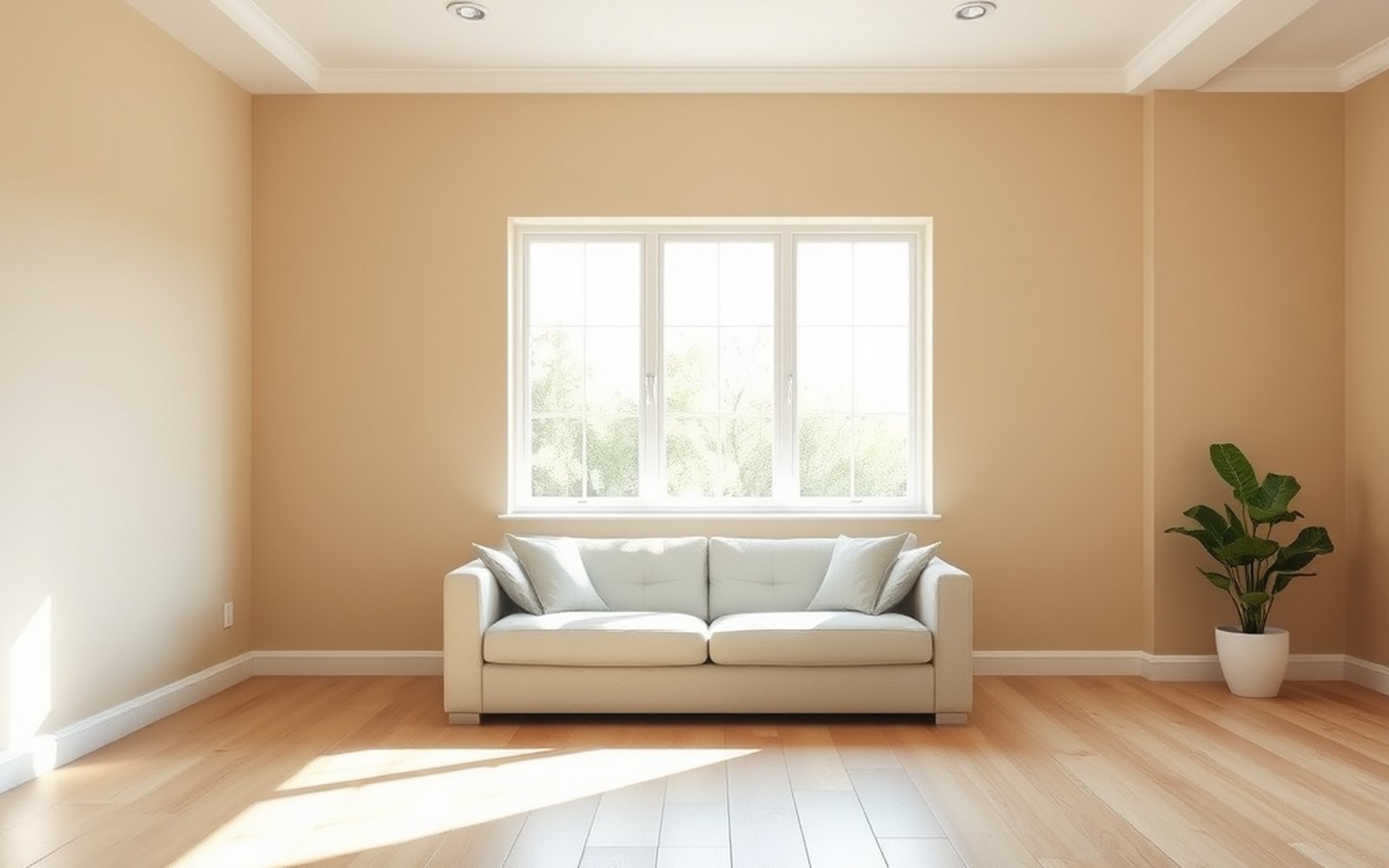
Air will not flow through a single opening in any useful volume. Without a second route for air to leave, you get a small amount of exchange right at the window and a mostly stagnant room behind it. That is why people open a window, paint all day, and still end the session with a headache.
Air needs a path. Give it an inlet and an outlet on opposite or adjacent walls and the whole volume of the room starts turning over. This is the single highest-value thing you can do to reduce what you breathe while working, and it costs nothing. The reason it matters, and what is actually in the air you are moving out, is covered in are paint fumes dangerous.
The basic setup
- Open two windows on different walls if the room has them. Diagonally opposite is ideal because it sweeps the whole room rather than short-circuiting across one corner.
- If there is only one window, open it and open the door to a hallway or another room that has its own opening. The door plus a window elsewhere in the house becomes your second opening.
- Put a box fan in the window facing outward. This is the part most people get backwards. The fan blows contaminated air out of the room, which lowers the pressure slightly and draws fresh air in through the door and any other gaps. It is far more effective than blowing air in.
- Seal around the fan roughly. A piece of card or a folded towel filling the gap either side of the fan in the window opening stops the exhausted air simply looping straight back in. It makes a bigger difference than it sounds like it should.
- Leave the room door open unless you are deliberately containing dust, and if you close it, leave a gap at the bottom for the inlet air.
- Do not blow air across the wet surface. More on this below.
Why you should not point a fan at the wet wall
It seems obviously helpful and it is not. Directing airflow onto a freshly painted surface causes three problems.
First, it dries the film unevenly. The area in the airflow skins over faster than the rest, which is a recipe for lap marks, visible edges where a wet edge closed too early, and patchy sheen once it cures. This is worst with darker colours and higher sheens, where any inconsistency shows.
Second, it lifts dust. A fan aimed into the room picks up whatever is on the floor, the trim, and the dust sheets and deposits it into wet paint, where it stays permanently. If you sanded before painting, there is far more of that around than you think, which is one reason for the cleanup step in how to prep walls for painting.
Third, forcing the surface to dry quickly does not make the paint cure quicker. It just closes the top of the film while the layer underneath is still soft, which can trap solvent and lead to a soft or tacky finish. If you have already hit that problem, see how to fix tacky paint.
The fix is orientation. Point the fan out of the window, not into the room. If you need a second fan to help move air through a doorway, aim it along the airflow path and away from the wet surfaces, not across them.
Rooms with no window
Interior bathrooms, hallways, closets, box rooms, and basements are the hardest cases, and they are also where the vapour concentrates fastest because the air volume is small.
| Space | How to get air moving |
|---|---|
| Interior bathroom | Run the extractor fan continuously and leave the door open. The extractor is a real outlet, so the door becomes your inlet. Run it for hours after you finish. |
| Windowless hallway or landing | Chain the airflow: open a window in a room at each end, prop all the doors, and use a fan in one of those windows blowing out. |
| Closet or small cupboard | Paint with the door wide open, work in short sessions, and ventilate the room the closet opens onto. Never work inside a closed cupboard. |
| Basement | Use whatever openings exist plus a fan exhausting to the outside. Solvent vapour is heavy and pools low down, so a basement is the worst place to skip protection. |
| Stairwell | Open a window at the top and one at the bottom. Warm air rises and the stack effect will do a lot of the work for you. |
The general principle in a windowless space is to borrow an opening from somewhere else and build a chain of open doors between it and the room you are painting. If you cannot build that chain, treat the space as confined and reach for respiratory protection rather than hoping.
Ventilating after you finish, not just during
People pack up, close the windows, and wonder why the house smells the next morning. Paint keeps releasing vapour throughout drying and well into curing, so the hours and days after the job matter as much as the hours during it.
- Keep the fan and openings going for at least several hours after your last coat, longer if the smell is strong.
- Overnight, leave a window open if it is safe and the weather allows, and leave the room door open so the air has somewhere to go.
- Keep ventilating for days rather than hours after oil-based products, varnishes, and anything else solvent-based.
- Open wardrobes, drawers, and cupboards in the room so trapped air in those spaces exchanges too.
How this feeds into the decision about occupying the room again is covered in how long after painting can you sleep in the room, and if the odour outlasts the ventilation, the follow-up options are in how to get rid of paint smell.
The trade-off with humidity, cold, and drying
Ventilation and drying conditions pull against each other sometimes, and knowing which one to prioritise depends on the weather.
In humid weather, pulling in damp outside air can slow drying considerably, because the film needs moisture to leave and the incoming air is already loaded. You still need air exchange for the vapour, so the compromise is to keep the air moving but pair it with a dehumidifier in the room, or ventilate hardest during the drier part of the day. The full picture is in can you paint in humidity.
In cold weather, people shut everything because they do not want to heat the outdoors, and then work in a sealed room all day. That is the worst of both worlds, because cold also slows curing so the film off-gasses for longer. The practical answer is bursts: ventilate hard for ten or fifteen minutes at a time, several times through the session and afterwards, rather than leaving everything wide open continuously. You get most of the air exchange for a fraction of the heat loss. Cold weather also has its own effects on the paint itself, covered in can you paint in cold weather.
In general, temperature and airflow both change how the film behaves, which is why recoat windows shift with conditions. See how does weather affect paint drying for the mechanics, and how long should paint dry between coats for the timing side.
| Condition | Ventilation approach | Watch out for |
|---|---|---|
| Mild and dry | Open everything, fan out of a window, keep it running | Dust blowing onto wet surfaces |
| Hot | Ventilate but avoid direct airflow on the wall | Paint skinning too fast and lap marks |
| Humid | Keep air exchange plus a dehumidifier | Very slow drying, extended tacky stage |
| Cold | Short bursts of full ventilation, repeated | Sealed rooms, slow curing, prolonged off-gassing |
| Windowless space | Extractor plus chained open doors, or a respirator | Vapour accumulating with nowhere to go |
When ventilation is not enough
Opening windows is the right baseline for ordinary interior work with water-based paint. There are situations where it does not get you to safe on its own, and in those you need protective equipment as well.
- Spraying indoors. A sprayer atomises paint into a mist that hangs in the air. That is a particle exposure as well as a vapour one, and no amount of open window fixes it. Wear proper respiratory protection, and read how to use a paint sprayer before you start.
- Oil-based and solvent-based products indoors. Higher vapour load for longer. Ventilate hard and check the label for what protection the manufacturer requires.
- Strippers, thinners, and solvent cleanup. Neat solvent evaporates fast and is usually being used in small spaces. Gloves matter here too, because skin is a route of exposure.
- Confined spaces. Closets, crawl spaces, tanks, and anywhere you cannot establish an inlet and an outlet.
- Long sessions in a small room. Time multiplies concentration. Break the session up and get outside regularly.
What to actually own, and which mask does which job, is in the painting safety equipment checklist. The short version is that a dust mask is for dust and does nothing for vapour, so if vapour is the issue you need a respirator with the right cartridge, fitted properly.
Common mistakes
- Opening one window and calling it done.
- Pointing the fan into the room instead of out of the window.
- Aiming airflow directly at wet paint and then wondering about lap marks and dust nibs.
- Shutting everything the moment the last coat goes on.
- Using a heater in a sealed room, which concentrates vapour rather than clearing it.
- Relying on a HEPA air purifier for odour. It captures particles, not gas.
- Masking the smell with candles or fresheners instead of removing the source.
- Leaving solvent-soaked rags and open tins in the room, which keeps feeding vapour into the air you just cleared.
- Painting a windowless bathroom with the extractor off.
A quick checklist before you open the tin
- Identify your inlet and your outlet. If you cannot name both, you have not set up ventilation.
- Put a fan in a window facing outward and pack the gaps around it.
- Prop interior doors along the airflow path.
- Point nothing at the wet surfaces.
- Turn on the extractor if the room has one, and leave it running.
- Plan a fresh-air break every hour or so.
- Decide in advance how long you will keep ventilating after you finish, and stick to it.
Set that up once at the start of the day and you will barely think about it again. It is the cheapest, fastest improvement available to any interior painting job, and it is the difference between finishing the room feeling fine and finishing it with a headache.
Frequently asked questions
Which way should the fan face when painting?
Out of the window, exhausting air from the room. That pulls fresh air in through the door and other gaps and creates a real flow path. Blowing a fan into the room from a window is less effective at exchanging air and it pushes dust onto wet surfaces.
Can I paint a room with no windows?
Yes, but you have to build the airflow from elsewhere. Run any extractor fan continuously, prop the door and the doors between that room and a room with an open window, and use a fan to move air along that path. Keep sessions short. If you cannot establish an inlet and an outlet, treat it as a confined space and use a respirator.
How long should I ventilate after painting?
Several hours at minimum after water-based paint, and typically days rather than hours after oil-based products or if the smell is still strong. Off-gassing continues well past the point where the surface is dry to the touch, so keep the air moving until the room no longer smells of paint when you walk in from outside.
Does a fan make paint dry faster?
General air movement in the room helps a little, but aiming a fan straight at the wet surface causes uneven drying, lap marks, and dust in the finish. It also skins the top of the film while the layer below is still soft. Move air through the room, not across the wall.
Should I ventilate when it is cold outside?
Yes, but in bursts rather than continuously. Open everything for ten or fifteen minutes at a time, several times through the session and afterwards. You get most of the air exchange without chilling the room to the point that the paint stops curing properly.
Is an air purifier a substitute for opening windows?
No. A HEPA filter captures particles and does essentially nothing for solvent vapour, and a unit with an activated carbon stage adsorbs only a limited amount before it is saturated. Purifiers are a supplement. Air exchange is what actually removes the vapour from the room.