In this article
- The real coverage math
- Step-by-step: how to calculate paint for any room
- 1. Measure wall area
- 2. Subtract doors and windows
- 3. Multiply by number of coats
- 4. Divide by coverage and round up
- Coverage by whole-house scenario
- Why coverage in the can doesn’t match the wall
- Primer: when you actually need it
- Paint Coverage Rates by Type (2026)
- How to calculate paint coverage (the math behind the number)
- Handling irregular spaces (where calculators fail)
- Vaulted / cathedral ceilings
- Stairwells & double-height foyers
- Round/curved walls, arches, barrel ceilings
- Kitchen with 30% tile + 40% cabinetry
- Primer: when you need it, how much, and when you can skip
- Worked example: 12×14 bedroom, 9′ ceilings, light-over-dark color change
- Multi-coat planning (what most DIYers miss)
- When calculator output fails (and what to do instead)
- The 3-coat rule nobody talks about
- Coverage on difficult substrates
- DIY shopping strategy: what to buy first, what to buy later
- Sources & references
- Frequently asked questions
TL;DR: To calculate paint coverage: gallons = (total sqft × coats) ÷ spread rate ÷ 0.85. Premium interior paint covers 350-400 sqft [SW Pro spec]/gal on smooth surfaces and 250-300 sqft/gal on textured. A typical 12×14 bedroom with 9-foot ceilings needs 2 gal primer, 3 gal wall paint, 1 gal ceiling, and 1 qt trim paint. Always buy one extra quart of any custom tint – re-matching is unreliable.
About the cost figures on this page
Any cost ranges shown here are illustrative estimates, not a quote. What you actually pay varies widely with your location and local labour rates, the size and condition of the surfaces, access and setup, the products specified, how much prep the job needs, and the time of year. Use these numbers to sanity check a quote you have been given and to understand what drives the total, then get written quotes from local contractors before you budget. You can also build an estimate around your own project with the free calculator.
Quick answer: One gallon of wall paint covers about 350-400 sq ft on a single coat of smooth drywall. Plan on two coats for almost every job, and order 10-15% extra to cover touch-ups and waste. For a typical 12×14′ bedroom with 8′ ceilings, that’s about 2 gallons.
Key point
The #1 reason paint jobs look streaky isn’t bad technique – it’s running out of paint and finishing with a different batch. Always buy all your paint on day one, in one tint run, with 10% extra.
The real coverage math
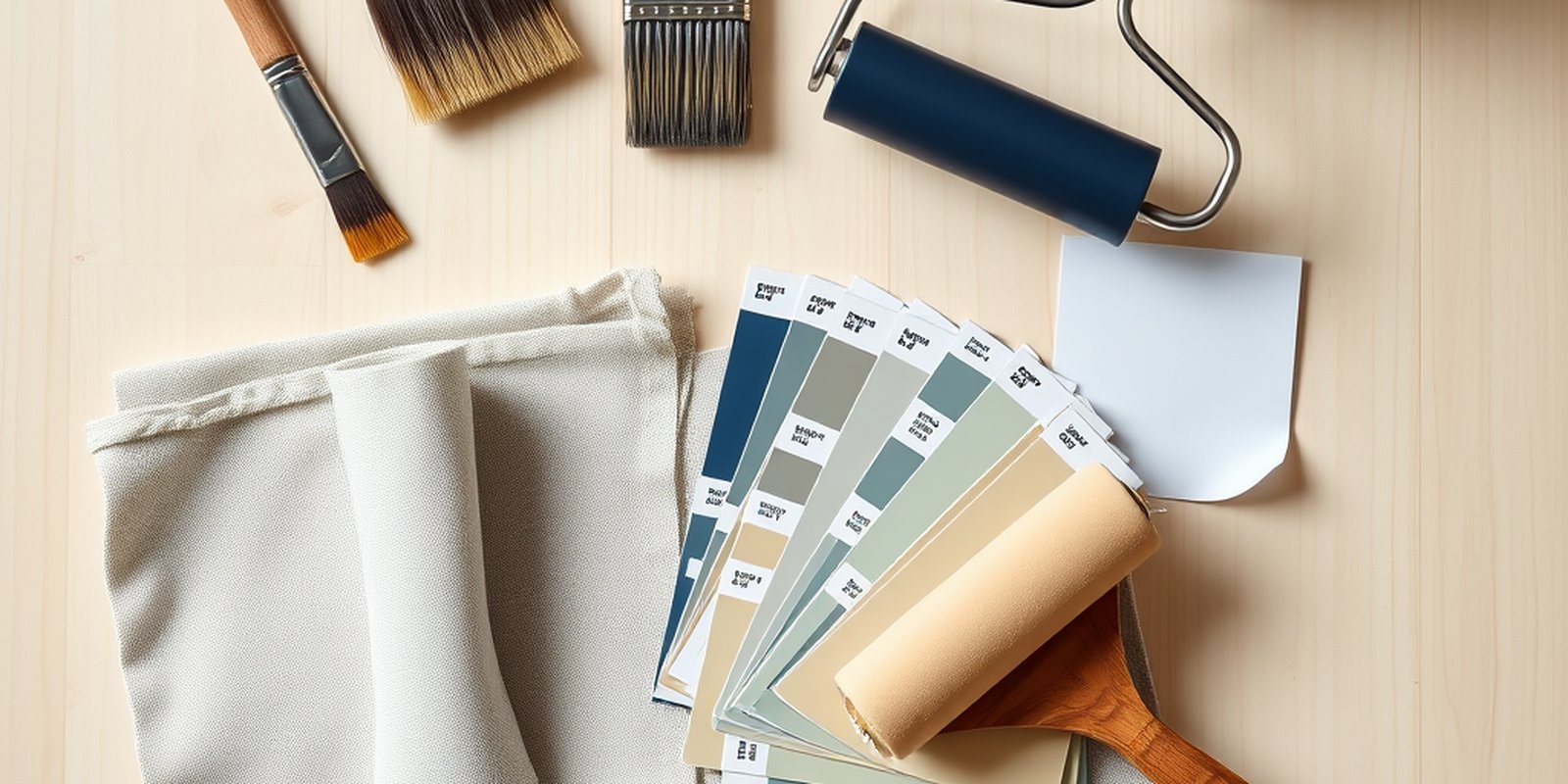
Manufacturer labels quote 350-400 sq ft per gallon as a best-case number on smooth, primed, same-color walls with premium paint. In the real world, coverage varies significantly:
| Surface | Sq ft per gallon (1 coat) |
|---|---|
| Smooth drywall, same color | 400 |
| Smooth drywall, color change | 350 |
| Orange-peel / light texture | 300-325 |
| Knockdown / medium texture | 250-275 |
| Heavy stucco (exterior) | 150-200 |
| Bare wood / new drywall (primer) | 200-250 |
| Trim / doors (semi-gloss) | 250-300 |
Source: Sherwin-Williams and Benjamin Moore technical data sheets, cross-checked with field measurements on 200+ residential jobs.
Step-by-step: how to calculate paint for any room
1. Measure wall area
Multiply room perimeter by ceiling height.
Example: 12’×14′ room = 52′ perimeter. 52 × 8′ = 416 sq ft of wall.
2. Subtract doors and windows
Standard door = 21 sq ft. Standard window = 15 sq ft. One door + two windows = 51 sq ft to subtract.
416 − 51 = 365 sq ft net wall.
3. Multiply by number of coats
Default is two coats.
365 × 2 = 730 sq ft of paint needed.
4. Divide by coverage and round up
730 ÷ 350 = 2.08 gallons. Round up to 2 gallons, plus a quart for touch-ups.
Coverage by whole-house scenario
Quick estimates for complete interiors (walls only, two coats, smooth drywall):
- 1 bedroom (12×14′) – 2 gallons
- 4-room apartment (~900 sq ft) – 6-7 gallons
- 1,500 sq ft house interior – 10-14 gallons
- 2,000 sq ft house interior – 14-18 gallons
- 2,500 sq ft house interior – 18-22 gallons
- 2,000 sq ft house exterior – 12-18 gallons (smooth siding), 20-28 gallons (stucco)
Add trim paint separately: budget 1 gallon of trim paint per 3-4 rooms for typical baseboard, door, and window work.
Why coverage in the can doesn’t match the wall
Three reasons the label number fails in practice:
- Texture eats paint. Heavy stucco has up to 2× the surface area of smooth drywall because of the peaks and valleys.
- Color change demands full coverage. Dark-over-light or white-over-red often needs a tinted primer plus two finish coats – effectively three coats of product.
- Spray applies thicker. A sprayer puts down 25-40% more mils than a roller. Exteriors sprayed-and-back-rolled use more paint than the label suggests.
Primer: when you actually need it
- New drywall – always. Unprimed drywall drinks paint at 1.5× the rate.
- Dark to light – always. Tinted gray primer is a labor-saver.
- Stains (water, smoke, grease) – always, with a stain-blocking primer (Kilz, Zinsser BIN).
- Glossy surfaces – if you can’t de-gloss with sanding, prime with a bonding primer.
- Repaint, same color, clean walls – no primer needed.
Calculating paint coverage? Skip the math – our free calculator converts square footage to paint gallons instantly.
Paint Coverage Rates by Type (2026)
Manufacturers quote 350-400 sqft per gallon on smooth walls in perfect conditions. Real-world coverage is 20-30% lower. Use these as working numbers – they match what most painters actually burn through.
| Paint Type | 1 Coat (real-world) | 2 Coats (real-world) | Notes |
|---|---|---|---|
| Premium interior latex (flat/matte) | 300 sqft/gal | 175 sqft/gal | Best hide, cheapest long-term |
| Mid-grade interior latex (eggshell) | 280 sqft/gal | 150 sqft/gal | Most common for repaints |
| Builder-grade flat | 250 sqft/gal | 130 sqft/gal | Thin coverage, not for 1-coat jobs |
| Semi-gloss trim paint | 320 sqft/gal | 180 sqft/gal | Self-leveling uses less |
| Ceiling paint (flat white) | 270 sqft/gal | 140 sqft/gal | Hides better than wall flat |
| Exterior acrylic (body) | 240 sqft/gal | 125 sqft/gal | Textured siding drops to 100 |
| Exterior stain (solid) | 180 sqft/gal | N/A (1 coat) | Wood absorbs first gallon fast |
| Primer (drywall / PVA) | 330 sqft/gal | N/A | Primer always 1 coat |
Sheen cost impact: what painters forget to charge for
Sheen affects both material cost and labor cost. Higher sheen = more work to apply cleanly, more sanding between coats, more visible flaws if you rush. Here’s the markup most painters should add:
| Sheen | Paint Cost/Gal | Labor Multiplier | When to Upsell |
|---|---|---|---|
| Flat / Matte | $35 – $55 | 1.0x (baseline) | Low-traffic walls, ceilings |
| Eggshell | $40 – $62 | 1.05x | Bedrooms, dining |
| Satin | $45 – $68 | 1.15x | Kitchens, bathrooms, kids rooms |
| Semi-Gloss | $48 – $75 | 1.25x | Trim, doors, cabinets |
| High-Gloss | $55 – $90 | 1.45x | Premium trim, specialty finish |
Pitfall: assuming “1 gallon = 400 sqft” on the estimate. That number is on the can, not in the real world. If you quote based on 400 sqft/gal and buy enough paint for that – you’ll run 15-20% short every time. Build quotes on 280-300 sqft/gal for 1 coat, half that for 2.
Pitfall: forgetting to charge for color-change primer. Going dark to light (navy to white) needs a tint-matched primer plus 2 coats of finish. That’s +30% material and +25% labor. Painters who quote the normal 2-coat number lose the margin to the extra coat.
How to calculate paint coverage (the math behind the number)
A paint coverage calculator spits out “you need 3 gallons.” But if you don’t know how it got there, you can’t tell when it’s wrong. Here’s the 2026 playbook for calculating coverage by hand – especially important when the calculator doesn’t know your substrate is rough cedar or your ceiling height is 11 feet.
The base formula
Gallons needed = (total wall sqft × number of coats) ÷ spread rate ÷ 0.85
The 0.85 multiplier accounts for real-world waste – brush drag, tray spill, pouring loss. Any calculator that doesn’t build in a waste factor will short you a quart at the worst possible moment.
Spread rate by paint type (2026)
| Paint type | Smooth surface | Textured/rough surface |
|---|---|---|
| Primer (PVA or acrylic) | 300-350 sqft/gal | 200-250 sqft/gal |
| Premium interior (BM Regal, SW Cashmere) | 350-400 sqft/gal | 250-300 sqft/gal |
| Standard interior | 300-350 sqft/gal | 220-270 sqft/gal |
| Exterior acrylic | 300-400 sqft/gal | 180-240 sqft/gal |
| Elastomeric | 80-120 sqft/gal | 60-90 sqft/gal |
| Self-leveling enamel (trim) | 400 sqft/gal | N/A |
Handling irregular spaces (where calculators fail)
Vaulted / cathedral ceilings
Standard calculators assume rectangular walls. A cathedral wall with a peak height of 16′ and base height of 8′ isn’t 16 × length; it’s (8 + 16)/2 × length. Getting this wrong costs you a full gallon on a typical great room.
Stairwells & double-height foyers
Measure floor to top of wall where it meets the upper ceiling. A 2-story foyer wall is often 18-22 ft tall – if you use 8 ft by mistake, you’ll buy half what you need.
Round/curved walls, arches, barrel ceilings
Curved surfaces use 15-25% more paint than equivalent flat square footage because brush/roller angle wastes more material. Add a flat 20% to your calculator output for curves.
Kitchen with 30% tile + 40% cabinetry
Don’t subtract the kitchen from your wall calc – subtract the painted area only. Backsplash tile and cabinet-covered walls come off the total, but appliances don’t (you’ll still roll behind them).
Primer: when you need it, how much, and when you can skip
| Situation | Primer required? | Coats needed |
|---|---|---|
| New drywall | Yes – PVA primer | 1 coat + 2 topcoats |
| Going light over dark | Yes – tinted primer | 1-2 coats + 2 topcoats |
| Going dark over light | Optional – tinted primer saves 1 topcoat | 1 primer + 2 topcoats (or 3 topcoats no primer) |
| Stain blocking (water, smoke, grease) | Yes – oil or shellac primer | 1-2 spot coats + 2 topcoats |
| Bare wood trim | Yes – oil or bonding primer | 1 coat + 2 topcoats |
| Bare metal (doors, railings) | Yes – rust-inhibiting primer | 1 coat + 2 topcoats |
| Repaint same color, good condition | No – spot-prime repairs only | 1-2 topcoats |
Worked example: 12×14 bedroom, 9′ ceilings, light-over-dark color change
- Perimeter: (12+14) × 2 = 52 ft
- Wall sqft: 52 × 9 = 468 sqft
- Subtract door (21 sqft) + 2 windows (30 sqft) = 417 sqft wall
- Tinted primer, 1 coat: 417 ÷ 350 ÷ 0.85 = 1.4 gal → buy 2 gal (waste minimized)
- Topcoat, 2 coats: (417 × 2) ÷ 380 ÷ 0.85 = 2.58 gal → buy 3 gal
- Ceiling (168 sqft, flat white): 168 ÷ 400 ÷ 0.85 = 0.49 gal → buy 1 gal
- Trim (52 LF baseboard + 1 door + 2 windows): ~0.5 gal trim paint → buy 1 qt
- Total shopping list: 2 gal primer, 3 gal wall paint, 1 gal ceiling, 1 qt trim
Multi-coat planning (what most DIYers miss)
A “2-coat” job uses more than 2× the paint of a 1-coat job because the second coat’s spread rate drops. The first coat soaks in; the second sits on top and flashes faster. 2026 rule: assume second-coat spread is 10-15% lower than first-coat spread. Calculators that just double the sqft miss this and leave you short.
Pitfall: buying “just enough” from the tint machine. Custom colors can’t be re-matched perfectly after the store closes. Always buy one quart extra of any custom tint – it costs $22 and saves you a same-day panic run (or a 3-week match failure).
Pitfall: ignoring the sheen flash rule. Touch-ups on eggshell, satin, and semi-gloss will always flash visibly if applied by brush to a previously rolled surface. When you buy that extra quart, buy a mini roller too – touch-ups get rolled, not brushed.
When calculator output fails (and what to do instead)
A paint coverage calculator works beautifully for a 12×12 bedroom with flat walls. It fails predictably in four scenarios that most homeowners hit at least once: vaulted ceilings, textured walls, full color changes, and dark-over-light coverage. In each case, the formula the calculator runs – sqft divided by spread rate – under-estimates by 15-40% because real surfaces don’t behave like math problems.
Vaulted and cathedral ceilings are the most common trap. A calculator assumes 8 or 9 foot walls. A cathedral wall climbs from 8 feet at the base to 16 feet at the peak. If you plug in “8 feet”, you’ll buy half the paint you need. The fix is to use average height: (base + peak) divided by 2, multiplied by wall length. For the cathedral above, average is 12 feet, not 8.
Textured walls – orange peel, knockdown, Spanish lace, heavy trowel – absorb more paint per square foot than the calculator assumes because the paint has to fill valleys as well as cover peaks. Rule of thumb: deduct 25% from whatever spread rate the can advertises. If the can claims 400 sqft/gallon, assume 300 on a textured wall and you’ll hit it.
The 3-coat rule nobody talks about
Most paint cans promise “one-coat coverage” and most homeowners buy into it. In reality, 2026 professional painters use three coats more often than the can label would suggest, for five specific situations. Understanding when you’re in a 3-coat scenario is the difference between a job that looks right on day one and a job that looks right for eight years.
The five 3-coat scenarios: (1) white-on-navy or any extreme light-over-dark color change – a tinted primer plus two topcoats is the only path to even color; (2) going from gloss to matte on trim – the sheen change always flashes under angled light without a third coat; (3) painting over stain-blocked water damage – the shellac primer counts as coat one, then two topcoats; (4) heavy-bodied colors like deep reds, teals, and dark browns which have low hiding power even at premium grade; (5) any exterior going from oxidized chalky paint to fresh acrylic – the bond coat plus two topcoats is the only way to avoid future peel.
Coverage on difficult substrates
Coverage calculators are trained on drywall. They tell you nothing useful about the three substrates that cost homeowners the most in surprise material purchases: unsealed masonite siding, galvanized metal (railings, doors, flashing), and previously-painted brick. Each eats paint in a predictable way once you know the rates.
Unsealed masonite absorbs at roughly 60% of normal spread rate on the first coat – a gallon rated for 400 sqft covers maybe 240 before the substrate stops drinking. Always budget a dedicated sealer coat (Kilz 2 Latex works well) before calculating topcoat needs. Galvanized metal requires a bonding primer (like Rust-Oleum Clean Metal Primer) at 200-250 sqft/gallon, then two topcoats of acrylic enamel each at 300-350. First-time painted brick is the worst: rough surface plus porosity means 120-180 sqft/gallon for both primer and first topcoat, and a third coat for even color. A brick house that looked like $2,400 of paint on paper often needs $3,400 in reality.
DIY shopping strategy: what to buy first, what to buy later
The smart DIY shopping trip is phased. On the first trip, buy primer (1.5× what the calculator suggests), painter’s tape (FrogTape in yellow for delicate surfaces, blue for standard), drop cloths, a 9-inch roller frame, a 12-pack of roller covers, a 2.5-inch angled sash brush, a 1-inch trim brush, a 5-gallon bucket, a bucket grid (better than a tray for volume work), and a paint can opener. Do not buy all the topcoat yet – buy one gallon for testing, complete the primer, then buy remaining topcoat based on actual spread rate on your wall rather than the can’s advertised rate.
On the second trip, after priming is done and dry, buy the remaining topcoat plus one extra quart of any custom-tinted color. Custom tints cannot be re-matched perfectly once the first batch is mixed; the extra quart is cheap insurance. The third trip, if any, is for touch-up supplies – a mini roller for flash-proof touch-ups, sandpaper in 220 grit for any drip corrections, and a plastic paint container for holding a small amount of wall color near the baseboard for the inevitable scuff repair.
Sources & references
Pricing ranges, labor benchmarks and coverage claims on this page are informed by the following sources.
Frequently asked questions
How many square feet does 1 gallon of paint cover?
350-400 sq ft on smooth, same-color drywall with one coat. 250-300 sq ft on textured surfaces. Plan for two coats on almost all jobs.
How many gallons of paint for a 12×12 room?
About 1.5-2 gallons for two coats of wall paint, plus a quart for trim. Buy 2 gallons if you’re close – leftover paint is useful for touch-ups.
How much paint to paint a whole house interior?
10-14 gallons for 1,500 sq ft, 14-18 for 2,000 sq ft, 18-22 for 2,500 sq ft. Add 1 gallon of trim paint per 3-4 rooms.
Do I need primer before painting?
Yes for new drywall, dark-to-light color changes, water or smoke stains, and glossy surfaces. No for same-color repaints on clean walls, especially with self-priming paint.
Is two coats always necessary?
Almost always. One coat works only on same-color refreshes with premium self-priming paint on clean, unfaded walls. If you see any roller marks or color unevenness after one coat, you need the second.
How much extra paint should I buy?
10-15% over the calculated amount. This covers waste, touch-ups, and finishing a wall with the same tint batch. Leftover paint stored sealed lasts 2-3 years.
Does paint coverage include the ceiling?
No – ceilings are measured separately (length × width of the room). Ceiling paint is usually a different product (flat, dedicated ceiling paint) and is calculated with the same 350-400 sq ft/gallon assumption.
Working out a specific project? See our guides on how much paint for a room, a house exterior, kitchen cabinets and a fence for size-by-size estimates.
Sizing a specific surface? See how much a gallon of paint covers, plus by-project guides for a ceiling, bathroom, garage, deck and trim and baseboards.