In this article
- A painted van is an advertisement that parks itself
- Full wrap, partial wrap, lettering or magnets
- What the panel should say
- The van has to be worth looking at
- Uniforms and what a crew shirt is really for
- The parked van problem
- Cost, life and where it sits in the books
- Measuring something you cannot click
- Frequently asked questions
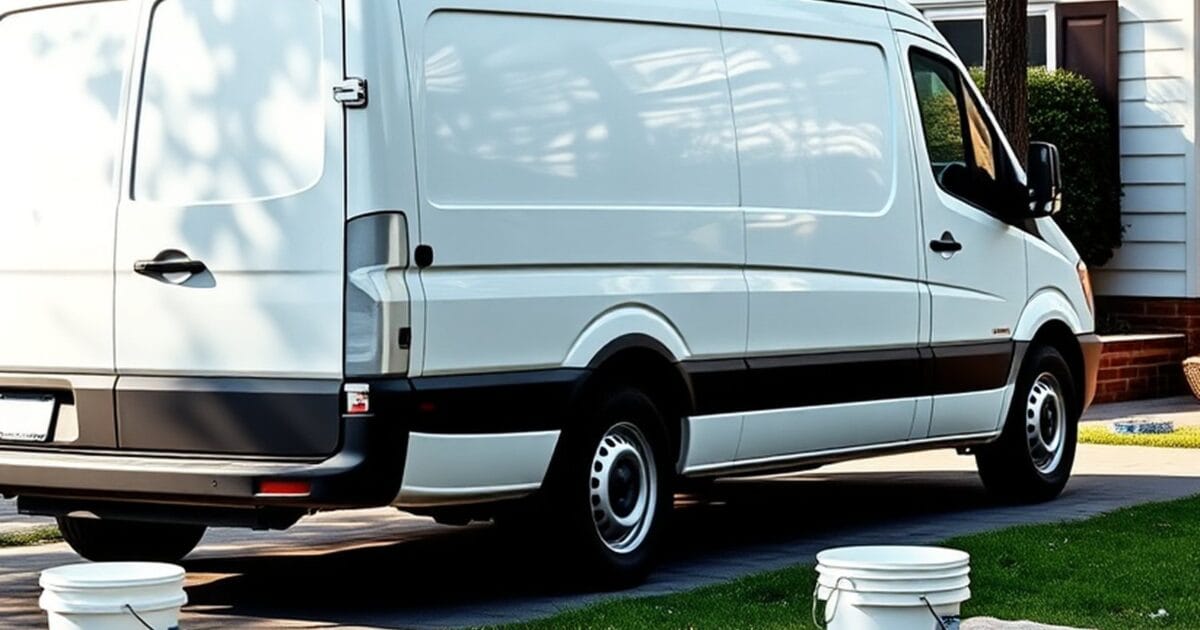
A painting company van is parked outside a customer house for a week at a time, driven through the service area every day, and left at the supply house, the coffee stop and the school run. A plain white van tells nobody anything. A marked one is an advertisement that goes exactly where the work is and costs nothing to run once it exists.
This guide is for a painting contractor deciding whether to mark a vehicle, how far to go, and whether crew shirts are worth the argument. It covers the options from magnets to a full wrap, what the panels should actually say, why the vehicle has to be worth looking at before it is worth marking, what a uniform really buys, the problem of where the van is parked, and how to judge a spend that produces no clicks. The ownership and running costs sit in painting business vehicle costs, and what goes inside is in the painting van setup checklist.
A painted van is an advertisement that parks itself
The reason this channel works has nothing to do with the driving. It is the parking. A van sitting outside a job for several days is seen by the same households repeatedly, alongside visible evidence of what the company does, in the streets where the company wants more work.
That is the same mechanism as the lawn sign, described in yard signs and job site marketing for painters, with two advantages. It goes where signs are not allowed, and it cannot be taken down by a town official. It is also present at every supply run and every quote visit, which means it is working during hours nothing else is.
The disadvantage is that it is bought once and cannot be switched off. A wrap on a van that is dirty, dented or badly driven advertises that instead, and a phone number on a vehicle that cuts somebody up on a highway is a liability rather than an asset.
Full wrap, partial wrap, lettering or magnets
The choice is usually presented as a budget ladder and is better understood as four different products.
Magnets are removable, cheap, and suit an owner using a personal vehicle who does not want it marked permanently. They also fall off, fade, and trap dirt against the paint underneath. They are a starting point, not a solution, and most painters outgrow them.
Cut vinyl lettering is the quiet workhorse. The name, the trade and the number applied directly to a painted panel, legible, cheap and durable. On a clean white or light van it reads well and looks like a business rather than a billboard. For most painting companies this is the right answer and the one they skip past.
A partial wrap adds a graphic panel across part of the vehicle, usually the rear quarters and back doors, which is where a vehicle is seen in traffic. It costs meaningfully more than lettering and does more at distance.
A full wrap covers the vehicle. It is expensive, it is impressive, and it hides the condition of the paintwork underneath, which is why it appeals to companies with older vehicles. It also has a working life, after which it has to be removed and replaced, and removal from a neglected wrap is its own bill. A painting business should treat it as a capital decision like any other, which is how painting business vehicle costs frames it.
What the panel should say
Every vehicle is read in traffic or across a street, so the design brief is identical to the sign: legible at distance, in seconds, in motion.
The essentials are the company name, the words that say it paints, and the phone number, in that order of size. The rear of the vehicle carries the most useful real estate, because that is what the driver behind stares at in traffic, and the number belongs there in the largest form the panel allows.
A short list of services helps if it is genuinely short and the vehicle is often parked rather than moving. A website address is worth including only if it is short enough to remember. Anything smaller than that, including license numbers and social icons, is being read by nobody at speed and can go on a card instead.
Photographic images of finished work can be effective on a partial wrap and are the one thing a sign cannot do. They have to be high resolution and simple. A busy image printed large becomes noise.
Whatever is printed on the vehicle is an advertising claim and has to be true, including any claim about licensing, insurance, or experience, as summarized in the FTC advertising guide for small business. Requirements for commercial vehicle markings are set separately by state and federal transportation authorities depending on the vehicle and the work, and a painter adding lettering should check what applies to the vehicles they run.
The van has to be worth looking at
Marking a vehicle amplifies whatever is already true about it. That is the whole risk of this channel, and it is the one painters do not think about before signing an order.
A clean, straight, well kept van with the company name on it says the company is organized. A van with a cracked bumper, a filthy windscreen and ladders tied on with rope says something else entirely, and now says it with a name attached. Homeowners draw conclusions about how a company will treat their house from how it treats its own equipment.
So the honest sequence is to sort the vehicle first. Fix the obvious damage, establish a washing habit, and organize the inside so that opening the back doors in front of a customer is not embarrassing. The interior matters more than painters expect, because customers see it at every quote visit, and getting it right is the point of the painting van setup checklist.
It follows that a marked vehicle imposes a standing obligation. Somebody has to keep it clean and somebody has to drive it properly. A company with several vans needs that written down rather than assumed, which is the sort of standing expectation covered in how to manage a painting crew.
Uniforms and what a crew shirt is really for
A crew shirt is not about looking smart. It does three specific jobs, and only one of them is advertising.
The first is that it tells a homeowner who is supposed to be in their house. A customer who leaves a key with a painter is trusting strangers in their home, and a marked shirt answers the question a neighbor would otherwise ask. That matters most on occupied jobs, which is most residential work.
The second is that it advertises everywhere the crew goes: the supply house, the lunch stop, the gas station. Those are all inside the service area and all full of homeowners.
The third is internal. A crew that arrives in company clothing behaves slightly differently, because they are visibly representing something. That effect is small and real, and it is one of the cheapest levers available to a painting business, which is part of why it appears in how to hire painters and roles in a growing painting business.
Practically, shirts have to be comfortable enough to actually be worn, supplied in enough quantity that a clean one exists on a Thursday, and replaced when they stop looking like a uniform and start looking like rags. A painting company that buys shirts once and never again has bought a worse impression than no shirts at all. The cost belongs in overhead rather than being charged to a job, which is the treatment described in painting business overhead.
The parked van problem
A marked vehicle advertises wherever it is, which includes places the owner has not thought about.
Parked across a driveway on a residential street, it advertises inconsiderate parking to exactly the neighbors the company wants as customers. Parked outside a bar, it advertises something else. Parked at home overnight in a neighborhood with rules about commercial vehicles, it can produce a complaint from the association the company might one day want to work for.
There is also a security dimension. A van covered in the word painting tells anybody passing that it probably contains sprayers, ladders and a compressor. Overnight parking, alarms and the habit of emptying the valuable items are the practical responses, and they are discussed alongside the rest of the kit in the painting business equipment list.
None of this argues against marking a vehicle. It argues for deciding in advance where a marked vehicle is parked and how it is driven, because the decision has been made either way.
Cost, life and where it sits in the books
Lettering, wraps and uniforms are business costs and belong in the records as such, separated from the vehicle running costs so that the marketing spend can actually be reviewed. What the tax authority expects a small business to keep is collected in the IRS guide to business expense resources, while the day to day filing habit is in painting business bookkeeping and the categories are in painting business tax deductions.
The important number is not the price. It is the price spread across the working life of the vehicle. A wrap that lasts several seasons on a van the company intends to keep is a very different proposition from the same wrap on a vehicle due for replacement, and painters regularly wrap a van shortly before selling it.
Selling is worth thinking about in advance. A wrapped vehicle usually has to be stripped before sale, which costs money and can damage paint if the wrap has been left too long. Lettering is far easier to remove. That is a genuine argument for the simpler option on any vehicle that will be sold on.
Measuring something you cannot click
No dashboard exists for this. Nobody clicks a van. The temptation is to treat it as an unmeasurable cost of doing business and stop thinking, and that is how painting companies end up with three unmarked vans and a monthly advertising bill.
The measurement available is the same one the sign uses: ask every caller where they heard of the company and write down what they say. Answers mentioning the van, the shirts, seeing the company working nearby or a neighbor recommendation all belong to the same family, and over a season the pattern is legible even if the individual attributions are not.
Then compare the cost across the life of the vehicle against a single job. For most painting companies the comparison is not close, because the spend is one time and the exposure continues for years. That is the opposite shape from the paid channels, where every enquiry is bought again, and the difference is worth remembering when a marketing budget is being argued over. Setting one review date a year for the whole of it is the approach in how to market a painting business.
A lead is only worth what happens in the next hour.
PaintPricing turns a site visit into an itemized quote built from your own rates the same day, so the money spent finding the customer is not wasted while the estimate waits. Free for your first 3 quotes, no card required.
Frequently asked questions
Is a full wrap worth it for a painting company?
Only on a vehicle the company intends to keep for several seasons and keeps clean. For most painters, cut vinyl lettering on a tidy van does most of the work for a fraction of the cost and is far easier to remove before a sale.
What should go on a painter van?
The company name, the words saying it is a painting company, and the phone number, largest on the rear where drivers in traffic look. Small print such as license numbers and social icons is read by nobody at speed.
Are magnets good enough to start with?
They suit an owner using a personal vehicle who does not want permanent marking, but they fade, fall off and trap dirt against the paint. Most painting companies outgrow them quickly.
Do crew uniforms make a difference?
They tell a homeowner who is supposed to be in their house, they advertise at every supply house and lunch stop inside the service area, and crews behave slightly differently when visibly representing a company. They have to be replaced before they stop looking like a uniform.
Should a marked van be parked at home?
It depends on the neighborhood rules and on security. A vehicle labeled as a painting company announces that it probably holds sprayers and ladders, so valuable items are better removed overnight regardless of where it sits.
How does a painter measure whether a wrap paid off?
By asking every caller where they heard of the company and recording the answer, then comparing the cost spread across the life of the vehicle against the profit on a single job. The spend happens once and the exposure continues for years.