In this article
- Step 1: Measure the Exterior Surface Area
- The Basic Wall Area Formula
- Worked Measurement Example: Typical 2-Story, 2,000 Sqft Home
- Don’t Forget the Extras
- Step 2: Assess Surface Condition and Type
- Step 3: Price by Surface Type
- Step 4: Price Your Prep Work Separately
- Step 5: Apply Multi-Story Multipliers
- Step 6: Build a Complete Estimate — Worked Example
- Common Exterior Gotchas That Can Wreck Your Profit
- How to Present Your Estimate to the Homeowner
- Use a Professional, Itemized Format
- Explain the Prep Work
- Offer Good-Better-Best Options
- Set Clear Expectations
- Follow Up Within 24 Hours
- Exterior Painting Estimate Template Checklist
- Frequently Asked Questions
- How much does it cost to paint the exterior of a 2,000 sqft house?
- How many gallons of paint do I need for an exterior?
- How long does it take to paint the exterior of a house?
- Should I charge by the hour or by the square foot for exterior painting?
- What’s the profit margin on exterior painting jobs?
- Keep reading
Reviewed by John Miller
Licensed painter, 15 years in the field
“Exterior prep is 40–60% of the labor on almost every repaint. If your estimate doesn’t reflect that, you’re losing money the day you sign the contract. Always walk every wall, test-scrape a few areas, and price prep as its own line item.”
How to Estimate Exterior House Painting: The Complete Contractor’s Guide
Getting your exterior painting estimates right is the difference between running a profitable business and leaving money on the table — or worse, losing money on a job. I’ve seen too many contractors eyeball an exterior, throw out a number, and regret it two days into scraping peeling paint off a three-story Victorian.
This guide walks you through exactly how to bid exterior paint jobs the way seasoned contractors do it: with real measurements, honest pricing, and a system you can repeat on every single estimate.
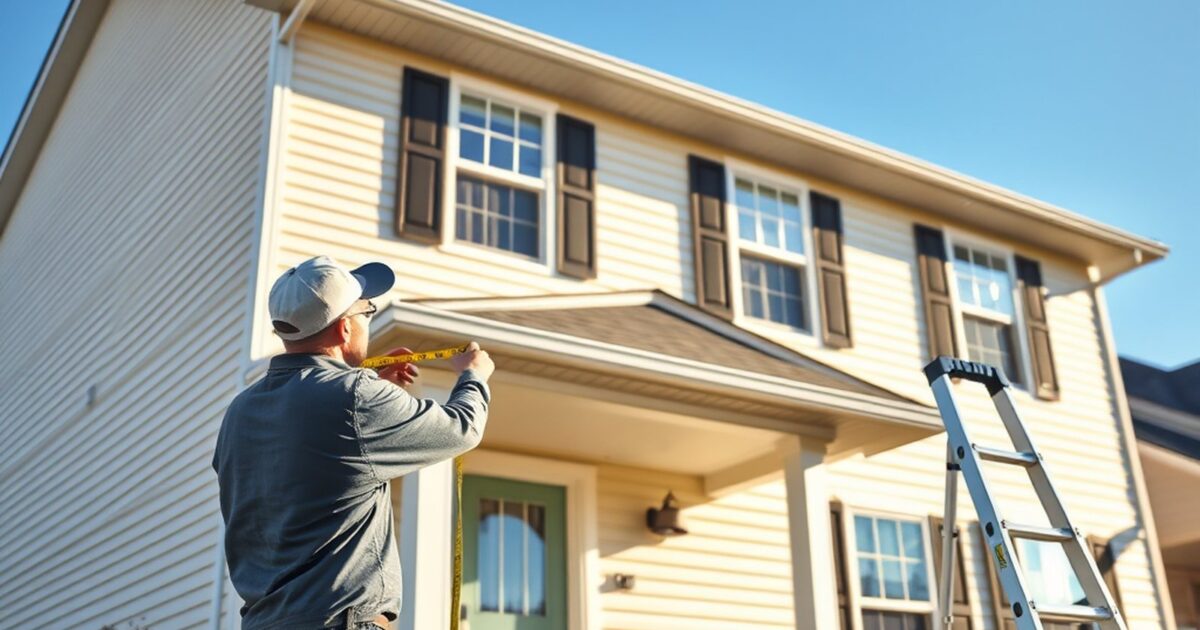
Step 1: Measure the Exterior Surface Area
Everything starts with accurate measurements. Skip this step and you’re guessing — and guessing is how you end up working for free on Saturday.
The Basic Wall Area Formula
For each wall of the house, use this formula:
Wall Area = Length × Height
Then subtract openings:
Paintable Wall Area = Total Wall Area − (Windows + Doors)
Use these standard deduction sizes if you can’t measure every opening exactly:
- Standard window: 15 sqft
- Large picture window: 25 sqft
- Standard door: 21 sqft
- Garage door (single): 64 sqft
- Garage door (double): 128 sqft
Worked Measurement Example: Typical 2-Story, 2,000 Sqft Home
Let’s say the home is roughly rectangular — 40 ft × 25 ft with 9 ft ceilings per floor (18 ft total wall height).
Perimeter: (40 + 25) × 2 = 130 linear feet
Gross wall area: 130 × 18 = 2,340 sqft
Subtract openings:
- 12 standard windows: 12 × 15 = 180 sqft
- 2 doors: 2 × 21 = 42 sqft
- 1 double garage door: 128 sqft
- Total deductions: 350 sqft
Net paintable wall area: 2,340 − 350 = 1,990 sqft
Don’t Forget the Extras
Walls are only part of the story. You also need to measure:
- Trim and fascia: Measure total linear feet, then multiply by the board width (typically 4–8 inches) to get sqft
- Soffits: Measure the overhang depth × perimeter
- Shutters: Count them and measure one pair — they’re usually about 8–10 sqft each
- Gutters and downspouts: Total linear feet
- Doors: Count and note if they need full paint or just touch-up
- Deck, porch, or patio surfaces: Length × width
Step 2: Assess Surface Condition and Type
A freshly built home with smooth Hardie board is a completely different job than a 1940s wood-sided house with alligator-cracked paint. Your price has to reflect reality.
Walk the entire exterior and note:
- Surface material — vinyl, wood, aluminum, stucco, brick, fiber cement
- Current paint condition — peeling, chalking, fading, bare wood
- Damage — rot, cracks, holes, missing caulk
- Mold or mildew — especially on north-facing walls
- Previous coats — how many layers are you dealing with?
Step 3: Price by Surface Type
Here’s where your estimate gets specific. These ranges cover labor and materials for two coats of quality exterior paint, assuming moderate prep work.
| Surface / Element | Unit | Low Range | High Range | Notes |
|---|---|---|---|---|
| Wood siding (clapboard) | per sqft | $1.75 | $3.50 | Higher if heavy scraping needed |
| Fiber cement (Hardie) | per sqft | $1.50 | $3.00 | Smooth surface, paints efficiently |
| Stucco | per sqft | $2.00 | $4.00 | Texture absorbs more paint |
| Brick | per sqft | $2.50 | $4.50 | Requires masonry primer; first coat is expensive |
| Aluminum/Vinyl siding | per sqft | $1.50 | $3.00 | Needs bonding primer |
| Wood trim / fascia | per linear ft | $1.00 | $3.00 | Width and height dependent |
| Soffits | per linear ft | $1.00 | $2.50 | Overhead work slows production |
| Gutters / downspouts | per linear ft | $1.00 | $2.00 | Often bundled with fascia |
| Shutters | per pair | $50 | $100 | Remove, paint, reinstall is best practice |
| Exterior door | per door | $100 | $250 | Front doors with detail work cost more |
| Deck / porch floor | per sqft | $2.00 | $5.00 | Stain vs. solid paint; condition matters |
| Fence (per side) | per linear ft | $5.00 | $12.00 | Height and picket style vary widely |
Step 4: Price Your Prep Work Separately
Prep is where most exterior jobs make or break profitability. Never bury prep costs inside your per-sqft rate — itemize them so you can adjust when conditions change.
| Prep Task | Unit | Low Range | High Range |
|---|---|---|---|
| Power washing | per sqft | $0.15 | $0.40 |
| Scraping / sanding (light) | per sqft | $0.50 | $1.00 |
| Scraping / sanding (heavy) | per sqft | $1.00 | $2.50 |
| Caulking (windows, trim joints) | per linear ft | $1.00 | $2.50 |
| Primer (full coat) | per sqft | $0.50 | $1.00 |
| Spot priming (bare wood only) | per sqft | $0.25 | $0.50 |
| Lead paint testing | per test kit | $10 | $35 |
| Lead-safe work practices | per job | $500 | $2,500+ |
| Minor wood repair / filling | per hour | $50 | $85 |
| Masking / protection | per job | $150 | $500 |
Step 5: Apply Multi-Story Multipliers
Working above the first floor costs more. Period. You’re moving ladders constantly, possibly setting up scaffolding, and your crew works slower when they’re 20+ feet up.
Apply these multipliers to your base pricing for any work above the first story:
| Height | Multiplier | Why |
|---|---|---|
| 1st floor (ground level) | 1.0x (base rate) | Standard ladder or ground work |
| 2nd floor | 1.3x – 1.5x | Extension ladders, slower movement |
| 3rd floor | 1.75x – 2.0x | Scaffolding often required |
| 4+ floors / complex rooflines | 2.0x – 2.5x | Boom lift or swing staging rental |
Equipment costs to factor in:
- Scaffolding rental: $150–$500 per week depending on length
- Boom lift rental: $250–$600 per day
- Extra setup/teardown time: 2–4 hours per job
For a two-story home, most contractors find that a 1.4x multiplier on upper-story work covers the added time and equipment cost without over-pricing the job.
Step 6: Build a Complete Estimate — Worked Example
Let’s put it all together. Here’s a realistic exterior painting estimate for a 2-story colonial home, approximately 2,400 sqft living space, with wood clapboard siding, wood trim, 8 pairs of shutters, and a detailed front door.
Home Specifications
- Footprint: 45 ft × 28 ft
- Wall height: 18 ft (two 9 ft stories)
- Perimeter: 146 linear ft
- 14 standard windows, 2 standard doors, 1 single garage door
- Trim/fascia: 160 linear ft
- Soffits: 146 linear ft (12-inch overhang)
- 8 pairs of shutters
- 1 front entry door (6-panel with detail)
- Condition: moderate — some peeling on south side, overall fair
Measurement
Gross wall area: 146 × 18 = 2,628 sqft
Window deductions: 14 × 15 = 210 sqft
Door deductions: 2 × 21 = 42 sqft
Garage door: 64 sqft
Net paintable wall area: 2,628 − 316 = 2,312 sqft
The Estimate Breakdown
| Line Item | Quantity | Rate | Subtotal |
|---|---|---|---|
| Prep — Power washing | 2,628 sqft | $0.25/sqft | $657 |
| Prep — Scraping/sanding (moderate) | 600 sqft (south side) | $0.75/sqft | $450 |
| Prep — Caulking | 200 linear ft | $1.50/lf | $300 |
| Prep — Spot priming | 600 sqft | $0.35/sqft | $210 |
| Prep — Masking/protection | 1 job | — | $250 |
| Siding — 1st floor | 1,156 sqft | $2.25/sqft | $2,601 |
| Siding — 2nd floor (1.4x) | 1,156 sqft | $3.15/sqft | $3,641 |
| Trim / fascia | 160 linear ft | $2.00/lf | $320 |
| Soffits | 146 linear ft | $1.75/lf | $256 |
| Shutters | 8 pairs | $75/pair | $600 |
| Front door (detailed) | 1 | $200 | $200 |
| Materials (paint, primer, caulk, supplies) | — | — | $1,100 |
| TOTAL ESTIMATE | $10,585 | ||
On this job, the per-sqft cost for the full exterior comes to about $4.58/sqft of paintable wall area — or roughly $4.41 per sqft of living space. Both of those are right in the sweet spot for a two-story wood-sided home in moderate condition.
Materials run about 10–12% of the total, which is typical. If you’re consistently above 15%, look at your paint usage — you may be overloading or wasting product.
Common Exterior Gotchas That Can Wreck Your Profit
Experience teaches these lessons the hard way. Here’s what to watch for before you commit to a number.
Lead Paint
Any home built before 1978 could have lead paint. You’re legally required to be EPA RRP certified and follow lead-safe work practices — containment, HEPA vacuums, proper disposal. This adds $500–$2,500+ to a job depending on scope. Never skip testing. One complaint from a neighbor and you’re facing five-figure fines.
HOA Restrictions
Many neighborhoods have strict color palettes, approved vendor lists, and required approval timelines. Your client might love that bold navy blue — but the HOA might not. Always ask the homeowner about HOA rules before finalizing the estimate. Color rejections after you’ve already bought paint eat directly into your margin.
Weather Windows
Exterior paint needs 50°F minimum (some products require 35°F+), low humidity, and no rain for 4–6 hours after application. In many regions, this limits your prime exterior season to April through October. Build weather delays into your scheduling — pad your timeline by 1–2 days on every exterior job.
Scaffolding vs. Ladders
Extension ladders work fine for most two-story homes, but once you’re dealing with steep lots, uneven ground, or complex rooflines, scaffolding becomes a safety and efficiency decision. Budget $150–$500/week for scaffolding rental. If the job takes longer than 3 days at height, scaffolding almost always pays for itself in faster production.
Landscaping and Access
Mature bushes tight against the house, decks with no clearance underneath, and narrow side yards all slow you down. If you need to protect or temporarily relocate landscaping, add $200–$500 to your estimate. Flag access issues during your walkthrough — don’t discover them on day one of the job.
How to Present Your Estimate to the Homeowner
Here’s what nobody else talks about: getting the number right means nothing if you can’t communicate the value. The contractor who presents the best estimate — not necessarily the lowest — wins the job.
Use a Professional, Itemized Format
Homeowners trust line items. A single lump sum of “$10,500” feels like a guess. But when they see power washing, prep work, siding, trim, shutters, and materials each broken out, they understand where the money goes. It also makes you harder to comparison-shop against the guy who just texts a number.
Explain the Prep Work
Most homeowners don’t understand why prep costs what it does. Take 60 seconds during your presentation to explain: “We’re going to power wash the entire exterior, scrape and sand the peeling areas on your south wall, re-caulk around all your windows, and spot-prime any bare wood before the first coat of paint goes on. That’s what makes the paint last 8–10 years instead of 3.”
Offer Good-Better-Best Options
Give three tiers when it makes sense:
- Good: Two coats on siding only, basic prep — $7,200
- Better: Two coats on siding + trim + shutters, full prep — $10,585
- Best: Everything above + front door + deck staining + minor wood repairs — $13,200
Most homeowners pick the middle option. And you’ve anchored the conversation around your full-service price instead of your bare minimum.
Set Clear Expectations
Your estimate should include:
- Scope of work: Exactly what surfaces get painted
- Paint brand and product: Name the specific product line (e.g., “Sherwin-Williams Duration Exterior Acrylic”)
- Number of coats: Always specify — “two coats” eliminates arguments later
- Timeline: Estimated start date and duration
- What’s NOT included: Wood replacement, gutter repair, window glazing — spell it out
- Payment terms: Deposit amount, progress payments, final payment
- Warranty: Typical exterior paint warranty is 2–5 years on labor
Follow Up Within 24 Hours
After you leave the walkthrough, send the written estimate within a day. Every day you wait, the homeowner’s urgency drops and a competitor’s estimate lands in their inbox. Speed wins more jobs than you’d think.
Exterior Painting Estimate Template Checklist
Use this checklist before submitting any exterior estimate to make sure nothing falls through the cracks:
- Total paintable wall area calculated and verified
- All trim, fascia, soffits, gutters measured
- Shutters, doors, and specialty items counted
- Surface type and condition documented
- Prep work itemized (washing, scraping, caulking, priming)
- Multi-story multiplier applied to upper-floor work
- Lead paint testing addressed (pre-1978 homes)
- Equipment needs identified (ladders, scaffolding, lifts)
- Materials estimated (gallons = sqft ÷ 350 per coat)
- Access issues and landscaping protection noted
- HOA requirements confirmed with homeowner
- Weather contingency built into timeline
- Three-tier pricing options prepared
- Payment terms and warranty clearly stated
Frequently Asked Questions
How much does it cost to paint the exterior of a 2,000 sqft house?
For a typical 2,000 sqft home, expect to charge between $3,000 and $7,500 depending on the number of stories, surface type, condition, and how much prep work is needed. A single-story home with fiber cement siding in good condition will be on the low end. A two-story wood-sided home with peeling paint will be on the high end or above.
How many gallons of paint do I need for an exterior?
One gallon of exterior paint covers approximately 300–400 sqft per coat on smooth surfaces, or 200–300 sqft on rough surfaces like stucco or brick. For a 2,000 sqft net wall area with two coats, budget 10–14 gallons for siding alone, plus additional paint for trim, doors, and shutters.
How long does it take to paint the exterior of a house?
A two-person crew can typically complete a standard 2,000 sqft single-story home in 3–4 days, including prep. A two-story home of similar size usually takes 4–6 days. Complex homes with heavy prep, multiple colors, or difficult access can take 7–10 days. Always build in 1–2 weather buffer days.
Should I charge by the hour or by the square foot for exterior painting?
Charge by the project with per-sqft pricing as your internal calculation method. Hourly billing penalizes you for being efficient and makes homeowners nervous about the final number. Use your sqft rates to calculate a fixed project price, then present that as a firm quote. Your client gets certainty, and you keep the upside when your crew works fast.
What’s the profit margin on exterior painting jobs?
Healthy exterior painting businesses target a 35–50% gross margin on each job. That means if your total costs (labor, materials, equipment, overhead) are $6,000, you should be pricing the job at $9,200–$12,000. If your margins are consistently below 30%, re-examine your estimating — you’re likely under-pricing prep work or not accounting for the true cost of multi-story access.
Want a number for your project?
Get a professional-looking quote in under 60 seconds — line-items included.
Keep reading
Free exterior estimate template →
Filled-out sample with real 2-story colonial pricing and line items.
How to write a painting estimate →
The format that closes more bids — with or without a template.
Cost to paint a house →
What homeowners should expect to pay — useful context for your quotes.
How we source this data
Prices reflect 2026 U.S. averages. We combine contractor-reported rates, manufacturer spec sheets, and federal wage data, then cross-check against John Miller’s 15 years of field experience pricing residential and commercial jobs. Numbers are updated quarterly.
Primary sources:
- U.S. Bureau of Labor Statistics, Occupational Employment Statistics: Painters, Construction and Maintenance (2024)
- Sherwin-Williams product data sheets (Emerald, SuperPaint, Duration)
- Benjamin Moore technical data sheets (Aura, Regal Select, Ben)
- HomeAdvisor / Angi national cost reporting (2025 survey data)
- PaintPricing field data from licensed contractor John Miller (2010–2026)