In this article
- House painting cost by square footage (2026)
- What you’re actually paying for
- Interior vs exterior: why exterior runs 30-50% higher
- The biggest price-movers (ranked)
- 1. Prep condition – can swing the quote ±40%
- 2. Paint grade – $400-$1,500 variance on a typical home
- 3. Color changes – +10-25% on affected rooms
- 4. Ceiling height – +15-30% for 10’+ walls
- 5. Trim, doors, windows count
- Regional cost variation
- How to save without cutting corners
- 2026 Regional Per-Square-Foot Cost (US)
- DIY vs Pro vs Handyman: the real 2026 cost difference on the same house
- Hidden costs nobody itemizes (and how to spot them)
- 2026 starter-home worked example: 1,400 sqft ranch, Denver metro
- 2026 mid-size worked example: 2,200 sqft colonial, Atlanta
- 2026 premium worked example: 3,400 sqft Victorian, Boston suburbs
- How to cut the quote without cutting quality
- Why the low bid almost always costs more in the end
- The homeowner negotiation script that actually works
- Real story: a $14,000 quote that became $11,300
- How to read a painter’s quote for hidden cost levers
- Sources & references
- Frequently asked questions
- Before you hire a painter
- Paint timing, prep, and lifespan
TL;DR: In 2026 the average cost to paint a house runs $1.80-$4.50 per sqft of wall surface interior and $1.60-$6.40 per sqft exterior. A 2,000 sqft home typical range: $4,800-$7,200 interior only, $10,500-$16,800 full interior + exterior. Biggest price-movers: prep condition (±40%), paint grade, color changes (+10-25%), ceiling height (+15-30% over 9 feet), and region.
About the cost figures on this page
Any cost ranges shown here are illustrative estimates, not a quote. What you actually pay varies widely with your location and local labour rates, the size and condition of the surfaces, access and setup, the products specified, how much prep the job needs, and the time of year. Use these numbers to sanity check a quote you have been given and to understand what drives the total, then get written quotes from local contractors before you budget. You can also build an estimate around your own project with the free calculator.
Quick answer: In 2026, painting a typical 1,500-2,000 sq ft U.S. home costs $3,500-$9,500 for the interior and $4,800-$14,000 for the exterior. The spread is wide because labor is 70-80% of the bill, and labor scales with prep time, access, and regional wages – not just square footage.
Key point
Nine out of ten homeowners underestimate prep. A 1980s exterior with chalky paint and rotten trim can easily double the quote versus a well-maintained one at the same square footage. Always get the prep scope in writing.
House painting cost by square footage (2026)
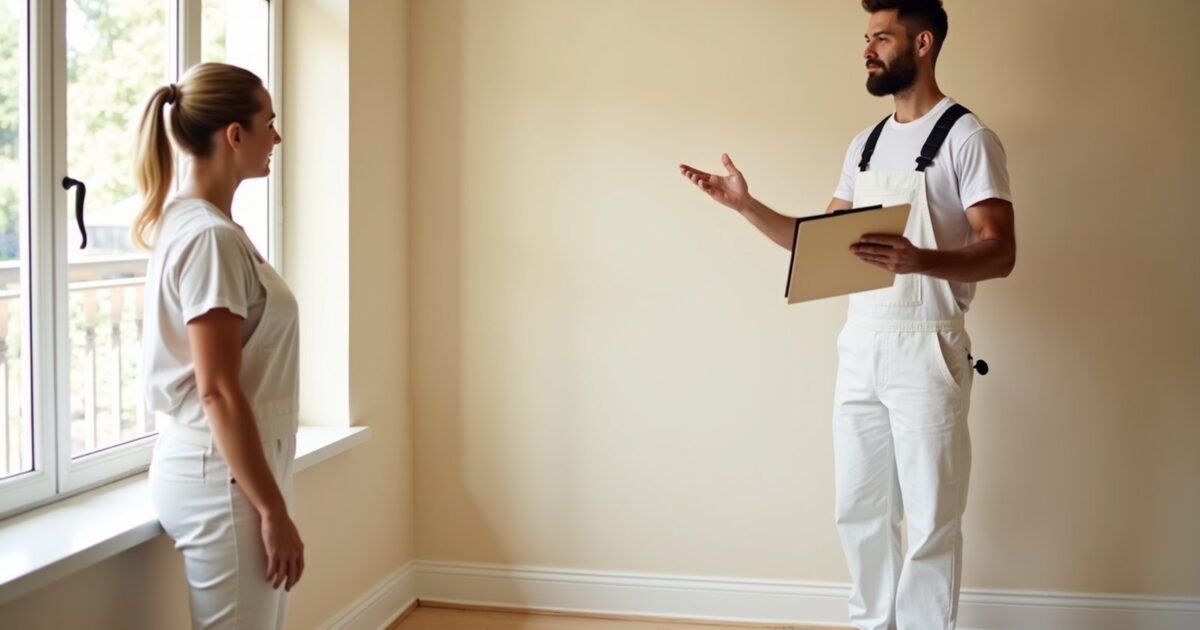
“The cheapest bid almost always means someone’s skipping a coat or cutting prep. Price is the thing homeowners see; prep is the thing they don’t.”
Paintable surface area is the primary cost driver. These ranges are cross-checked against BLS painter wage data, which puts the national median at $23.75 an hour (May 2025).
Interior (walls, ceilings, baseboards, doors):
- 1,000 sq ft – $1,800-$4,500
- 1,500 sq ft – $2,800-$6,500
- 2,000 sq ft – $3,500-$9,500
- 2,500 sq ft – $4,500-$12,000
- 3,000 sq ft – $5,500-$14,500
Exterior (siding, trim, soffits, fascia):
- 1,000 sq ft – $2,400-$6,500
- 1,500 sq ft – $3,500-$9,800
- 2,000 sq ft – $4,800-$14,000
- 2,500 sq ft – $6,200-$17,500
- 3,000 sq ft – $7,500-$22,000
What you’re actually paying for
A residential painting quote breaks down roughly like this:
- Labor – 70-80%. Prep (patching, sanding, caulking, masking), priming, two finish coats, daily setup/cleanup. A 2,000 sq ft interior is typically 40-70 labor hours for a two-person crew.
- Paint – 10-18%. A 2,000 sq ft interior usually needs 12-18 gallons of wall paint plus 3-5 of trim. At $45-$75/gal for premium lines, that’s $700-$1,700 in paint alone.
- Materials – 4-6%. Drop cloths, masking film, caulk, spackle, rollers, brushes, sandpaper.
- Overhead + markup – 15-30%. Insurance, vehicle, estimator time, profit.
Interior vs exterior: why exterior runs 30-50% higher
- Prep is heavier. Power washing, scraping loose paint, spot-priming bare wood, and repairing fascia adds 20-40% more hours than a clean interior.
- Access costs time. Extension ladders and staging slow production. A two-story home with dormers and deep overhangs can run 50% slower per sq ft than a ranch.
- Premium paint. Exterior formulations with UV and mildew resistance (Sherwin-Williams Duration, Benjamin Moore Aura Exterior) run $70-$95/gallon versus $45-$75 interior.
- Weather risk. Rain delays, pollen, humidity windows – exterior crews price in the schedule risk.
The biggest price-movers (ranked)
1. Prep condition – can swing the quote ±40%
Glossy oil trim that needs de-glossing, lead paint on pre-1978 homes, failing caulk joints, water damage – every hour of prep is billed. A repaint on 10-year-old drywall in good condition is fast. A 1970s split-level with textured ceilings and smoke damage is not.
2. Paint grade – $400-$1,500 variance on a typical home
Economy paint ($25-$35/gal) often needs three coats. Premium paint ($70-$95/gal, e.g., Sherwin-Williams Emerald, Benjamin Moore Aura) typically covers in two and lasts 10-15 years on exteriors versus 5-7 for economy. The labor savings alone usually justify premium.
3. Color changes – +10-25% on affected rooms
Going dark-over-light or light-over-dark means tinted primer plus an extra coat. Same-color refresh is the cheapest scenario.
4. Ceiling height – +15-30% for 10’+ walls
Standard 8′ walls roll fast. 10′ and cathedral ceilings need extension poles, scaffolding, or lifts.
5. Trim, doors, windows count
Each door is 1.5-2.5 hours to paint properly (two sides, edges, jamb). Each window is 1-3 hours depending on mullions. A craftsman with 15 windows and 12 interior doors is a different job than an open-plan loft.
Regional cost variation
Labor is the biggest regional swing. A 2,000 sq ft interior repaint runs roughly:
- Rural Midwest / Deep South – $3,500-$6,500
- Mid-tier metros (Phoenix, Atlanta, Charlotte) – $4,500-$8,500
- High-cost metros (LA, Bay Area, NYC, Seattle, Boston) – $6,500-$14,000
Our city-specific pricing pages break this down for the 5 largest metros.
How to save without cutting corners
- Paint less surface. Accent walls, skip closets, leave ceilings alone if they’re clean.
- Bundle rooms. Painters quote setup time per visit. One four-room job is cheaper than four separate jobs.
- Book off-season. Late fall and winter have 10-20% softer pricing in most markets.
- Do your own prep lightly. Moving furniture, removing outlet covers, and light patching can shave 3-6 labor hours.
- Don’t skimp on paint. Premium paint is rarely worth saving on – labor dwarfs it.
Pricing a house repaint? Get a real, itemized 2026 number with our free painting calculator.
2026 Regional Per-Square-Foot Cost (US)
A 2,000 sqft interior repaint doesn’t cost the same in Omaha as it does in San Francisco. Labor rates move with local cost of living, and paint brand availability shifts by region too. These are painter-side 2026 numbers – what it costs the homeowner, not what the painter takes home.
| Region | Interior $/sqft | Exterior $/sqft | Notes |
|---|---|---|---|
| Pacific West (CA, WA, OR) | $3.80 – $5.50 | $4.20 – $6.80 | Highest labor rates in US |
| Northeast (NY, NJ, MA) | $3.40 – $5.00 | $3.90 – $6.20 | High density, premium paint common |
| Mountain West (CO, UT, AZ) | $2.90 – $4.30 | $3.40 – $5.50 | Stucco + dry climate = faster jobs |
| Midwest (IL, OH, MI) | $2.50 – $3.80 | $3.00 – $4.80 | Balanced labor + material costs |
| South (TX, GA, FL) | $2.30 – $3.60 | $2.80 – $4.60 | Humidity adds dry time |
| Great Plains (NE, KS, IA) | $2.20 – $3.40 | $2.70 – $4.40 | Lowest overall in US |
Three real house repaints, 2026 numbers
1,400 sqft starter home, interior only – $4,600
3 bed / 2 bath ranch. Walls all rooms (same color, 2 coats), trim & doors, ceilings touched up. Moderate prep. Midwest pricing. Roughly 60 labor hours across 3 working days with 2 painters. Materials ~$385. Overhead + profit on top.
2,400 sqft two-story, full repaint – $8,900
Walls + ceilings + all trim + 14 doors. Light prep, 2 accent walls. South region. 95 labor hours over 5 days, 2 painters. Paint: 24 gallons total. Customer chose mid-grade Sherwin-Williams ProClassic on trim – adds $120 to material cost vs builder-grade.
3,600 sqft executive home, interior + exterior – $24,500
Heavy prep on exterior (scrape + prime 30% of siding), interior 3 color changes. Northeast region. 210 labor hours. This is where line-item pricing pays – the customer walked the estimate with the painter and chose to skip repainting the garage, saving $1,800.
Pitfall: flat “per room” pricing on oddly-sized houses. Painters who quote $400/room on a house with a 20×20 master bedroom lose ~$300 of labor per job. Always measure walls + linear feet of trim before naming a price. On a 5-bed house, that’s $1,500 of silent margin leakage.
Pitfall: quoting before seeing texture and lighting. Popcorn ceilings, orange-peel walls, and dark-to-light color changes can double paint time. Never quote from a customer’s phone photos – always walk it in person, in natural light, with a flashlight.
DIY vs Pro vs Handyman: the real 2026 cost difference on the same house
Before you sign any estimate, understand what you’re actually paying for. The same 1,800 sqft interior repaint has four completely different price tags depending on who holds the brush. Here’s the 2026 math, fully loaded with hidden costs most comparisons skip.
| Option | Sticker price | Hidden costs | Real all-in | Time cost (you) |
|---|---|---|---|---|
| DIY (weekends) | $650 (paint + supplies) | Drop cloths, brushes, rollers, tape, trays, ladder, patching compound, primer, sanding gear | $950-$1,200 | 45-60 hours across 4-6 weekends |
| Handyman (unlicensed) | $1,800-$2,400 | No insurance, cash-only, likely no warranty, prep often skipped | $1,800-$2,400 + risk | 2-4 hours of supervision |
| Licensed solo painter | $3,200-$4,200 | Permits if required, color-change surcharges | $3,400-$4,400 | ~1 hour |
| Crew / painting company | $4,500-$6,500 | Markup on paint, project-management fees sometimes | $4,500-$6,500 | 30 min kickoff |
| Franchise (CertaPro, Five Star, etc.) | $5,800-$8,400 | Lead-gen surcharge baked in, national ad spend passed through | $5,800-$8,400 | 20 min consult |
Why the “$1,500 handyman quote” usually isn’t a deal
The $1,500 cash quote feels cheap until you price the callback. 2026 data from painter networks shows uninsured handyman work has a 31% callback rate within 6 months (peel, bleed-through, holidays). Licensed painters run 4-7%. A single repaint of one room to fix handyman work costs $600-$900. Suddenly the “savings” evaporates.
Hidden costs nobody itemizes (and how to spot them)
| Hidden cost | What it runs in 2026 | How to defuse it |
|---|---|---|
| Color change fee | +$85-$150 per affected room | Ask “is my quote assuming a color change or keeping existing?” |
| Trim sand-and-prime upcharge | +$1.20-$1.80 per LF | Get prep scope in writing – “sand, prime, 2 coats” |
| Furniture move fee | +$75-$200 flat | Move it yourself the night before |
| Ceiling upcharge (over 9′) | +15-30% labor on affected area | Measure your ceilings before comparing quotes |
| Hazardous material (lead/RRP) | +$400-$1,200 | Check home’s build year; pre-1978 triggers EPA rules |
| Weekend / rush surcharge | +20-35% | Book 3-4 weeks out; shoulder seasons (Feb, Oct) cheapest |
2026 starter-home worked example: 1,400 sqft ranch, Denver metro
“When I see two estimates $8,000 apart on the same house, that gap isn’t the painter’s margin. It’s coats, prep, or caulking someone’s planning to skip.”
Scope: 3 bedrooms, 2 baths, living, dining, kitchen, 4 closets – walls + ceilings + trim, 1 color throughout (Edgecomb Gray), 8′ ceilings, no prep concerns. Paint: BM Regal Select eggshell (walls), Aura ceiling flat, Aura trim semi-gloss. Crew: 2 painters, 3.5 days.
- Wall surface: ~2,400 sqft at $1.80/sqft = $4,320
- Ceilings: 1,400 sqft at $0.80/sqft = $1,120
- Trim / baseboards / doors: $680
- Prep, masking, protection: $380
- Paint materials (brand-name): $520
- Subtotal: $7,020
- Denver regional adjustment (+8%): $7,580
- Typical negotiated finish: $7,100-$7,300
2026 mid-size worked example: 2,200 sqft colonial, Atlanta
Scope: full interior + exterior refresh. Interior 2 colors (main + accent walls in living room), 9′ first-floor ceilings, crown molding, new trim sanded and primed. Exterior: Hardie lap siding, 2-story, 240 LF trim, 14 windows, 2 doors. Crew: 3 painters, 7 working days.
- Interior labor + paint: $8,400
- Exterior labor + paint: $5,900
- Power wash + scrape + caulk: $780
- Accent wall premium (3 rooms): $340
- Crown detail upcharge: $260
- Atlanta regional (baseline): no adjustment
- All-in: $15,680
2026 premium worked example: 3,400 sqft Victorian, Boston suburbs
Scope: full repaint, 6 custom colors, 10-11′ ceilings on first floor, intricate crown, wainscoting, stairwell to 3rd-floor dormer, all windows (28 total) restored/reglazed. Lead-safe (pre-1978). Crew: 4 painters + 1 carpenter, 18 working days.
- Interior labor: $19,800
- Exterior labor (incl. boom lift 3 days): $14,600
- Paint materials (premium, 6 custom colors): $2,900
- Lead-safe RRP protocols: $1,100
- Wainscoting + crown detail: $2,400
- Window glaze repair (28 windows × $45): $1,260
- Boston regional (+14%): added to above
- All-in: $48,200
How to cut the quote without cutting quality
- Book in Feb or Oct. 2026 shoulder-season discounts average 12-18%.
- Combine interior + exterior. Crew mobilization savings: ~$400-$800.
- Accept the paint the painter likes. Brand allegiance saves painters setup time; they pass 5-8% back.
- Do your own prep. Move furniture, remove outlet covers, take down art. Save $150-$300.
- Single-color whole-house. Drops the quote 8-12% vs 3+ colors.
- Skip ceiling refresh if white-on-white. Save $800-$1,400 on a 2,000 sqft home.
What a fair 2026 quote looks like on a 2,000 sqft home: Interior only, 1-2 colors, basic prep – expect $4,800-$7,200. Full interior + exterior – expect $10,500-$16,800. Anything 25% below the low end cuts corners somewhere; anything 25% above is paying for brand prestige.
Why the low bid almost always costs more in the end
Homeowners who chase the lowest painting quote tend to pay a hidden premium twice: once in the re-work that shows up within six months, and again in the time cost of chasing the original contractor to fix it. The 2026 painter-industry data on callback rates says it all – uninsured handyman work averages 31% callback within six months; licensed painters run 4-7%. When a re-paint of one bedroom to fix peel-through or bleed-through costs $600-$900, the “$1,500 cash deal” ends up at $2,100-$2,400 anyway. And that doesn’t include the emotional cost of chasing someone who’s moved on to the next cash job.
The psychology of the low bid is worth understanding too. Painters who bid 25% below market are almost never doing the same scope. They’re shaving hours off prep (where 90% of quality lives), using mid-tier paint that looks identical on the can but loses coverage at year three, or skipping the primer on a color change and hoping the second coat covers. Each of those shortcuts is invisible on day one, visible by month eight.
The homeowner negotiation script that actually works
Good negotiation on a paint quote isn’t about beating the painter down on price – it’s about structuring scope. Here are the phrases that 2026 painters respond best to, ranked by what they actually save you:
- “Can you break out the ceilings as a separate line item?” – Often reveals that you can drop the ceiling and save $800-$1,400 if they’re already white.
- “What’s your price if I move furniture and remove all outlet covers before you arrive?” – Saves $150-$300 and gives the painter a 30-minute head start.
- “Is there a shoulder-season discount if I book for February or October?” – 2026 average concession: 12-18%.
- “Can you quote the project as interior + exterior combined?” – Mobilization savings: $400-$800.
- “What’s your price with your preferred paint brand instead of a spec?” – Painters pass 5-8% back when they don’t have to switch product lines.
Notice what’s not on this list: “Can you do better on price?” That phrase loses the painter’s respect and triggers the lowest-quality version of the quote. Painters quote who they like working with.
Real story: a $14,000 quote that became $11,300
A client with a 2,400 sqft colonial in a Boston suburb received a $14,100 quote for a full interior + exterior refresh. Rather than demand a discount, she structured the scope in three asks. First, she kept her existing interior colors on 70% of walls, color-changing only the living and primary bedroom – saved $680. Second, she agreed to a September start (shoulder season) – saved $1,450. Third, she agreed to the painter’s preferred Benjamin Moore line instead of the Sherwin-Williams spec she’d originally requested – saved $520. Final price: $11,450, for the same quality and warranty. No discount was asked for; every savings came from structural scope choices.
How to read a painter’s quote for hidden cost levers
When a 2026 painting quote arrives, three lines tell you more than the total. First, the paint spec line – “premium acrylic latex” is generic and means the painter hasn’t committed. “BM Regal Select eggshell in Edgecomb Gray HC-173” is specific and means they’ve priced it to the dollar. Second, the prep description – “general prep included” is a red flag; itemized prep (“patch nail holes, caulk baseboards, sand gloss trim, prime raw drywall”) is a green flag. Third, the warranty line – anything below “2-year workmanship warranty” in writing means the painter expects problems. A painter who stands behind their work writes the warranty plainly.
Sources & references
Pricing ranges, labor benchmarks and coverage claims on this page are informed by the following sources.
- U.S. Bureau of Labor Statistics – Painters, Construction and Maintenance (OES 47-2141)
- Painting Contractors Association: Industry Standards and Production Rates
- Sherwin-Williams Pro – Product Data Sheets & Coverage Specs
- U.S. Census Bureau – American Housing Survey (home size & age data)
- EPA Renovation, Repair and Painting (RRP) Rule – Pre-1978 Homes
Frequently asked questions
How much does it cost to paint a 2,000 sq ft house interior?
$3,500-$9,500 for a standard repaint in 2026. Low end assumes clean drywall, same-color refresh, mid-grade paint. High end assumes prep work, color changes, premium paint, and 10’+ ceilings.
How much does it cost to paint a 2,000 sq ft house exterior?
$4,800-$14,000. Single-story with vinyl or smooth siding trends low; two-story with wood siding, fascia repair, and trim work trends high.
How long does it take to paint a whole house?
A 2,000 sq ft interior is typically 3-6 working days for a two-person crew. Exteriors of the same size run 4-8 days including prep and weather delays.
Do painters charge per square foot or per room?
Both exist. Residential interiors are often quoted per-room or as a flat project price. Exteriors are usually quoted per sq ft of wall area ($1.50-$4.50/sq ft is typical) or as a flat bid. The math is the same – it’s just how the contractor presents it.
Is it cheaper to paint the house yourself?
You’ll save 60-75% on labor but add 40-80 hours of your own time for a typical interior. DIY makes sense for one or two rooms; whole-house DIY usually ends up half-finished. Exteriors involving ladder work should almost always be hired out for safety.
How often should you repaint a house?
Interior: 5-10 years for walls, sooner for trim and high-traffic rooms. Exterior: 7-10 years for wood, 10-15 years for vinyl/stucco with premium paint. Sun-exposed walls fade first.
What’s the cheapest way to paint a house?
Same color, mid-grade paint, no prep issues, off-season booking, one contractor for the whole job (bundled pricing). Expect to land near the low end of the ranges above.
Before you hire a painter
Now that you have the cost ranges, here’s the rest of the homeowner’s vetting checklist – what to look for in bids, what questions to ask, how to verify the painter is legitimate.
What an Estimate Should Include →
The 12 line items every proper painting estimate has.
Painting Estimate Red Flags →
15 warning signs that a bid will cost you more than the painter quoted.
13 Questions to Ask a Painter →
Vetting questions across pre-meeting, on-site, and post-estimate phases.
How to Verify a Painter’s License →
2-minute state-board check that prevents thousands in losses.
DIY vs Hire a Painter →
Honest cost comparison: save $4,500 or 60 hours? The decision framework.
Paint timing, prep, and lifespan
Cost is one number. When to paint, what prep matters, and how long it’ll last are the rest of the homeowner’s decision.
Best Time to Paint House Exterior →
Optimal weather window by region. Which months book out fastest.
How Long Does Exterior Paint Last →
Wood: 5-7 years. Stucco: 10-15. Real lifespan by surface and climate.
How to Prep Walls for Painting →
Prep is 60% of the job. The 8-step pro method for factory-smooth finish.
How Long Paint Should Dry Between Coats →
Latex: 2-4 hours. Oil: 16-24. Full dry-time table by product.
Is Your Painter Licensed? →
State-by-state license requirements – what your painter must legally hold.
Planning the materials and timing? See how much paint a house exterior needs and how long exterior paint lasts.
Estimating materials? See how much paint a house interior needs and how much a gallon of paint covers.
Just doing part of the house? See the cost to paint a bedroom, bathroom, living room, a ceiling, or trim and baseboards.
In a major metro? See local painting estimate guides for Denver, Atlanta, Phoenix, Houston, Los Angeles.
Are you the contractor quoting it? See how much to charge to paint a house interior and a house exterior.
Pricing a specific exterior surface? See the cost to paint vinyl siding, a brick house, stucco, and wood siding.
Doing it room by room? See the cost to paint a foyer, a sunroom, a laundry room, and a mudroom.
Choosing the palette? See how to choose exterior paint colors and how to choose paint colors for the interior.
Before you commit, learn how many painting quotes to get and how to compare them so the price is real.
Want a number for your home size? See the cost to paint a 1000, 1500, 2000, 2500, or 3000 square foot house.
Considering stain instead of paint on wood siding? See the cost to stain a house.
Pricing a rental unit rather than your own home? See cost to paint an apartment, which covers the occupied versus vacant difference and why a landlord repaint is usually a different specification.