In this article
- Anatomy of a Professional Exterior Painting Estimate
- Header – Company Information
- Property Details
- Scope of Work
- Itemized Pricing Breakdown
- Materials Specification
- Timeline and Schedule
- Terms, Payment, and Warranty
- Signature Block
- Complete Sample Estimate: 2-Story Colonial, Vinyl Siding
- Exterior Surface-Type Pricing Reference
- Multi-Story Pricing Multipliers
- What Separates a $5K Estimate from a $15K Estimate
- 5 Exterior Estimate Mistakes That Cost Painters Money
- How to Use This Template for Your Business
- Best Software for Exterior Painting Estimates
- Exterior Painting Estimate Template: What Makes It Actually Win Jobs
- Exterior template section checklist
- 2026 per-sqft exterior pricing by substrate
- Worked example: same 2,000 sqft ranch, three templates
- Sources & references
- Frequently asked questions
TL;DR: An exterior painting estimate template needs: substrate diagnosis, power-wash scope, scrape & prime percent, caulk line items, lead-safe (RRP) clause on pre-1978 homes, paint brand + line + mil thickness, weather contingency, and ladder/lift equipment listed. 2026 per-sqft wall price ranges: $1.60-$3.60 (lap siding), $2.20-$4.80 (cedar shakes), $1.80-$4.00 (stucco), $3.20-$6.40 (first-paint brick).
About the cost figures on this page
Any cost ranges shown here are illustrative estimates, not a quote. What you actually pay varies widely with your location and local labor rates, the size and condition of the surfaces, access and setup, the products specified, how much prep the job needs, and the time of year. Use these numbers to sanity check a quote you have been given and to understand what drives the total, then get written quotes from local contractors before you budget. You can also build an estimate around your own project with the free calculator.
Free download: exterior painting estimate template
- Itemized pricing by surface with automatic totals in Excel
- Materials specification: primer, product, sheen, color, coats
- Schedule, payment, warranty and not included
- Customer acceptance block
Search “exterior painting estimate template” and you’ll find a dozen sites offering empty PDFs and blank Word docs. Company name here. Address here. Total price here. Thanks for nothing.
The problem isn’t that painters need a blank form. The problem is they need to know what numbers go on the form – and nobody ranking on page one actually shows that. Every result is either a generic downloadable template with zero pricing data, or a software company trying to get you to sign up for their estimating tool.
This page is different. Below you’ll find a complete exterior painting estimate template, a fully filled-out sample with real 2025-2026 line-item pricing, surface-type cost references, multi-story multipliers, and the exact sections your estimate needs to win jobs without leaving money on the table.
If you also do interior work, check out our general painting estimate template with interior pricing data. And if you want to understand the full estimation process for exteriors specifically, our guide to estimating exterior painting walks through measuring, calculating, and pricing step by step.
Anatomy of a Professional Exterior Painting Estimate
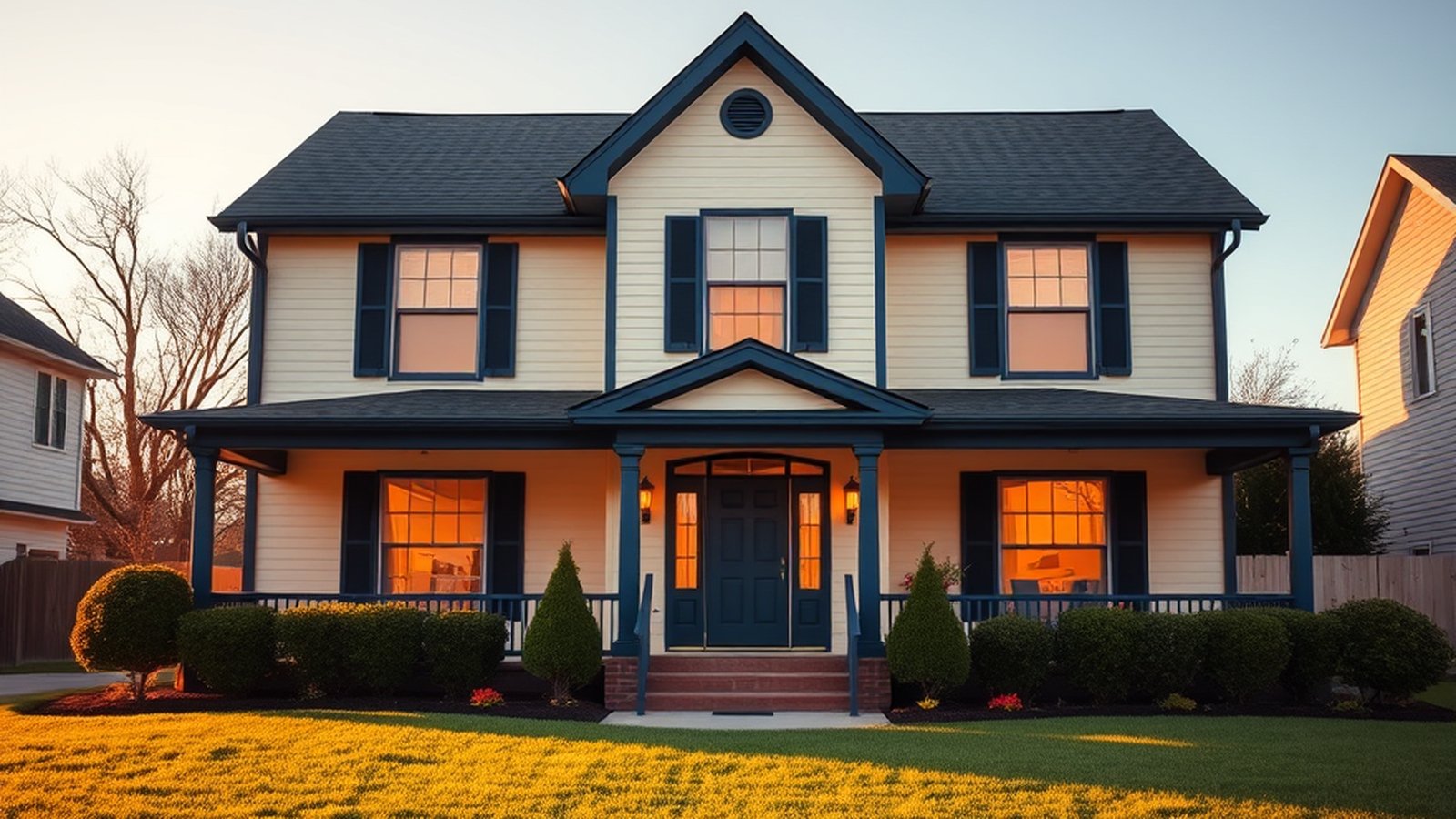
Before we get to the filled-out sample, let’s break down the eight sections every exterior estimate needs. Missing any of these is how you end up with scope creep, unpaid change orders, or customers who ghost after the job because “they didn’t realize that wasn’t included.”
Header – Company Information
Your company name, address, phone, email, website, license number, and insurance carrier. This isn’t just professional courtesy – in many states, an estimate without a license number isn’t legally enforceable. Include your logo if you have one. The header builds trust before the customer reads a single line item.
Property Details
Document everything about the property: total exterior square footage, number of stories, siding type (vinyl, wood, stucco, brick, fiber cement), current condition (good, fair, poor), and any specific issues you observed during the walkthrough. This section protects you. If the customer later says “you should have noticed the rot behind the downspouts,” your property details show exactly what you inspected and what condition you documented.
Scope of Work
Spell out what IS included and what is NOT. “Paint exterior” is not a scope of work – it’s an invitation for a dispute. List every surface you’ll paint: body/siding, trim, fascia, soffit, shutters, doors, window frames, gutters. Then list what’s excluded: interior of garage, fence, deck, outbuildings, anything you walked past but aren’t touching.
Itemized Pricing Breakdown
This is the section that separates professionals from amateurs. Every line item should show: the surface or task, the quantity (sq ft, linear ft, or count), the unit price, and the extended total. We’ll show you exactly how to structure this in the sample estimate below.
Materials Specification
Name the paint brand, product line, sheen, and color for every surface. “Sherwin-Williams Duration, Satin, 2 coats, SW 7015 Repose Gray” is a materials spec. “Gray paint” is not. Specifying materials justifies your price – when a customer compares your $15K estimate to a $6K estimate, the materials spec shows why.
Timeline and Schedule
Estimated start date, estimated completion, daily working hours, and weather contingency language. Exterior work is weather-dependent, so always include a clause like: “Timeline assumes 5 consecutive working days of suitable weather (no rain, temperatures above 50F). Schedule may shift due to weather conditions.”
Terms, Payment, and Warranty
Deposit amount (typically 25-33% for exterior work), progress payment schedule if applicable, final payment terms, and your warranty. Industry standard for exterior paint with premium products is 5-7 years on labor, with the paint manufacturer’s warranty covering materials separately.
Signature Block
Acceptance signature, printed name, date, and a clear statement: “Signature authorizes work as described above and agrees to payment terms.” Without this, you have a quote – not an agreement.
Complete Sample Estimate: 2-Story Colonial, Vinyl Siding
Here’s what most template sites won’t show you – a fully filled-out exterior painting estimate with real numbers. This is for a 2,400 sq ft, 2-story colonial with vinyl siding in fair condition, located in a mid-cost U.S. market. Adjust up 15-30% for high-cost metros (Boston, SF, NYC) and down 10-20% for lower-cost markets.
ABC Professional Painting, LLC | License #PP-2024-08812 | Fully Insured
123 Main Street, Anytown, USA | (555) 867-5309 | info@abcpainting.com
Client: John & Mary Smith
Property: 456 Oak Avenue, Anytown, USA 12345
Property Type: 2-Story Colonial – Vinyl siding, wood trim, 12 shutters
Exterior Sq Ft: 2,400 (body), 480 (trim/fascia/soffit), 42 windows/doors
Current Condition: Fair – peeling on south-facing trim, minor wood rot at 2 fascia sections, chalking on siding
Estimate Date: April 16, 2026 | Valid For: 30 days
| Line Item | Quantity | Unit Price | Total |
|---|---|---|---|
| Power washing (full exterior) | 2,400 sq ft | $0.35/sq ft | $840 |
| Scraping & sanding (trim, fascia, window frames) | 480 sq ft | $3.50/sq ft | $1,680 |
| Caulking (windows, doors, trim joints) | 42 openings | $18/each | $756 |
| Wood repair/replacement (rotted trim sections) | 24 linear ft | $12/lin ft | $288 |
| Primer (bare wood & repaired areas) | 520 sq ft | $1.10/sq ft | $572 |
| Paint – Body, 2 coats (SW Duration, Satin) | 2,400 sq ft | $2.85/sq ft | $6,840 |
| Paint – Trim, 2 coats (SW Duration, Semi-Gloss) | 480 sq ft | $3.50/sq ft | $1,680 |
| Shutters (remove, paint both sides, reinstall) | 12 shutters | $45/each | $540 |
| Doors – front entry + garage service (2 coats) | 2 doors | $175/each | $350 |
| 2-Story access premium (ladder/scaffold setup) | 15% of labor | – | $1,382 |
| Masking & protection (landscaping, walkways, fixtures) | Flat fee | – | $350 |
| Cleanup & disposal | Flat fee | – | $200 |
| Subtotal | $15,478 | ||
| 10% Contingency (unforeseen repairs) | $1,548 | ||
| TOTAL ESTIMATE | $17,026 | ||
Materials: Sherwin-Williams Duration Exterior Acrylic Latex – Body: Satin, SW 7015 Repose Gray. Trim: Semi-Gloss, SW 7006 Extra White. Primer: SW PrepRite ProBlock on bare wood.
Timeline: 6-8 working days, weather permitting. Estimated start May 5, 2026.
Warranty: 5-year labor warranty on peeling, chipping, or adhesion failure. Paint manufacturer warranty applies separately.
Payment: 30% deposit ($5,108) upon acceptance. 40% at midpoint. Balance due upon completion and walkthrough.
Exclusions: Garage door (overhead), deck/porch floor, fence, interior of any surface, lead paint abatement, structural repair beyond specified trim sections.
Want to build estimates like this in minutes instead of hours? Our painting estimate calculator lets you plug in square footage, surfaces, and condition – and generates a professional line-item estimate automatically.
Exterior Surface-Type Pricing Reference
Different siding materials require different prep, different primers, and different paint products. Your per-square-foot cost varies significantly based on what you’re painting. Use this table as a baseline for your estimates – then adjust for local labor rates and current material costs.
| Surface Type | Prep Cost/sq ft | Paint Cost/sq ft | Notes |
|---|---|---|---|
| Vinyl Siding | $0.25-$0.50 | $2.00-$3.50 | Needs adhesion primer; can’t go darker than existing color without risk |
| Wood Siding | $1.50-$4.00 | $2.50-$4.50 | Most prep-intensive; scraping, sanding, priming bare spots |
| Stucco | $0.50-$1.50 | $2.50-$5.00 | Elastomeric paint recommended; textured surface uses 20-30% more paint |
| Brick | $0.30-$0.75 | $2.00-$3.50 | Requires masonry primer; once painted, must maintain indefinitely |
| Aluminum Siding | $0.25-$0.75 | $2.00-$3.00 | Degloss chalked surface before painting; DTM primer if oxidized |
| Fiber Cement (Hardie) | $0.25-$0.50 | $2.00-$3.50 | Best ROI surface; low prep, holds paint well, 10-15 year repaint cycle |
These are total installed costs including labor and materials for a mid-range U.S. market. Prep costs are separate from paint costs – add them together for your all-in per-square-foot rate. For wood siding in poor condition, your combined cost could hit $8.50/sq ft or more once you factor in full scraping and spot priming.
Multi-Story Pricing Multipliers
One of the biggest gaps in online estimate templates is how to price multi-story work. A 2-story house isn’t just twice the paint – it’s the ladders, the scaffolding, the slower pace, and the safety overhead. Here’s how to adjust your base rates by building type.
| Building Type | Premium Over Base Rate | Why |
|---|---|---|
| 1-Story Ranch | Base rate (no premium) | All work reachable from ground or step ladder |
| 2-Story | +15-25% | Extension ladders required; slower setup/teardown each section |
| 3-Story | +25-40% | Scaffolding required (rental cost $500-$1,500+); OSHA safety compliance |
| Split-Level | +10-15% | Mixed heights; awkward transitions between levels |
| Victorian / Ornate Trim | +20-35% | Gingerbread, corbels, detailed millwork all require brush work at height |
Apply the premium to your labor costs, not materials. Paint costs the same whether you’re on the ground or on scaffolding – it’s the labor hours that increase. In the sample estimate above, the 15% 2-story premium ($1,382) is calculated against the labor portion of the job, not the full subtotal.
What Separates a $5K Estimate from a $15K Estimate
Homeowners regularly get exterior painting bids that range from $5,000 to $20,000 for the same house. And painters regularly lose jobs to lowball bids they can’t understand. Here’s what actually drives that range – and how your estimate template should address each factor.
Scope Detail
A $5K estimate says “paint exterior of home.” A $15K estimate has 12 line items with quantities, unit prices, and extended totals. The detailed estimate takes longer to produce, but it wins more jobs at higher prices because the customer can see exactly what they’re paying for. Vague estimates invite comparison shopping on price alone. Detailed estimates shift the comparison to value.
Paint Quality
Contractor-grade paint runs $25-$35/gallon. Premium exterior paint (Duration, Regal Select, Aura) runs $55-$80/gallon. On a 2,400 sq ft home needing roughly 12-15 gallons for body and 4-5 gallons for trim, that’s a material difference of $500-$800. But the real difference is longevity – contractor grade lasts 3-5 years, premium lasts 8-12. Your estimate template should name the exact product so customers understand the value gap.
Prep Depth
This is the single biggest variable. A light pressure wash and one coat over existing paint might take 2 days. Full scraping, sanding, caulking, priming bare spots, and wood repair might take 4-5 days of prep before you open a single can of finish paint. Prep is 60-70% of the labor on exterior work – and it’s where the $5K estimate cuts corners.
Warranty
No warranty = no accountability. A 5-7 year warranty means the painter is confident in their prep, their products, and their application. It also means they’ve priced the job to cover a potential callback. Your estimate should clearly state the warranty period and what it covers.
Insurance and Licensing
The $5K bid might be from someone without general liability insurance, workers’ comp, or a contractor’s license. That’s not a savings – that’s a liability transfer to the homeowner. Your estimate should display your license number and insurance status prominently. It justifies your price and filters out customers who only want the cheapest option.
5 Exterior Estimate Mistakes That Cost Painters Money
Even experienced painters make these errors on exterior estimates. Each one can turn a profitable job into a break-even job – or worse.
Mistake #1: Not subtracting windows and doors from wall area. A 2,400 sq ft exterior might have 300-500 sq ft of windows and doors. If you’re charging $2.85/sq ft for body paint, that’s $855-$1,425 in phantom square footage. Measure the openings and subtract them from body area. (You’ll price the trim around them separately anyway.)
Mistake #2: Underestimating prep on old paint. “It looks okay from the driveway” is not an assessment. Get up close. Check the south and west faces where sun damage is worst. Poke trim with an awl to check for rot. If a home was last painted 10+ years ago with builder-grade paint, assume heavy prep and price accordingly. You can always credit unused contingency – you can’t easily bill for prep you didn’t expect.
Mistake #3: Forgetting weather contingency days. Exterior painting requires dry conditions, temps above 50F (for most paints), and low humidity. If your estimate is based on 6 working days and it rains 3 of those, you just doubled your labor timeline while your crew sits idle. Build 1-2 buffer days into your schedule and note it in the estimate.
Mistake #4: Not specifying number of coats. “Paint exterior” could mean 1 coat or 3. A single coat over a dark color changing to light is going to look terrible. Your estimate must state “2 coats minimum” for body and trim, and note that dramatic color changes may require a tinted primer plus 2 finish coats (3 total passes). Specify it upfront so there’s no argument about coverage on day 5.
Mistake #5: Missing the soffit and fascia. Painters scope the walls and trim, then forget that the soffit (the underside of the roof overhang) and fascia (the board the gutters mount to) are both paintable surfaces. On a 2,400 sq ft colonial, the soffit alone might be 400+ sq ft. At $2.50/sq ft, that’s $1,000 you left off the estimate.
For a deeper dive into writing estimates that avoid these traps, see our guide on how to write a painting estimate – it covers both interior and exterior with examples of language that protects you legally.
How to Use This Template for Your Business
You can copy the structure of the sample estimate above into whatever format you prefer – Word, Google Docs, Excel, or dedicated estimating software. Here’s how to adapt it to your specific jobs:
- Walk the property first. Never estimate from photos or Google Earth alone. You need to see the condition of every surface, check for rot, assess paint adhesion, and note access issues (steep grades, landscaping in the way, overhead power lines near the house).
- Measure everything. Use a laser measure for wall heights and lengths. Count windows, doors, and shutters. Measure trim runs in linear feet. Record the measurements on a property sketch – this becomes part of your estimate file.
- Adjust the line items. Not every job needs wood repair or shutter removal. Delete what doesn’t apply and add what does (gutter painting, downspout painting, chimney painting, etc.). The sample estimate is a starting framework, not a rigid form.
- Use your local rates. The per-unit prices in this template are mid-market averages. If you’re in San Francisco, bump everything 25-35%. If you’re in a rural southern market, you might be 10-20% below these numbers. Know your local labor rate and adjust.
- Present it professionally. Print it clean or send it as a PDF. Include your logo, license number, and insurance info. A polished estimate at $15K beats a scribbled one at $12K because the customer trusts that you’ll deliver quality work.
Building an exterior template? Our free calculator does the line-item math for you – prep, labor, paint, profit included.
Best Software for Exterior Painting Estimates
If you’re doing more than 2-3 exterior estimates per week, a spreadsheet template won’t scale. Dedicated estimating software lets you save material presets, apply multi-story multipliers automatically, and send professional PDFs from your phone while you’re still in the customer’s driveway.
We reviewed the top options in our best painting estimate apps and software guide. The short version: for solo painters, a good spreadsheet template or PaintPricing’s calculator covers most needs. For crews doing 10+ estimates per month, dedicated software pays for itself in time saved and jobs won.
Exterior Painting Estimate Template: What Makes It Actually Win Jobs
An exterior template is different from interior – the homeowner is risking the curb appeal of their biggest asset. Detail earns trust. Here’s every section a 2026 exterior estimate needs, plus the numbers that separate a $3,000 quote from a $7,000 one for the same house.
Exterior template section checklist
| Section | Why exterior needs it (vs interior) |
|---|---|
| Substrate diagnosis | Cedar vs stucco vs T1-11 vs Hardie all prep differently – name it |
| Power-wash scope | “Soft wash” vs “pressure wash” matters; homeowners have seen YouTube damage stories |
| Scrape & prime % | State the percent of siding getting re-primed (e.g., “~15% scrape & spot prime”) |
| Caulk line items | Window/door/trim caulking is 30% of an exterior’s longevity; spell it out |
| Lead-safe (RRP) clause | Required on pre-1978 homes; cite your EPA cert # – instant credibility |
| Paint brand + line + mil | “2 coats of Duration at 4 mil wet” vs “2 coats of paint” looks completely different |
| Weather contingency | Rain-delay clause – protects you, looks professional |
| Ladder/lift equipment | Lists tallest ladder + lift rental if needed – justifies the “2-story premium” |
2026 per-sqft exterior pricing by substrate
| Substrate | Low-end ($/sqft wall) | Mid-range ($/sqft wall) | Premium ($/sqft wall) |
|---|---|---|---|
| Smooth lap siding / Hardie | $1.60 | $2.40 | $3.60 |
| Cedar shakes (rough) | $2.20 | $3.10 | $4.80 |
| Stucco | $1.80 | $2.60 | $4.00 |
| Brick (first paint) | $3.20 | $4.50 | $6.40 |
| T1-11 plywood | $1.90 | $2.80 | $4.20 |
Worked example: same 2,000 sqft ranch, three templates
Generic template: “Paint exterior of house – $4,000.” Loses to anyone who writes two sentences.
Basic template: “Paint 2,000 sqft exterior, 2 coats, Behr Marquee. Prep included. $5,200.” Wins against generic but loses to detail.
Winning template: “2,000 sqft Hardie lap siding exterior. Soft-wash at 500 psi. Scrape/sand ~12% of surface showing wear, caulk all trim seams, spot-prime bare areas with BIN primer. 2 coats SW Duration satin (color TBD) at 4 mil wet thickness. 240 LF trim/fascia brushed. 3 doors, 11 windows. 2-story with 24ft extension ladder. 2-year workmanship warranty. Rain-delay clause attached. Total: $6,400.“
The winning template closes at 40%+ vs 15% for the basic, even at a higher price.
Pitfall: no “color TBD” line. Homeowners change colors 2-3 times before starting. Without a “color selection due 7 days before start” clause, you’ll eat the 2-week delay.
Pitfall: omitting deck/rail scope. 60% of exterior disputes are about “I thought the deck was included.” Spell it out: “Deck, railings, and detached structures not included unless listed above.”
Sources & references
Pricing ranges, labor benchmarks and coverage claims on this page are informed by the following sources.
Frequently asked questions
How much does it cost to paint the exterior of a 2,000 sq ft house?
For a single-story home with siding in fair condition, expect $8,000-$14,000 for a full exterior repaint with premium paint and proper prep. A 2-story home of the same square footage will run 15-25% more due to ladder and scaffold access. The biggest variable isn’t the size of the house – it’s the condition of the existing paint and how much prep work is needed. A home with minimal peeling and intact caulk might come in at $8,000. The same home with heavy scraping, wood rot repair, and full re-caulking pushes toward $14,000+.
Should I include a contingency on my exterior painting estimate?
Yes. A 10% contingency is standard for exterior work. Unlike interior jobs where you can see everything during the walkthrough, exteriors hide problems – rot behind downspouts, failed caulk under trim caps, substrate damage under peeling paint. The contingency covers these discoveries without requiring an awkward mid-job conversation about extra charges. If you don’t need it, credit it back. Customers appreciate the transparency and the refund.
How do I estimate exterior painting for a surface I’ve never worked with before?
Use the surface-type pricing table above as a starting point, then add a buffer. If you’ve never painted stucco, for example, factor in that textured surfaces consume 20-30% more paint than smooth surfaces and require elastomeric products that cost more per gallon. Talk to your paint supplier about recommended products and coverage rates for the surface. And on your first job with an unfamiliar surface, err on the side of higher pricing – you can always come down on the next one once you know your actual production rate.
What’s the difference between an estimate, a quote, and a bid for exterior painting?
In practice, these terms are used interchangeably in residential painting. Technically, an estimate is an approximation that can change if conditions differ from what was observed. A quote is a fixed price for a defined scope. A bid is a competitive offer, typically in response to a formal request (more common in commercial work). For residential exterior painting, most customers expect a quote – a fixed number they can accept or decline. Your estimate template should include language like “final price based on conditions as observed during site visit” to protect you if hidden problems emerge during the job.
How long is an exterior painting estimate valid?
Industry standard is 30 days. Material prices fluctuate (paint prices rose 15-20% between 2021 and 2023 and have stayed elevated), labor availability changes seasonally, and the property’s condition can worsen between your walkthrough and the start date. Always include an expiration date on your estimate. If a customer comes back 3 months later to accept, re-inspect the property before honoring the original price – that “fair condition” trim might be in poor condition now.
A template is a starting point. This does the work.
PaintPricing produces an itemized, branded estimate you can send from your phone, without rebuilding the spreadsheet for every job. Free for your first 3 quotes, no card required.