In this article
- What drives how much paint a home office needs
- How to measure the paintable area
- Real coverage math
- How many coats you actually need
- A worked example for a real home office
- Do not forget primer, trim, and ceiling
- Buy about 10 percent extra
- Tying paint quantity to cost
- Common mistakes that waste home office paint
- A quick formula you can reuse
- How office layout changes the totals
- Frequently asked questions
Quick answer: A home office is usually a converted bedroom size room, around 11 by 12 feet with 8 foot walls. That gives roughly 320 to 360 square feet of paintable wall after openings. That is about 1 gallon for a single coat and about 2 gallons for two coats. Add the ceiling and you need roughly 1 more half gallon. So most home offices land at about 2 to 2.5 gallons for walls and ceiling in two coats.
To tailor the numbers to your exact room and finish, run them through the paint cost calculator or grab a free painting estimate before you buy.
What drives how much paint a home office needs
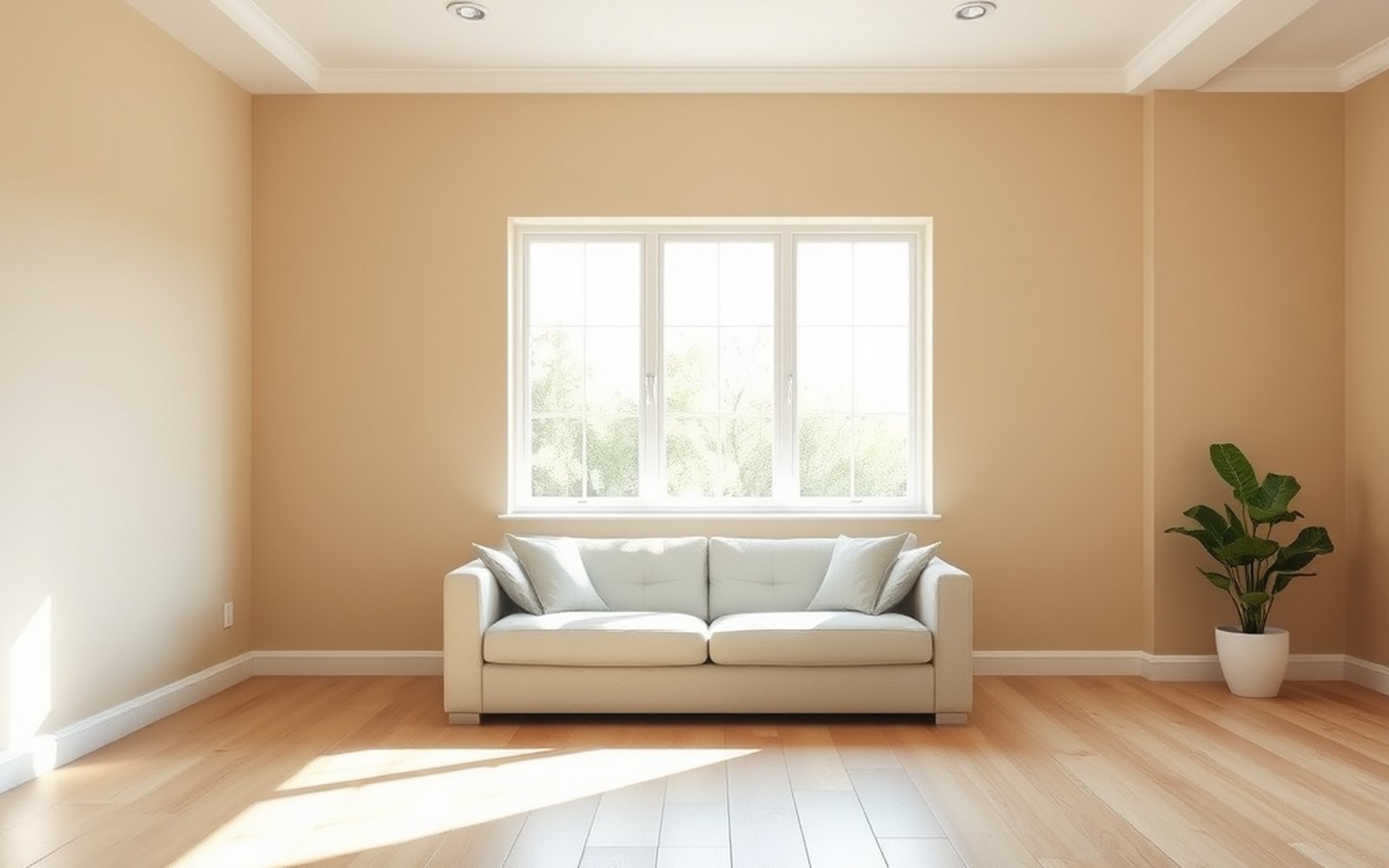
It is a straightforward rectangular room. Most home offices started life as a spare bedroom, so they are simple rectangles with one or two windows, a closet, and a single door. That makes the paint math clean: this is the most predictable room type in the quantity series.
Accent walls and built ins are common. Offices frequently get one accent or feature wall behind the desk for video calls, which means a second color in a smaller quantity. Built in shelving or a wall of cabinets reduces paintable wall but adds fiddly cut in around the units. Either way, the headline gallon count stays moderate.
Color depth and texture adjust the count. A deep, saturated accent color can need an extra coat, and lightly textured walls cut your coverage. A bright office with large windows tends to show wall imperfections, which nudges most people toward a clean two coats.
How to measure the paintable area
Walls first. Add the length of all four walls for the perimeter, then multiply by the wall height. An 11 by 12 office has a perimeter of 11 plus 12 plus 11 plus 12, which is 46 feet. At 8 feet tall that is 368 square feet of gross wall.
Subtract the openings. Remove the door at about 21 square feet, the windows at about 15 square feet each, and the closet opening if it is open faced. An office with one door and two windows loses about 51 square feet, leaving roughly 315 square feet of paintable wall. If a wall is covered by built in shelving, subtract that area too.
Ceiling separately. Ceiling is length times width. An 11 by 12 ceiling is 132 square feet, which is just under a half gallon for two coats. Keep it on its own line.
Trim by linear feet. Measure baseboard around the room plus the door and window casings. A standard office uses about 1 quart of trim enamel for two coats. Built ins add casing and shelf edges that take a little more.
Real coverage math
A gallon covers about 350 square feet on smooth, primed drywall in a single coat. That is the baseline anchor in our how much does a gallon of paint cover guide, and it is where you should start before adjusting.
Real coverage usually runs lower. On lightly textured walls expect closer to 300 square feet per gallon, less on heavy texture or bare drywall, and less again when an accent color goes dark over light. A bold feature color can drop first coat coverage to 250 square feet per gallon.
Divide, then multiply by coats. Take your paintable square footage, divide by your realistic coverage rate, and multiply by coats. For 315 square feet at 300 per gallon over two coats, that is 315 divided by 300 times 2, which is 2.1 gallons. Round up to 3, or buy 2 plus a quart if you want to trim it close.
How many coats you actually need
Two coats is the standard for an office. Because offices have good window light and you stare at the walls all day on calls and at the desk, an uneven single coat is obvious. Two coats give the even, professional finish the room deserves.
Prime for big color changes or bare walls. A tinted primer under a deep accent color can save a finish coat, and priming bare or heavily patched drywall prevents flashing. Our how many coats of paint do I need guide covers the cases where one coat is genuinely enough versus when two or three is the right call.
A worked example for a real home office
Take an 11 by 12 converted bedroom office with 8 foot ceilings, one door, two windows, and a single accent wall behind the desk. Here is the arithmetic.
Gross wall: perimeter is 11 plus 12 plus 11 plus 12, which is 46 feet. Times 8 feet tall equals 368 square feet.
Subtract openings: one door at 21 and two windows at 15 each for 30, totals 51 square feet removed. That leaves 317 square feet of paintable wall.
Split for the accent wall: the accent wall is one 12 foot wall at 8 feet tall, about 96 square feet, painted in the feature color. That leaves 221 square feet in the main wall color.
Now the gallons: the main color covers 221 square feet over two coats, which is 442 square feet of paint, or about 1.5 gallons at 300 per gallon. Buy 2 gallons of the main color. The accent wall at 96 square feet over two coats is 192 square feet, under 1 gallon, but a deep accent color may want a third coat or a tinted primer, so buy 1 gallon of the accent color.
Ceiling: 11 times 12 is 132 square feet. Two coats is 264 square feet, just under 1 gallon, so 1 quart to a half gallon of ceiling paint covers it.
Total: about 2 gallons main wall color, 1 gallon accent color, roughly a half gallon of ceiling paint, and 1 quart of trim enamel. In a single color scheme without the accent wall, the same office is simply about 2 gallons of wall paint plus a half gallon of ceiling paint.
Do not forget primer, trim, and ceiling
Primer is a separate line. If the office walls are bare drywall, freshly patched, or going dark to light, plan about 1 gallon of primer, which covers a similar 350 square feet. Our how much primer do I need guide explains when you can skip it and when it saves you a finish coat.
Trim uses its own enamel. Baseboard, door casing, and window casing in a standard office take about 1 quart of trim paint for two coats. Built in shelving or a cabinet wall adds edges and casing, so budget a little extra if your office has them.
The ceiling uses ceiling paint. Keep its quart or half gallon on a separate line so it does not get blended into your wall gallons and leave you short.
Buy about 10 percent extra
Add roughly 10 percent to your computed gallons. Coverage varies, the tray and roller hold paint, and you want a touch up reserve for the inevitable desk and chair scuffs along the baseboard. If the math says 1.8 gallons, buy 2. If it says 2.1, buy 3 rather than gambling on a partial can and a dye lot mismatch.
Label the leftover. Write the room and color on the lid. An office accent wall is the hardest color to match later, so a clearly labeled can saves you when you patch a shelf anchor hole.
Tying paint quantity to cost
Gallons set your materials floor. Multiply your wall gallons by paint price, then add the ceiling paint, primer, and trim enamel. Labor is usually the larger share of a finished quote, but knowing you need about 2 to 3 gallons fixes the bottom of your budget. For the full materials plus labor breakdown, see our cost to paint a home office guide, and if you are scheduling the work around your meetings, our how long it takes to paint a home office piece helps you plan the day.
Sizing the rest of the house uses the same method. Our how much paint for a room hub collects the per room quantity guides so you can total a whole floor with the same perimeter times height approach.
Common mistakes that waste home office paint
Forgetting it used to be a bedroom. Because a home office is usually a converted spare room, people sometimes guess at quantities from memory of how the room felt as a bedroom rather than measuring. Measure it fresh as perimeter times height, and the number will be reliable since the shape is simple.
Underbuying the accent color. The feature wall behind the desk is the hardest color to match if you run short, and deep accent shades often need a third coat. Buy a full gallon of the accent color even if the math says you only need a partial. The leftover is your touch up reserve.
Painting around built ins instead of subtracting them. A wall of shelving reduces paintable area, so you buy a little less wall paint, but the edges and casing eat trim enamel and cut in time. Subtract the covered wall, then add to the trim budget rather than ignoring the shelves entirely.
Skipping the ceiling line. An office ceiling is small, so people fold it into the wall total and end up short on one or the other. Keep the ceiling on its own line with its own ceiling paint, even though it is only a quart or so.
A quick formula you can reuse
The whole method in one line. Gallons equals perimeter times height, minus openings, divided by 300 to 350, times coats, then add 10 percent. The office is the cleanest room to apply this to because it is a simple rectangle with predictable openings.
Worked the fast way: an 11 by 12 office is 46 feet of perimeter times 8 feet, which is 368. Minus about 50 for one door and two windows is 318. Divided by 325 is just under 1 gallon per coat. Times 2 coats is about 2 gallons. Plus 10 percent rounds to a clean 2 to 3 gallon buy, before splitting out the accent color.
Save the measurements. With perimeter, height, and opening counts written down, you can rerun the math for any accent wall plan or color change, and hand the same figures to the calculator for a fast materials number.
How office layout changes the totals
A larger office or a former primary bedroom uses more. If your office is a 13 by 15 former primary bedroom rather than an 11 by 12 spare room, the perimeter grows and so do the gallons. The same formula applies, you just plug in the bigger perimeter, and the answer climbs toward 3 gallons of wall paint for two coats.
A shared or combined office adds wall. Offices that double as a guest room or sit in a combined den often have more wall sections and sometimes a higher ceiling. Measure each wall section, including any half walls or knee walls, so a combined layout does not leave you short.
A wall of windows cuts the total. Some offices are chosen for their light and have large or multiple windows. Each window you subtract reduces paintable wall, so a bright office can need a little less wall paint than its footprint suggests. Subtract every window accurately rather than rounding past them.
Frequently asked questions
How many gallons of paint for a home office?
A bedroom size home office needs about 2 gallons of wall paint for two coats, plus a half gallon of ceiling paint and a quart of trim enamel. Adding a separate accent wall color means buying 1 more gallon for that feature color.
How much paint for a home office accent wall?
A single accent wall is usually 90 to 110 square feet. Two coats is under 1 gallon, but deep feature colors often need an extra coat or a tinted primer, so buy a full gallon of the accent color to avoid running short on the hardest shade to match.
Do built in shelves change how much paint I need?
Built ins reduce paintable wall area, so you buy a little less wall paint, but they add casing and shelf edges that take more cut in and a bit more trim enamel. Subtract the covered wall area, then add a small amount to your trim budget.
Do I need primer in a home office?
Prime when the walls are bare drywall, freshly patched, stained, or going from a dark color to a lighter one. In those cases plan about 1 gallon of primer. Repainting a similar color over a sound finish usually lets you skip it.
How much ceiling paint for a home office?
Multiply length by width for ceiling square footage. An 11 by 12 ceiling is 132 square feet, which is just under a half gallon for two coats. Use dedicated ceiling paint for a flat, hide friendly finish rather than wall paint.
What if my office has higher ceilings?
Taller walls raise your gallons directly. Going from 8 to 9 foot ceilings adds about 12 percent to wall area, and 8 to 10 feet adds 25 percent. Recompute wall area as perimeter times the actual height before buying.