In this article
About the cost figures on this page
Any cost ranges shown here are illustrative estimates, not a quote. What you actually pay varies widely with your location and local labour rates, the size and condition of the surfaces, access and setup, the products specified, how much prep the job needs, and the time of year. Use these numbers to sanity check a quote you have been given and to understand what drives the total, then get written quotes from local contractors before you budget. You can also build an estimate around your own project with the free calculator.
Quick answer: Most painters charge $150 to $600 to paint a front door, with a simple single-face refresh running $100 to $250. The price is driven by door material, whether you coat one face or both, how much prep the old finish needs, and whether you remove the door to spray it. Because a front door is a small, high-visibility job where prep and drying eat the whole day, you should price it as a job minimum, not by the hour.
This guide is for the painter setting the price. A front door is the trickiest small job in exterior painting because customers see it up close every single day, so the finish has to be perfect, yet the area is tiny. That combination is exactly why hourly pricing fails here and a job minimum wins. To turn the scope into a number, use the painting estimate calculator, or present it inside a tidy free painting estimate with the rest of the entry. The sections below show how to price a door so the detail pays.
How much to charge to paint a front door
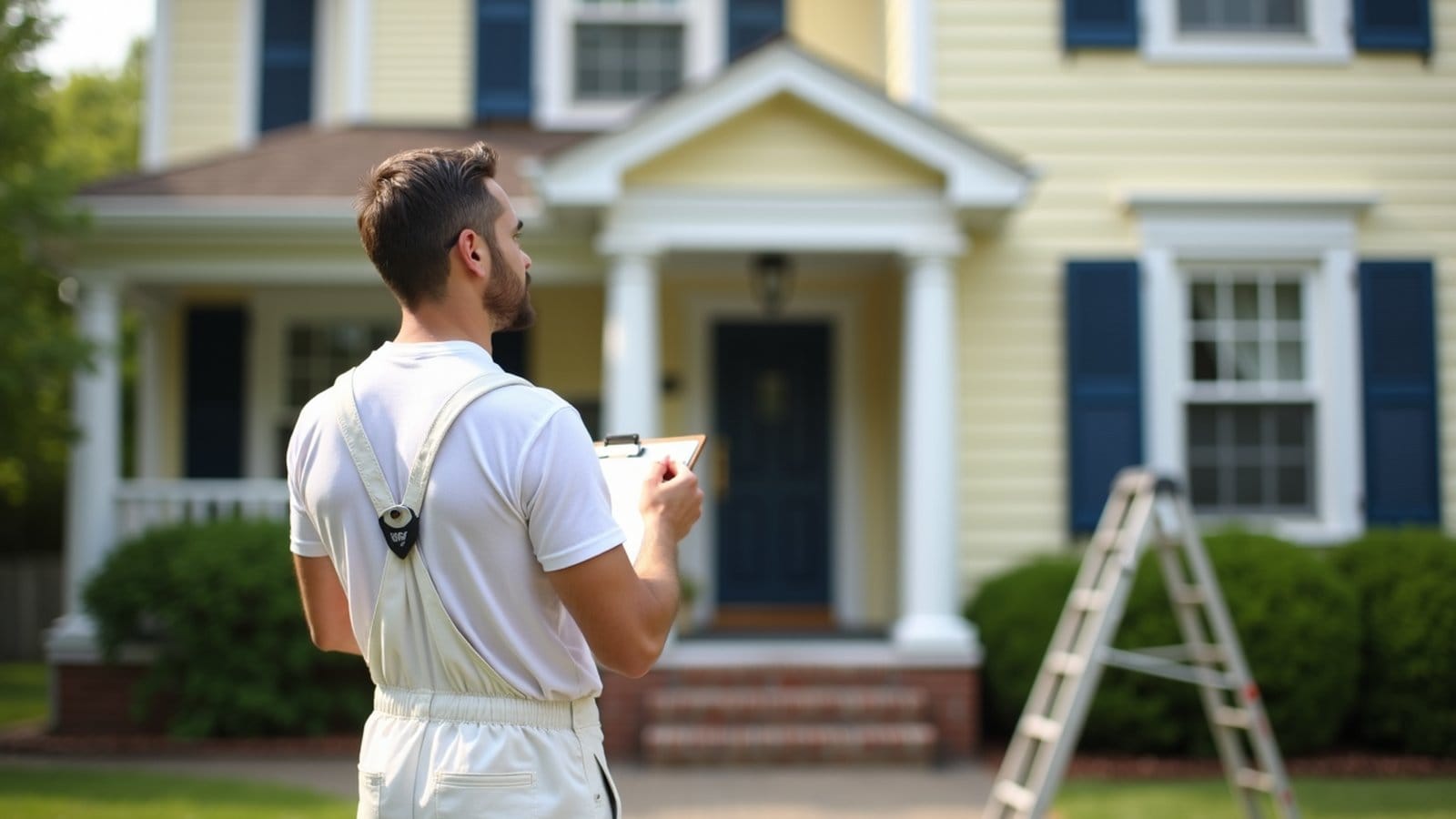
A front door is priced as a flat job, not per square foot, because the area is too small for a per-foot rate to mean anything. Here is the range painters are quoting in 2026, set by material, faces, and prep.
| Door job | Flat price range | Notes |
|---|---|---|
| Single-face refresh, good condition | $100 to $250 | One coat or two, light prep, in place |
| Both faces, standard prep | $200 to $400 | Inside and out, sand, prime spots, two coats |
| Full repaint, removed and sprayed | $350 to $600 | Door off, strip or sand, prime, durable enamel |
| Job minimum (any door) | $150 floor | Setup and drying eat the day regardless |
Those numbers are for the door itself. Add the frame, jamb, and trim and the price climbs, because that is more cut-in and more masking. The job minimum is the key line: even the simplest door ties up your morning with prep and your afternoon with drying, so never quote below your floor. For where the door fits in the entry and the wider exterior, see how much to charge to paint a house exterior.
Three ways to price it
There are three ways to price a front door, and for once the best choice is clear.
- Per square foot. This is the wrong tool for a door. A standard door is around 20 square feet, so even a rich per-foot rate produces a number far below what the careful prep and drying actually cost. Per-foot pricing only makes sense on large surfaces, as covered in how to price painting jobs per square foot, not on a single door.
- Per hour. Hourly seems fair but punishes you here, because the door has long stretches of unbillable drying time between coats. You cannot charge the customer for the two hours a coat needs to dry, yet that time blocks your schedule. Hourly on a door undercounts the real cost of owning the day.
- Flat-rate job minimum. This is the right method. You set a floor price that reflects the reality that prep, two coats, and drying tie up your day no matter how small the door is. You present one clean number, and it protects you from the drying downtime that hourly and per-foot both ignore.
For a front door, always price a flat-rate job with a minimum floor. It is the only method that accounts for the dead time between coats, which is the defining cost of door work.
The bottom-up formula
Even a single door deserves a built-up price, because the overhead and the drying time are large relative to the area. Stack the pieces.
- Labor. Estimate the hands-on hours: remove and rehang if you take the door down, sand, clean, prime bare spots, mask hardware or remove it, and apply two coats. The hands-on time is modest, but it is spread across a whole day because of drying.
- Materials. A quart or two of premium exterior enamel, primer, sandpaper, and masking. Durable door enamel costs more per quart than wall paint because it has to survive sun, hands, and slamming.
- Markup. Add a markup on the enamel and supplies so they earn margin. Set the percentage with painting contractor markup percentage.
- Overhead. The truck, the drive, insurance, and your estimating time all apply even to a one-door job. On a small job this overhead is a large share of the price, which is why the minimum exists.
- Profit. Front doors are high-visibility, skill-intensive work, so carry a healthy profit margin. Set the target with painting business profit margin and price to hit it.
Build the door price this way and the job minimum stops feeling like a made-up number. It is simply what it costs to own a full day for a small, exacting job.
What drives the front door price up or down
A front door has its own specific cost drivers, and they all point back to why you price a minimum.
- Job minimum, not hourly. The single biggest reason to charge a minimum is drying downtime. A proper door gets two coats with a cure window between them, and the door is often unusable while it dries. That time eats the day even though your brush is idle. A job minimum captures the cost of owning the day; hourly does not.
- Door material. Wood doors take paint readily but often need sanding and may have weathered spots to prime. Fiberglass and steel doors need the right bonding primer and a careful sand or scuff so the enamel grips, and steel can flash-rust if bare spots are not primed. Material decides the prep, and prep decides the price.
- One face or both. Painting just the exterior face is the quick refresh. Doing both faces doubles the coats, the drying windows, and often means the door cannot close fully while it cures. Both faces is a meaningfully bigger job, so price it up.
- Durable enamel cost. A front door needs a hard, self-leveling exterior enamel that resists fading, handprints, and slamming. That paint costs more per quart than standard trim paint, and the customer is paying for a finish that lasts, so spec it and price it.
- Removed or in place. Taking the door off the hinges and spraying it on sawhorses gives a flawless, brush-mark-free finish, but you pay for removal, rehang, and the security gap while the door is off. Painting in place is faster to set up but slower to a perfect finish and risks drips on the threshold. Pick the method and price its labor.
- Glass, sidelights, and hardware. Doors with glass panels, decorative grilles, or sidelights add masking and cut-in time. Removing the handle and deadbolt for a clean finish adds a few minutes but saves fussy edging. Account for the detail.
A worked quote example
Walk a realistic example. A customer wants their weathered wood front door repainted on both faces, in place, with the old finish sanded smooth and a premium exterior enamel for a lasting result.
- Labor. Estimate 6 hands-on hours spread across the day: clean, sand both faces, prime bare spots, mask the glass and hardware, and apply two coats per side with drying between. At a loaded cost of $45 per hour, that is $270 in labor cost.
- Materials. Two quarts of premium exterior enamel, primer, sandpaper, and masking for about $70.
- Markup. Apply a 25 percent markup on the $70 of materials, adding about $18.
- Overhead. Allocate $90 of overhead for the truck, drive, and estimating time.
- Profit. Add a 25 percent profit target on the $448 running subtotal, about $112.
Total: $270 plus $70 plus $18 plus $90 plus $112 lands at roughly $560, near the top of the both-faces range, which fits a sanded, two-side, premium-enamel job. A simple single-face refresh in good condition, by contrast, would drop to the $150 to $250 band because the prep and the second face fall away. Either way, the number never goes below your job minimum.
Do not underbid
The front door is the classic job painters lose money on because it looks like ten minutes of work and quietly costs a day.
The first mistake is pricing by the hour. A door has two coats and a cure window, and the door is often out of service while it dries. You cannot bill the customer for the hours the coat spends drying, but that time blocks your schedule just the same. Painters who quote hourly on a door undercount the day and walk away with pocket change for a job that tied up their afternoon.
The second mistake is ignoring setup time. Loading the truck, driving, masking the glass and hardware, and laying down protection takes real time before a brush touches the door, and the same teardown follows. On a job this small, setup and teardown can be a third of the total time, and it has to be in the price.
The third mistake is skimping on the enamel to win the bid. A cheap paint on a south-facing door fades, chalks, and shows handprints within a season, and the customer who sees that door every day will call you back. Spec the durable enamel, price it, and the finish lasts.
Charge a job minimum, account for setup, and use the right paint, and a front door becomes a clean, profitable little job. For the bidding fundamentals behind the number, see how to bid a painting job, and know what homeowners expect to pay to paint a front door so your quote lands where they expect.
Bundling the door with the entry
A front door rarely needs to be a standalone trip, and it pays to avoid making it one. The job minimum exists precisely because a single-door visit carries a full setup for a tiny scope. The way to beat that math is to bundle the door with the rest of the entry or a larger exterior job, so the mobilization is already paid for and the door becomes high-margin add-on work.
When you are already on site painting the exterior or the trim, the front door is the finishing touch that makes the whole house look new, and customers say yes to it easily because the cost feels small against the larger job. Package it with the shutters, the porch, and the garage door into one tidy upgrade line, and you turn several small minimum-floor jobs into one efficient visit with shared setup. That is where the real profit on small exterior details lives. For the neighboring numbers when you build that package, see how much to charge to paint shutters and how much to charge to paint a garage door. A standalone door always carries the minimum, but a bundled door is easy money.
Ready to price your next door? Build the number in two minutes with the painting estimate calculator, or fold the door into a clean free painting estimate for the whole entry. Price a job minimum, account for drying and setup, and spec the durable enamel, and the front door pays for the day instead of costing you one.
Stop rebuilding this quote from scratch every time.
PaintPricing turns the numbers you just worked out into a clean, branded quote in minutes, so you can send it before your competitor calls back. Free for your first 3 quotes, no card required.
Frequently asked questions
How much should I charge to paint a front door?
Most painters charge $150 to $600 for a front door, with a simple single-face refresh in good condition running $100 to $250. The price depends on the door material, whether you coat one face or both, how much prep the old finish needs, and whether you remove the door to spray it. Always quote a flat job with a minimum floor rather than an hourly rate.
Why charge a job minimum instead of hourly for a door?
A front door gets two coats with a drying window between them, and the door is often out of service while it cures. You cannot bill the customer for the hours a coat spends drying, yet that time blocks your schedule for the day. A flat job minimum captures the real cost of owning the day, while hourly undercounts it and leaves you working for pocket change.
Does the door material change the price?
Yes. Wood doors take paint readily but usually need sanding and spot priming. Fiberglass and steel doors need the right bonding primer and a careful scuff so the enamel grips, and steel can flash-rust if bare spots are missed. The material decides how much prep the door needs, and prep is the biggest swing in the price.
Should I paint one face or both?
Painting only the exterior face is the quick refresh and the cheaper option. Doing both faces doubles the coats and drying windows and often means the door cannot close fully while it cures, so it ties up the entry longer. Both faces is a meaningfully larger job, so price it well above a single-face refresh.
Is it better to remove the door or paint it in place?
Removing the door and spraying it on sawhorses gives a flawless, brush-mark-free finish, but you pay for removal, rehang, and a security gap while the door is off. Painting in place is faster to set up but slower to a perfect finish and risks drips on the threshold. Choose per job and price the labor for the method you pick.
Scheduling the crew? See how long it takes to paint a front door.
Want to speed up your quotes? See painting estimate software options.