In this article
- What dryfall is and why it is specified
- Dryfall does not mean no protection
- Measuring an open ceiling
- Access and lifts
- Occupied buildings and after hours work
- Preparing the structure
- What not to paint
- Color and the finished look
- Production and the spray rig
- Air quality and the people below
- Walls, columns and the rest of the building
- Schedule risk and lift downtime
- Learning from each open ceiling
- Six lines on a dryfall bid
- Clarifications and exclusions
- Frequently asked questions
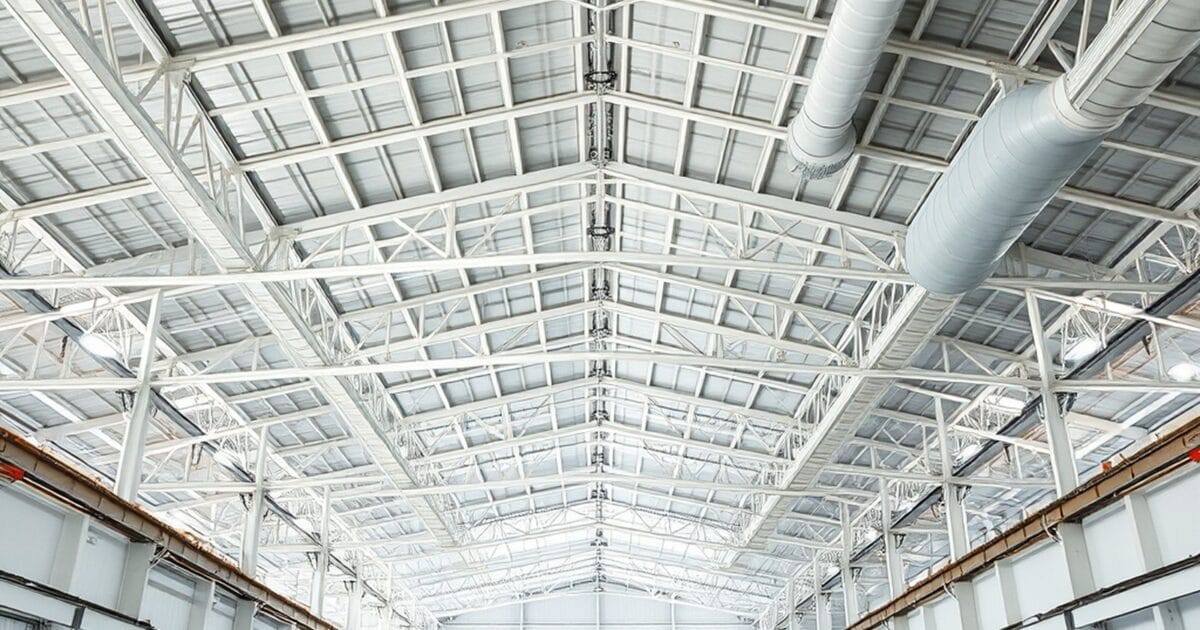
Exposed ceilings are everywhere in commercial buildings: warehouses, retail stores, gyms, offices with open structure and restaurants with ducts on show. Painting them is often done with dryfall coatings, sprayed from lifts across a ceiling full of joists, deck, ducts, conduit and pipe.
These jobs look simple on a floor plan and are anything but. The ceiling area is not the surface area, the access is expensive, and the building below is often full of stock, equipment or people. This guide covers how commercial painters price dryfall work.
What dryfall is and why it is specified
Dryfall coatings are formulated so that overspray dries as it falls, and settles as a dust that can be cleaned up rather than as wet paint that sticks. The distance the spray must fall before it is dry is stated on the product data sheet, and it varies between products and with conditions.
That property makes dryfall well suited to high ceilings with complex structure, where spraying is the only practical method and masking everything below is impossible. It is commonly specified for exposed structure in commercial and industrial buildings.
The key word is formulated. Dryfall only behaves as intended within its stated conditions. Low ceilings, high humidity, high temperatures or air movement can all change how far the overspray travels before it dries.
Dryfall does not mean no protection
The most expensive mistake in dryfall work is assuming that nothing below needs protecting. Overspray settles as dust, and that dust still lands on stock, machinery, floors and fixtures. Near the ceiling, within the stated drop distance, overspray can still be wet.
High value items, sensitive equipment, food areas and anything that cannot be cleaned easily should be covered or moved. Walls near the ceiling may need protection. Finished floors may need cleaning after the job.
Price the protection and the cleanup explicitly. A customer who expects dryfall to mean no mess will be unhappy with a dusty store, and a painter who did not price the cleanup will pay for it.
Measuring an open ceiling
The floor area is the starting point, but the painted surface of an open ceiling is much larger. Deck profiles have ribs and flutes. Joists have top chords, bottom chords and webs. Ducts, pipes, conduit, cable trays and hangers all add surface.
There are several ways to estimate the real area. Some estimators apply adjustment factors to the floor area for different structure types, based on their own past jobs. Others measure a representative bay in detail and scale it up. On large or complex jobs, the drawings can help, and the process of measuring from plans is covered in painting takeoff from plans.
Whatever method is used, it should come from your own records rather than a borrowed rule. Structures vary too much for a general figure to be reliable, and an estimate based on floor area alone will be well short.
Access and lifts
High ceilings mean lifts. Scissor lifts, boom lifts and in some cases scaffolding are needed to reach the structure. Their rental, delivery, fuel or charging, and the time to move them across the floor all belong in the price.
Floor conditions affect lift choice. Some floors cannot take the weight of certain lifts. Racking, equipment and fixed fixtures limit where lifts can go. Tight spaces slow movement.
OSHA sets requirements for aerial lifts in construction, including operator training and fall protection, and covers scaffolding on its scaffolding page. The broader pricing of access is covered in how to price access equipment for painting jobs.
Access is often one of the largest costs on a dryfall job. Price it as its own line, so the customer can see it and the estimate is not undercut by an unrealistic labor rate.
Occupied buildings and after hours work
Many dryfall jobs are in buildings that stay open. Stores, warehouses and offices cannot close for weeks, so painting happens at night, on weekends or in sections.
After hours work costs more. Crews may need premium pay, supervision is harder, and productivity can drop. Each night starts with moving stock or covering equipment and ends with cleanup so the building can open. That daily setup and cleanup can take a large share of each shift.
Working in sections means repeated setup, moving lifts, and coordinating with the building operator. Price the number of shifts and the setup for each, not just the area. Businesses that run a second crew for this kind of work often find the scheduling as demanding as the painting.
Preparing the structure
Exposed structure collects dust, grease, cobwebs and residue. In kitchens and some industrial buildings, grease and oil can be heavy. Coatings need a clean surface to bond, so the structure may need cleaning before painting.
Cleaning at height is slow, and it adds to the lift time. Rust on steel may need spot preparation and primer. Galvanized surfaces may need a specific primer. Previously painted surfaces need to be checked for adhesion and compatibility.
Specifications often state preparation requirements. Read them carefully, because they define the scope and the cost. The skill of reading them is covered in how to read painting specifications.
What not to paint
Open ceilings contain items that must not be painted. Fire sprinkler heads are the most important. A painted sprinkler head may not work as designed, and fire protection rules generally require painted heads to be replaced. Protect every head before spraying, and check the requirements with the fire protection contractor or building owner.
Other items often excluded include labels and identification on pipes and equipment, fire stopping materials, smoke detectors, lighting fixtures and moving parts. The specification or the building owner should say what is excluded, and anything unclear should be asked before pricing.
Masking these items takes time at height, and it belongs in the price. Where responsibility for items is unclear between trades, the issue is covered in painting scope gaps between trades.
Color and the finished look
Dark ceilings, often black, are popular in retail and hospitality because they make the structure recede. White and light colors are common in warehouses and industrial spaces because they reflect light.
Color affects the job. Dark colors often hide the structure but can show uneven coverage on light surfaces below. Light colors may need more coats over dark or rusty structure. Uniform coverage across complex structure takes skill, and inspection at height is harder than at eye level.
Agree how the finish will be judged: from the floor, under normal lighting, rather than close up from a lift. That prevents disputes about small misses that no one will see from below.
Production and the spray rig
Dryfall is usually applied with airless sprayers, sometimes with extension poles or from lifts. Production depends on the structure, the lift movement, the coating and the crew. A simple deck with little structure goes much faster than a ceiling crowded with ducts and pipe.
Use your own records to set production rates, adjusted for the complexity of each ceiling. The general approach to production rates is covered in painting production rates.
Plan for material waste. Spraying complex structure produces more overspray and waste than spraying flat surfaces.
Air quality and the people below
Spraying produces vapor and mist, and even dry overspray dust can be a nuisance. Workers need respiratory protection suited to the product. OSHA explains the requirements on its respiratory protection page.
In occupied buildings, ventilation and timing matter. Many operators want painting done when the building is empty and ventilated before it reopens. The EPA page on volatile organic compounds and indoor air quality is a useful reference when operators ask about odor and air quality.
Walls, columns and the rest of the building
Dryfall ceiling jobs rarely stop at the ceiling. Upper walls, columns, beams, mezzanine structures and exposed pipe drops are often in the same scope, and they may use a different coating or method. Each of these needs its own line, because production and access differ from the ceiling.
Where the walls below are to be painted too, sequence matters. Painting the ceiling first keeps overspray dust off finished walls. Where the walls are already finished, protection of the upper walls becomes part of the ceiling job.
Schedule risk and lift downtime
Large ceiling jobs depend on equipment and on access to the floor. A lift that breaks down, a delivery that arrives late or a section of floor that the operator cannot clear on the planned night all cost time. So do changes in the building schedule, such as a sale event or an inventory count.
State in the bid how such delays are handled, and build some allowance for them into the schedule. Where the operator controls access, a lost shift caused by the building should be a chargeable item rather than a cost the painter absorbs.
Learning from each open ceiling
Every dryfall job is a chance to improve the next estimate. Record the floor area, the structure type, the estimated and actual surface area, the hours per shift, the lift days, the material used and the time spent on protection and cleanup.
After a few jobs, the adjustment factors and production rates become your own, and the estimates become far more reliable. The habit of comparing estimated and actual results is described in how to track painting job costs, and the wider view of commercial bidding in how to bid commercial painting jobs.
Six lines on a dryfall bid
A dryfall estimate usually includes these lines.
Surface preparation. Cleaning and spot preparation of the structure, by area and condition.
Protection. Covering or moving stock, equipment and fixtures, and masking excluded items.
Application. By real surface area, adjusted for structure complexity and coats.
Access. Lift rental, delivery and movement.
Shift premiums. For after hours or weekend work, including daily setup and cleanup.
Final cleanup. Removing dust from floors, stock and equipment as agreed.
Commercial pricing more generally is covered in how much to charge to paint an office building, and the way owners see these costs is covered in cost to paint an office building.
Clarifications and exclusions
Dryfall bids need clear clarifications. State what is included and excluded, the assumed working hours, who moves stock, what protection is provided, how the finish will be judged and what cleanup is included.
Clarifications turn assumptions into agreements. The approach is covered in painting bid exclusions and clarifications, and it matters more on dryfall than on most jobs because so much depends on the building and its use.
Every extra service deserves its own line.
PaintPricing builds itemised estimates from your own rates, so washing, repairs, coatings and consultations sit on the quote as separate lines instead of disappearing into the paint price. Free for your first 3 quotes, no card required.
Frequently asked questions
What is dryfall paint?
A coating formulated so that overspray dries as it falls and settles as dust. It is commonly used on high, exposed ceilings where spraying is the practical method. The drop distance needed is stated on the product data sheet.
How do painters price dryfall ceiling painting?
By the real surface area of the structure rather than the floor area, with separate lines for preparation, protection, lifts, shift premiums and cleanup. Complexity of the structure has a large effect on the price.
Does dryfall mean nothing below needs to be covered?
No. Overspray still settles as dust, and near the ceiling it can still be wet. Valuable stock, equipment and sensitive areas should be covered or moved, and cleanup should be priced.
How is the surface area of an open ceiling estimated?
By adjusting the floor area for the type of structure, or by measuring a representative bay and scaling up. Base the method on your own past jobs, since structures vary widely.
Can sprinkler heads be painted?
No. Painted heads may not work properly and generally have to be replaced. Protect every head before spraying and confirm requirements with the fire protection contractor or building owner.
Why does after hours dryfall work cost more?
Premium pay, daily setup and cleanup, working in sections and coordination with the building operator all add cost. Price the number of shifts, not just the area.