
In this article
- The homeowner has a job too
- Work room by room, not in passes
- Boundaries, dust and odour
- The daily reset
- Pets, children and the things that go wrong fastest
- Scheduling around a household
- The occupied home painting checklist
- Handing back a room
- Security and trust
- Communication is part of the scope
- Frequently asked questions
Painting an empty house and painting a house somebody is living in are different jobs that happen to use the same skills. The empty one is a production problem. The occupied one is a production problem wrapped in a relationship, and the relationship is what determines whether you get paid on time, get a review, and get the exterior next year.
The general setup method is in how to set up a painting job site, which covers arrival, staging and protection for any job. What follows is what changes when the customer is still in the building, and it changes more than most painters expect.
The homeowner has a job too
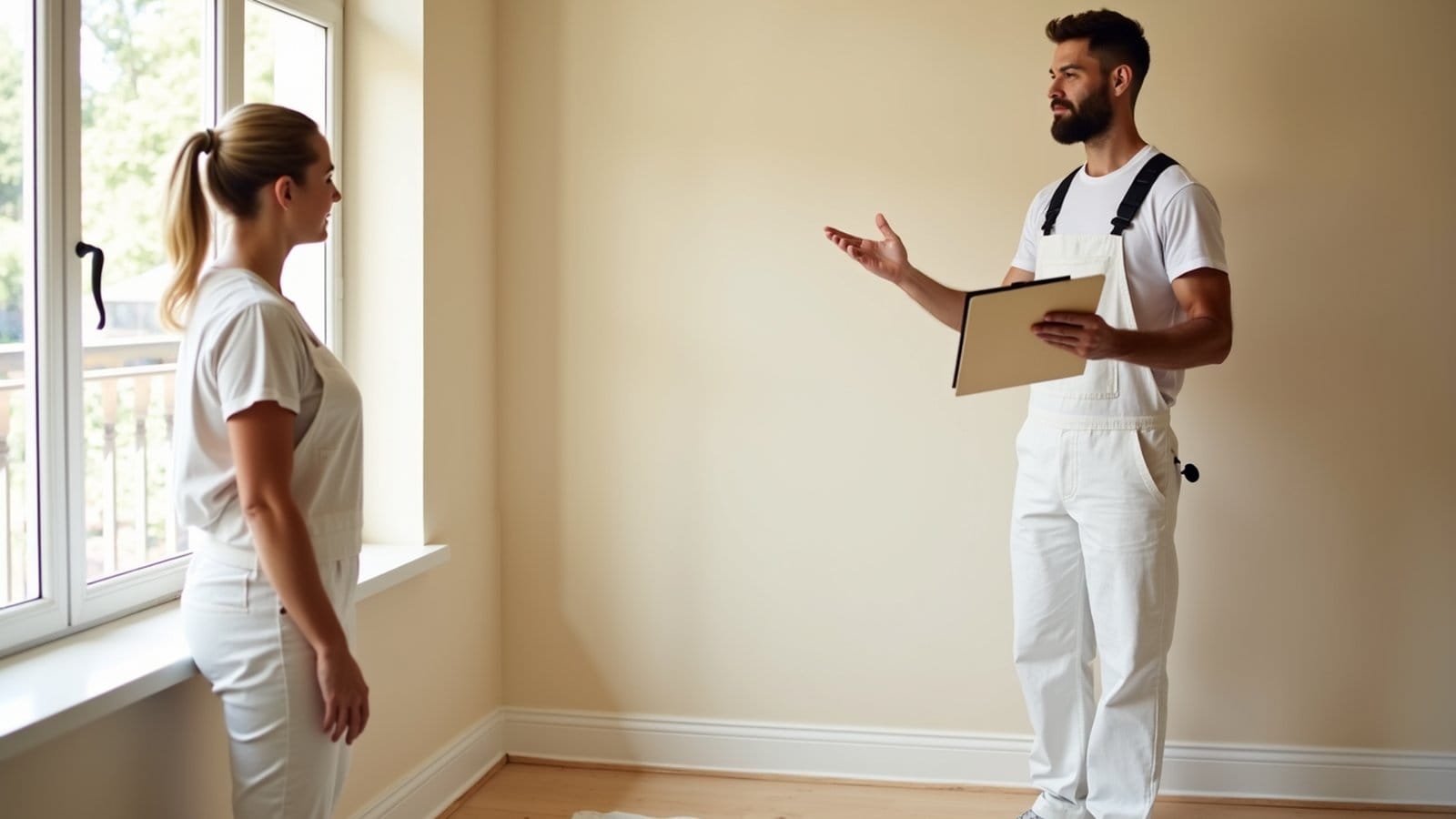
Half the friction on occupied jobs comes from an unstated division of labour. The customer assumes you will move everything. You assume they will clear the surfaces. Neither of you said so, and the disagreement surfaces on the morning with the crew standing in the hall.
Say it in writing before the start date, specifically, room by room. What they clear, what you move, what they should put somewhere safe themselves. Anything genuinely valuable or irreplaceable should be moved by its owner rather than by you, and saying that plainly is a kindness rather than a disclaimer. The homeowner side of this is set out in how to prepare your home for painters, and pointing a customer at it before the job is a five minute action that prevents an hour of confusion.
Work room by room, not in passes
On an empty house you work in passes: all the caulking, then all the priming, then all the coats. It is substantially faster.
In an occupied house it is usually the wrong choice, because it means every room in the house is mid job at once and the family has nowhere to be. Work room by room, finish what you open, and give the house back in pieces. It costs you production and it buys the thing that actually matters on this kind of job, which is a customer who does not feel besieged in their own home.
Sequence around how they live rather than around your convenience. Bedrooms first if they need somewhere to sleep. Kitchen and bathrooms in the shortest possible window, since those are the rooms a household genuinely cannot do without.
Boundaries, dust and odour
Establish a physical boundary and keep to it. One staging area, one route in and out, and protection on that route rather than only in the room being painted. Dust and traffic travel further than most crews assume, and the mark on the stair carpet three rooms away is the one that gets remembered.
Contain dust at the source. Sanding with extraction and sealing the doorway of the room being worked costs a few minutes and prevents the fine layer that appears on every surface in the house and is impossible to fully remove. Full detail on materials is in how to protect floors and furniture when painting.
Odour is the constraint people underestimate, because it decides whether the family can use the house at all. Product selection changes accordingly, and ventilation stops being optional. See how to ventilate a room while painting and, for the questions customers actually ask, are paint fumes dangerous.
The daily reset
This is the single practice that separates a good occupied job from a bad one. At the end of every day the house goes back to being a home: routes cleared, tools consolidated, the day dust vacuumed, the bathroom left usable, the kitchen accessible.
It costs perhaps twenty minutes a day. What it buys is a customer who never reaches the point of feeling that they have lost control of their own house, and that point, once reached, is very difficult to come back from regardless of how good the paint looks.
Pets, children and the things that go wrong fastest
The two worst outcomes on an occupied job have nothing to do with paint. One is an animal getting out. The other is a child getting into something.
Both are prevented by a conversation before the start rather than by care during the work. Agree who is responsible for keeping animals contained, agree that the crew will not open a gate or an external door without checking, and agree what happens on the days nobody is home. A crew carrying materials in and out through a door is not in a position to also be watching for a cat, and pretending otherwise is how it happens.
For children, the rule is physical rather than procedural. Blades, open product, solvent and anything sharp goes back in the box when the room is unattended, not left on a windowsill for the ten minutes you are having lunch. Ladders get laid down or taken out. It costs almost nothing and it removes the only genuinely serious risk on a domestic job.
Both of these belong in the written agreement rather than in a friendly reminder, because a friendly reminder is not what anyone remembers three days in.
Scheduling around a household
An occupied job has a working window that a vacant one does not, and it is set by the household rather than by daylight.
Ask directly what the constraints are before you schedule rather than discovering them. Someone working nights, a baby who naps at a fixed time, a home office with calls, a school run that blocks the driveway twice a day. None of these prevent the work and all of them change how the days are shaped.
Then build the schedule with the constraint in it rather than around the edges of it, and share the room order with the customer. A family that knows the kitchen is Thursday can plan for Thursday. A family that finds out on Thursday morning cannot, and the resulting friction gets attributed to the painting rather than to the communication. The general approach to sequencing and buffer is in how to schedule painting jobs.
The occupied home painting checklist
- Division of labour agreed in writing before the start date, room by room
- Valuables and irreplaceable items moved by the owner rather than by the crew
- Working hours agreed explicitly, including start time, finish time and weekend working
- Room sequence agreed around how the household actually lives, not around production
- Access arrangement settled: keys, codes, alarm, and who is present when
- Parking and material route agreed with the customer and with the neighbours where relevant
- One staging area established, off finished flooring and out of the household traffic route
- Traffic route protected end to end, not only the room being painted
- Doorways of active rooms sealed, and dust contained at the source with extraction
- Pets identified, and a plan agreed for doors, gates and any animal that must be kept in
- Children and their routine considered, including nap times and school run timing
- Bathroom access for the crew agreed rather than assumed
- Product selected for odour and drying time against the hours the family needs the room back
- Ventilation planned for each room in advance, including where the air is going
- Wet areas and freshly coated rooms clearly marked so nobody walks into them
- Tools, blades and open product never left accessible when the crew is out of the room
- Ladders taken down or laid down when the room is unattended
- Music, radios and phone calls kept to a level suitable for somebody else home
- Daily reset done: routes cleared, dust vacuumed, tools consolidated, bathroom left usable
- Each finished room handed back deliberately, rather than left ambiguous
- Progress and next day plan communicated to the customer at the end of every day
- Doors, windows and gates secured before leaving, and the alarm set if that is the arrangement
- Anything damaged reported the same day by the person who did it, not discovered later
Handing back a room
On a vacant job the whole house is handed back at once. On an occupied one it happens piece by piece, and each handover is a small opportunity that mostly gets wasted by being ambiguous.
Make it deliberate. Walk the finished room with the customer, in the light they will actually use it in, say what is done, say when they can put furniture back against the walls, and confirm they are happy before the crew moves on. Two minutes, and it converts a room that is merely finished into a room that is accepted.
The reason to do it room by room rather than saving it all for the end is that problems found early are cheap. A concern raised about the first bedroom can be addressed in the remaining rooms and fixed while the equipment is still in the house. The same concern raised at the final walk, after five rooms, is five rooms of rework. The full method for the final walk itself is in how to do a final walkthrough with a customer.
Security and trust
You have keys to somebody home and access to everything in it. That is a significant thing to be given and it deserves to be handled explicitly rather than casually.
Keep the crew consistent. A customer who agreed to two named painters and finds a third in their kitchen has a reasonable concern, and it costs nothing to introduce anyone new. Keep keys accounted for by name, secure the house properly when you leave, and never leave the property open because you are coming back in ten minutes.
Report damage the same day, by the person who caused it, without being asked. A scuff reported by the painter who made it is a minor event. The identical scuff discovered by the customer after you have gone is a question about what else you did not mention, and that question is far more expensive than the repair.
Communication is part of the scope
On an occupied job the customer is watching progress they do not know how to interpret. A room that looks finished to them is a room mid process to you, and a day spent on prep looks to them like a day where nothing happened.
Two minutes at the end of each day fixes it. What was done, what tomorrow looks like, anything they need to do or avoid. It converts a customer who is anxiously guessing into one who knows what is happening, and it costs less time than a single misunderstanding does. The wider approach is in how to communicate with customers during a painting job.
Handle the small requests explicitly rather than absorbing them. The extra cupboard, the touch up in the room that was not in scope, the different colour in the hallway. Each one is trivial and they accumulate into real hours, and the way to keep them from souring the relationship is to price them plainly at the time on a change order rather than doing them silently and resenting it. The alternative approach, absorbing everything, teaches the customer that scope is negotiable and makes the next request larger.
Frequently asked questions
How much slower is an occupied job?
Slower enough to price for, and the difference is mostly in the daily reset, the room by room sequencing and the interruptions rather than in the painting itself. Record the hours on a few and you will have your own figure rather than a guess.
Should I charge more for occupied homes?
You should price them differently, since they take longer for structural reasons rather than because of anything avoidable. Presenting that as a different scope rather than a surcharge is both more accurate and easier to explain.
What about pets?
Agree the arrangement before the start, in writing, and be specific about doors and gates. An escaped animal is the worst possible outcome on an otherwise perfect job and it is entirely preventable with one conversation.
Can the family stay in a room being painted?
No, and it is better to say so clearly at the start than to negotiate it daily. Give them a schedule showing when each room comes back, which turns a restriction into a plan.
How do I handle a customer who follows the crew around?
Usually with more information rather than less, since it is normally anxiety about an unfamiliar process. A clear end of day update most often resolves it within a couple of days.
What if they ask for changes mid job?
Welcome them and write them up. A change captured at the time is additional revenue and a satisfied customer, while the same change absorbed quietly is unpaid work and a precedent.
The commercial version of the same problem is a building that never closes. See hotel painting projects for working floor by floor around paying guests, night work in public areas, and pricing when the real constraint is a room that stops earning the moment you walk into it.
Working around a household changes how contents are handled and how long it takes. How to put furniture moving on the estimate, and what not to move, is covered in how to charge for moving furniture when painting.