In this article
- A home first and a building second
- Corridors carry the daily traffic
- Handrails, contrast and the way residents see
- Memory care is a different job
- Apartments, move outs and the turnover rhythm
- Occupied apartments are the hardest room in the building
- Odor, noise and the residents who stay all day
- Falls, trip hazards and the work zone
- Crews who are good with people
- Families, staff and the operator who pays
- Building the senior living price
- Is senior living worth chasing
- Frequently asked questions
- How is senior living painting different from apartment painting?
- Can handrails be painted while residents use the corridor?
- Should memory care floors be priced separately?
- Who decides the colors in a senior living community?
- How do I price move out painting in senior living?
- What causes the most complaints on senior living jobs?
Senior living communities combine two kinds of work painters already know. The common areas look like a hotel: corridors, dining rooms, lobbies and activity spaces that have to look good every day. The apartments look like residential work: individual homes with their own furniture, their own routines and their own occupants. What makes the segment different is who those occupants are.
Residents in independent living, assisted living and memory care communities live in the building full time. Many have limited mobility, some have health conditions that make fumes and noise harder to tolerate, and some are living with dementia. Their families are watching, and the operator is responsible for all of them. This guide explains how that changes the scope, the schedule and the price.
A home first and a building second
The most useful mindset for senior living work is that the painter is working inside somebody else home. A corridor is not a commercial corridor. It is the route a resident walks to breakfast, often slowly, often with a walker, often at the same time every day.
That shapes everything. Work zones must leave a safe path. Equipment cannot be left where someone might lean on it. Wet paint signs must be clear and placed where people actually look. Crews must be patient with residents who stop to talk, ask questions or wander into the work area. None of this appears on a drawing, and all of it slows production.
The general rules for painting in occupied homes are covered in the occupied home painting checklist. Senior living takes each of them and adds a layer of care.
Corridors carry the daily traffic
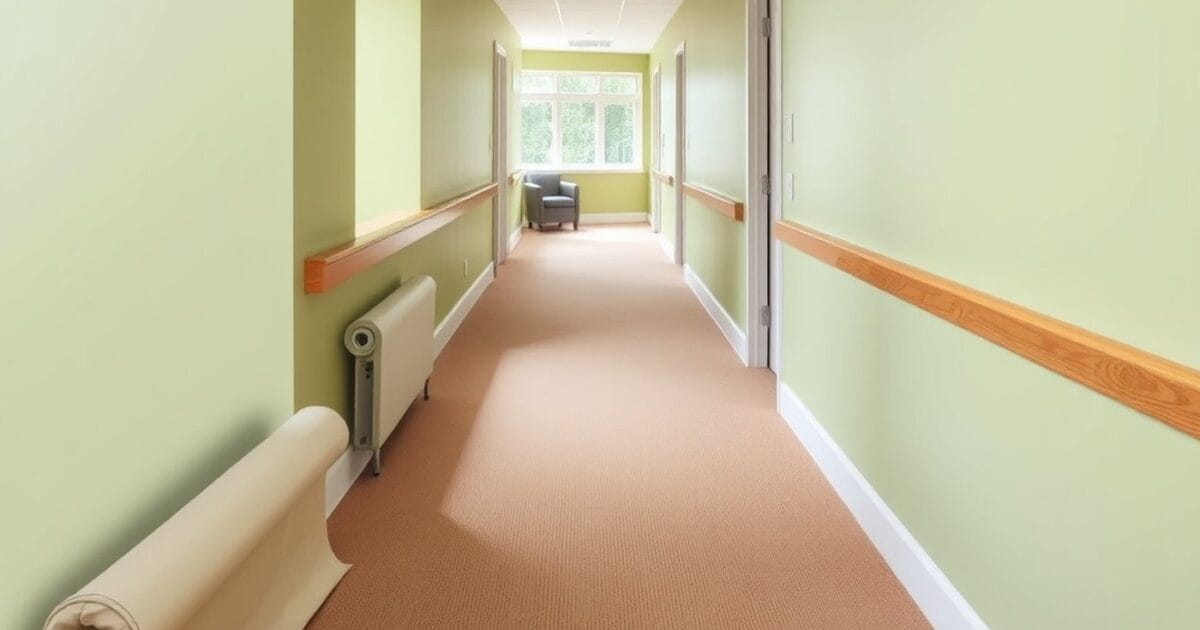
Corridors are the most visible and most demanding part of a senior living repaint. They are long, they are used continuously and they take a beating from carts, wheelchairs and walkers. Scuffs, dents and gouges along the lower wall are normal, and repairing them is a large part of the job.
Plan corridor work in sections so that residents always have a clear route. Night or early morning work is sometimes possible in common areas, but not always, because residents may be awake and moving at any hour. The practical steps of hallway work are in how to paint a hallway, and pricing a single hallway is covered in how much to charge to paint a hallway. A senior living corridor is the same surface with more obstacles, so the rate should rise accordingly.
Wall protection is part of the conversation. Many communities use corner guards, crash rails or wainscot panels to protect the lower wall. Painting around them takes longer than painting a clear wall, and replacing or refitting them may be in or out of scope. Decide in advance and write it down.
Handrails, contrast and the way residents see
Handrails are safety equipment in senior living, not decoration. They must be solid, clean and dry when residents need them, which means painting them on a schedule that never leaves a stretch of corridor without a usable rail. Some communities prefer that rails are painted at night and cured by morning; others ask for rails to be done in short sections with a clear route around them.
Color choices matter more than usual, because many older people see contrast less well. Operators and their designers often use contrasting colors to help residents distinguish walls from floors, doors from walls and rails from the surface behind them. Some memory care settings use color to help residents find their own door or to make exit doors less prominent.
Painters are rarely asked to design these schemes, but they are asked to execute them exactly. Confirm the color plan in writing for every surface, and get signoff on samples in the actual light of the corridor. A formal approval step, described in how to price color consultations, is worth using if the operator has no designer.
Memory care is a different job
Memory care units look like other residential floors but work differently. Doors are secured, residents may be disoriented, and changes to the environment can cause distress. A ladder in an unfamiliar place, a closed corridor or a stranger in the room can all upset residents who rely on routine.
Work closely with the staff on the unit. They know which residents need extra space, which times of day are calmer and which changes should be introduced gradually. Tools, materials and chemicals must never be left unattended, because a resident may pick them up. Doors must be closed behind the crew every time.
Price memory care separately from other floors. Production is slower, supervision is tighter, and the crew may need to stop entirely when the unit needs quiet. A realistic allowance is fairer to the operator and to the crew than an optimistic one that falls apart on the second day.
Apartments, move outs and the turnover rhythm
When a resident moves out, the apartment is repainted and prepared for the next person. This is familiar turnover work, and the per unit pricing approach in how to price apartment turnover painting applies directly.
Senior living adds two complications. First, the timing of a move out is often sudden, and the operator wants the unit back quickly because an empty unit costs money every day. Second, the condition of the unit can vary widely, from light touch up after a short stay to heavy repair after many years of wheelchair and walker traffic.
A price card with condition bands handles both. Agree what a standard turn includes, what counts as heavy, and how extra repairs are approved. The operator gets a quick number for every unit, and the painter is protected when a unit turns out worse than the band.
Occupied apartments are the hardest room in the building
Sometimes the operator wants apartments painted while residents still live in them, as part of a refresh program. This is the slowest work in the segment. Furniture has to be moved and protected, personal belongings handled with care, and the resident may need to be relocated to a common area for the day or stay in the room while work goes on around them.
Coordinate with the staff and, where appropriate, with the family. Explain what will happen, how long it will take and when the room will be ready. Price the furniture handling as its own line, using the approach in how to charge for moving furniture when painting, and allow time for the conversation that comes with every room.
Odor, noise and the residents who stay all day
In an office, odor and noise disappear at five in the evening. In senior living, the residents never leave. Low odor products, good ventilation and quiet tools are the baseline, not an upgrade.
Plan noisy work such as sanding and patching for times the operator agrees, often mid morning when many residents are at activities. Keep the work area ventilated, and allow extra time before a room is reoccupied. The EPA introduction to indoor air quality is a sound reference when an operator or family member asks what is in the air.
Tell residents what is happening. A short notice at the front desk, on each floor and in the dining room, prepared with the operator, prevents a surprising number of complaints.
Falls, trip hazards and the work zone
Falls are one of the main safety concerns in any senior living community, and a painting job adds new hazards to a building designed to remove them. Drop cloths, extension cords, ladders, buckets, tape on the floor and a wet surface near a doorway can all catch a resident who is not expecting them.
Plan the work zone so that nothing lies across a walking route. Use drop cloths that lie flat and are secured at the edges, route cords away from paths or cover them, and keep ladders inside a marked area that residents cannot wander into. Clear everything away at every break rather than at the end of the day.
Staff are the best judge of how residents move through the building. Walk the route with the maintenance director before starting and agree where the work zones will be. The general safety equipment a crew should carry is listed in the painting safety equipment checklist, and the OSHA page on walking and working surfaces sets out the principles behind keeping floors clear.
Crews who are good with people
Senior living rewards a particular kind of painter. Residents talk to the crew, ask what is happening and sometimes want to help. Some are lonely, some are confused and some are simply curious about what is changing in their home.
The crew that does well here answers kindly, keeps working and knows when to ask a staff member for help. The crew that treats every conversation as an interruption generates complaints even when the painting is perfect. Choose the crew for the job, brief it on what to expect, and keep the same people on site for the whole project where possible, so residents see familiar faces.
Supervision matters too. A lead painter who can talk with the maintenance director, reassure a family member and keep the crew on schedule is worth more on this work than a faster painter who cannot. The broader habits of running a crew are in how to manage a painting crew.
Families, staff and the operator who pays
The buyer in senior living is usually the operator or its maintenance director, sometimes a regional facilities manager for a group of communities. The residents and families are not the buyer, but they can end a job with a single complaint.
Make it easy for them to raise concerns through the operator rather than stopping the crew in the corridor. Give the maintenance director a daily summary of what was done and what is planned. Most of the conflict on these jobs comes from surprise, and most surprise can be removed with a simple daily report.
Operators who run several communities often standardize on a small group of contractors. A painter who handles one community well can be asked to price the next one, which is how a single job becomes a relationship. The approach to building that relationship is in how to get property management painting contracts.
Building the senior living price
Start from ordinary production rates for each surface. Then adjust for the conditions of the segment: sections instead of open runs, traffic management, rails painted in stages, repair of heavy wear, furniture handling, supervision on memory care floors and the time spent talking with residents.
Price common areas, occupied apartments, vacant turns and memory care as separate lines. Each has a different productivity, and mixing them hides which part lost money. Include a clear statement of what happens when work is stopped because the community needs the space, and agree how extra repairs are approved.
Finally, include cleanup to a standard the operator can accept on the same day. A corridor left dusty for residents to walk through at dinner is a complaint, not a job finished. The habit of checking the work before leaving is in the painting quality control checklist.
Is senior living worth chasing
Senior living suits painting businesses with patient crews, steady supervisors and owners who are happy to build long relationships. It offers regular turnover work, periodic common area refreshes and operators who come back when the job was done well.
It suits badly the business that wants fast, uninterrupted production. Every day contains time that cannot be converted into finished wall, and every crew member has to be comfortable working around people who may be frail, confused or simply curious. Price those days honestly, and the segment can be steady and reliable work.
Every kind of building takes hours away from painting. Price them.
PaintPricing builds itemized estimates from your own rates, so night shifts, containment, escorts, access and protection sit on the quote as lines the client can see, not a guess inside one number. Free for your first 3 quotes, no card required.
Frequently asked questions
How is senior living painting different from apartment painting?
Residents are home all day, many have limited mobility, and some live with dementia. Work has to be sectioned, routes kept clear, rails kept usable and odor and noise controlled, all of which slows production.
Can handrails be painted while residents use the corridor?
Only with a plan that always leaves a usable rail and a clear route. Many communities prefer rails done in short sections or at times when few residents are moving. Agree the approach with the operator first.
Should memory care floors be priced separately?
Yes. Secured doors, tighter supervision, the need to stop when residents are distressed and strict control of tools and materials all slow the work. A separate line keeps the rest of the building priced fairly.
Who decides the colors in a senior living community?
Usually the operator or its designer, often using contrast to help residents see walls, doors and rails. The painter executes the scheme exactly, so confirm it in writing and approve samples in the actual space.
How do I price move out painting in senior living?
With a per unit price card and condition bands, as for apartment turnover, plus a clear process for approving extra repairs when a unit is in worse condition than its band.
What causes the most complaints on senior living jobs?
Surprise. Residents and families who were not told what would happen, when and for how long are the usual source. Daily reports to the operator and simple notices on each floor prevent most of it.