In this article
- The properties that actually matter on exterior trim
- Flexibility and movement
- Adhesion, especially over old oil based coatings
- Block resistance
- Dirt pickup and washability
- Gloss retention and chalking
- Mildew resistance
- Water based or oil based: an honest answer for exterior trim
- Sheen: why trim is satin or semi gloss
- Primers, by substrate
- Colour, practically
- Matching the product to the component
- How many coats and how long it lasts
- A short buying checklist
- Frequently asked questions
The best paint for exterior trim is a flexible, high adhesion exterior acrylic or an alkyd modified acrylic hybrid, in satin or semi gloss, over the correct primer for whatever the trim is made of. That is the answer for the large majority of houses. Everything below explains why, and covers the cases where something different is the right call.
This is a product selection post. If you want the method instead, the exterior trim painting guide covers prep and application, and the porch column guide, soffit and fascia guide and exterior window frame guide handle the individual components.
Note that exterior trim paint and interior trim paint are different products and are not interchangeable. If you are working inside, see the best paint for trim and doors instead.
The properties that actually matter on exterior trim
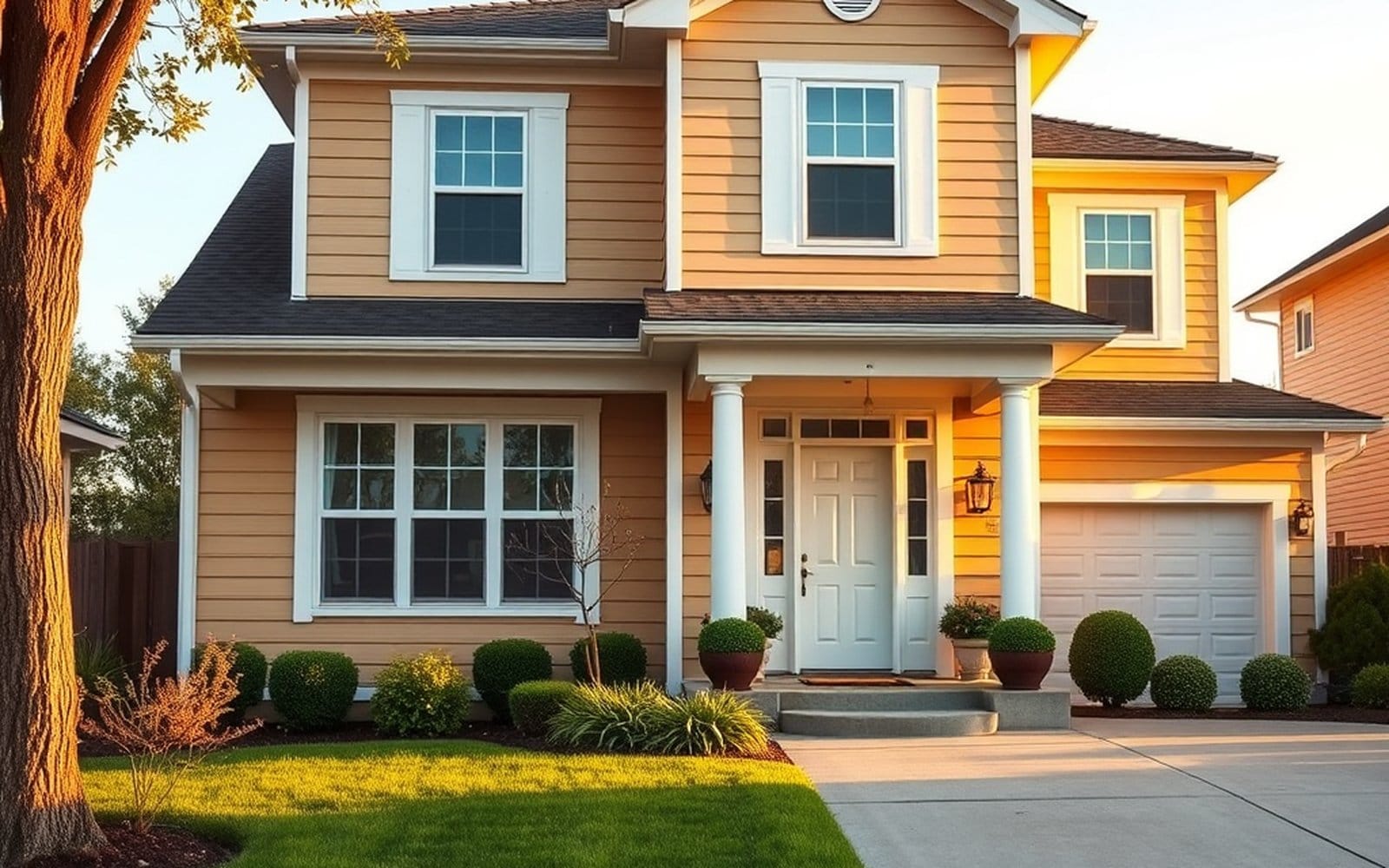
Trim fails differently from siding. It is narrower, it has more joints per square area, it is usually a different colour from the field, and it takes more direct water and more direct sun per unit of surface. So the properties you should be reading on a data sheet are not the same ones you would prioritise on a wall.
Flexibility and movement
Trim moves more than the field. A window casing, a fascia board, a corner board and a column shaft all expand and contract with heat and moisture, and they do it across their width and at every mitre and butt joint. A brittle film cannot follow that movement. It cracks, and it cracks first at the joints, which is exactly where water then gets in.
This is the single strongest argument for a quality exterior acrylic on trim. Acrylic films stay flexible for far longer than traditional oil films, which continue to harden and embrittle with age. On trim, flexibility is not a nice to have, it is the property that decides whether the coating survives its second winter.
Adhesion, especially over old oil based coatings
Older houses very commonly have oil based paint on the trim, often several generations of it. That surface is hard, sometimes glossy, sometimes chalky, and a water based topcoat applied straight onto it can fail to bond and peel off in sheets that carry the shape of the brush.
The practical rule: you can generally go water based over old oil based coatings if the old coating is sound, if you dull it properly by sanding, if you clean off all the chalk and grease, and if you use a primer designed to bridge the two. What you cannot do is casually brush a water based topcoat straight over aged glossy oil and hope. That is the classic peeling failure and it is entirely preventable at the primer stage.
You can test what you have. Rub a hidden area with a cloth and a suitable solvent. If colour transfers readily it is more likely water based. If it does not soften at all it is more likely oil. Combine that with the age of the house, and prime accordingly if there is any doubt.
Block resistance
Block resistance is how well a dried film resists sticking to itself under pressure. This is the property nobody thinks about until a painted window sash refuses to open in July, or a door sticks shut against its stop, or a shutter glues itself to the wall.
It matters specifically on trim because trim includes the surfaces that touch other surfaces: sash and frame, door and stop, casement and rebate, shutter and siding. Cheaper acrylics tend to be soft and block badly in heat. Better quality acrylics and alkyd modified hybrids are formulated for it, and the data sheet will usually say so explicitly. If your trim job includes any moving joinery, treat this as a screening criterion.
Dirt pickup and washability
Trim is usually the lightest colour on the house, and it is usually the part at hand height near the door where people touch it. A soft film holds dust, pollen and road grime, and it does not clean up. Look for a product that states good dirt pickup resistance, and remember that a higher sheen sheds dirt better and washes down better than a flat one.
Gloss retention and chalking
UV breaks down the binder at the surface of any exterior coating. When it does, pigment is left loose on the surface, which is what chalking is: that white powder on your hand when you touch old siding or an old aluminium trim. Chalking is a real adhesion problem for the next coat, and it dulls the colour long before the film actually fails.
Traditional oil based exterior coatings chalk and yellow noticeably under sun. Quality exterior acrylics hold colour and sheen far better because acrylic binders are much more UV stable. On south facing trim and on any strong or dark colour, this difference is very visible over the life of the job.
Mildew resistance
North facing trim, trim under a deep soffit, trim shaded by a tree and trim near ground level all stay damp longer and grow mildew. Most exterior paints include a mildewcide in the film, but they vary in how much and how durable it is. If you have a persistently shaded, damp elevation, prioritise a product that states mildew resistance and do not skip the fungicidal wash at prep stage, because a coating cannot fix mildew that is already alive underneath it.
Water based or oil based: an honest answer for exterior trim
For most exterior trim today, water based wins. That is not a fashion, it is the properties above.
| Property | Modern exterior acrylic | Alkyd modified acrylic hybrid | Traditional oil based |
|---|---|---|---|
| Flexibility over time | Stays flexible | Good, firmer than straight acrylic | Hardens and embrittles |
| Colour and gloss retention | Strong | Strong | Yellows and chalks |
| Levelling and brush mark hiding | Adequate to good | Very good | Excellent |
| Hardness and block resistance | Varies by quality | Good | Very good |
| Adhesion over aged oil | Needs the right primer | Often better direct, still prime if in doubt | Straightforward |
| Clean up | Water | Usually water | Solvent |
| Drying and recoat | Fast | Moderate | Slow |
The case for traditional oil is levelling and hardness. It flows out and leaves fewer brush marks, and it dries hard, which is why some painters still prefer it on doors and fine joinery. The case against it outdoors is that it embrittles, yellows and chalks, and clean up is a nuisance. Availability and permitted formulations also vary by region.
Alkyd modified acrylic hybrids are the useful middle ground for trim: they lay off closer to an oil, dry harder than a straight acrylic which helps block resistance, and clean up with water. If you want an oil like finish on a door or a window without an oil’s downsides, this is the category to look at.
The water based versus oil based comparison goes deeper on the general trade off. The exterior specific point is simply that the flexibility and UV stability arguments both favour acrylic, and both of those matter more on trim than they do almost anywhere else.
Sheen: why trim is satin or semi gloss
Satin and semi gloss dominate on exterior trim for three practical reasons. They shed water rather than holding it in a porous surface. They clean up, which matters on the parts of the house people touch. And they read as trim, giving definition against a lower sheen field colour.
The cost of sheen is honesty. A gloss surface reflects light in a coherent way, so it shows every dent, every sanding scratch, every unfeathered scrape edge and every lumpy filler repair. A flat surface scatters light and hides all of it. So the rule is straightforward: the higher the sheen you choose, the higher your prep standard has to be. If you are not going to sand and feather properly, choosing high gloss will make your work look worse, not better.
| Sheen | Where it fits on trim | Watch out for |
|---|---|---|
| Flat or matt | Rarely used on trim, occasionally on rough or heavily repaired boards | Holds dirt, poor washability |
| Satin or low sheen | The common default across fascia, casings, corner boards and columns | Modest defect hiding, still needs decent prep |
| Semi gloss | Windows, doors, handrails, anywhere touched or washed often | Shows surface defects clearly |
| Gloss | Front doors and feature joinery for maximum crispness | Unforgiving, demands excellent preparation |
The paint sheen guide covers the full range and how sheen names differ between manufacturers, which they do.
Primers, by substrate
Primer choice on trim is not a single decision. It depends entirely on what is underneath, and getting it wrong is the most common cause of premature failure. The primer guide covers the general question of when you need one at all. Here is the exterior trim breakdown.
- Bare wood. An exterior wood primer. It seals the surface, evens out absorption so the topcoat does not go patchy, and gives the topcoat something consistent to bond to. Prime all faces and edges you can reach, including end grain, which absorbs water far faster than the face.
- Tannin bleeding woods. Cedar, redwood and some other species contain water soluble extractives that migrate through a coating and stain it brown, usually appearing as streaks after the first heavy rain. These need a stain blocking primer specifically rated for tannin blocking. A general purpose primer will not stop it, and no number of topcoats will cover it once it starts.
- Knots and resinous areas. Softwood knots bleed resin through paint. Spot treat them with a knotting or shellac based stain blocker before the general primer.
- Bare or rusted metal. A direct to metal or rust inhibiting primer. Remove loose rust first, then prime promptly before flash rusting starts. Galvanised metal needs a primer specifically stated as suitable for galvanised surfaces, because ordinary primers can saponify and release.
- Chalky old surfaces. Wash the chalk off first, then use a bonding primer designed to penetrate and lock down residual chalk. Painting over chalk without this step means your new coating is bonded to loose powder, and it will come off carrying that powder with it.
- Glossy old oil based coatings. Dull them by sanding, clean thoroughly, then use a bonding primer rated for adhesion over aged alkyd and glossy surfaces before a water based topcoat.
- PVC, composite and fibreglass trim. Check whether the manufacturer says it can be painted at all, and what it permits. Many require a specific type of coating and place limits on colour darkness. Follow the manufacturer’s own guidance rather than a general rule, and do not assume any particular product will preserve a warranty. Ask the manufacturer.
Colour, practically
Colour is not just aesthetics on exterior trim, it has performance consequences.
Dark colours run hotter. A dark trim colour absorbs far more solar energy than a light one, and the surface temperature on a south facing fascia in summer can climb well above the air temperature. That heat drives more movement in the substrate underneath, which stresses the film, and it accelerates the breakdown of the binder. It also makes block resistance more of an issue on windows and doors.
Dark and saturated colours fade faster. The organic pigments used to achieve deep reds, bright blues and strong greens are less UV stable than the inorganic pigments used in earth tones and off whites. If you pick a deep saturated trim colour, accept that it will need refreshing sooner. Some manufacturers offer colour ranges formulated with more UV stable pigments specifically for this reason, so it is worth asking.
Dark colours on PVC and composite trim can be restricted. Because heat causes those materials to expand significantly, several manufacturers limit how dark a colour you may apply and specify heat reflective formulations. This is a real limitation, not a marketing one, and ignoring it can warp the trim.
Contrast with the field. Trim is architectural punctuation. It reads best when there is a clear step in value between the trim and the siding, not just a change in hue. A common approach is a light trim against a mid to dark field, or a deep trim against a pale field, with the door as a third accent. Test your combination on the actual house, on both a sunny and a shaded elevation, because exterior colour looks dramatically different under direct sun than it does on a chip indoors.
Matching the product to the component
| Component | Sensible choice | Key reason |
|---|---|---|
| Fascia and soffit | Exterior acrylic, satin | Water shedding and mildew resistance under shade |
| Window frames and sashes | Acrylic or hybrid, semi gloss | Block resistance so sashes still open |
| Casings and corner boards | Exterior acrylic, satin | Flexibility across joints |
| Porch columns | Exterior acrylic, satin or semi gloss | Washability plus flexibility at the base |
| Handrails and touched surfaces | Hybrid, semi gloss | Hardness and cleanability |
| Metal gutters and downpipes | DTM or metal rated system | Corrosion protection, see the guidance below |
Gutters are a special case with their own primer and adhesion requirements, so use the best paint for gutters guide rather than treating them as ordinary trim.
How many coats and how long it lasts
Two topcoats over the correct primer is the standard on exterior trim, and it is not padding. The second coat builds film thickness, and film thickness is directly related to how long the coating protects the substrate. One coat on trim, especially on a colour change or over a spot primed surface, will look uneven and will thin out at edges where you need it most. The coats guide covers the reasoning.
How long the result lasts varies enormously with exposure, orientation, the substrate, the quality of prep and the product itself, so treat any single number you see with suspicion. Trim generally needs attention sooner than the siding around it, because it takes more water and more sun per unit of area and it has more joints. The exterior paint lifespan guide sets realistic expectations, and for any specific product the manufacturer’s technical data sheet is the authority on expected service life, coverage rate, recoat times and permitted substrates.
A short buying checklist
- Identify the substrate on every trim component, and note anywhere the material changes.
- Determine whether the existing coating is oil based or water based, especially on an older house.
- Pick the primer per substrate, not one primer for the whole job.
- Choose an exterior acrylic or an alkyd modified acrylic hybrid rated for flexibility, adhesion and block resistance.
- Pick satin or semi gloss, and set your prep standard to match the sheen.
- Check the mildew resistance claim if you have a shaded elevation.
- Choose colour with heat and fade in mind, and check any manufacturer colour limits on PVC or composite.
- Buy enough for two full topcoats in one batch so the colour is consistent.
- Read the data sheet for recoat times, temperature limits and coverage before the day you start.
Frequently asked questions
Can I use water based paint over old oil based trim?
Generally yes, but not casually. The old coating must be sound, dulled by sanding, and cleaned of all chalk and grease, and you should use a bonding primer rated for adhesion over aged glossy alkyd. Brushing a water based topcoat straight onto aged oil is the classic cause of paint peeling off in sheets.
Is exterior trim paint different from siding paint?
Often yes. Trim products are typically formulated for higher sheen, better block resistance and more flexibility across joints, because trim moves more and includes surfaces that touch each other. Siding paints prioritise coverage and dirt resistance across large flat areas. Many ranges offer both from the same family so the colours and sheens coordinate.
What sheen should exterior trim be?
Satin or semi gloss for most trim, with gloss reserved for a front door or feature joinery. Higher sheen sheds water and cleans better but shows every surface defect, so raise your sanding and feathering standard as you raise the sheen.
Do I have to prime exterior trim?
Not everywhere, but yes on bare wood, bare or rusted metal, filler and repairs, knots, tannin bleeding species like cedar and redwood, chalky old surfaces and glossy old oil coatings. Sound, dull, previously painted trim usually takes a topcoat directly. Pick the primer by substrate rather than using one product for the whole house.
Why does my cedar trim keep showing brown stains through the paint?
That is tannin bleed. Cedar and redwood contain water soluble extractives that migrate through a coating and stain it, usually after rain. The fix is a stain blocking primer specifically rated for tannin blocking, applied to the bare wood. Adding more topcoats will not stop it once it has started.
Will a dark trim colour cause problems?
It can. Dark colours run much hotter in sun, which drives more substrate movement and stresses the film, and saturated pigments fade faster than earth tones. On PVC and composite trim, several manufacturers limit how dark a colour you may use because of thermal expansion. Check the trim manufacturer’s own guidance before choosing a deep colour.