In this article
- Cost to paint a living room by size
- What goes into the price
- DIY vs hiring a pro
- How painters price the job
- A worked example
- How to lower the cost
- The real cost of high and vaulted ceilings
- What you get at each price point
- Should you paint the living room before or after furnishing?
- Accent walls, fireplaces, and feature details
- Common living room painting mistakes
- How to compare living room painting quotes
- Frequently asked questions
About the cost figures on this page
Any cost ranges shown here are illustrative estimates, not a quote. What you actually pay varies widely with your location and local labour rates, the size and condition of the surfaces, access and setup, the products specified, how much prep the job needs, and the time of year. Use these numbers to sanity check a quote you have been given and to understand what drives the total, then get written quotes from local contractors before you budget. You can also build an estimate around your own project with the free calculator.
Quick answer: In 2026, painting a living room typically costs $500 to $1,500 for an average room, climbing to $1,000 to $3,000 for large, vaulted, or two-story spaces. The main price driver is square footage combined with ceiling height, since living rooms are often the biggest rooms with the tallest walls in the house.
This guide breaks living room paint cost down by size and ceiling type, explains why high ceilings add so much, and shows where you can save. For a fast number on your exact room, run our free painting calculator or request a quick painting estimate.
Cost to paint a living room by size
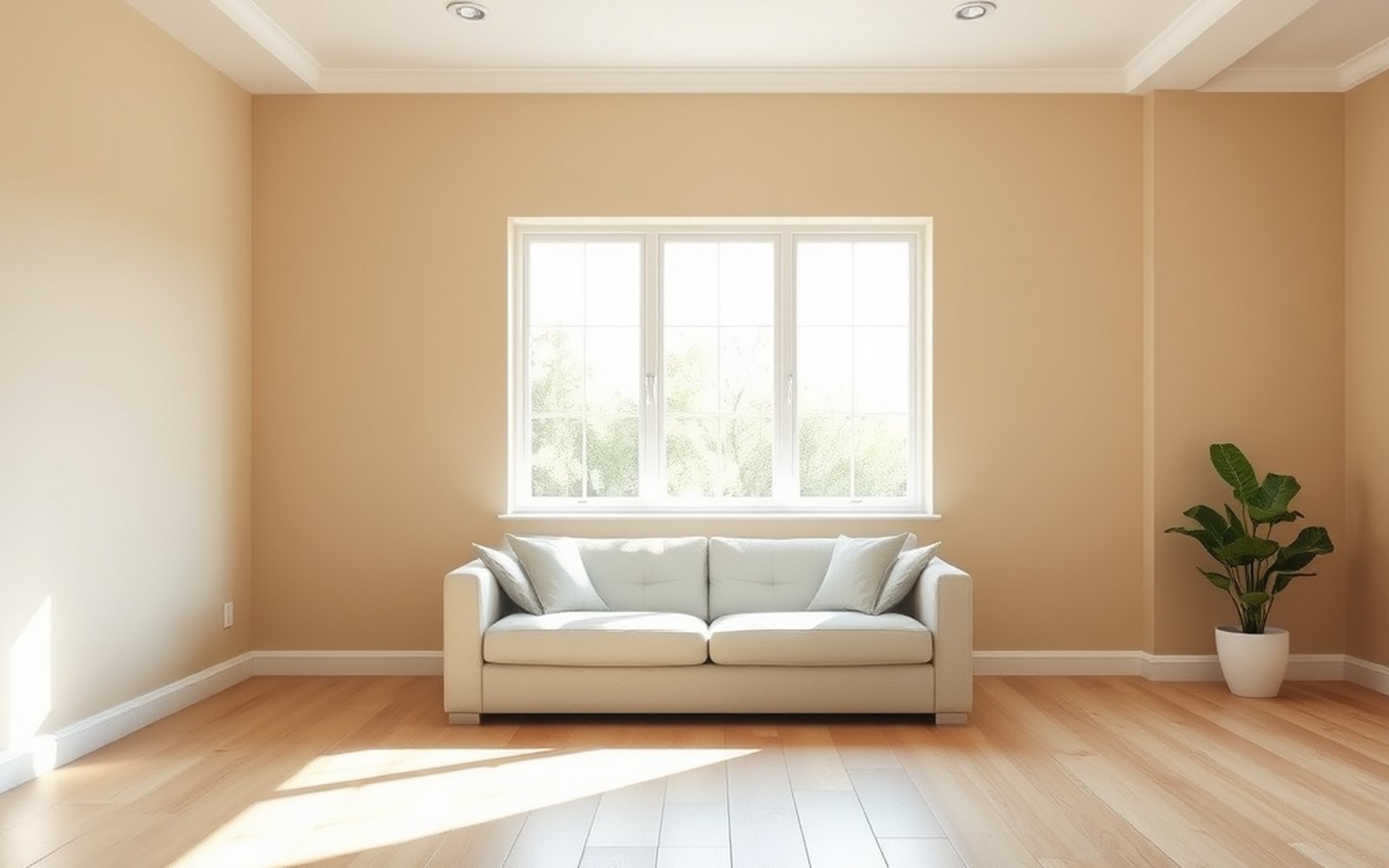
Living rooms vary more than any other room, from a modest 12×14 space to a soaring two-story great room. The table below shows typical 2026 pro pricing for labor plus materials.
| Living room type | Ceiling | Pro cost (walls, or walls + ceiling/trim) |
|---|---|---|
| Average (12×16 to 14×18) | 8 to 9 ft | $500 to $1,000 walls; $700 to $1,500 full |
| Large (16×20+) | 9 to 10 ft | $800 to $1,800 |
| Vaulted / two-story | 12 to 20 ft | $1,000 to $3,000 |
The jump to vaulted and two-story rooms is steep because tall walls mean more surface, plus scaffolding, extension equipment, and slower, more careful work at height. A painter cannot simply roll from a step ladder when the wall runs 18 feet up.
What goes into the price
Living room pricing comes down to scale and reach:
- Labor. The dominant cost. A large room with tall walls is many hours of cutting and rolling, often spread over two days.
- Materials. Living rooms have real wall area, so plan on 2 to 4 gallons of paint, more for tall rooms.
- Ceiling height. This is the single biggest swing factor. Standard 8-foot walls are quick; vaulted ceilings require scaffolding or tall ladders and add significant labor.
- Prep and repairs. Patching nail holes from picture hangers, filling cracks, and caulking is standard. Older rooms may need more.
- Number of coats. Two coats standard, with a primer coat for bold color changes or accent walls.
- Trim and detail. Crown molding, large windows, built-ins, and a fireplace surround all add cut-in time.
- Color change. Going dramatically lighter or darker can require a primer plus two coats across a large area, which adds up fast.
For how living room costs fit into a whole-house budget, see our interior painting cost guide.
DIY vs hiring a pro
A standard-ceiling living room is DIY-friendly, but a vaulted one usually is not, because of the safety and equipment needed at height. Here is a materials-only budget for an average room:
| Item | Typical cost |
|---|---|
| 2 to 4 gallons wall paint | $60 to $160 |
| Primer (spot or accent wall) | $12 to $25 |
| Rollers, extension pole, brushes | $25 to $45 |
| Tape, drop cloths, spackle, caulk | $20 to $40 |
| DIY total (materials) | $80 to $200 |
So DIY runs $80 to $200 in materials versus $500 to $3,000 for a pro. For a standard-ceiling room the savings are real and the work is manageable over a weekend. For a vaulted room, the cost of renting scaffolding and the safety risk usually tip the decision toward a pro. Our DIY painting vs hiring a painter guide covers the trade-offs in detail.
How painters price the job
For living rooms, painters lean on per-square-foot pricing because the wall area is large enough to measure cleanly. Interior wall rates usually run $1.50 to $4 per square foot of wall, with a height surcharge added once ceilings pass 9 or 10 feet. Vaulted work can effectively double the per-foot rate because of the equipment and slower pace.
Our how to price painting jobs per square foot guide shows the exact formula, so you can check whether a tall-room surcharge is reasonable.
A worked example
Take a 14×18 living room with a standard 9-foot ceiling, walls only.
- Wall area: perimeter (64 ft) times height (9 ft) = 576 sq ft, minus about 80 sq ft for windows, a doorway, and a fireplace = roughly 496 sq ft of paintable wall.
- Paint: 496 sq ft over two coats needs about 2.5 to 3 gallons at $50 = $135.
- Sundries: $35.
- Labor: 8 to 11 hours for prep and two coats. At $50 to $65 per hour, that is $400 to $715.
- Total pro price: about $570 to $885, in line with the average band.
Swap in a 16-foot vaulted ceiling and the same room can easily double once scaffolding and height labor are added.
How to lower the cost
Living rooms are big, so smart choices save real money:
- Keep the ceiling height in mind. If your room is vaulted, accept that it is a premium job and get multiple bids.
- Do walls only. Skipping the ceiling and crown molding can cut a meaningful slice off the bid.
- Stay near the current color to avoid a primer coat across a large surface.
- Handle your own prep. Move furniture, take down art, and patch picture-hanger holes before the crew arrives.
- Bundle with adjacent rooms. If the living room flows into a hallway or dining area, painting them together lowers the per-room rate.
Be cautious with a bid that is far below the others on a tall room, since proper scaffolding and safety gear cost money that a lowball quote may be skipping. Our painting estimate red flags guide explains what to look for.
Before you buy paint for such a large room, get the quantity right. Our how much paint for a room guide gives you an exact gallon count so you neither over-buy nor run short on the second coat.
If your living room job includes the ceiling or crown molding, those are priced as their own surfaces. See our cost to paint a ceiling and cost to paint trim and baseboards guides to add them in. When you want a real figure, get a free painting estimate or run the painting calculator on your exact living room.
The real cost of high and vaulted ceilings
Ceiling height is the factor that turns a routine living room into a premium job, so it is worth understanding why. With a standard 8 or 9-foot ceiling, a painter works comfortably from a 6-foot ladder and an extension pole, rolling and cutting at a normal pace. Once a wall climbs past about 12 feet, that is no longer safe or practical. The crew has to bring in scaffolding, planks, or tall multi-position ladders, set them up, move them repeatedly around the room, and work slowly and carefully at height.
All of that adds hours of labor that have nothing to do with paint. It also often adds an extra person for safety. A two-story foyer-style living room wall can take as long to cut and coat as several normal walls combined. That is why a vaulted room can cost two to three times what its footprint alone would suggest. If you have a tall room, budget for it up front and gather at least three bids, since pricing on height work varies widely between contractors.
What you get at each price point
Living room quotes span a huge range, and ceiling height is usually the reason. Here is what each band typically buys:
| Price band | What it usually includes |
|---|---|
| $500 to $800 | Average room, walls only, standard ceiling, similar color. |
| $800 to $1,500 | Average to large room, walls plus ceiling and trim, light color change. |
| $1,500 to $2,200 | Large room or 10-foot ceilings, full scope, bold color with primer. |
| $2,200 to $3,000+ | Vaulted or two-story room needing scaffolding and height labor. |
Should you paint the living room before or after furnishing?
One practical timing question affects both cost and quality. Painting an empty living room is faster and cheaper because the crew is not working around a sofa, entertainment center, and rug. If you are moving into a home or planning a refresh, painting before the furniture arrives can shave labor off the bid and produce cleaner results, since nothing has to be covered or shuffled. If the room is already lived in, expect the painter to spend the first part of the job moving and draping furniture, which adds time.
Either way, you can lower the cost by clearing the room yourself, taking down art and curtains, and pulling furniture to the center before the crew arrives. A living room that is ready to paint when the painter walks in is a living room that costs less to paint.
Accent walls, fireplaces, and feature details
Living rooms are where homeowners most often want a feature wall, and those details carry their own cost. A single accent wall in a bold color adds a second paint, extra masking, and frequently a primer coat under a saturated shade, which painters price as a flat add of roughly $100 to $300 depending on height and how crisp the lines must be. A two-story wall accent costs more because of the reach involved.
A painted fireplace surround or built-in shelving is another common request. Brick fireplaces need a masonry primer and sometimes a special paint, and built-ins involve cabinet-grade prep similar to furniture, so both are quoted separately from the walls. None of these are required, but they are the extras that turn a standard living room repaint into a higher bid, so flag them when you request a quote rather than adding them mid-job.
Common living room painting mistakes
The biggest living room regrets usually come down to underestimating scale and height:
- Buying too little paint for a large room and getting a visible difference between batches.
- Attempting a vaulted ceiling without proper equipment, which is both unsafe and likely to look streaky.
- Skipping primer on a big color change, so the old color shadows through across a large wall.
- Not patching picture-hanger holes, which stand out badly under fresh paint in raking light.
- Forgetting the trim and crown molding, which then look dingy next to crisp new walls.
Because a living room is large and highly visible, these mistakes are expensive to fix after the fact. Getting the scope, paint quantity, and ceiling plan right up front is what keeps the cost predictable and the result clean.
How to compare living room painting quotes
Living room bids cover the widest range of any room, so comparing them carefully matters most here. The single biggest variable is ceiling height, but scope and paint grade move the number too. When you collect estimates, line each one up against the same checklist instead of reacting to the bottom-line figure.
- Ceiling height and method: confirm whether the bid includes scaffolding or height labor for a vaulted or two-story wall.
- Surfaces: walls only, or walls plus the ceiling, crown molding, and trim.
- Feature details: any accent wall, fireplace surround, or built-ins quoted as separate lines.
- Paint grade and coats: a named quality paint, two coats, and primer for a bold color change.
- Furniture handling: whether moving and draping furniture is included or expected of you.
A higher bid that clearly covers the vaulted ceiling, the crown molding, and a primer coat is often the honest one, while a surprisingly low number on a tall room usually means height work is missing from the scope. Matching the surfaces across every quote is what turns a confusing spread of prices into a fair, apples-to-apples comparison.
Frequently asked questions
How much does it cost to paint an average living room?
An average living room with standard ceilings costs $500 to $1,000 for walls and $700 to $1,500 if you add the ceiling and trim. Large or vaulted rooms run $1,000 to $3,000.
Why do vaulted ceilings cost so much more to paint?
Tall walls mean more surface plus scaffolding, extension equipment, and slower, more careful work at height. That added labor and gear can push a vaulted room to double the price of a standard-ceiling room of the same footprint.
How much paint does a living room need?
An average living room needs about 2 to 4 gallons for two coats, with tall or vaulted rooms needing more. Use our paint-quantity calculator for an exact count based on your dimensions.
Can I paint a living room myself?
A standard-ceiling living room is a manageable weekend DIY for $80 to $200 in materials. A vaulted or two-story room is best left to a pro because of the height, equipment, and safety risk.
Does painting the ceiling add much to the cost?
Yes, especially on a high or vaulted ceiling, where reach and equipment drive labor up. On a standard ceiling it is a modest add; on a two-story ceiling it can be a major part of the total.
Painting the next room over? See the cost to paint a dining room.
Choosing a color? See the best paint colors for a living room.
Buying the paint yourself? See how much paint for a living room to get the gallons right.
Doing it yourself? See how to paint a living room for the furniture logistics, keeping a wet edge across a long wall, and using a raking light as quality control.