In this article
About the cost figures on this page
Any cost ranges shown here are illustrative estimates, not a quote. What you actually pay varies widely with your location and local labour rates, the size and condition of the surfaces, access and setup, the products specified, how much prep the job needs, and the time of year. Use these numbers to sanity check a quote you have been given and to understand what drives the total, then get written quotes from local contractors before you budget. You can also build an estimate around your own project with the free calculator.
Quick answer: The cost to paint trim and baseboards runs about $1 to $3 per linear foot for trim and $1 to $2 per linear foot for baseboards in 2026. A single room of trim lands around $200 to $500, and whole-house trim usually runs $1,000 to $3,000 or more. It is priced high for the surface area because it is slow, detail-heavy hand work.
Trim looks like a small job and prices like a big one. The reason is simple: baseboards, casings, and crown are narrow surfaces that demand careful taping, steady cutting in, and several thin coats. This guide shows the per-foot and per-room numbers, what makes one quote higher than another, and how to bring the cost down. For a fast figure on your home, use our free painting calculator or request a free painting estimate.
Cost to paint trim and baseboards by scope
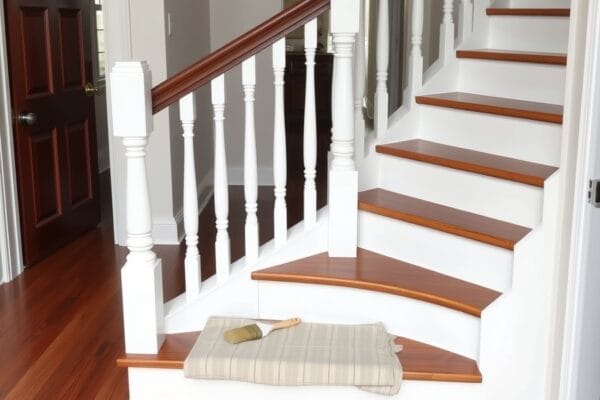
Painters usually price trim by the linear foot, then roll it up into a room or whole-house number. Here is what each piece typically costs in 2026.
| Trim type | Typical price |
|---|---|
| General trim | $1 to $3 per linear foot |
| Baseboards | $1 to $2 per linear foot |
| Door and window casings | $3 to $10 each |
| Crown molding | $2 to $5+ per linear foot |
| Chair rail and wainscoting | $2 to $4 per linear foot |
Crown molding sits at the top of the range because it is up high, often intricate, and needs scaffolding or tall ladders plus extra care at the inside and outside corners. Simple flat baseboards are the cheapest trim you can paint.
| Scope | Typical installed cost |
|---|---|
| Single room of trim | $200 to $500 |
| Trim plus baseboards, 3 rooms | $600 to $1,400 |
| Whole-house trim | $1,000 to $3,000+ |
What goes into the price
Trim is the most labor-intensive painting per square foot of any interior surface. Here is where the money goes.
- Labor: The dominant cost, often 80 to 90 percent. Cutting a crisp line where trim meets wall is the slowest part of any paint job.
- Materials: A quart or gallon of semi-gloss or satin enamel, a quality angled sash brush, painter’s tape, and caulk. Usually $40 to $120 for a typical home.
- Prep: Filling nail holes, caulking gaps where trim meets wall, sanding glossy old paint so the new coat sticks.
- Taping and masking: Trim borders both walls and floors, so there is twice the masking of an open wall.
- Number of coats: Trim enamel is usually applied in two or three thin coats to avoid drips and brush marks on the narrow surface.
- Surface condition: Chipped, dented, or previously oil-painted trim adds sanding and priming time.
- Height and access: Crown and high window casings need ladders, which slows everything down.
The hidden cost in trim is caulking. A clean, gap-free line between baseboard and wall is what separates a $200 room from a $400 room, and it takes real time to do right.
Why trim costs more per square foot than walls
Homeowners are often surprised that a few hundred feet of baseboard costs as much as painting an entire room of walls. The reason comes down to surface geometry and finish standards.
- Edges everywhere: A wall has four edges to cut in. A baseboard has a top edge against the wall, a bottom edge against the floor, and ends at every doorway and corner. Cutting in is the slow part of painting, and trim is almost all edge.
- Higher-sheen paint: Trim is usually finished in semi-gloss or satin enamel, which shows every brush mark, dust nib, and drip. Walls in flat or eggshell hide imperfections. The higher sheen forces slower, more careful application.
- Thin coats, more of them: Enamel runs and sags if applied thick, so trim gets two or three thin coats instead of one or two heavier wall coats.
- Caulking and filling: Walls rarely need caulking. Trim almost always does, at every seam and corner, and that prep is billable time that walls do not carry.
Put together, a square foot of trim can take three to five times longer to finish than a square foot of wall, which is exactly why the per-foot price feels steep.
DIY vs hiring a pro
Trim is cheap on materials and brutal on patience. If you have a steady hand and time, the savings are large because labor is nearly the whole cost.
| DIY material | Approx cost |
|---|---|
| 1 quart to 1 gallon trim enamel | $20 to $60 |
| Angled sash brush | $10 to $25 |
| Painter’s tape | $8 to $20 |
| Caulk and filler | $10 to $25 |
| Total DIY | $40 to $120 |
The catch is that trim shows every mistake. Drips, brush ridges, and a wavy cut line are obvious because trim sits at eye level on doors and is lit from the side on baseboards. If your trim is currently oil-based, it must be cleaned, sanded, and primed before latex will stick, which trips up many first-timers. Our guide on DIY painting vs hiring a painter covers when the savings are worth it.
How painters price it
Trim is the classic per linear foot job, the same way ceilings are billed per square foot and doors are billed per unit. A painter measures the running feet of baseboard and trim in a room, multiplies by their rate, then adds per-each charges for door and window casings. At $2 per linear foot, a 12×14 bedroom with about 52 feet of baseboard comes to roughly $104, before casings. Our breakdown of how painters price jobs explains how the per-foot rates are set and where they flex.
Because casings and doors are awkward shapes, many pros switch to a flat per-piece price for those: $3 to $10 per casing rather than trying to measure every inch of profile.
A worked example
Take an average bedroom: 12×14 feet, with baseboards on all four walls, one door, and two windows.
- Baseboard run: about 52 linear feet at $1.50 = $78.
- One door casing at $6 = $6.
- Two window casings at $5 each = $10.
- Caulking and filling nail holes: add about $40 in labor.
Estimated total: around $134 for trim in one bedroom. Add crown molding around the same room at $3 per foot over 52 feet, and you tack on roughly $156, nearly doubling the trim bill.
Repainting vs painting bare or stained trim
Not all trim jobs start from the same place, and the starting condition changes the price as much as the footage does. There are three common scenarios, each with its own labor profile.
| Starting condition | Extra steps | Cost impact |
|---|---|---|
| Repaint over latex, same color | Light clean and scuff sand | Baseline price |
| Repaint over oil-based trim | Degloss, sand, prime before latex | Add 25 to 50 percent |
| Paint bare or new wood trim | Sand, prime, fill grain, then coats | Add 30 to 60 percent |
| Paint over stained wood trim | Sand, stain-blocking primer, two coats | Add 40 to 70 percent |
The big one to watch is painting over stained or oil-finished trim. Stained wood, especially with a yellowed clearcoat, can bleed tannins through latex for months, so it needs a dedicated stain-blocking primer first. Skipping that step is the most common cause of a trim job that looks great for a week and then turns blotchy. If a quote for painting stained woodwork comes in suspiciously low, ask whether a bonding or stain-blocking primer is included, because that one line item is where a cheap bid cuts the corner that ruins the result.
How to lower the cost
Trim costs come down when you reduce the slow, fiddly steps for the crew:
- Do the prep yourself. Filling nail holes and light sanding ahead of the crew shaves billable hours.
- Skip the crown. Painting baseboards and casings while leaving simple crown unpainted cuts the highest-rate item.
- Bundle rooms. Doing the whole floor at once spreads setup time across more footage.
- Match the existing color. Staying with the same white avoids extra coats for coverage.
- Keep oil if it is oil. Switching from oil to latex trim adds a mandatory prime-and-sand step.
A few more levers can shave the bill on a larger trim job:
- Sequence it with wall painting. A crew already set up and masked in a room paints the trim far cheaper than a separate trim-only visit that carries its own setup and minimum charge.
- Accept a one-coat touch-up where it works. If your existing trim is the same color and in good shape, a single fresh coat may be enough, cutting the labor nearly in half versus a full two-coat repaint.
- Limit the high-rate items. Crown molding, intricate wainscoting, and tall window casings are the priciest per foot. Painting only the baseboards and door casings keeps the job in the cheaper tier.
To check the materials line on your quote, it helps to know how much enamel the job actually needs. Our companion guide on how much paint for trim and baseboards gives the quart and gallon count so you can confirm a painter is not padding the materials.
Red flags in a trim painting quote
Trim is where cheap bids cut corners, because the corners they cut are invisible on day one and only show up weeks later. When you compare quotes, look past the bottom-line number and check for these details.
- No mention of caulking. A trim quote with no caulking line is a quote that plans to paint over every gap and crack, which looks rough and fails fast. Caulking should be explicitly included.
- No prime step on oil or stained trim. If your existing trim is oil-based or stained wood and the quote skips priming, the new latex will peel or bleed. This is the most common shortcut.
- One coat on a color change. Going from a dark or natural-wood trim to white in a single coat will look streaky. A real quote specifies two coats for any meaningful color change.
- A flat price with no scope. A number with no detail on which rooms, whether crown and casings are included, and how many coats is impossible to compare and easy to dispute later.
A slightly higher quote that spells out caulking, priming, and two coats is almost always the better value than a low number that leaves the prep vague. Our guide on painting estimate red flags covers the warning signs that apply across every kind of paint job.
Trim is usually painted alongside doors, since both use the same enamel and the same brush. If you are doing the whole package, see our cost to paint interior doors guide to price the doors and trim together and save on setup. When you want a real number for your home, get a free painting estimate or run the rooms through our painting calculator.
Frequently asked questions
How much does it cost to paint trim and baseboards per foot?
General trim runs about $1 to $3 per linear foot and baseboards about $1 to $2 per linear foot in 2026. Door and window casings are usually priced per piece at $3 to $10 each, and crown molding costs more.
Why is trim so expensive compared to walls?
Trim is narrow, detailed hand work. It needs careful taping on both edges, slow cutting in, caulking, and two or three thin coats. That detail makes it the most labor-heavy painting per square foot in the house.
How much does whole-house trim painting cost?
Whole-house trim and baseboards typically run $1,000 to $3,000 or more, depending on square footage, the amount of crown molding, and whether casings and doors are included.
Can I paint baseboards myself to save money?
Yes, and the savings are large because labor is nearly the whole cost. Materials run $40 to $120. The challenge is a clean cut line and no drips, since trim sits at eye level and shows every flaw.
Does crown molding cost more than baseboards?
Yes. Crown runs $2 to $5 or more per linear foot versus $1 to $2 for baseboards. It is up high, often intricate at the corners, and needs ladders or scaffolding, all of which add labor time.
Bidding the job? See how much to charge to paint trim and baseboards.
Choosing a durable enamel? See the best paint for trim and doors.
Deciding on a color? See what color to paint trim.
Tackling it yourself? See how to paint trim and baseboards.
Taking old paint off the trim first? See how to remove paint from trim.