In this article
- What charging means versus what the job costs
- Charge by scope for a two story exterior
- What goes into the price you charge
- Pricing by the square foot
- What moves your number up or down
- How to turn this into a real quote
- Frequently asked questions
- How much should I charge to paint a two story house exterior?
- Why does a two story exterior charge more than a one story?
- How do I price the ladder and scaffold time?
- Is upper-wall prep more expensive than ground-level prep?
- Should I ever recommend against DIY on a two story exterior?
- How does the longer schedule affect what I charge?
Quick answer: For a two story house exterior, most painters charge somewhere in the range of about 2.00 to 5.00 dollars per square foot of siding area, which puts a typical two-story repaint in a broad range of about 4,000 to 12,000 dollars for siding and trim, and higher when prep is heavy or the upper walls are hard to reach. These are planning ranges, not fixed prices. The single biggest reason a two story home charges more than a one story home of the same siding area is access: the upper walls require tall ladders or scaffold, which adds setup, safety time, and risk to every hour worked up high. Confirm your number against your own market, the siding material, and the actual condition of the house.
A two story exterior is where the access premium shows up in full. The paint and the prep steps are the same as a single story job, but reaching the second-floor walls, gables, and high trim changes the economics. Ladders have to be set, footed, and moved constantly, scaffold may be required on tall or complex elevations, and every hour spent at height is slower and riskier than the same hour at ground level. This guide shows how to price that reality without underquoting the setup that makes it safe, while keeping the core distinction clear: what you charge is not what the job costs to produce. For the framework, see our hub on how much to charge to paint a house exterior, and to sanity check any quote, run the home through the painting cost calculator or start from a free painting estimate.
What charging means versus what the job costs
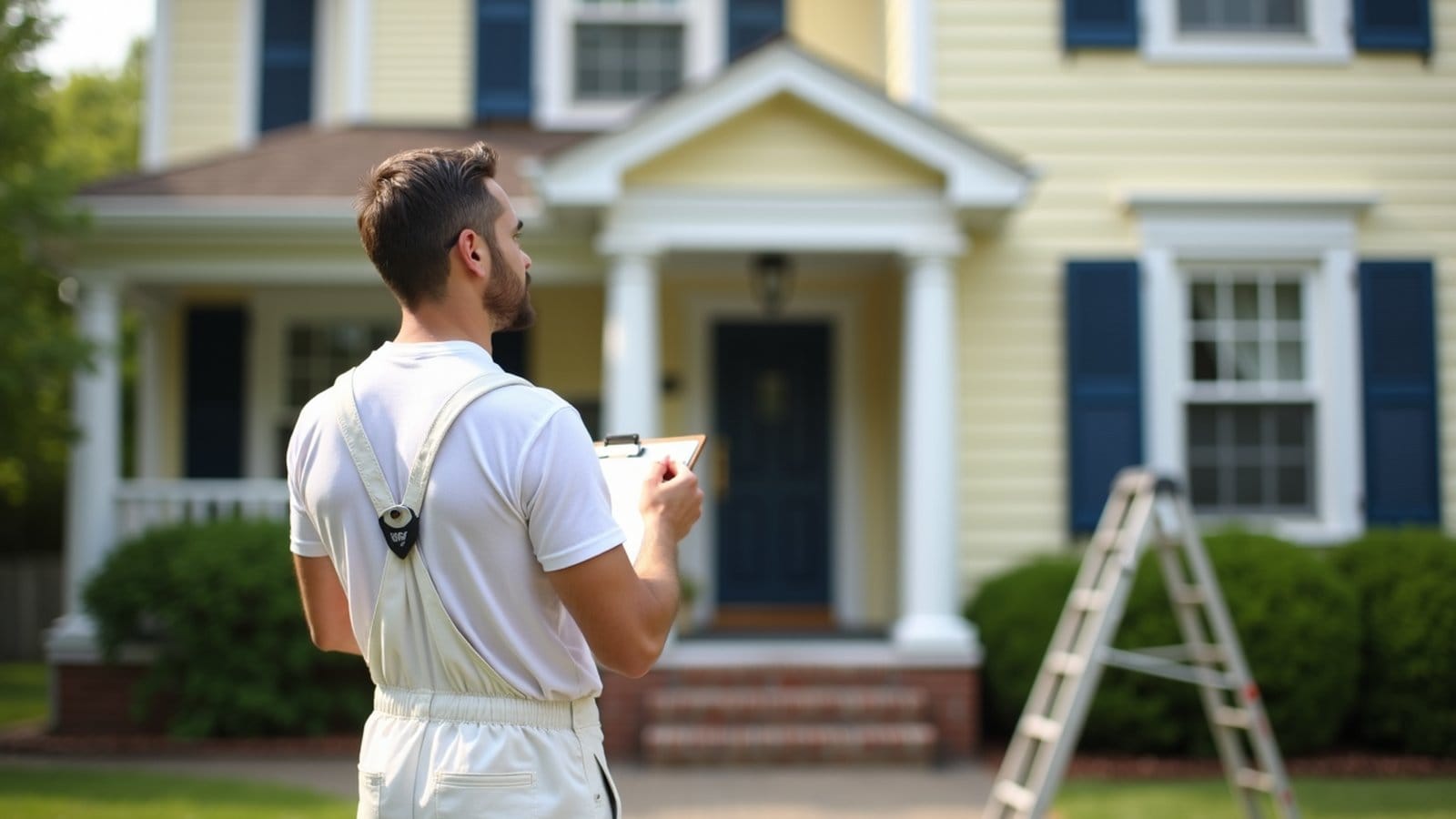
Start by separating cost from charge. Your production cost is what you actually spend to complete the exterior: paint, primer, caulk, and sundries, plus the labor hours your crew logs on prep, staging, and coating. On a two story home that labor block includes a real chunk of time just setting and moving ladders or building scaffold, which is easy to overlook until it eats your day. Your charge is the invoice number, and it must cover more than that cost. It has to carry your overhead, the insurance, trucks, staging equipment, and downtime that exist regardless of any single job, and it has to leave a profit margin on top.
This is where the painter’s number and the homeowner’s number split. When a homeowner reads our companion guide on the cost to paint a two story house exterior, they see their out-of-pocket total. When you price the same house, you build that number from production cost, then overhead, then margin. Same house, opposite sides of the invoice. On a two story exterior the discipline is critical, because the access work adds hours that a floor-area glance completely hides. Related timing matters too: our guide on how long it takes to paint a two story house exterior shows how those staging hours stretch the schedule, and a longer schedule is more overhead and more weather exposure to price for. Quote to cost alone and the access premium quietly becomes your unpaid contribution.
Charge by scope for a two story exterior
Scope on a two story exterior combines how much of the shell you coat with how much of it sits up high. Siding only is lighter than siding plus high trim, and a full exterior with heavy scraping at height is the most demanding version. The table gives typical charge ranges. Read them as planning ranges that move with your market, the siding material, the height, and the condition.
| Scope (two story exterior) | Typical price per sq ft | Typical total range |
|---|---|---|
| Siding only, sound condition | 2.00 to 3.00 dollars | 3,500 to 7,000 dollars |
| Siding and trim | 2.50 to 4.00 dollars | 5,000 to 9,000 dollars |
| Full exterior with prep and high access | 3.50 to 5.50 dollars | 7,000 to 14,000 dollars |
| Scaffold-heavy scrape and restore | 4.50 to 7.00 dollars | 9,000 to 18,000 dollars |
Every row here sits above the one story equivalent, and the gap is the access premium in action. The paint and prep are similar, but the upper elevations demand staging that adds setup and slows the pace. Compare the rows against our sibling guide on how much to charge to paint a one story house exterior and the difference between them is essentially the cost of working at height safely.
What goes into the price you charge
Build every two story exterior quote from the same blocks, in order.
- Materials. Exterior paint, primer, caulk, and masking, matched to the siding material. Quantity does not change with height, but the right coating for the substrate still matters.
- Labor. Prep, masking, ladder and scaffold setup, cutting in, and coating, valued at your crew’s loaded rate. On a two story home the access and safety time is a distinct, sizeable share of this block, not a rounding error.
- Overhead. Insurance, vehicles, ladders, scaffold, and estimating time. Height raises your insurance exposure, and that belongs in overhead and margin.
- Profit margin. The markup on top of cost and overhead. A two story exterior carries more physical risk and more weather exposure over a longer schedule, so the margin should reflect that rather than shrink to win the bid.
The method for turning siding area and condition into labor hours is in our guide on painting production rates, and on a two story job you add explicit hours for staging. For pricing that genuinely funds the risk you take at height, the Small Business Administration offers guidance on pricing your services for profit rather than covering cost alone.
Pricing by the square foot
On a two story exterior, per-square-foot pricing is measured against the siding area, not the floor area, and the upper walls are the ones that carry the premium. A two story home often has a smaller footprint than a sprawling ranch of the same total size, yet more paintable siding stacked vertically, along with tall gables and high trim that only a ladder or scaffold can reach. That vertical surface is where the extra dollars live.
Use the per-square-foot range to catch a quote that is clearly off, then price from the measured shell with the height factored in. Measure each wall face, subtract large openings, and separate the ground-level area from the second-story area in your head, because the upper portion is slower and riskier per square foot than the lower. Two homes with identical siding area can price differently if one has an easy, laddered second story and the other has steep grade, complex rooflines, or elevations that force scaffold. The per-square-foot figure is a starting benchmark. The access assessment is what turns it into a real number.
What moves your number up or down
Two story exteriors are defined by access more than any other single factor. These are the levers that decide the quote.
- Access and height. This is the core driver. Second-story walls, tall gables, and high trim require ladders or scaffold, which add setup, moving, and safety time to every high hour. Elevations that force full scaffold cost the most.
- Setup and safety time. Footing ladders, tying off, and building and moving scaffold is real, billable time that produces no coating on its own. It is the reason two story charges more, and it must be in the quote, not absorbed.
- Prep and failing paint at height. Scraping and sanding peeling paint two stories up is slower and riskier than the same work at ground level, so upper-wall prep carries a premium of its own.
- Siding material. Rough cedar, stucco, and heavy textures slow the work and raise paint quantity, and doing that work at height compounds the effect.
- Weather risk over a longer schedule. A two story job runs longer, which means more days exposed to weather delays. That extended risk window belongs in your margin.
- Local labor rates. Height-capable crews and rigging command a premium in most markets, so anchor your rate to what two story exterior work actually pays in your area.
How to turn this into a real quote
Turn the range into a firm number with a disciplined process. Walk the full perimeter and measure each siding face, separating ground-level from upper-story area so you can price the height honestly. Assess access on every elevation and decide where ladders suffice and where scaffold is required, then add explicit setup and safety hours for the high work. Inspect the paint condition, note upper-wall prep, and identify the siding material. Apply production rates for the coating, add the staging hours, price the coatings and sundries, and layer overhead plus your target margin on top. Present a written scope that spells out access method, prep, coats, and exclusions. For a fuller walkthrough, see our guide on how to estimate exterior painting, and cross-check the total in the painting cost calculator before sending. On a job at height, a written agreement protects everyone. The Federal Trade Commission has clear advice on getting a written contract before work starts.
Stop rebuilding this quote from scratch every time.
PaintPricing turns the numbers you just worked out into a clean, branded quote in minutes, so you can send it before your competitor calls back. Free for your first 3 quotes, no card required.
Frequently asked questions
How much should I charge to paint a two story house exterior?
Most painters charge in the range of about 4,000 to 12,000 dollars for a two story exterior of siding and trim, and more when prep is heavy or the upper walls force scaffold. The number depends on your local rates, the siding material, the access required, and the margin you build in. Measure the actual siding area and separate the upper-story work, since that is where the premium sits.
Why does a two story exterior charge more than a one story?
The access premium. The paint and prep are similar, but reaching the second-story walls, gables, and high trim requires tall ladders or scaffold. Setting, footing, and moving that staging is slow, billable time that produces no coating on its own, and every high hour carries more safety risk. That added setup and safety time is the core reason the taller home costs more.
How do I price the ladder and scaffold time?
As explicit labor hours, not an afterthought. Estimate the time to set, foot, tie off, and move ladders or build and shift scaffold on each elevation, and add those hours to your coating labor. Scaffold-heavy elevations carry the most. Folding this setup time into the quote is what keeps the access premium from becoming your unpaid contribution.
Is upper-wall prep more expensive than ground-level prep?
Yes. Scraping, sanding, and priming failing paint two stories up is slower and riskier than the same work at ground level, because you are working from a ladder or scaffold and moving constantly. Price upper-wall prep at a premium over lower-wall prep rather than assuming a flat rate across the whole shell.
Should I ever recommend against DIY on a two story exterior?
Often, yes. The height and staging that raise your price also raise the risk for an untrained homeowner, and second-story ladder and scaffold work is where serious injuries happen. That risk is exactly why professional pricing includes safety time and insurance, and it is a fair part of the value you offer over a DIY attempt.
How does the longer schedule affect what I charge?
A two story job runs more days, which means more overhead per job and more exposure to weather delays. Both belong in your number. Price the extended schedule into your overhead recovery and your margin, since a job that ties up your crew longer and risks more rain days should not be quoted like a quick single-story refresh.
The dependable way to price a two story exterior is to measure the shell, assess access on every elevation, and price the staging honestly rather than trust an average. Build your quote from measured siding area, real production rates, explicit setup and safety hours, and a margin you set on purpose, then cross-check it in our painting cost calculator or against a free painting estimate. When you are ready to compare, our sibling guide on how much to charge to paint a one story house exterior and the hub on how much to charge to paint a house exterior are the natural next reads.