In this article
- The building never closes, so the work is fitted around care
- Infection control is a planning document, not a courtesy
- Containment, dust and the air the patients breathe
- Odor is a clinical problem here, not a comfort problem
- Surfaces that are scrubbed every day
- Clinics, dental and medical offices are the way in
- Credentialing, badges and the vendor file
- Life safety details a painter can break
- Pricing the hours you cannot paint
- Documentation the facility will keep
- Is healthcare the right segment for your business
- Frequently asked questions
- Do painters need an infection control risk assessment in a hospital?
- Why do healthcare painting jobs cost more than office jobs?
- What paint is used in hospitals and clinics?
- How do I get my first healthcare painting job?
- What paperwork do healthcare facilities ask painters for?
- Can painters work in occupied patient areas?
Healthcare work looks attractive from the outside. The buildings are large, they are repainted on a cycle, the owners pay, and the same facility will call again next year. Painters who try it for the first time often discover that the painting is the easy part. The hard part is everything that happens around the painting: the approvals before a room can be touched, the barriers that go up before the first coat, the patients who cannot be moved, and the paperwork that has to be finished before anyone is paid.
This guide is written for the painting contractor deciding whether to chase hospitals, clinics, medical offices and dental practices, and how to price them once the invitation arrives. It covers what the facility is really buying, where the hours go, and why the estimate for a patient room cannot be built the way the estimate for an office is built.
The building never closes, so the work is fitted around care
An office empties at night. A hospital does not. Patients are in beds, procedures run on their own schedule, and whole departments operate every hour of every day. The painter is a guest in a building whose first job is caring for people, and every plan has to respect that.
In practice, this means the facility decides when a room is available, not the painter. A patient room may be released for a short window after a discharge. A corridor may be available only when a unit is quiet. A waiting area may need to stay open with a section closed off. The schedule is built from these windows, and the windows move.
The result is that crews spend more of the day waiting, moving, setting up and packing down than they would on a comparable commercial job. None of that is painting, and all of it has to be priced. The general principles of scheduling around occupants are covered in how to schedule painting jobs, but healthcare takes them further than any other segment.
Infection control is a planning document, not a courtesy
Many healthcare facilities require an infection control risk assessment before construction or renovation work starts in or near patient areas, and painting frequently falls inside that process. The assessment looks at the kind of work, the dust and disruption it creates, and the vulnerability of the patients nearby, and it sets out the precautions the contractor must follow.
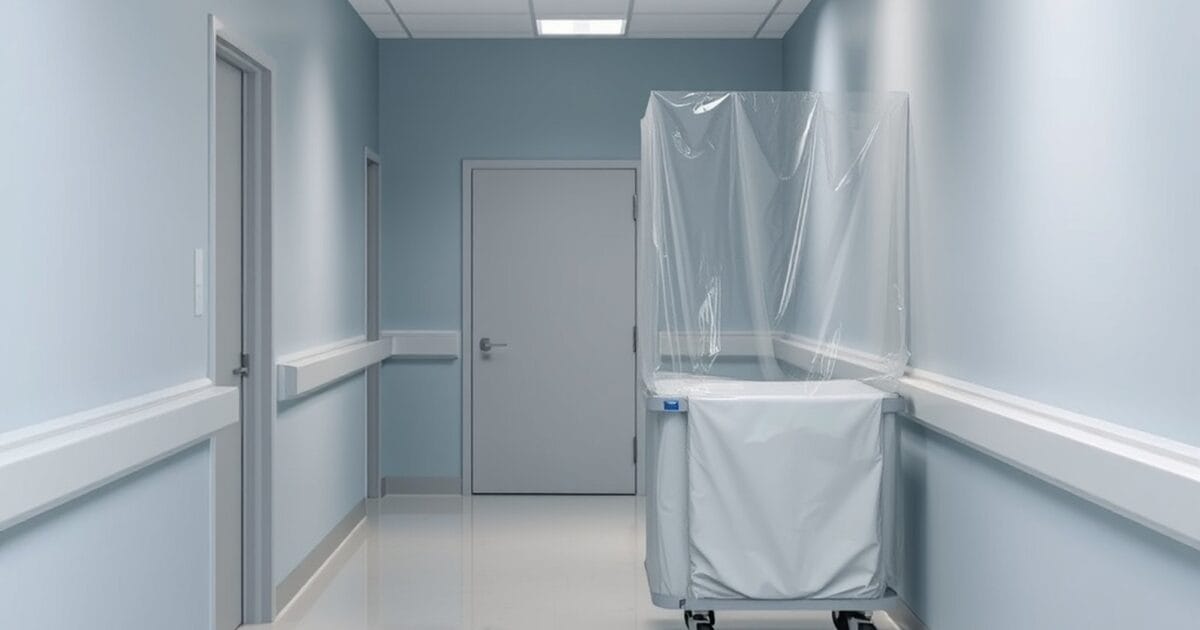
For a painter, the important point is that the assessment is produced before the work and it changes the scope. Precautions can include barriers, sealed doors, sticky mats at the exit, covered carts, cleanup at the end of each shift and restrictions on where debris travels. The facility infection prevention team will usually own the document, and the painter is expected to follow it exactly.
Ask for the assessment, or the facility policy, before pricing. A number built without it is a number for a different job. The CDC publishes environmental infection control guidelines for healthcare facilities, which explain the thinking behind these precautions and are worth reading before the first walkthrough.
Some painting contractors take formal training in healthcare construction infection control so they can speak the same language as the facility. Whether or not that training is required on a given job, it helps with the conversation.
Containment, dust and the air the patients breathe
Sanding, patching and scraping make dust, and dust is the reason infection control teams care about painters. Where the assessment calls for it, the painter builds a contained work area: plastic or hard barriers from floor to ceiling, sealed seams, a controlled entrance and, on some jobs, equipment that filters the air inside the enclosure.
Containment is labor and material that produce no paint on the wall. It has to be built, inspected, maintained, cleaned and removed, sometimes for every room. The easiest way to price it is as a line of its own, per room or per area, so that the facility can see what it is paying for and the painter can track whether the allowance was right.
Dust control also changes how prep is done. Wet methods, vacuums with appropriate filtration and careful patching reduce dust but slow the work. The prep allowance on a healthcare job should reflect that, and the logic of pricing prep properly is in how to account for prep time in a painting estimate.
Where older buildings are involved, the question of what is in the existing coating comes up as well. Lead is possible in older structures, and disturbing it has its own rules. The OSHA overview of lead in the workplace is a good starting point, and testing before prep is cheaper than finding out afterward.
Odor is a clinical problem here, not a comfort problem
In a home, paint smell is an inconvenience. In a healthcare building it can be a clinical issue. Patients with breathing conditions, people recovering from surgery and staff working long shifts all share the air, and a strong smell drifting down a corridor will stop a job faster than any inspector.
Low odor and low emission products are the usual answer, but product choice alone is not enough. Ventilation, containment, the time of day the work is done and the time allowed before a room is returned all matter. The practical side of clearing a smell after painting is described in how to get rid of paint smell, and in a healthcare building those steps are part of the plan rather than an afterthought.
The EPA explains why emissions from building products matter in its page on volatile organic compounds and indoor air quality. For pricing, odor control shows up as slower product, more ventilation equipment, shorter work windows and a longer gap before a room is released. Each of those costs time.
Surfaces that are scrubbed every day
Walls in patient rooms, corridors, bathrooms and treatment areas are cleaned often and with strong disinfectants. A coating that looks good on handover day but softens, stains or wears through under that cleaning becomes the painter problem within months.
Choose products that the manufacturer describes as suitable for frequent cleaning with the disinfectants the facility uses, and ask the facility which products those are. Sheen matters too: flatter finishes hide surface flaws but are harder to clean, while higher sheens clean well but show every patch. The trade offs are set out in the paint sheen guide.
Surface preparation matters as much as the product. Walls that have been wiped with cleaning chemicals for years can carry residues that interfere with adhesion, and they need a proper clean before any coating goes on. The basic process is in how to clean walls before painting, and in a healthcare building it deserves its own line on the estimate.
Clinics, dental and medical offices are the way in
Large hospitals often work with a small group of approved contractors and buy through formal processes. Breaking in cold is slow. Outpatient clinics, dental practices, physical therapy offices, imaging centers and medical office buildings are a more realistic starting point for most painting businesses.
These smaller facilities have many of the same concerns about cleanliness, odor and patient comfort, but decisions are made by a practice manager or a building owner rather than a committee. Work is usually done after hours or over a weekend, and the scope is closer to a commercial office repaint with added care. The pricing of after hours office work is covered in how much to charge to paint an office building.
A few well run clinic jobs build the references and the paperwork that larger facilities ask for. The approach to breaking into commercial buyers generally is in how to get commercial painting clients.
Credentialing, badges and the vendor file
Healthcare facilities keep files on the contractors who enter their buildings. Requirements vary, but they can include insurance certificates at particular limits, background checks, proof of vaccinations or health screening, safety training records and orientation to the facility itself. Some facilities use outside services to manage vendor credentials, and some charge contractors to register.
All of this takes time before the first day and continues through the job, because badges expire, crews change and new workers have to be cleared before they can start. Budget the office time to assemble and maintain the file, and do not promise a start date until every worker on the crew is cleared. The insurance side of the conversation is in painting business insurance.
Crew stability matters here more than on most jobs. Swapping in a new painter midweek may be impossible if that person has not been cleared, so plan the crew for the whole job at the start.
Life safety details a painter can break
Healthcare buildings are full of fire and life safety features, and a careless coat of paint can compromise them. Fire rated doors and frames carry labels that must stay readable. Sprinkler heads must not be painted. Smoke detectors, door closers, hold open devices and fire alarm devices must be protected. Penetrations through rated walls must not be disturbed.
These items are easy to miss on a fast job and expensive to fix, because a painted sprinkler head or an obscured door label may need replacement rather than cleaning. Protect them before painting and inspect them after. Where the scope includes coatings on structural steel for fire protection, that is specialized work with its own requirements, described in intumescent paint.
Write the protection of life safety devices into the scope so that the facility knows it has been considered, and so that the time is visible in the price.
Pricing the hours you cannot paint
The biggest mistake painters make on healthcare work is using production rates from commercial offices. The painting itself may go at a similar speed, but the day contains much less of it.
Build the estimate in layers. Start with the painting hours from your own production rates, using painting production rates as the reference for how to set them. Add the setup and teardown of containment for each area. Add the waiting and moving between released rooms. Add orientation, badging and the time lost when a room is not released as planned. Add the cleanup the infection control plan requires at the end of each shift.
Many painters convert the result into a daily productivity factor: the share of a crew day that ends up as paint on the wall. Tracking actual hours on the first few healthcare jobs is the only honest way to set that factor, and the method is in how to track painting job costs.
Finally, price the risk of disruption. Rooms that are released late, work that is stopped because a patient needs the space, and shifts that are cancelled at short notice all cost money. Say in the estimate how those events are handled. A lost shift caused by the facility should be a chargeable item, not a cost the painter quietly absorbs.
Documentation the facility will keep
Healthcare facilities are inspected and surveyed, and they keep records of the work done in their buildings. Expect to provide product data sheets and safety data sheets for every coating, records of the precautions taken, inspection signoffs, and before and after photographs where requested.
Treat the paperwork as a deliverable. Assemble it as the job runs rather than at the end, and include it in the closeout package. The general closeout process is in painting job closeout checklist, and a facility that receives a complete package without chasing it is a facility that remembers the contractor.
Is healthcare the right segment for your business
Healthcare suits painting businesses that are organized, patient and comfortable with rules. It rewards crews who work cleanly and quietly, office staff who keep paperwork current and owners who price conditions honestly. It is steady work once a facility trusts you, and much of it repeats on a cycle.
It does not suit businesses that make their margin on speed. The day is full of time that cannot be converted into square feet, and a painter who tries to push production usually ends up in conflict with the facility. Start with a clinic or medical office, learn the rules on a small job, and price the next one from what the first one actually cost. The wider picture of choosing work by margin is in painting profit by job type.
This is general information about how painting businesses approach healthcare work, not legal or safety advice. Infection control, credentialing and life safety requirements differ between facilities and jurisdictions, so confirm them with the facility before pricing.
Every kind of building takes hours away from painting. Price them.
PaintPricing builds itemized estimates from your own rates, so night shifts, containment, escorts, access and protection sit on the quote as lines the client can see, not a guess inside one number. Free for your first 3 quotes, no card required.
Frequently asked questions
Do painters need an infection control risk assessment in a hospital?
Often, yes. Many facilities require one before construction or renovation work in or near patient areas, and painting can fall within that process. The facility usually produces it, and the painter must follow the precautions it sets.
Why do healthcare painting jobs cost more than office jobs?
Less of each day becomes paint on the wall. Containment, waiting for rooms, credentialing, odor control, extra cleanup and protection of life safety devices all take time that an office repaint does not need.
What paint is used in hospitals and clinics?
Usually low odor, low emission products that the manufacturer describes as suitable for frequent cleaning with disinfectants. Ask the facility which cleaning products it uses and choose coatings that tolerate them.
How do I get my first healthcare painting job?
Start with smaller facilities such as clinics, dental practices and medical office buildings. They share many of the same concerns but decide more quickly, and they build the references larger facilities ask for.
What paperwork do healthcare facilities ask painters for?
Commonly insurance certificates, worker background and health screening records, safety training, product and safety data sheets, and records of the precautions taken during the work. Requirements vary by facility.
Can painters work in occupied patient areas?
Sometimes, with the precautions the facility requires. More often, rooms are released in windows and returned after painting and cleanup. The facility decides, and the schedule has to be built around its decisions.