In this article
Quick answer: A professional painter finishes an average bathroom in 3 to 6 hours, while a DIY homeowner usually needs most of a day. The square footage is small, but slow, detailed cut-in around tile, the vanity, the mirror, and fixtures is what eats the clock, and moisture-resistant paint plus humidity slow the drying.
This is a planning guide, not a cost article. If you are scheduling the job or blocking out a day off to do it yourself, the timeline below shows where the hours actually go. To turn that working time into a number, run the room through the painting estimate calculator or request a free painting estimate once you have the scope.
How long it takes to paint a bathroom
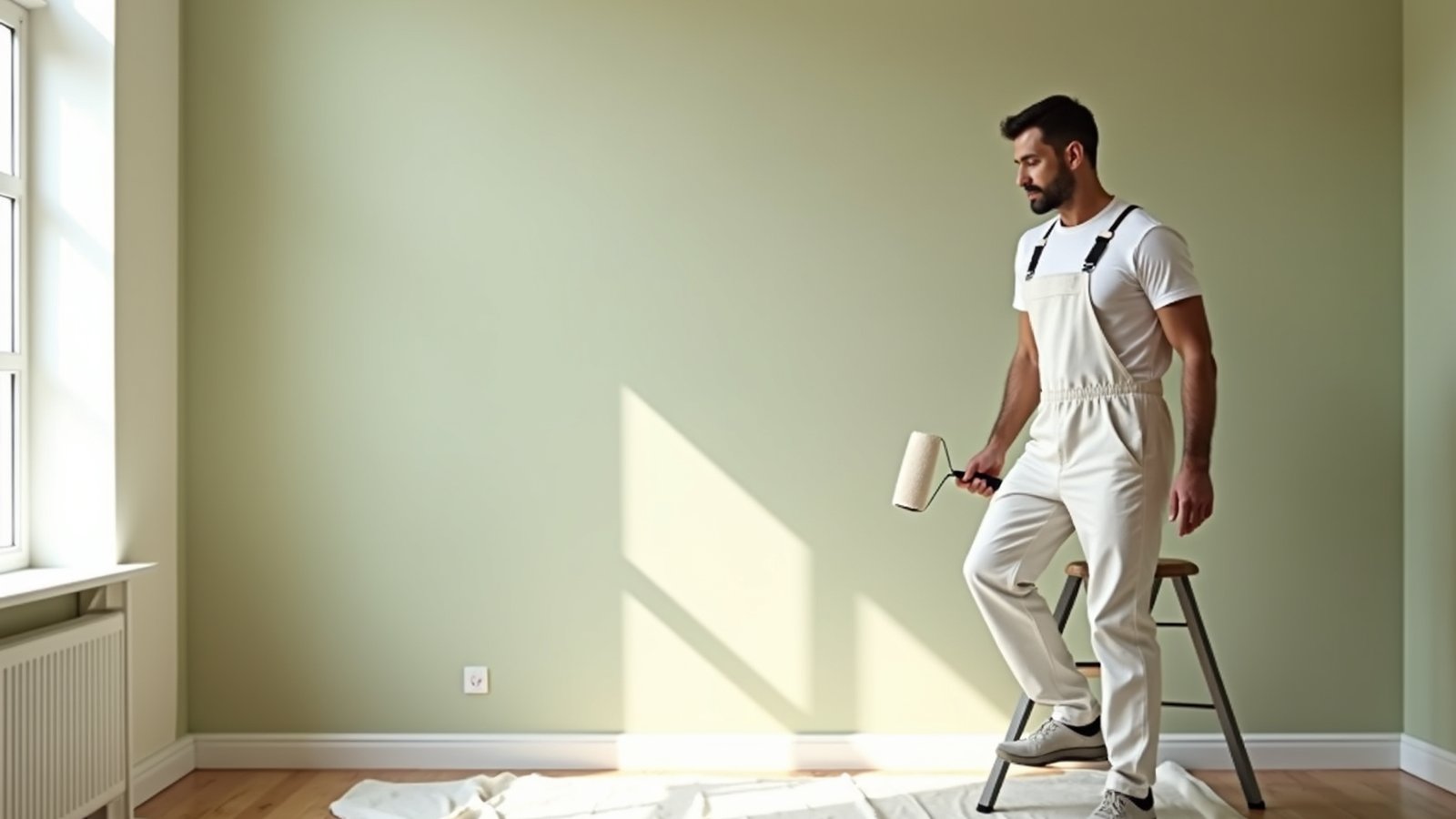
Bathrooms are small but fiddly. Most of the time is cutting in carefully around fixtures rather than rolling open wall. Here is how the hours break down by bathroom size, split between a pro and a DIY homeowner.
| Bathroom size | Pro painter | DIY homeowner | Notes |
|---|---|---|---|
| Half bath / powder room | 2 to 3 hours | 4 to 6 hours | Small but heavy cut-in |
| Full bath (average) | 3 to 6 hours | Most of a day | Tile, vanity, tub surround |
| Large / master bath | 5 to 8 hours | 1 to 1.5 days | More fixtures and trim |
| Walls + ceiling + trim | 1 day | 1.5 to 2 days | Moisture-resistant ceiling coat |
Notice the ratio: a bathroom has a fraction of the wall area of a bedroom, yet it can take nearly as long. That is because so little of the surface is open wall you can roll quickly. Most of it is tight brushwork along the top of the tile, around the mirror, behind the toilet, and along the vanity.
What determines how long it takes
The factors below explain why one bathroom takes two hours and another takes a full day.
- Prep and repairs. Bathrooms accumulate moisture damage: peeling paint near the tub, mildew spots, caulk that needs replacing. Cleaning grease and soap film, scraping, and spot-priming can add 1 to 2 hours before painting.
- Number of coats. Moisture-resistant bathroom paints often need two coats for an even sheen, and covering a dark or glossy old color can require a primer plus two coats.
- Drying time between coats. This is where bathrooms differ from other rooms. High humidity slows the film, so the drying time between coats stretches longer than the can’s stated minimum. Run the exhaust fan and crack the door to speed it up.
- Crew size. Bathrooms are too small for a full crew to work efficiently. One or two painters is the practical limit, so you cannot compress the timeline as much as you can in a larger room.
- Surface condition. Glossy old enamel and humidity-glazed walls need deglossing or priming for the new paint to grip.
- Cutting in around fixtures. This is the big one. Tile edges, the mirror, the vanity, the tub surround, towel bars, the toilet tank, and the medicine cabinet all demand slow, precise brushwork. A bathroom is almost all edges.
DIY vs hiring a pro: the timeline difference
In a bathroom the pro advantage is steadiness and a loaded brush, not parallel crews, because there is barely room for two people. Here is how the same job splits out.
| Phase | Pro painter | DIY (solo, first time) |
|---|---|---|
| Clear fixtures, mask tile, mirror, vanity | 30 to 45 min | 1 to 1.5 hours |
| Clean, scrape, spot-prime, caulk | 30 to 60 min | 1.5 to 2.5 hours |
| Cut in around everything | 1 to 1.5 hours | 2 to 3 hours |
| Roll open wall, first coat | 20 to 40 min | 1 hour |
| Drying time (humid room) | 3 to 5 hours | 3 to 5 hours |
| Second coat and touch-ups | 1 hour | 1.5 to 2 hours |
The cut-in line is where DIYers lose the most time. A pro pulls a clean edge along the tile freehand in one pass. A homeowner tapes everything, paints slowly, and still touches up. Because there is so little open wall, the rolling phase is almost trivial, which is why a bathroom feels disproportionately slow for its size.
How painters estimate the time
For a bathroom, square-foot production rates only get a painter partway, because the room is dominated by detail work. Pros estimate the open wall using painting production rates, then add a generous block of hours for cut-in around fixtures, which is figured by experience rather than area. The detail-heavy nature of bathrooms is exactly why painters often charge a higher rate per square foot here than in a plain bedroom.
That estimated labor time drives the quote. The painter converts hours into dollars, adds materials and overhead, and gives you a price. To see what that looks like from the contractor side, read how much to charge to paint a bathroom. Since a bathroom is mostly trim and edges, the how long it takes to paint trim and baseboards guide is a useful companion for sizing that portion.
How to speed up a bathroom paint job
Because a bathroom is dominated by cut-in and a long humid drying window, the time savings come from two places: cleaner edges and faster drying. Here is where a homeowner can recover hours.
- Manage the air to shorten drying. The single biggest delay in a bathroom is the humid drying window. Run the exhaust fan, open the window, and set up a small fan to move air. Dropping the humidity can cut an hour or more off the wait between coats.
- Master a clean cut-in line. The tile edge, mirror, and vanity are where DIYers lose the most time taping and touching up. A quality angled sash brush and a steady hand often beat tape, because pulling tape on a small detailed room is slow and can lift fresh paint. Practice the freehand line on the least visible wall first.
- Remove hardware instead of cutting around it. Taking off towel bars, switch plates, and the toilet tank lid is faster than carefully edging around them and gives a cleaner result. Five minutes of unscrewing saves twenty minutes of fiddly brushwork.
- Spot-prime only what needs it. You rarely need to prime the whole bathroom. Hit the stains, peeling spots, and patched areas with a stain-blocking primer, then go straight to your finish coats. Priming the entire room adds a coat and a drying window you usually do not need.
- Use a small roller and a mini tray. A 4 inch roller fits the tight wall sections between fixtures and loads faster than a full-size setup you cannot maneuver around the vanity and toilet.
- Buy the right amount. A bathroom rarely needs more than a quart or two. Overbuying means a trip to return paint, and underbuying means a mid-coat run to the store. Size it before you start.
The theme is the same as any room: remove the stalls. In a bathroom that means controlling humidity so the paint dries on schedule and cutting edges cleanly the first time so you are not touching up. Do both and a full-day DIY job tightens toward the pro’s 3 to 6 hours.
A worked timeline: average full bathroom, one painter
Here is a realistic schedule for a solo painter doing two coats on an average full bathroom, walls only.
- 9:00 to 9:45. Remove towel bars and switch plates, mask the tile line, mirror, vanity, and tub surround, cover the floor.
- 9:45 to 10:45. Clean soap film and grease, scrape loose paint near the tub, spot-prime stains, recaulk where needed.
- 10:45 to 12:15. Cut in around every fixture: tile edge, mirror, vanity, window, ceiling line. This is the bulk of the job.
- 12:15 to 12:45. Roll the small open wall sections, first coat. Turn on the exhaust fan.
- 12:45 to 4:00. Break while the first coat dries. Humidity makes this window longer than in a dry room.
- 4:00 to 5:00. Second coat on cut-in and walls.
- 5:00 to 5:30. Pull tape, touch up, reinstall hardware, cleanup.
That is the better part of a day for one person, mostly because of the long humid drying window. A pro shaves it by cutting in faster and managing airflow, landing in the 3 to 6 hour range of active work.
Time is one part of the plan. To budget the money, see the cost to paint a bathroom, and to buy the right amount of paint without overshooting on a small room, check how much paint for a bathroom. A bathroom rarely needs more than a quart or two, so it is easy to overbuy.
One more scheduling note specific to bathrooms: avoid using the room overnight before the paint has cured. Even when a coat is dry to the touch, a hot shower the next morning floods the room with moisture that can soften or spot a fresh finish. Plan the job for a day when the household can go a full evening, and ideally a day or two, without steaming up that bathroom. If it is the only bathroom in the house, paint early in the day so the surface has the longest possible head start before anyone needs it.
Working time versus calendar time
A bathroom shows the gap between labor hours and calendar time more sharply than any other room, because moisture controls the schedule. The active painting might be only 3 to 4 hours, but the room is out of full service much longer, and in a one-bathroom home that distinction drives the whole plan.
Run the math on an average full bath. Cut-in and rolling take roughly 2 to 3 hours of hands-on work. But the humid drying window between coats can stretch to 3 to 5 hours instead of the 2 to 4 a dry room would need, and the cure that lets the finish survive a steamy shower takes a day or two beyond that. So a job with 4 hours of labor can easily span a full calendar day, and the safe no-shower window runs longer still.
The practical takeaway: do not schedule a bathroom repaint the evening before a busy morning. Paint it on a day when the household can route around that bathroom for a full evening, and ideally skip hot showers in it for 24 to 48 hours so the moisture-resistant finish cures hard. If it is the only bathroom, start at first light, run the exhaust fan the entire time, and you can usually have both coats on and dry to the touch by evening, with the deeper cure finishing overnight. Treat the drying window as the real constraint, not the brushwork.
Ready to book it? Get a quick free painting estimate, or size the job yourself with the painting estimate calculator. Knowing the cut-in is the slow part lets you plan the day around the drying window instead of being surprised by it.
Frequently asked questions
Why does a small bathroom take so long to paint?
Because almost the entire surface is edges, not open wall. Tile lines, the mirror, the vanity, the tub surround, and fixtures all need slow, careful cut-in by brush. There is very little area you can roll quickly, so the room takes nearly as long as a much larger bedroom despite its small square footage.
How long does paint take to dry in a bathroom?
Longer than in a dry room. High humidity slows the paint film, so a coat that lists 2 to 4 hours to recoat may need 3 to 5 hours in a steamy bathroom. Run the exhaust fan, crack the door, and avoid showering in the room until the paint fully cures, which can take a few days.
Can you paint a bathroom in one day?
Yes, a full bathroom is typically a one-day job for a pro and most of a day for a careful DIYer. The schedule is dominated by cut-in and the humid drying window between coats. Starting early in the day gives the first coat enough time to dry so you can finish the second coat the same afternoon.
Do you need special paint for a bathroom?
Moisture-resistant or bathroom-specific paints with a satin or semi-gloss sheen resist mildew and wipe clean better than flat wall paint. They often need two coats for an even finish, and because the room stays humid, plan a longer drying window between those coats than the can’s minimum suggests.
Is it faster to hire a pro for a bathroom?
A pro is faster mainly because they cut in fixtures cleanly freehand and manage airflow to speed drying, finishing in 3 to 6 hours of active work. A bathroom is too small for a large crew, so the time saving comes from skill rather than extra hands. A first-time DIYer should plan most of a day for the same room.