In this article
- Cost to paint a bathroom by size
- What goes into the price
- DIY vs hiring a pro
- How painters price the job
- A worked example
- What raises your quote
- Why bathroom paint quality matters more here
- What you get at each price point
- Prepping a bathroom the right way
- Should you paint the bathroom ceiling too?
- Common bathroom painting mistakes that cost more
- How to compare bathroom painting quotes
- Frequently asked questions
About the cost figures on this page
Any cost ranges shown here are illustrative estimates, not a quote. What you actually pay varies widely with your location and local labour rates, the size and condition of the surfaces, access and setup, the products specified, how much prep the job needs, and the time of year. Use these numbers to sanity check a quote you have been given and to understand what drives the total, then get written quotes from local contractors before you budget. You can also build an estimate around your own project with the free calculator.
Quick answer: In 2026, painting a bathroom typically costs $150 to $900, with a small half bath at the low end and a large master bath at the high end. The main price driver is not size but detail: bathrooms have lots of tight cut-in around tile, vanities, mirrors, and fixtures, plus moisture-resistant paint, so cost per square foot runs high.
This guide breaks bathroom paint cost down by type of bathroom, explains why the smallest room in the house can cost more per foot than a bedroom, and shows what you can DIY. For a fast number on your exact bathroom, run our free painting calculator or request a quick painting estimate.
Cost to paint a bathroom by size
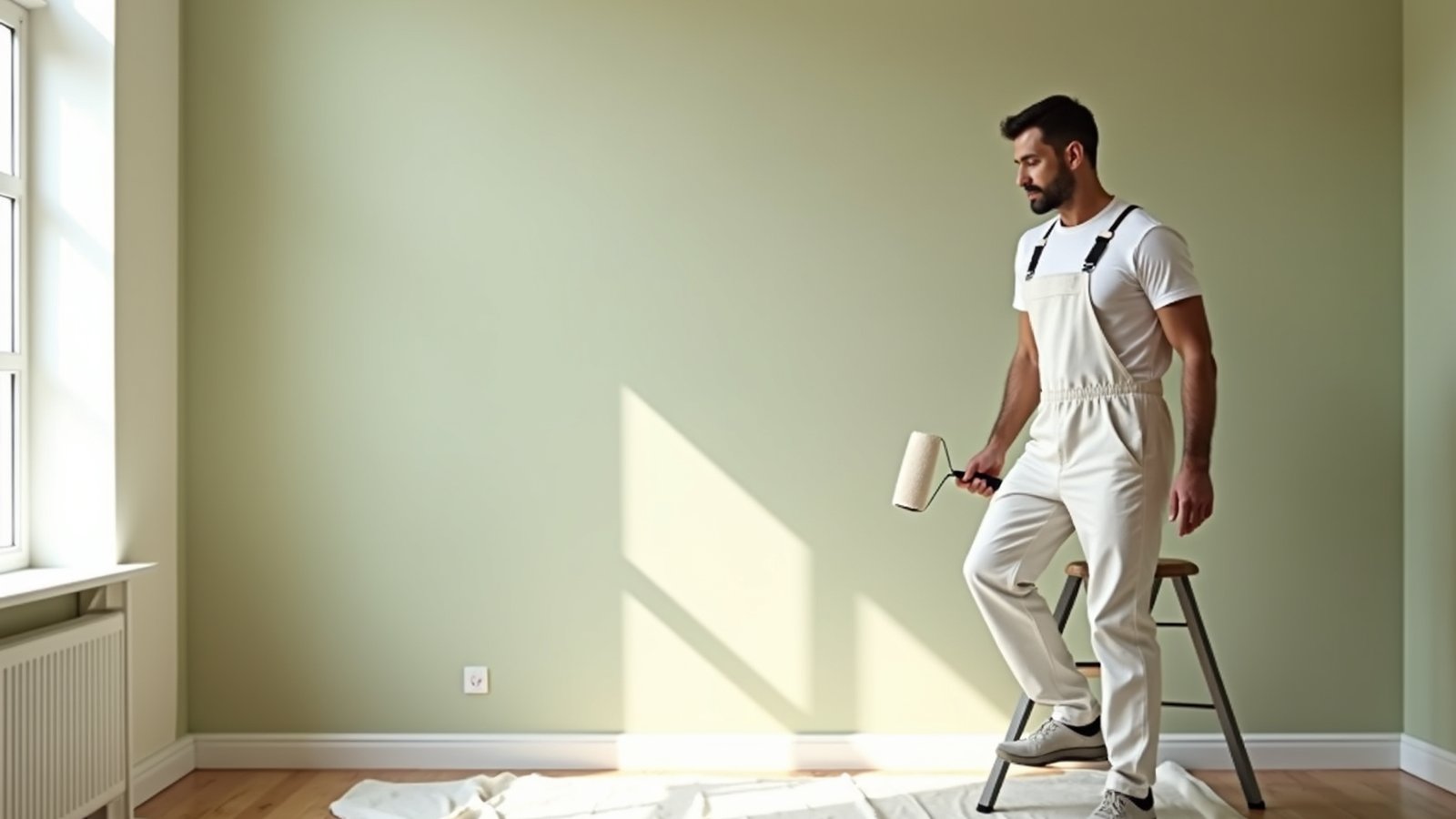
Bathrooms are small, but they are slow to paint because of all the obstacles. The table below shows typical 2026 pro pricing for labor plus materials.
| Bathroom type | Approx. size | Pro cost (labor + materials) |
|---|---|---|
| Small half bath / powder room | 15 to 25 sq ft floor | $150 to $350 |
| Standard full bath | 40 to 60 sq ft floor | $250 to $550 |
| Large / master bath | 70 to 120 sq ft floor | $400 to $900 |
Notice how the dollar ranges do not shrink the way the floor area does. A powder room has very little wall, but you still pay for setup, careful masking, and detailed cut-in. That is why bathrooms have one of the highest cost-per-square-foot figures in the house.
What goes into the price
Several factors push bathroom pricing above what the small footprint suggests:
- Detailed cut-in. Painters work slowly around tile edges, the vanity, the mirror, the medicine cabinet, towel bars, and the toilet. This precision cutting is the single biggest time cost.
- Moisture-resistant paint. Bathrooms need a satin or semi-gloss with mildew resistance, which costs more per gallon than flat wall paint.
- Prep and repairs. Humidity causes peeling, bubbling, and mildew spots that must be scraped, primed, and sealed before painting.
- Number of coats. Two coats is standard, and patchy or stained walls may need a stain-blocking primer first.
- Fixtures in the way. Painters often have to mask or work around plumbing, lights, and exhaust fans, which slows the job.
- Ceiling. Bathroom ceilings take moisture and frequently need their own coat of mildew-resistant paint.
Because labor dominates, the smallest bathroom rarely drops below about $150 once a pro factors in travel, setup, and cleanup.
DIY vs hiring a pro
A small bathroom is a great DIY candidate because the wall area is tiny. Here is a realistic materials-only budget:
| Item | Typical cost |
|---|---|
| 1 gallon moisture-resistant paint | $30 to $60 |
| Quart of stain-blocking primer | $12 to $20 |
| Angled brush and small roller | $12 to $25 |
| Tape, caulk, painter’s plastic | $10 to $20 |
| DIY total (materials) | $40 to $120 |
So you are weighing $40 to $120 in materials against $150 to $900 for a pro. The catch is that bathrooms are fiddly, and clean cut-in around tile and fixtures takes a steady hand. If you are comfortable with detail work, DIY is very cost-effective here. Our DIY painting vs hiring a painter guide helps you decide.
How painters price the job
Because bathrooms are small, most painters use a flat minimum or a small flat-rate rather than a pure per-square-foot number. Many companies have a job minimum of $150 to $300 that a powder room simply hits. When they do use square-foot math, the effective rate for a bathroom often runs $3 to $7 per square foot of wall, well above a plain bedroom, because of the detailed cutting.
To see how square-foot pricing works and where bathroom minimums come from, read our how to price painting jobs per square foot guide.
A worked example
Take a standard 5×8 full bathroom with an 8-foot ceiling.
- Wall area: perimeter (26 ft) times height (8 ft) = 208 sq ft, minus roughly 50 sq ft for the door, window, tile wainscot, and vanity = about 150 sq ft of paintable wall.
- Paint: 150 sq ft over two coats fits in 1 gallon of moisture-resistant paint at $45 = $45.
- Sundries and primer: $30.
- Labor: 4 to 6 hours because of slow cut-in. At $50 to $65 per hour, that is $200 to $390.
- Total pro price: about $275 to $465, squarely in the standard full-bath band.
What raises your quote
A few bathroom-specific factors can push the price up fast:
- Mildew or water damage that needs scraping, sealing, and a stain-blocking primer.
- Painting the ceiling in addition to the walls, which adds a separate surface.
- Tile-to-wall transitions with lots of edges to cut around.
- A bold color change that requires a primer plus two coats.
- Removing and reinstalling fixtures like a mirror or towel bars for a cleaner finish.
If one bid is dramatically lower than the rest, it may skip prep that bathrooms genuinely need. Our painting estimate red flags guide explains what to watch for.
If your bathroom job includes the ceiling or trim, those are priced separately. See our cost to paint a ceiling and cost to paint trim and baseboards guides to add them in.
Before you shop for paint, figure out how much you need so you do not over-buy for such a small room. Our how much paint for a bathroom guide gives you the gallon count based on your dimensions.
For most homeowners, a bathroom is the cheapest room to repaint and one of the highest-impact, since fresh paint hides moisture wear and brightens the space instantly. When you want a real number, get a free painting estimate or run the painting calculator for your exact bathroom.
Why bathroom paint quality matters more here
In most rooms you can get away with a mid-grade flat paint and never notice. A bathroom punishes that choice. Constant humidity, splashes near the sink and tub, and condensation on cooler walls all attack the finish. Flat paint soaks up moisture, grows mildew in the corners, and cannot be scrubbed without burnishing. That is why painters quote a satin or semi-gloss with a mildew inhibitor, and why a gallon costs more than basic wall paint.
The good news is that you only need one gallon for almost any bathroom, so the upgrade adds only $10 to $25 to the whole job. Skimping here is one of the most common DIY regrets, because a cheap finish in a wet room can start peeling or spotting within a year, forcing a repaint that wipes out any savings. Spend the small premium and the paint will hold up for years of showers.
What you get at each price point
Because bathrooms are small, the price bands are tighter than other rooms, but they still tell you about scope:
| Price band | What it usually includes |
|---|---|
| $150 to $250 | Powder room or half bath, walls only, minimal prep, often a company minimum. |
| $250 to $450 | Standard full bath, walls plus the ceiling, light mildew prep, moisture-resistant paint. |
| $450 to $900 | Large or master bath, walls, ceiling, detailed trim, stain-blocking primer, and fixture work. |
If a quote for a small bath comes in under $150, ask what prep is included. Bathrooms genuinely need a clean, dry, mildew-free surface before paint, and a number that low sometimes means that step is being skipped.
Prepping a bathroom the right way
Whether you DIY or hire out, the prep sequence in a bathroom is what makes the paint last. A thorough job runs the room through these steps before a drop of finish paint goes on:
- Clean and degrease. Wipe walls with a mild cleaner to remove hairspray, soap film, and skin oils that block adhesion.
- Treat mildew. Scrub any black or pink spots with a mildew remover and let the wall dry fully.
- Repair and seal. Patch nail holes and cracks, then spot-prime any stained or repaired areas with a stain-blocking primer.
- Caulk gaps. Fresh caulk along the trim, vanity, and tub edge gives crisp lines and keeps moisture out.
- Ventilate. Run the exhaust fan or open a window so coats cure properly in the humid space.
Skipping any of these is the fastest way to end up repainting in a year. The humidity in a bathroom is unforgiving, so the surface has to be clean, dry, and sound before the new paint goes on.
Should you paint the bathroom ceiling too?
In most rooms the ceiling is optional, but in a bathroom it is often the surface that needs paint the most. Steam rises and settles on the ceiling, so that is where mildew, yellowing, and peeling tend to show up first. If your ceiling has any spotting or a dingy cast, painting the walls alone will only make the tired ceiling more obvious by contrast.
Adding the ceiling typically costs an extra $75 to $250 depending on the bathroom size, and it should be done in a mildew-resistant ceiling paint rather than a standard flat. For a full bath or master bath, doing walls and ceiling together is usually the better value because the painter is already set up, masked, and on site. For a powder room with no shower, the ceiling sees little moisture and can often wait.
Common bathroom painting mistakes that cost more
Most bathroom repaint regrets trace back to a handful of avoidable mistakes. Knowing them helps whether you DIY or vet a contractor:
- Using flat paint that cannot handle moisture and starts spotting within months.
- Painting over mildew instead of killing it first, which lets it bleed right back through.
- Skipping the stain-blocking primer on water stains, so the stain ghosts through the new color.
- Rushing the dry time in a humid room, leaving a soft finish that scuffs easily.
- Sloppy cut-in along tile and the vanity, which is the detail that makes a bathroom look amateur.
Each of these tends to force an early repaint, which is the most expensive outcome of all. Doing the bathroom right the first time, with the correct paint and patient prep, is what keeps the true cost low over the years you live with it.
How to compare bathroom painting quotes
Because bathrooms are small, the dollar differences between bids look small too, which makes it tempting to just take the lowest number. Resist that. A good bathroom quote spells out exactly what surfaces are included and what prep is covered. When you collect estimates, line them up against the same checklist so you are comparing equal scopes rather than guessing.
- Surfaces: walls only, or walls plus ceiling, trim, and the inside of the door.
- Paint grade: a named moisture-resistant satin or semi-gloss, not generic flat.
- Prep: degreasing, mildew treatment, patching, and stain-blocking primer where needed.
- Coats: two finish coats stated clearly, plus primer on any repairs.
- Fixtures: whether towel bars, the mirror, or switch plates come off for cleaner edges.
A slightly higher bid that includes the ceiling, the right paint, and real prep is almost always a better value in a wet room than a rock-bottom number that leaves those out. Knowing what a complete quote covers is the difference between a finish that lasts a decade and one you redo in a year.
Frequently asked questions
Why does a small bathroom cost so much to paint?
Because labor, not paint, drives the price. A bathroom has very little wall but lots of tight cut-in around tile, the vanity, the mirror, and fixtures, so it takes a pro several hours even though the room is small.
How much does it cost to paint a small half bath?
A powder room or half bath usually costs $150 to $350 for a pro, which is often just the company’s job minimum given how little wall there is.
What kind of paint should I use in a bathroom?
Use a satin or semi-gloss with mildew resistance. The slight sheen wipes clean and stands up to humidity far better than flat wall paint.
Can I paint my own bathroom?
Yes. The wall area is small, so materials run only $40 to $120. The challenge is patient cut-in around tile and fixtures, so take your time and use good tape.
Does the bathroom ceiling need special paint?
It should. Bathroom ceilings absorb moisture, so a mildew-resistant ceiling paint prevents peeling and spotting. Expect the ceiling to add a modest amount to the total.
Quoting the job as a painter? See how much to charge to paint a bathroom.
Another humid, fixture-filled room? See the cost to paint a laundry room.
Choosing the paint? See the best paint for a bathroom, where moisture and mildew resistance matter most.
Making a small space feel bigger? See the best paint colors for a small room.
Refreshing dated tile instead of retiling? See how to paint over tile.
Painting it yourself? See how to paint a bathroom for handling moisture and mildew, the right sheen, and cutting in around the tub, vanity, and toilet.