In this article
Quick answer: The best paint colors for a small room are light, soft, and slightly cool, used in a low contrast, mostly monochromatic way. Light colors reflect more light and push the walls back, cool tones recede visually, and keeping walls, trim, and ceiling close in tone removes the hard lines that make a small space feel boxed in. The goal is to make the room feel larger and brighter, and color choice is one of the cheapest ways to do it.
Once you have a direction, it helps to know what the room will cost to paint so the plan stays realistic. Run a quick check with our paint cost calculator or get a free painting estimate before you buy.
What makes a good small room color
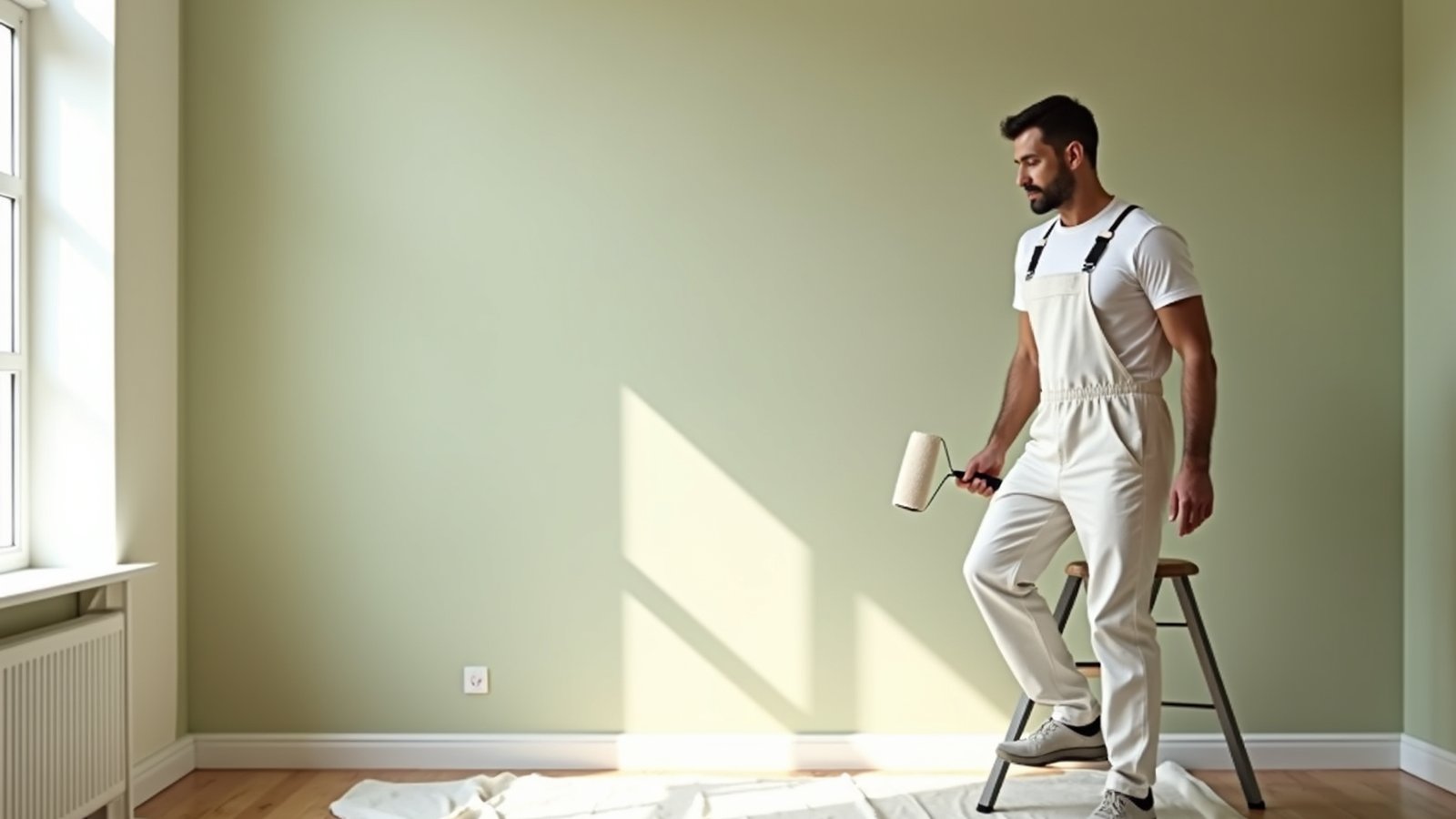
A small room has one main job for its color, and that is to feel bigger and more open than it actually is. Every choice should serve that goal. Color cannot move a wall, but it can change how close the walls feel and how much light bounces around, and that is most of the perception of size.
Reflect light. Light colors bounce daylight and lamplight around the room instead of absorbing it, so the space feels brighter and more open. A higher light reflectance value generally means a roomier feel.
Reduce contrast. Sharp contrast between walls, trim, and ceiling chops a small room into pieces and draws attention to its limits. Keeping those surfaces close in tone blurs the edges so the eye reads one continuous, larger volume.
Let cool tones recede. Cool colors visually step back, while warm colors advance toward you. In a small room, walls that step back make the space feel deeper than it is.
Stay soft and slightly muted. Very saturated colors feel heavy and close in on a small room. Softer, lighter versions of the same hue keep things airy.
Carry color up and over. Painting the ceiling the same light color as the walls, or a slightly lighter version, removes the hard line at the top and makes the ceiling feel higher.
Use the same color on trim, or close to it. Trim painted close in tone to the walls disappears, which stretches the room. High contrast trim frames and shrinks it.
Colors and families that work
Stick to light, cool leaning, low contrast families and you will rarely go wrong in a small space. Soft warm whites and off whites are the safest starting point because they reflect the most light and feel open while still avoiding a sterile hospital look. A white with a gentle warm undertone keeps the room from feeling cold.
Pale cool neutrals are excellent. A light greige or a soft gray with a cool or barely warm undertone recedes nicely and pairs with almost anything. Very pale blues and soft blue grays bring an airy, sky like openness that works beautifully in small bathrooms and bedrooms. Soft sage and pale, muted greens feel calm and fresh and still keep the space light when kept pale. A whisper of soft lavender gray can work in the right light too.
The unifying idea across all of these is to go light, keep it slightly cool or neutral rather than strongly warm, and keep saturation low. Then carry that one color, or a slightly lighter version, onto the ceiling and trim so the whole envelope reads as one expansive surface rather than a small box with edges.
A monochromatic approach is the most reliable way to open up a small room. Instead of pairing several different colors, choose one color and use slightly lighter and slightly deeper versions of it on walls, trim, and ceiling. Because the eye never hits a hard boundary between two contrasting colors, the surfaces blur together and the room reads as a single, larger space. This tone on tone idea is the quiet secret behind most small rooms that feel bigger than they are. It looks intentional and calm rather than busy, and it removes the visual clutter that makes a small room feel cramped.
If you do want a touch of personality, add it through soft accents rather than a bold wall. A single piece of art, a few cushions, or a light patterned textile gives the room interest without weighing it down. Save strong color for items you can move, and keep the fixed wall surfaces in the light, low contrast family that makes the room breathe.
Colors to be careful with
Dark and very saturated colors are the obvious risk. A deep charcoal or a bold jewel tone absorbs light and pulls the walls inward, which can make a small room feel like a closet. That said, a dark color used deliberately on every surface to create a cozy, enveloping den effect can work, but that is a different goal than feeling larger, so go in with eyes open.
High contrast schemes are the quieter trap. Bright white trim against a medium or dark wall draws a hard frame around the room and announces exactly how small it is. The same goes for a dark ceiling over light walls, which presses down on the space. In a small room, contrast is usually working against you.
Strong warm colors like deep terracotta, bright gold, or a saturated red advance toward you and shrink the space, even though they feel cozy. If you love warmth, choose a very pale, soft version rather than a full strength one. Busy, dark, or large scale patterns can crowd a small room the same way, so if you use wallpaper or an accent, keep it light and small in scale.
One more trap is the chair rail or two tone wall split, where the lower part of the wall is one color and the upper part another. That horizontal line cuts the wall in half and emphasizes how short the wall is, which works against the open feel you want. In a small room, an unbroken wall from baseboard to ceiling almost always feels taller and larger than a wall divided into bands. Keep the wall as one continuous color and let the height read uninterrupted.
Light, undertones, and testing
Light matters even more in a small room because there is often less of it to begin with. A small north facing room gets cool, weak light that can make a cool wall color look gray and gloomy, so you may need to nudge slightly warmer than the rule suggests. A small room with one window benefits from the lightest, most reflective colors you can find to make the most of what light there is.
Undertones can quietly wreck a small room. A pale gray that turns blue in low light, or a greige that goes pink, changes the whole feel of a tight space where the wall color surrounds you. Read our guide to paint undertones explained and always check your candidate against a pure white card and against the floor before you commit. The full decision process, including how light direction shifts a color, is covered in our pillar on how to choose paint colors.
Test on the actual wall, not the chip. Paint a large sample or a movable board, place it near the window and in the darkest corner, and look at it morning, midday, and at night with the lamps on. In a small room especially, a color that looks open at noon can feel cramped after dark, and you only learn that by living with the sample for a few days.
Pay extra attention to the corner of the small room that gets the least light, because that is where a color shows its heaviest side. If a candidate still feels open and airy in the darkest corner, it will feel even better elsewhere. If it goes flat and gloomy there, it is too dark for the space no matter how good it looks by the window. The darkest spot is the real test in a small room, since you cannot escape it the way you can in a larger space.
Pairing color with finish and cost
Color is only half the decision. The finish you choose affects both durability and how light moves around the room. In a small space, a finish with a little sheen, like eggshell or satin, reflects slightly more light and helps the room feel brighter, while also being easier to wipe clean in a tight area where walls get bumped. Flat finishes hide imperfections but bounce less light. Our paint sheen guide covers which finish suits which surface, and for a small bedroom specifically the product side is in our best paint for a bedroom guide.
Budget is the other half. Small rooms use less paint, so they are often an affordable project, but exact cost depends on wall condition, number of coats, and whether you do trim and ceiling too. Since many small rooms are bedrooms, our cost to paint a bedroom guide gives a realistic range, and our calculator lets you check your own room in a minute.
Because the monochromatic, low contrast approach works so well in small rooms, you may end up painting trim and ceiling the same or a similar color to the walls, which can actually simplify the job and the shopping. Fewer distinct colors means fewer cans and less cutting in between contrasting surfaces. That said, if you are doing the ceiling and trim in a slightly different sheen for durability, factor that in. The point is that a small room is usually a quick, low cost project, which makes it a great place to experiment with the light, open palette ideas here.
Frequently asked questions
What color makes a small room look bigger?
Light, soft, slightly cool colors make a small room look bigger because they reflect more light and visually recede. Soft warm whites, pale cool neutrals, light greige, and pale blues or sages are reliable choices. Keeping trim and ceiling close in tone to the walls amplifies the effect by removing hard edges.
Should I paint a small room white?
White is a strong choice for a small room because it reflects the most light. Choose a white with a soft warm undertone so it feels inviting rather than sterile, and avoid stark bright white with high contrast trim, which can feel cold and clinical. A soft off white often reads better than pure white.
Can I use a dark color in a small room?
You can, but understand the trade off. A dark color will make the room feel smaller and cozier, not larger. If you want a dramatic, enveloping den or powder room, dark on all surfaces can be lovely. If your goal is to feel more open, stay light. Avoid the worst of both worlds, a dark wall with bright high contrast trim.
Should trim be a different color in a small room?
Usually keep trim close in tone to the walls in a small room. Low contrast between walls and trim blurs the edges and makes the space feel larger. High contrast trim frames the room and emphasizes its size. If you want a little definition, choose a trim only a shade or two off the wall color.
What color ceiling for a small room?
Painting the ceiling the same light color as the walls, or a slightly lighter version, removes the hard line at the top and makes the ceiling feel higher and the room more open. A bright white ceiling over colored walls can work, but matching or near matching tends to feel more spacious.
Does the light in the room change which color I should pick?
Yes, strongly. A small north facing room with cool light may need a slightly warmer color than the general rule, while a small south facing room can carry cooler tones well. Always test your sample on the actual wall in your own light, morning to night, because light direction can change how a color reads more than the color name suggests.