In this article
- Step 1: Walk the job and define scope
- Step 2: Measure (the formula painters actually use)
- Step 3: Calculate paint by surface
- Step 4: Price labor at burdened crew rate
- Step 5: Add prep honestly
- Step 6: Mark up for overhead and profit
- Sample estimate calculation
- 7 mistakes that wreck an interior estimate
- FAQ
- How long should it take to write an interior estimate?
- Should I charge for the estimate?
- How accurate should an estimate be?
- How do I price a one-room job vs. whole-house?
- What software do most painters use to write estimates?
- Should I use square-foot pricing or hours-and-materials?
- Sources & references
- Quick reference: the 5-minute summary
TL;DR: Estimating an interior painting job is six steps: walk the space and measure (perimeter × ceiling height − openings), calculate paint by surface (walls, ceilings, trim, doors), price labor at burdened crew rate × production hours, add prep honestly, mark up for overhead and profit, and write it up so the homeowner can read it in 60 seconds. The two mistakes that break interior estimates: underbidding prep, and quoting “$X per square foot” without itemizing surfaces. This guide walks through each step with real numbers.
About the cost figures on this page
Any cost ranges shown here are illustrative estimates, not a quote. What you actually pay varies widely with your location and local labour rates, the size and condition of the surfaces, access and setup, the products specified, how much prep the job needs, and the time of year. Use these numbers to sanity check a quote you have been given and to understand what drives the total, then get written quotes from local contractors before you budget. You can also build an estimate around your own project with the free calculator.
Knowing how to estimate interior painting jobs separates painters who run profitable businesses from painters who stay busy and broke. The six-step process below is the same anatomy every honest residential painter follows when they walk a house, measure, and write a quote.
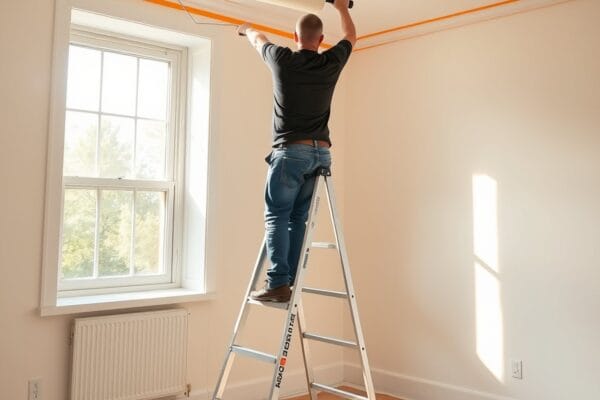
Step 1: Walk the job and define scope
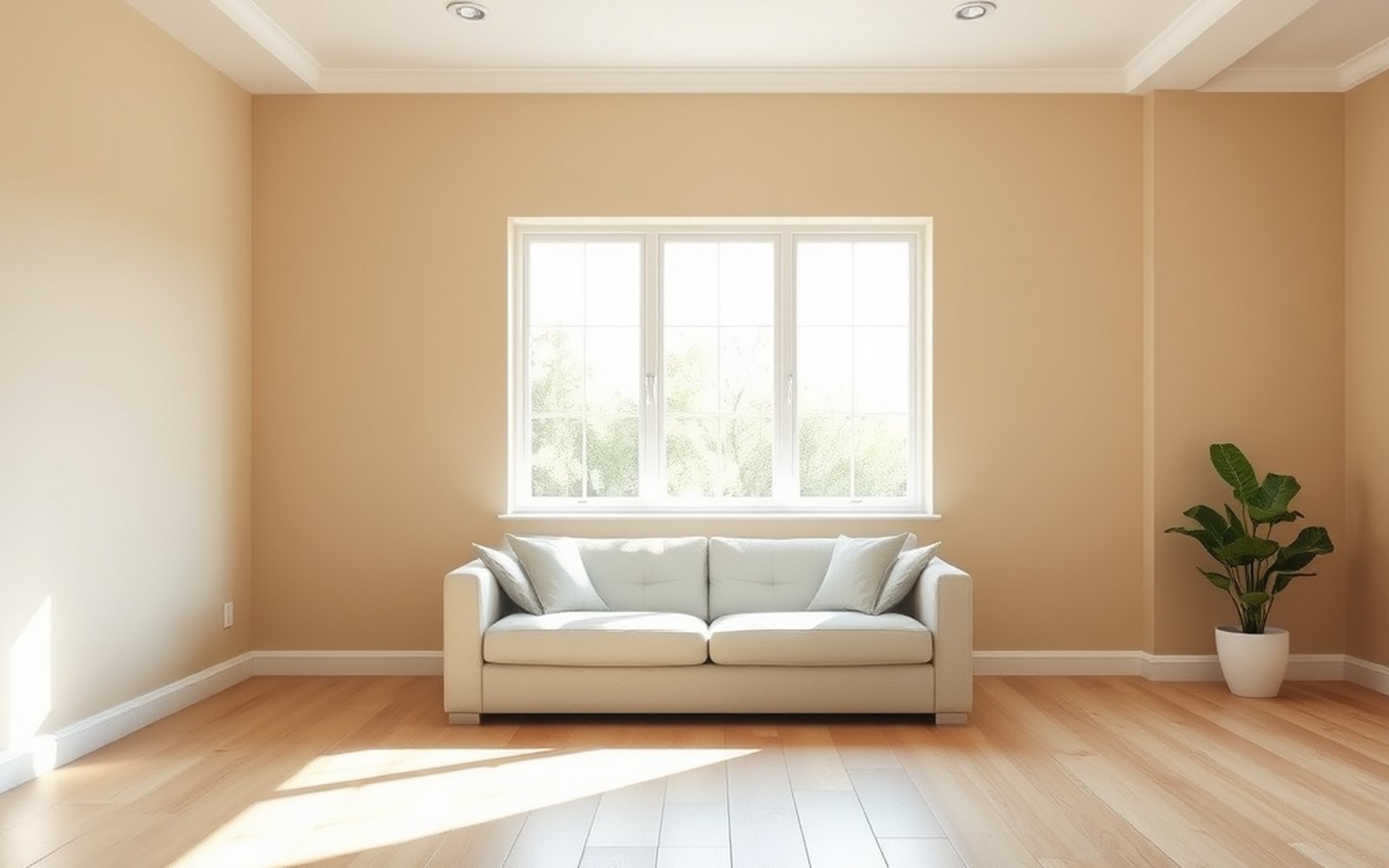
The walkthrough is the most important 30 minutes of the entire estimate. You’re not just looking at the rooms – you’re looking for the things that turn a clean job into a money-loser:
- Wall condition. Cracks, water stains, popcorn ceilings, oil-painted trim, glossy semi-gloss that needs sanding before it’ll hold latex.
- Ceiling height. Standard 8-9 ft is one rate. 10 ft+ is another. Vaulted or two-story foyer is a third.
- Color change. Cream to navy is a true second coat plus possible primer. White to off-white is one coat with touch-up.
- Furniture. Empty house is fastest. Lived-in is slower. Charge for moving, don’t bury it.
- Lead paint. Pre-1978 home? EPA RRP rule applies – certified renovator, dust containment, HEPA cleanup. That’s a real prep cost.
- Access. Stairs to a third floor? Tight hallways for ladders? Pets that have to be managed?
Bring a measuring tape, a notebook, and a phone for photos. Photos save you when the homeowner says “I thought you’d paint that closet too.”
“The estimate gets written at the kitchen table. The estimate gets won during the walkthrough. If you’re not asking questions and pointing out concerns when you walk the house, the homeowner thinks you’re guessing. Because you are.”
Step 2: Measure (the formula painters actually use)
For each room:
- Wall area = perimeter × ceiling height − (windows + doors + closets you’re not painting)
- Ceiling area = length × width
- Trim length = baseboard linear feet (perimeter, with adjustments for doorways)
- Door count = each door counted separately (slab vs. panel vs. cased)
Standard adjustments:
- Subtract 20 sqft per standard window
- Subtract 21 sqft per standard door (3′ × 7′)
- Round wall areas up to nearest 10 sqft (always favor the higher number – material waste is real)
For a quick gallon estimate, the rule of thumb is 1 gallon per 350-400 sqft of smooth interior wall, per Sherwin-Williams coverage specs. Textured walls drop to 250-300 sqft per gallon.
Step 3: Calculate paint by surface
| Surface | Coverage (sqft/gal) | Coats | Paint type |
|---|---|---|---|
| Smooth interior walls | 350-400 | 2 | Eggshell or satin latex |
| Textured walls | 250-300 | 2 | Same, more paint |
| Ceilings | 350-450 | 1 | Flat ceiling-specific |
| Trim & baseboards | ~80 lf/qt | 2 | Semi-gloss or satin alkyd |
| Doors | ~3 doors/qt | 2 | Same as trim |
| Primer (where needed) | 200-300 | 1 | Stain-blocking on shifts/repairs |
For a 1,500 sqft repaint with walls, ceilings, trim and doors: roughly 5-6 gallons wall paint, 2-3 gallons ceiling paint, 1-2 gallons trim paint, plus 1 gallon primer where needed. At contractor pricing of $35-$50 per gallon for mid-grade lines (SW ProMar 200, BM Regal), materials run $300-$450.
Step 4: Price labor at burdened crew rate
Per BLS May 2024 OES data, the median painter wage is $22.78/hr. That’s the wage – not the cost-to-employ. To get the burdened rate, add:
- Payroll taxes (FICA, Medicare, FUTA, SUTA): ~12%
- Workers’ comp insurance: 8-14% (state-dependent)
- General liability insurance: 2-4%
- Equipment and tool depreciation: ~5%
- Vehicle and fuel: ~5%
That brings a $22.78/hr wage to a real cost-to-employ around $35-$45/hr. In high-cost states (CA, NY, MA) it’s closer to $50-$55. That’s the rate that should drive your interior labor line.
| Surface | Production rate | Hours per 1,500 sqft repaint |
|---|---|---|
| Walls (smooth, two coats) | 250-400 sqft/hr | 18-24 hr |
| Ceilings (one coat) | 200-300 sqft/hr | 8-12 hr |
| Trim & baseboards (two coats) | 40-80 lf/hr | 12-16 hr |
| Doors (8 slab, two coats) | 1.5-2 hr/door | 12-16 hr |
| Total paint hours | – | 50-68 hr |
Step 5: Add prep honestly
This is where most interior estimates lose money. Walls don’t get painted in a vacuum.
| Prep task | Time per 1,500 sqft repaint |
|---|---|
| Patch and sand minor wall damage | 4-6 hr |
| Caulk trim and baseboard gaps | 2-4 hr |
| Mask windows, floors, fixtures | 2-4 hr |
| Move and cover furniture | 2-3 hr |
| Wash kitchen/bath walls (where needed) | 1-2 hr |
| Final cleanup | 2-3 hr |
| Total prep hours | 13-22 hr |
If the home was built before 1978 and you’re disturbing painted surfaces, EPA RRP adds 4-8 hours for plastic containment and HEPA cleanup, plus the certification cost amortized across jobs.
Step 6: Mark up for overhead and profit
Per Benjamin Moore’s contractor guide and PDCA benchmarks:
- Overhead (rent, software, marketing, admin time, insurance not loaded into labor): 8-12% of total cost
- Net profit target: 8-12% on top of cost + overhead
- Combined markup: typically 15-25% on cost
So if your direct cost (paint + labor + prep) totals $3,200, your final estimate should be $3,800-$4,000. Painters who skip the markup eat the overhead – and then wonder why the business doesn’t grow.
“You don’t have to win every bid. The painters making real money lose half their bids on price and win the half where the homeowner cares about quality. The race-to-the-bottom guys are busy and broke.”
Sample estimate calculation
1,500 sqft three-bed two-bath repaint, walls + ceilings + trim, mid-grade paint, no major repairs, $42/hr burdened labor:
| Line | Hours / qty | Rate | Cost |
|---|---|---|---|
| Walls – two coats | 22 | $42 | $924 |
| Ceilings – one coat | 10 | $42 | $420 |
| Trim & baseboards – two coats | 14 | $42 | $588 |
| Doors (8) – two coats both sides | 14 | $42 | $588 |
| Patch, sand, caulk | 6 | $42 | $252 |
| Mask, move, drop cloths, cleanup | 6 | $42 | $252 |
| Paint & primer (mid-grade) | – | – | $330 |
| Other materials (caulk, tape, plastic) | – | – | $80 |
| Direct cost | $3,434 | ||
| Overhead (10%) | $343 | ||
| Profit (12%) | $453 | ||
| Estimate to homeowner | $4,230 |
That’s a profitable interior estimate – not a race-to-the-bottom number. For more on what the homeowner sees on this estimate, see interior painting estimate (cost guide).
7 mistakes that wreck an interior estimate
- Quoting from photos. Walk the house. Photos miss damage, smells, and homeowner expectations.
- Bundling prep into one line. Itemize patch, caulk, mask, move. Bundles get cut by clients.
- Using wage rate, not burdened rate. $22/hr labor cost is wrong – your real cost is closer to $40.
- No primer line. If primer is needed (color shifts, repairs, new drywall), call it out and price it.
- Forgetting the second coat. Most paint specs are based on two coats. One coat looks fine for a month, then patchy.
- No change-order policy. Mid-job scope changes happen. The estimate should say what happens when they do.
- Ignoring overhead. Markup pays your office, software, vehicle, and time off. Skipping it is how painters work themselves out of business.
For a fast template painters can paste into a quote, see the painting estimate template and the best painting estimate apps. For homeowners reading the resulting estimate, see interior painting estimate.
FAQ
How long should it take to write an interior estimate?
30-60 minutes on-site for the walkthrough, plus 20-30 minutes back at the office line-iteming and writing it up. Painters who quote in 5 minutes are guessing.
Should I charge for the estimate?
Standard residential practice is free. Specialty restoration painters charge $50-$150 applied as a credit on booking. Decide based on your market – most painters who charge for estimates lose more leads than they gain.
How accurate should an estimate be?
Within ±10% of final invoice on a clean job. Major scope changes (homeowner adds rooms mid-job, surprise water damage) trigger change orders, not estimate revisions.
How do I price a one-room job vs. whole-house?
One-room jobs need a minimum charge – usually $250-$400 – to cover crew mobilization. Per-sqft on a 100 sqft bathroom is meaningless because setup time dominates the cost.
What software do most painters use to write estimates?
PaintScout, Jobber, Housecall Pro, and ProEst dominate residential. Excel and Google Sheets work fine for solo operators. See best painting estimate apps for a comparison.
Should I use square-foot pricing or hours-and-materials?
Hours-and-materials is more accurate for the painter and more transparent for the client. Square-foot pricing is faster but compresses everything into one number – and that number is what gets cut when the client compares bids.
Sources & references
Pricing ranges, labor benchmarks and coverage claims on this page are informed by the following sources.
- U.S. Bureau of Labor Statistics – Painters, Construction and Maintenance (OES 47-2141)
- Painting Contractors Association: Industry Standards and Production Rates
- Sherwin-Williams Pro – Product Data Sheets & Coverage Specs
- Benjamin Moore for Contractors – Technical Data & Coverage
- EPA Renovation, Repair and Painting (RRP) Rule – Pre-1978 Homes
A template is a starting point. This does the work.
PaintPricing produces an itemised, branded estimate you can send from your phone, without rebuilding the spreadsheet for every job. Free for your first 3 quotes, no card required.
Quick reference: the 5-minute summary
If you only have five minutes to read this, here are the takeaways that matter most for your decision.
- The 12-line-item rule: A complete painting estimate names rooms (not just “interior of house”), specifies the exact paint product (brand, line, sheen, color code), itemizes surface prep separately, and lists deposit terms in writing. Estimates missing any of these line items are openings for upcharges later.
- Compare on prep, not just price: Two estimates within 10-15% of each other on price almost always differ by 30-50% on prep scope. The cheaper bid is usually skipping caulking, patching, or spot-priming – not because the painter is faster.
- Verify license before signing: Look up the painter’s license number on your state contractor board website. Takes 2 minutes; protects you from unlicensed work that has no recourse path if anything goes wrong.
- Deposit caps vary by state: California caps at 10% or $1,000 (whichever is less). Maryland and Massachusetts cap at 33%. Anywhere a painter asks for 50%+ upfront is a red flag – possibly illegal in your state and a credibility issue everywhere.
- The 4-minute alternative: Build your own version of the estimate or sanity-check the bids you’ve received with PaintPricing’s free calculator. Same math as the templates above, no signup, no math by hand.
Handing this method to somebody else is its own job. See how to train someone to estimate painting jobs for how to teach measuring before pricing, and how to review an estimate without quietly taking it over.
For homeowner-facing numbers, see the cost to paint a 3 bedroom house interior or a 2000 square foot house.
The estimate is only as good as the site visit. See how to do a painting job walkthrough for the measuring, photo, and question checklist.