In this article
- First, find out what the partitions are made of
- Why baked enamel steel is paintable but demanding
- Counting stalls, panels and pilasters
- Hardware, hinges and what gets masked
- Painting in place or in a spray room
- Odor, ventilation and a room with no window
- Closing a restroom that people need
- Graffiti, scratches and the next round of vandalism
- Refinish or replace: helping the owner decide
- Pricing the partition line
- Recording what each restroom took
- Frequently asked questions
Scratched, faded and graffiti covered toilet partitions are one of the first things customers notice in a restaurant, school, office or gym restroom. Replacing them is expensive and slow, so owners often ask a painter whether they can be refinished instead. Sometimes the answer is yes and the job is quick, profitable and dramatic. Sometimes the answer is no, because the partitions are made of a material paint will not hold to.
The guide below is written for contractors quoting the refinishing of restroom partitions. It explains how to identify the material, what prep and products a paintable partition needs, how to count and band stalls, and how to price a job that has to work around a restroom that people need. The general method for painting a bathroom, including ventilation and moisture, is in how to paint a bathroom, and the prep for any hard glossy surface is set out in how to paint over glossy paint. This post is about the partitions and the price.
First, find out what the partitions are made of
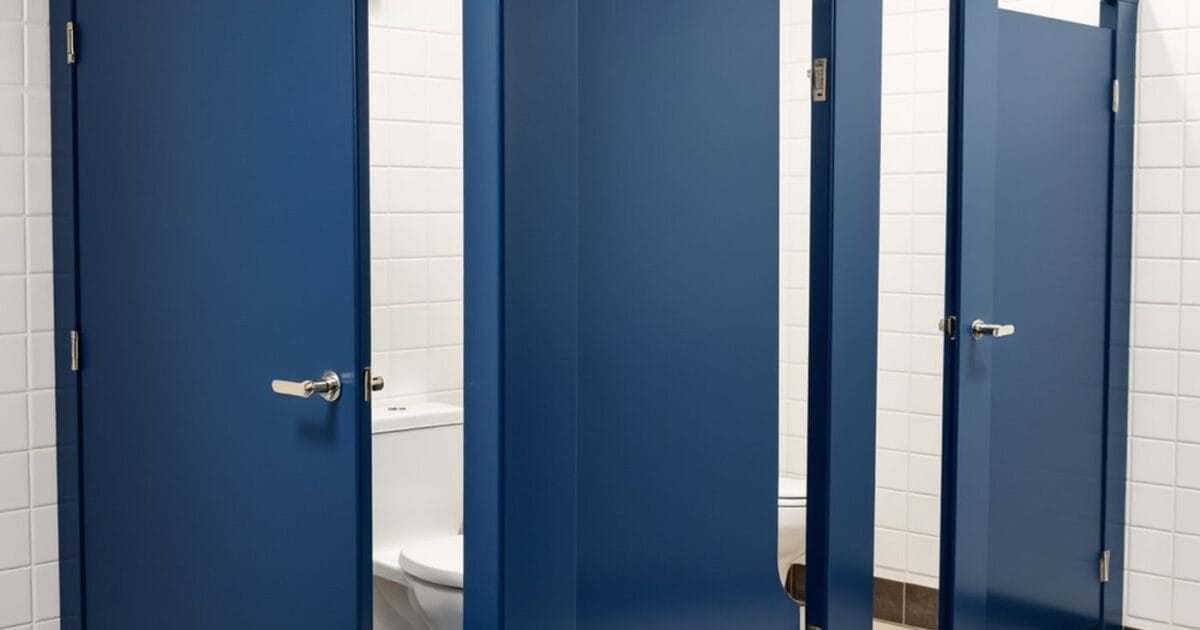
Restroom partitions are made from several materials, and only some should be painted. Powder coated or baked enamel steel is the classic paintable partition: a steel skin over a honeycomb core, finished in the factory. Stainless steel partitions are not painted; they are cleaned and refinished by other methods. Solid plastic partitions, usually high density polyethylene, are chosen because nothing sticks to them, and paint does not bond well to that kind of plastic. Phenolic and compact laminate partitions and plastic laminate partitions have decorative surfaces that are not designed to be painted.
The walkthrough should identify the material before any price is given. Steel partitions ring when tapped and show a steel edge where the finish is chipped. Solid plastic partitions have a thick, uniform color through the edge and feel waxy. Laminate partitions show layers at the edge. When in doubt, a small adhesion test with the intended primer is the honest way to find out.
If the partitions are plastic or laminate, the right answer is usually to decline the painting or to price it only with a clear warning that the finish may not last. Promising a durable finish on a surface paint does not stick to is the fastest way to a callback.
Why baked enamel steel is paintable but demanding
Steel partitions are paintable, but their factory finish is hard and slick, and paint applied without proper prep will peel under the constant contact, cleaning and moisture of a restroom. The finish needs thorough degreasing, because restroom surfaces carry soap, body oil and cleaning residue. It then needs abrading to give the new coating something to grip, and a bonding primer suited to hard factory finishes.
The topcoat is usually a durable enamel, often a waterborne urethane or an industrial alkyd, chosen to stand up to scrubbing and disinfectants. Some owners want a two component coating for the hardest finish, which brings its own mixing, pot life and ventilation needs. The choice between product families is covered in latex versus oil based paint, and the reasons primer matters on hard surfaces are in do I need primer before painting.
Rust is common at the bottom of steel partitions and around the floor brackets, where mop water sits. Rust has to be cleaned to sound metal and primed with a rust inhibiting primer. Panels rusted through at the base are a replacement item, not a painting one.
Counting stalls, panels and pilasters
Partitions are priced by the compartment or by the component, not by area. A compartment usually has a door, one or two panels and one or two pilasters, which are the vertical posts that carry the door and anchor to the floor or ceiling. Urinal screens are separate small panels. Counting components gives the most accurate price, and counting compartments gives the simplest.
Many painters use a compartment count with adjustments: a standard compartment, an accessible compartment, which is larger and has more panel area, and end compartments that share fewer panels. Urinal screens are counted separately. Both faces of every panel are usually painted, and the edges and door edges take real time. A layout of a restroom with a few compartments and screens can be counted in minutes on the walk.
The count should also note the mounting style: floor mounted, ceiling hung, floor to ceiling braced or overhead braced. Headrails and floor shoes are extra pieces to prepare and paint or mask.
Hardware, hinges and what gets masked
Every partition door carries hinges, a latch, a keeper, a coat hook, a door stop and sometimes a pull. Panels are held by brackets and screws. Some painters remove all of the hardware, paint the bare components and reinstall; others mask it in place. Removing hardware gives a cleaner finish but takes longer and risks stripped screws in old partitions. Masking is quicker but leaves the hardware edges less clean.
Accessible compartments have grab bars, which are usually mounted to the wall rather than the partition, and sometimes coat hooks and door pulls at specific heights. The painter should not relocate or remove grab bars or accessible hardware unless the owner has a plan, and anything removed must go back exactly as it was. The requirements for accessible toilet compartments are explained in the Access Board guide to toilet rooms; painting does not change them, but careless reinstallation could.
The estimate should say whether hardware is removed or masked, and whether the painter reinstalls it. Worn or broken hardware discovered during the work can be replaced by the owner or priced as an extra.
Painting in place or in a spray room
Partitions can be painted in place or taken down and refinished elsewhere. In place work is the most common. It avoids the risk of damaging partitions and anchors during removal, but it means working in a small room with tile, fixtures and mirrors to protect, and it limits spraying because overspray in a small room is hard to control.
Removal and shop finishing gives the best finish, usually sprayed in a controlled space, but it takes the partitions out of the restroom for days, needs transport and storage, and requires reinstallation, which may be a partition installer task. Reinstallation of floor anchored and ceiling hung partitions is not always simple, and a painter who takes partitions down owns the result when they go back up.
In place spraying is possible with careful masking and ventilation, especially in larger restrooms, but many painters roll with a fine foam roller and brush the edges. Spraying indoors brings ventilation and respiratory protection needs, covered on the OSHA spray operations overview.
Odor, ventilation and a room with no window
Most commercial restrooms have no window and rely on an exhaust fan. The bonding primers and durable enamels used on partitions can have strong odors, and two component coatings may need more ventilation still. The painter needs to know whether the exhaust runs continuously, whether temporary fans can be used, and how long the room must stay empty after painting.
Volatile organic compounds and their indoor effects are explained by the EPA on its VOC page, and the labels and safety data sheets for each product carry the specific handling information, a system explained on the OSHA hazard communication page. Low odor products help, but they may not match the durability of stronger coatings, which is a choice to discuss with the owner rather than make quietly.
Closing a restroom that people need
A restroom out of service is a real problem for a restaurant, a school, an office or a gym. The owner will want the work done at night, over a weekend, or in phases so that at least one restroom stays open. Partitions also need time to cure before they are scrubbed and used heavily, and a freshly painted door that is closed too soon can stick to its stop.
These constraints shape the schedule and the price. A job that has to be done in two restrooms at night with an early morning reopening is different from one in an empty building. The segment posts cover the rhythms of different buildings, such as restaurant painting projects and school painting contracts. Night and staged restroom work is priced as shown in how to price a painting job done in phases.
Graffiti, scratches and the next round of vandalism
Partitions in schools, parks, bars and transit buildings are refinished because they have been scratched, carved and written on. Deep scratches and carvings need filling and sanding before painting, or they will show through the new finish. Marker and paint graffiti may bleed through a new coat unless it is sealed with a stain blocking primer.
Owners of high abuse restrooms often ask whether a coating can protect the partitions from the next round. Anti graffiti coatings exist, with their own benefits and limits, and are covered in anti graffiti coating. A darker or patterned color also hides marks better than a light solid color, which is a practical point to raise with the owner.
Refinish or replace: helping the owner decide
Refinishing is not always the right answer. Partitions that are rusted through, bent, delaminating or missing parts may cost more to repair and paint than to replace. Plastic and laminate partitions generally should not be painted at all. Partitions in a restroom about to be remodeled may not be worth refinishing.
A good painter tells the owner when refinishing is a poor choice. That honesty builds trust, and it avoids the callback that comes from painting partitions that were never going to hold paint. When refinishing is right, it is usually far faster and less disruptive than replacement, which is a strong selling point.
Pricing the partition line
A clear partition line lists the compartments by type, the urinal screens and any headrails, with the count in each. It states the material and the adhesion test result, the prep, the products and coats, whether hardware is removed or masked, and whether the work is in place or off site. It states the schedule, the cure time before heavy use, and what the owner must provide, such as access at night and a working exhaust fan.
Exclusions should cover replacement of rusted or damaged panels, broken hardware, partition reinstallation if removal is by others, and any promise of durability on non steel materials. The wording of those limits is covered in painting bid exclusions and clarifications.
Recording what each restroom took
Partitions are easy to count and therefore easy to time. On each job, record the compartments and screens by type, the material, the prep, the method and the hours for cleaning, sanding, priming and each coat, along with any hardware work. After a few restrooms, those records become rates per compartment for the painting estimate rate card, and the reasoning is in painting production rates.
With real rates, partition refinishing becomes a reliable add on for commercial customers, one that can be priced on the spot during a walkthrough of the rest of the building.
Commercial pieces get counted, not buried in the wall price.
PaintPricing builds itemized estimates from your own rates, so doors, lockers, partitions and lift days sit on the quote as counted lines a general contractor can check. Free for your first 3 quotes, no card required.
Frequently asked questions
How do painters price painting restroom partitions?
Most count the compartments and urinal screens by type, confirm the material is paintable, and apply a rate per compartment from their own timed jobs, adding hardware work, heavy repair and night or phased scheduling as separate items.
Can plastic toilet partitions be painted?
Generally not reliably. Solid plastic partitions are made to resist anything sticking to them, including paint. Most painters decline them or warn clearly that the finish may not last.
What prep do steel partitions need?
Thorough degreasing, abrading of the hard factory finish, rust treatment at the base, and a bonding primer suited to hard surfaces before a durable enamel topcoat.
Are partitions painted in place or removed?
Usually in place, with careful masking and rolling or controlled spraying. Removal gives a better finish but takes the partitions out of service longer and requires reinstallation.
How long must a restroom stay closed after partitions are painted?
It depends on the product, temperature and ventilation. The product data sheet gives dry and cure times, and the painter should agree a reopening plan with the owner before starting.
Is refinishing cheaper than replacing partitions?
Often, when the partitions are sound steel. Partitions that are rusted through, bent or made of plastic or laminate may be better replaced, and a good painter says so.