In this article
- The test result decides the job before the price does
- If the result is positive
- What removal really involves
- Painted texture is a different job
- The ceiling underneath
- Five lines on a removal quote
- Occupied homes and containment
- Disposal
- Heights, stairwells and awkward ceilings
- The quote wording
- Tracking removal so the next quote is better
- Setting expectations about mess and time
- Retexturing instead of smooth
- Frequently asked questions
- Do I need to test a popcorn ceiling before removing it?
- What should I do if the ceiling tests positive for asbestos?
- How do painters price popcorn ceiling removal?
- Why is painted popcorn texture harder to remove?
- Is the ceiling ready to paint after the texture comes off?
- Should disposal be included in the price?
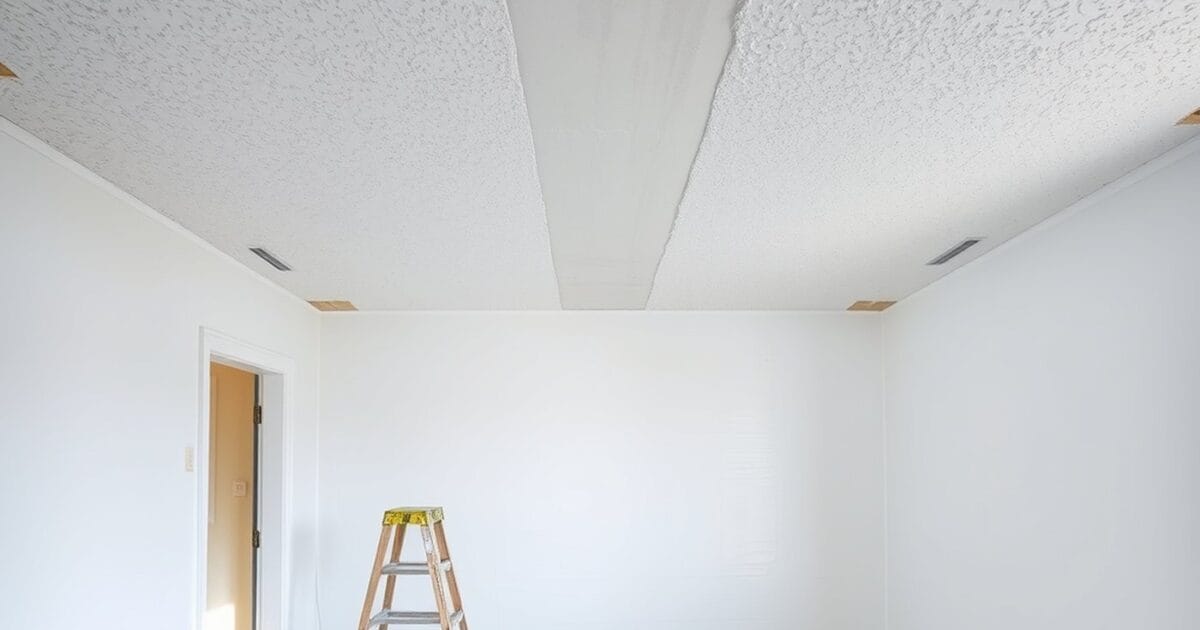
Popcorn ceiling removal looks like one of the simplest jobs a painter can be offered. Wet it, scrape it, paint it. In practice it is one of the easiest to underprice, because almost all of the real work sits outside the scraping: testing, containment, protection, cleanup, disposal and the finishing of a ceiling that was never meant to be seen bare.
It is also a job where the price depends on a result nobody knows at the first visit. This guide covers how to handle that, and how to build a number that survives the day.
The test result decides the job before the price does
Textured acoustic ceilings in many older buildings were made with materials that may contain asbestos. The texture can look identical whether it does or not, and the only way to know is to have a sample tested.
That makes the test the first line of the job, not an afterthought. The EPA explains why disturbing asbestos is the problem, and why testing should be done by trained people, in protect your family from exposures to asbestos. The OSHA asbestos overview covers the workplace side, which applies to any crew that might disturb it.
For the estimate, the practical consequence is simple. No removal price should be final until the result is known. The quote can give a price that applies if the test comes back negative, and say plainly what happens if it does not.
If the result is positive
A positive result changes who can do the work. In many places, removing asbestos containing material requires specialist training, licensing, procedures and disposal, and the rules differ by state and locality. The EPA lists the federal framework in asbestos laws and regulations and explains the roles of trained asbestos professionals.
For most painting businesses, the sensible answer is to refer removal to a qualified abatement contractor and quote the work that follows: repair, finishing and painting of the ceiling once it has been cleared. That keeps the customer, keeps the crew safe and keeps the business out of work it is not set up for.
This is general information about how painting businesses approach textured ceilings, not legal or safety advice. Asbestos requirements vary by location, so confirm them with the relevant authority and with qualified professionals before any work begins.
What removal really involves
Assuming a negative result and a painter who takes on the removal, the job has more parts than it first appears.
Emptying or protecting the room. Furniture out or covered, and floors fully protected. The scraped texture is wet, heavy and messy, and it gets everywhere. The pricing of contents is covered in how to charge for moving furniture when painting.
Containment. Walls covered, doorways sealed, vents and fixtures protected, and a plan to keep the mess out of the rest of the house.
Wetting and scraping. The texture is softened and removed in sections. Unpainted texture usually softens readily. Painted texture often does not, which is covered below.
Collecting and bagging the debris. This is heavier and bulkier than it sounds.
Cleanup. Removing the plastic, cleaning the floor and walls, and checking that nothing has escaped the containment.
Each part takes time, and the scraping is often the smaller share of it. The step by step process is described in how to remove a popcorn ceiling, and it is worth reading as a list of hours rather than a list of tasks.
Painted texture is a different job
When the texture has been painted, water struggles to penetrate it. The painted layer can turn a quick removal into a slow grind, with more scraping, more damage to the ceiling behind and more finishing afterward.
Check for paint during the walkthrough. A small test area, or a look at the ceiling in raking light, usually shows whether it has been painted. Price painted texture in its own band rather than applying the unpainted rate and hoping.
Painted texture raises another question: what paint? On older buildings, a coat of paint on the texture may itself contain lead. If the building is old enough for that to be possible, check first. The EPA Renovation, Repair and Painting program explains when lead safe practices apply to work that disturbs paint.
The ceiling underneath
The surface behind popcorn texture was rarely finished to the standard a smooth ceiling needs. Tape joints may be visible, fastener heads may show and the drywall may be damaged by scraping. Removal almost always means finishing work before paint.
That finishing can range from spot repairs to a full skim coat over the whole ceiling, and the difference in hours is large. Price it as its own line, with a clear statement of the finish level the customer is buying. The pricing of that work is covered in how to price skim coating.
Primer and paint follow. Ceiling painting has its own pricing logic, set out in how much to charge to paint a ceiling, and the removal job should include that line rather than leave it to a separate conversation.
Five lines on a removal quote
A popcorn removal estimate usually has four or five lines, and keeping them separate is what keeps the job profitable.
Testing. Either arranged by the customer or by the painter through a qualified provider, with the cost passed through.
Preparation and containment. Priced per room or by area, and higher for occupied rooms with contents that cannot move.
Removal. Priced by ceiling area, with bands for unpainted, painted and difficult texture.
Ceiling finishing. Priced by area and finish level, as a conditional line where the extent cannot be known until the texture is off.
Priming and painting. Priced as normal ceiling painting.
Disposal can sit inside removal or as its own line. Either works, as long as it is not forgotten.
Your own production records are the only reliable source for the rates. The approach in painting production rates applies, with the caution that removal rates vary more from job to job than painting rates do.
Occupied homes and containment
Removal in an empty house and removal in a lived in house are different jobs. In an occupied home, containment has to be tighter, cleanup has to happen every day and the crew has to work around people who still need to use the rest of the house.
Price that difference openly. A customer who is living at home during the work is buying extra protection and extra cleaning, and should see it as a line rather than find it hidden in a higher removal rate.
Dust and odors from primer and paint also matter in occupied rooms. The EPA page on volatile organic compounds and indoor air is a useful reference when customers ask about living in the house during the finishing stage.
Disposal
Scraped texture is heavy when wet and bulky when bagged. A large ceiling produces more debris than most painters expect, and it has to go somewhere.
Check local disposal rules and costs before quoting, since they vary. Some areas treat construction debris differently from household waste. Include the cost of hauling, any disposal fees and the time spent loading, and do not assume the customer will put the bags out with the trash.
Heights, stairwells and awkward ceilings
Ceiling work is overhead work. Tall ceilings, stairwells and vaulted areas need scaffolding or platforms, and the time spent moving them is part of the job. The pricing of access is covered in how to price access equipment for painting jobs.
Ceilings with many fixtures, beams or changes of plane take longer per square foot. Note them at the walkthrough and adjust the band.
The quote wording
A good popcorn removal quote is conditional in clear ways. It states that removal pricing applies only if testing shows no asbestos. It states what happens if the result is positive. It separates removal from ceiling finishing, and explains that the extent of finishing will be confirmed once the texture is off. It says whether furniture moving, disposal and painting are included.
That level of detail is not defensive. It is what allows a customer to compare quotes fairly, and it is what prevents the argument that starts when the ceiling behind the texture turns out to be rough. The general principles are in painting bid exclusions and clarifications.
Tracking removal so the next quote is better
Popcorn removal is a job where experience changes the price more than almost anything else. The first few jobs teach what the texture types feel like, how much finishing a scraped ceiling usually needs, and how long containment really takes in a furnished room.
Capture that learning. For each job, record the ceiling area, whether the texture was painted, how long preparation, removal, finishing and cleanup each took, how many bags of debris came out and what disposal cost. After a handful of jobs, the bands on the rate sheet stop being guesses and start being your own numbers.
Record the surprises too. A ceiling that turned out to have two coats of paint, a room where containment took twice as long because of built in shelving, a finishing job that grew from spot repair to a full skim. Those notes are what turn a walkthrough into a reliable estimate next time. The broader habit is set out in how to track painting job costs.
Setting expectations about mess and time
Customers who have never had a ceiling removed rarely imagine how disruptive it is. A clear explanation at the estimate stage prevents most of the complaints that follow.
Explain that the room will be sealed and unusable during removal and finishing. Explain that finishing takes several visits because each coat of compound has to dry before the next. Explain that the ceiling will look worse before it looks better. And explain that the extent of finishing will be confirmed once the texture is off, with a price for each level agreed in advance.
A realistic timeline written into the quote does more than any reassurance on the day. It also makes the price easier to accept, because the customer can see how much work stands behind it.
Retexturing instead of smooth
Not every customer wants a flat ceiling. Some want a lighter, more modern texture applied after removal. That can reduce finishing time, because a texture hides minor flaws that a smooth ceiling would show.
Offer it as an option alongside the smooth finish. Presenting both, with their prices, is often the easiest way to let the customer choose between cost and finish, and the approach is covered in how to price painting jobs in tiers.
Every extra service deserves its own line.
PaintPricing builds itemised estimates from your own rates, so washing, repairs, coatings and consultations sit on the quote as separate lines instead of disappearing into the paint price. Free for your first 3 quotes, no card required.
Frequently asked questions
Do I need to test a popcorn ceiling before removing it?
Yes. Many older textured ceilings may contain asbestos, and it cannot be identified by looking. Have a sample tested by a qualified provider before any removal, and make the removal price conditional on the result.
What should I do if the ceiling tests positive for asbestos?
For most painting businesses, refer the removal to a qualified abatement contractor and quote the finishing and painting that follow. Requirements vary by location, so check with the relevant authority.
How do painters price popcorn ceiling removal?
As separate lines for testing, preparation and containment, removal by area with condition bands, ceiling finishing, and priming and painting. Keeping them apart stops one uncertain part from sinking the whole price.
Why is painted popcorn texture harder to remove?
Paint stops water from soaking into the texture, so it does not soften. Removal takes longer and the ceiling behind is more likely to be damaged, which adds finishing time.
Is the ceiling ready to paint after the texture comes off?
Rarely. Tape joints, fasteners and scraping damage usually need repair, and many ceilings need a skim coat before primer and paint. Price that as its own line.
Should disposal be included in the price?
Yes, either within removal or as a separate line. Wet texture is heavy and bulky, and hauling and disposal fees vary by area, so check local costs before quoting.