In this article
- Where painting stops and repair starts
- Repairs painters commonly take on
- Repairs to refer or subcontract
- Licensing and the limits of the trade
- Pricing the repairs you can see
- Pricing what you cannot see
- When damage turns up mid job
- Rot is a symptom
- How repairs appear on the estimate
- Track repair time so the next estimate is better
- Frequently asked questions
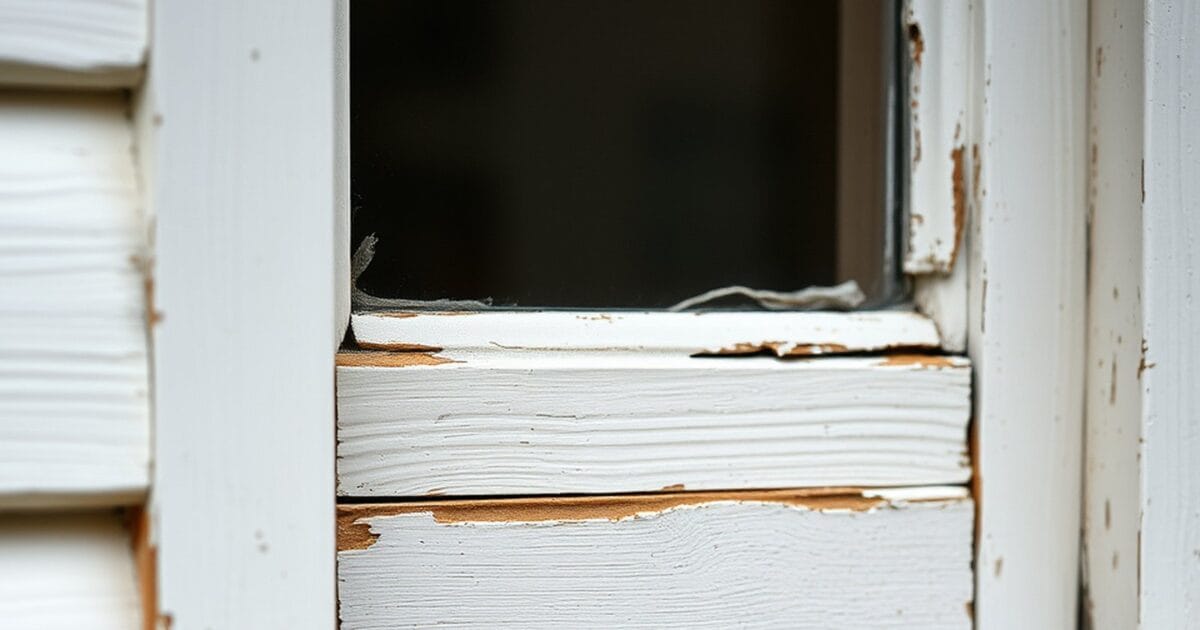
Every painter eventually pushes a scraper into a window sill and feels it sink. The paint looked tired, the estimate allowed for scraping and priming, and underneath is soft wood that needs cutting out. The job has just changed, and the price has not.
Repairs sit at the edge of the painting trade. Some are routine preparation that belongs in every estimate. Some are carpentry, plastering or water problems that a painter can take on, subcontract or refer. The difficulty is not doing the repairs. It is pricing work that is often invisible until the job is underway.
Where painting stops and repair starts
A useful dividing line is whether the work restores the surface or restores the thing the surface is on.
Restoring the surface is preparation: filling nail holes and small cracks, sanding, spot priming, caulking gaps, and minor patching. It belongs in the painting estimate, priced through the condition of the surface, and the method for doing that is in how to account for prep time in a painting estimate.
Restoring the thing underneath is repair: cutting out rotted wood, replacing sections of trim or siding, patching large holes in drywall, rebuilding failed plaster, or fixing whatever let water in. It needs different skills, different materials and different time, and it should be priced as repair rather than hidden inside preparation.
Most disputes about repairs come from an estimate that never said where that line was.
Repairs painters commonly take on
Many painting businesses handle a band of smaller repairs well, and doing so wins work because the customer does not have to find a second trade.
Drywall patches beyond simple filling, where a hole or damaged area needs a patch, taping and finishing before paint. The routine side of this is covered in how to repair drywall cracks.
Small areas of soft wood that can be consolidated and filled with an exterior wood repair system rather than replaced.
Short lengths of trim, molding or fascia replaced like for like where the profile is available.
Re-glazing and re-caulking around windows, where the frame itself is sound.
Resetting popped nails and securing loose boards before painting.
These are worth offering if the crew has the skill, because they are exactly the tasks that stand between a customer and a finished job.
Repairs to refer or subcontract
Other work is better handled by somebody whose trade it is, even if a painter could attempt it.
Structural members. Rot in sills that carry load, posts, beams, joists or framing is not a painting repair.
Water ingress. Rot, peeling and staining are usually symptoms. If the gutter, roof, flashing or plumbing that caused them is not fixed, the repair and the paint over it will fail again.
Large areas of siding, window replacement, and extensive plaster failure.
Anything involving electrical, plumbing or gas.
Moisture problems that have produced mold. The Environmental Protection Agency brief guide to mold, moisture and your home is clear that the moisture source has to be dealt with before the cleanup, and it describes when a larger problem needs a professional with specific experience.
Where a painter subcontracts a repair, it becomes part of the painting job commercially. The subcontractor quote, a margin for managing and coordinating them, and the scheduling around their work all belong in the estimate.
Licensing and the limits of the trade
Some states and localities require a contractor license, a specific trade license or a permit for carpentry, drywall or general repair work beyond a certain size or value, and some treat painting and repair differently. Requirements vary widely and change, so check what applies where you work before offering repairs as a service.
Insurance matters here too. A policy written for a painting business may treat carpentry or structural work differently, and it is worth confirming that the repairs you offer are covered by the cover you hold. This is general information about how painting businesses approach repairs, not legal advice, and licensing and insurance questions should be checked with the relevant authority, a broker or a qualified adviser where you operate.
Pricing the repairs you can see
Visible damage should be priced as specifically as the painting.
Count and classify. Walk the job and record each repair: location, what it is, and its approximate size. A soft corner on a sill is a different repair from a sill that is soft along its length.
Price by type. Build your own time and material allowances for the repairs you do often, such as a small wood consolidation, a replaced length of trim or a drywall patch of a given size. Those allowances, refined from your own records, become the most useful repair pricing tool the business has.
Show them separately. List repairs as their own lines rather than burying them in preparation. The customer can see what they are paying for, can choose to leave something out, and the painting price stays comparable with other quotes.
Photograph them. Photos of each repair location, taken at the survey and attached to the estimate, settle later questions about what was included.
Pricing what you cannot see
The hardest repairs to price are the ones hidden under paint, caulk or trim until preparation starts. There are three honest ways to handle them.
An allowance. A stated sum of repair time or cost included in the price, with the understanding that it will be adjusted up or down based on what is found. This keeps the headline price realistic while making the uncertainty visible.
Unit prices. A stated price per unit of a defined repair, such as per replaced length of trim or per sill repair of a defined size, applied to whatever quantity turns up. The approach is familiar from commercial bidding and is described in painting bid alternates and unit prices. On residential work it gives the customer certainty about the rate even when the quantity is unknown.
An exclusion with a process. Hidden damage is excluded from the price, and the estimate describes exactly what happens if it is found: work stops in that area, the customer is shown the damage, a price is given, and nothing proceeds until it is agreed.
What does not work is ignoring the possibility. On older exterior woodwork in particular, some hidden damage is more likely than none, and an estimate that assumes none is an estimate that will be wrong.
When damage turns up mid job
When preparation uncovers more than was allowed for, the order of events protects both sides.
Stop work in that area. Carry on elsewhere if the schedule allows.
Show the customer. In person where possible, with photographs either way. Damage the customer has seen is damage they believe exists.
Explain the options. Repair it now, repair part of it, have another trade look at it, or leave it and accept that the paint over it will not last. Be honest that the last option usually means the finish fails.
Price it and get agreement in writing before continuing. The process for doing this cleanly, and keeping the job moving while it happens, is in how to handle change orders on a painting job.
Adjust the schedule. A repair that needs drying or curing time before paint moves the finish date, and the customer should hear that at the same time as the price.
Rot is a symptom
A painter who repairs rot without asking why it happened is often doing the job twice.
Wood rots when it stays wet. The usual causes around painted exteriors are failed caulk and glazing, blocked or leaking gutters, splashback from ground level, missing flashing, and paint films that trap moisture behind them. Any of these will bring the rot back if left.
Point out the likely cause on the estimate, even when it is outside the scope. A line noting that the sill damage appears to come from an overflowing gutter above it protects the painter when the repair fails in a few years, and it is useful to the customer. Looking for these causes before the first coat is part of the exterior painting checklist.
Where preparation or repairs involve cutting or sanding masonry, stucco or some patching materials, dust control matters. The Occupational Safety and Health Administration guidance on crystalline silica explains the hazard and what controls apply in construction work.
How repairs appear on the estimate
A clear estimate treats repairs as a separate section with four parts.
Known repairs, listed with location and price.
The approach to hidden damage: an allowance, unit prices, or an exclusion with a stated process.
What is excluded outright, such as structural members, water source repairs and other trades.
Any condition noted but not addressed, such as a probable moisture source the customer should have looked at.
That structure keeps the painting price comparable, protects the margin on repairs, and gives the customer the information to make decisions rather than finding out halfway through. Where repairs are part of what makes a job worth doing, it can also help to know which jobs carry the best return, which is the subject of painting profit by job type.
Track repair time so the next estimate is better
Repair pricing improves faster than almost any other part of an estimate, provided the business records what actually happened.
For each repair, note what it was, how big it was, how long it took, and what materials it used. After a season of jobs, the time for a typical sill repair, a replaced length of trim or a drywall patch of a given size stops being a guess and becomes a figure the business owns.
Record the discoveries separately. Note how often hidden damage turned up, on what kind of house, and how large it was compared with what was visible at the survey. That record is what tells an estimator how big an allowance to carry on an older exterior, which is a far better basis than instinct.
Compare repair margins with painting margins. Some businesses find that repairs are among their most profitable work, because customers value the convenience of one contractor. Others find that repairs are where their margin disappears, because every repair takes longer than it was priced at. Either way, the numbers decide whether to offer more repair work or less. The habit of comparing estimated against actual time on every job is set out in how to track painting job costs, and repairs deserve their own column in it.
Share the figures with whoever estimates. A repair allowance that lives only in the head of the person who did the work cannot be used by anybody else, and it disappears when they leave.
The conditions are what make the price.
PaintPricing builds an itemised estimate from your own rates, so travel, access, repairs and extras sit on the quote as lines the customer can see rather than hiding inside one number. Free for your first 3 quotes, no card required.
Frequently asked questions
Do painters do wood rot repair?
Many painters handle small areas of soft wood and like for like trim replacement as part of a job. Rot in structural members, extensive siding damage and the water problems that cause rot are better referred or subcontracted to the relevant trade.
How should I price repairs I cannot see until I start?
Use an allowance that is adjusted to what is found, unit prices for defined repairs applied to the actual quantity, or an exclusion that describes exactly what happens when damage is discovered. Assuming there will be none is the approach that goes wrong.
Should repairs be a separate line on a painting estimate?
Yes. Listing repairs separately shows the customer what they are paying for, lets them choose, keeps the painting price comparable with other quotes, and stops repair costs being lost inside preparation.
What do I do if I find rot halfway through a painting job?
Stop work in that area, show the customer with photographs, explain the options, price the repair and get written agreement before continuing. Update the schedule at the same time if the repair needs drying time.
Do painters need a license to do carpentry repairs?
It depends on where you work. Some states and localities require a contractor or trade license or a permit for repair work beyond certain limits. Check the requirements that apply locally and confirm your insurance covers the repairs you offer.
Should I fix the cause of rot or just the rot?
Repairing rot without addressing the moisture source usually means it returns. If the cause is outside your scope, such as a gutter or flashing, note it on the estimate so the customer can have it dealt with.