In this article
- Why basements are a different painting problem
- Fix the water first: the rule that overrides everything
- Situation 1: finished drywall basement walls
- Situation 2: bare concrete or block foundation walls
- Remove efflorescence and let new masonry cure
- Situation 3: the basement floor
- What sheen for a basement
- Manage the humidity, not just the walls
- Choosing a basement color
- Common mistakes to avoid
- DIY or hire a pro
- Frequently asked questions
Quick answer: The best paint for a basement depends on the surface. Finished drywall walls take a standard 100 percent acrylic, ideally a mildew-resistant formula in damp areas. Bare concrete or block foundation walls take acrylic masonry or waterproofing masonry paint, but only after you fix the water source. Choose an eggshell or satin sheen for wipeability.
Basements break the usual painting rules because they mix surfaces and add moisture, so the best paint for a basement is really a set of answers, one per situation. A finished basement with drywall is almost a normal room. A bare foundation of poured concrete or block is a masonry job with damp and mineral challenges. And the floor is a different problem again. This guide sorts it out by situation and, most importantly, explains why paint is never a substitute for fixing water. For the money side, see cost to paint a basement, and to size product, how much paint for a basement.
Why basements are a different painting problem
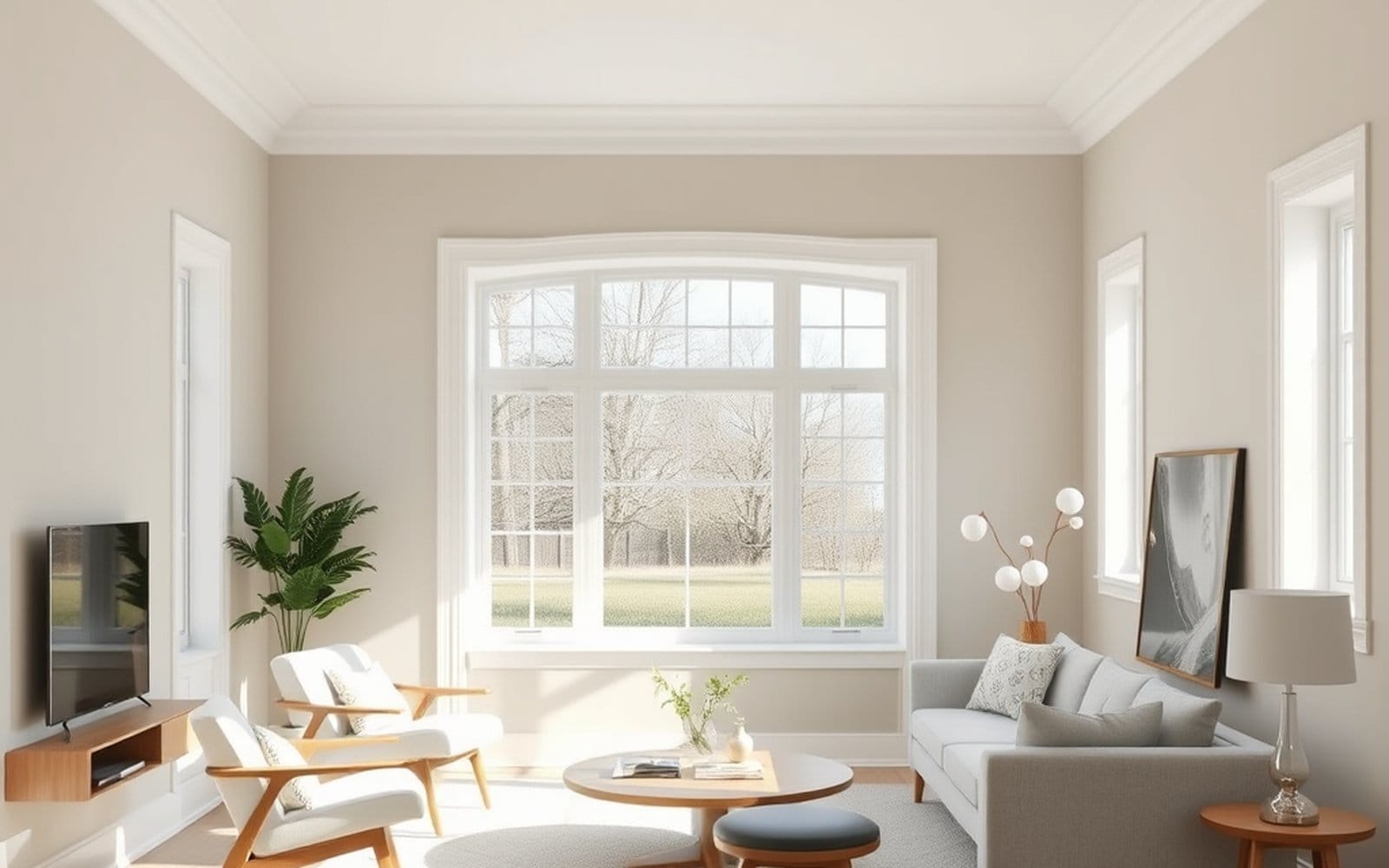
Two things make a basement unlike an upstairs room. First, it is below grade, surrounded by soil that holds moisture, so the humidity runs higher and masonry walls can wick water inward. That damp environment invites mildew and makes washability and mildew resistance genuinely useful rather than nice-to-have. Second, basements mix surfaces. You might have painted drywall on framed walls, bare concrete block on the foundation, and a concrete floor, all in one space, and each wants a different coating. Treating the whole basement as one paint job is the mistake that leads to peeling foundation walls and a floor coating that fails.
Fix the water first: the rule that overrides everything
Here is the most important sentence in this guide. Waterproofing paint is not a cure for active leaks or hydrostatic pressure. If water is actively seeping through your foundation, pooling on the floor after rain, or pushing in from saturated soil, no paint will hold it back for long, and a waterproofing coating applied over an active leak will bubble and peel as the water pushes it off the wall. Waterproofing masonry paint is designed to resist damp and minor moisture vapor on a fundamentally sound wall, not to dam a leak. So before you paint a foundation wall, find and fix the water source: grading, gutters and downspouts, cracks, or drainage. Then paint. Skipping this step wastes the paint and hides a problem that gets worse behind the coating.
Situation 1: finished drywall basement walls
If your basement is framed and drywalled like an upstairs room, treat it like one, with a nod to the damp. Use a standard 100 percent acrylic interior paint, and in bathrooms, laundry areas, or any corner that runs humid, choose a mildew-resistant formula so the finish resists mold growth. This is the same category of paint you would use in a bathroom, and our best paint for high-traffic areas guide is worth a look if the basement doubles as a rec room or gym that takes scuffs. Prime new drywall and any patched areas first. For the general primer rules, see do I need primer before painting.
Situation 2: bare concrete or block foundation walls
Bare masonry is where basements get technical. Concrete and block are porous and alkaline, so ordinary wall paint does not bond or hold up well on them. Use an acrylic masonry paint, which is formulated to breathe and grip porous masonry, or a waterproofing masonry paint if you want extra damp resistance on a sound, leak-free wall. Both go on thick and work the coating into the pores and pinholes of the block. Remember the rule above: these coatings resist damp, they do not stop a leak. Two specific prep issues come with masonry, covered next. For the prep principles, our how to prep walls for painting guide applies, and to strip any failing old coating, see how to remove paint from concrete.
Remove efflorescence and let new masonry cure
Two masonry-specific steps are non-negotiable. First, efflorescence, the white powdery or crusty mineral deposit that appears on block and concrete, must be removed before painting, because paint will not bond over it and it signals moisture moving through the wall. Brush or scrape it off and address the moisture behind it. Second, brand-new concrete or block is highly alkaline and needs to cure, typically around thirty days, before it will accept paint, or the alkalinity can attack the coating and cause failure. Patience on new masonry pays off.
Situation 3: the basement floor
The floor is its own project. A basement concrete floor takes a concrete floor paint or, for far more durability, an epoxy coating, exactly like a garage floor. The same rules apply: test for moisture, profile the concrete by etching or grinding, and cure before use. Rather than repeat all of that here, point yourself to the two siblings built for it: our best paint for a garage floor guide for the epoxy versus floor-paint tiers and the hot-tire and moisture cautions, and best paint for concrete for the broader masonry-floor picture. A below-grade floor is even more moisture-prone than a garage, so the moisture test matters double.
One reason the basement floor deserves extra caution is that it sits directly on soil with no ventilated crawl space beneath it, so vapor drives up through the slab continuously. A coating that traps that vapor can blister from below even when the surface looks bone dry. This is exactly why the plastic-sheet moisture test is non-negotiable down here, and why some finished basements are better served by a floating floor or a vapor-tolerant floor covering than by a bonded coating. If the test comes back damp, treat that as information worth having before you spend on any product, not a hurdle to paint over.
| Basement surface | Best paint type | Key requirement |
|---|---|---|
| Finished drywall walls | 100 percent acrylic, mildew-resistant in damp areas | Prime new drywall |
| Bare concrete / block walls | Acrylic or waterproofing masonry paint | Fix water, remove efflorescence, cure new masonry |
| Concrete floor | Concrete floor paint or epoxy | Moisture test, etch or grind, cure before use |
What sheen for a basement
Eggshell or satin is the sweet spot for basement walls. Below-grade humidity means walls need to be wipeable and mold-resistant, and eggshell and satin clean up far better than a flat finish while still hiding minor wall imperfections. Satin edges out eggshell for cleanability in the dampest, highest-traffic zones. Flat can look nice on a dry, finished basement ceiling but is a poor choice where you will need to scrub. On masonry walls the masonry paint largely dictates the sheen, which tends to be low. Our paint sheen guide covers the trade-offs in detail.
Manage the humidity, not just the walls
Paint is only part of a healthy basement. Even mildew-resistant paint works better when the air is drier, so run a dehumidifier to keep humidity in check, especially in summer, and make sure any bathroom or laundry area vents properly. Lower humidity slows mold, helps paint cure and last, and makes the whole space more comfortable. Think of the coating and the dehumidifier as a team rather than expecting paint to do the job alone.
A few habits keep basement humidity from creeping back up. Insulate cold water pipes so they stop sweating onto the floor, direct dryer exhaust fully outside rather than into the room, and keep gutters and downspouts moving roof water away from the foundation so less of it ends up pressing against the walls you just painted. In summer, cool basement surfaces can cause warm humid air to condense on them, so running the dehumidifier through the humid months does more good than opening a window, which often lets damp air in. These small moves protect the paint and the whole space, and they cost far less than redoing a moldy wall.
Choosing a basement color
Below grade, color does real work because there is little or no natural light. Lighter, warmer tones bounce what light you have and make a low-ceilinged basement feel larger and less cave-like, while dark colors can close the space in fast. If the basement is finished as a living area, treat color the way you would upstairs and let the room’s purpose guide it, keeping the ceiling light to lift the sense of height. On bare masonry walls your palette is narrower, since masonry paints come in a more limited range, but a clean off-white or soft gray reads tidy and reflects light well. Whatever you pick, view a sample under the basement’s own artificial lighting before committing, because a color that looks right in a daylit store can turn flat or muddy under basement bulbs.
Common mistakes to avoid
- Painting over active water. Waterproofing paint will not stop a real leak or hydrostatic pressure. Fix the water source first.
- Painting over efflorescence. The white mineral crust blocks adhesion and signals moisture. Remove it before coating.
- Coating brand-new masonry too soon. Fresh concrete and block are too alkaline until they cure, usually about thirty days.
- Using wall paint on bare block. Porous, alkaline masonry needs masonry paint, not standard interior latex.
- Ignoring humidity. Skipping a dehumidifier lets mold return no matter how good the paint is.
DIY or hire a pro
Painting finished basement drywall is a straightforward DIY, no harder than any other room. Bare masonry walls are also doable if you handle the prep honestly, but if you are seeing efflorescence or damp, the real fix may be waterproofing or drainage work that belongs to a specialist before any paint goes up. A basement floor epoxy is the same weekend-or-pro decision as a garage floor. Price your project first: run it through the painting cost calculator, get a free painting estimate, and compare with our cost to paint a basement guide.
Frequently asked questions
What is the best paint for a basement?
It depends on the surface. Finished drywall walls take a 100 percent acrylic, ideally mildew-resistant in damp spots. Bare concrete or block foundation walls take acrylic or waterproofing masonry paint. The floor takes concrete floor paint or epoxy. In every case, fix any water problem first, because paint cannot substitute for stopping a leak.
Does waterproofing paint stop basement leaks?
No. Waterproofing masonry paint resists damp and minor moisture vapor on a sound wall, but it will not hold back an active leak or hydrostatic pressure, and it bubbles and peels if you apply it over one. Fix the water source first through grading, gutters, crack repair, or drainage, then use waterproofing paint to manage ordinary below-grade damp.
What paint goes on bare concrete basement walls?
Use an acrylic masonry paint, or a waterproofing masonry paint on a sound, leak-free wall. Both are made to bond to porous, alkaline masonry and work into the pores of the block, unlike standard interior latex. Remove any efflorescence first, let new masonry cure about thirty days, and confirm you do not have an active water problem.
What is efflorescence and do I have to remove it?
Efflorescence is the white powdery or crusty mineral deposit that appears on concrete and block as moisture moves through and evaporates. Yes, you must remove it before painting, because paint will not bond over it. Brush or scrape it off, and treat the underlying moisture, since efflorescence is a sign that water is passing through the wall.
What sheen is best for basement walls?
Eggshell or satin. Below-grade humidity means walls should be wipeable and mold-resistant, and both sheens clean up better than flat while hiding minor imperfections. Satin is the more cleanable of the two for the dampest, highest-traffic areas. Masonry paints tend to have their own low sheen, which the product largely dictates.
Do I need a dehumidifier if I use mildew-resistant paint?
It helps a lot. Mildew-resistant paint slows mold on the surface, but it works far better in drier air. Running a dehumidifier keeps basement humidity down, discourages mold, helps the paint cure and last, and makes the space more comfortable. Treat the coating and the dehumidifier as a team rather than relying on paint alone.
Sort your basement by surface, fix any water first, prep the masonry properly, and match paint to each situation, and the space will stay clean and dry-looking for years. Plan the job with the painting cost calculator, request a free painting estimate, and if you are coating the floor, start with our best paint for a garage floor guide.
Seeing mold or mildew first? Remove it before you paint: how to remove mold before painting.