In this article
Quick answer: Most vinyl-sided homes need 4 to 12 gallons of paint to cover two full coats, with small ranch homes near the low end and larger two-story homes near the top. Add 1 to 2 gallons of bonding primer only if the panels are faded or chalky. Vinyl is smooth and sealed, so it paints efficiently and uses less paint than wood or brick of the same size.
Knowing the gallon count before you shop saves money and trips to the store. Homeowners can buy the right amount in one go, and painters can spec materials accurately on a bid. If you want a fast figure without measuring, run your numbers through the painting estimate calculator or request a free painting estimate to see paint and labor together. The math below shows exactly how the gallons are counted so the result makes sense.
How much paint for vinyl siding
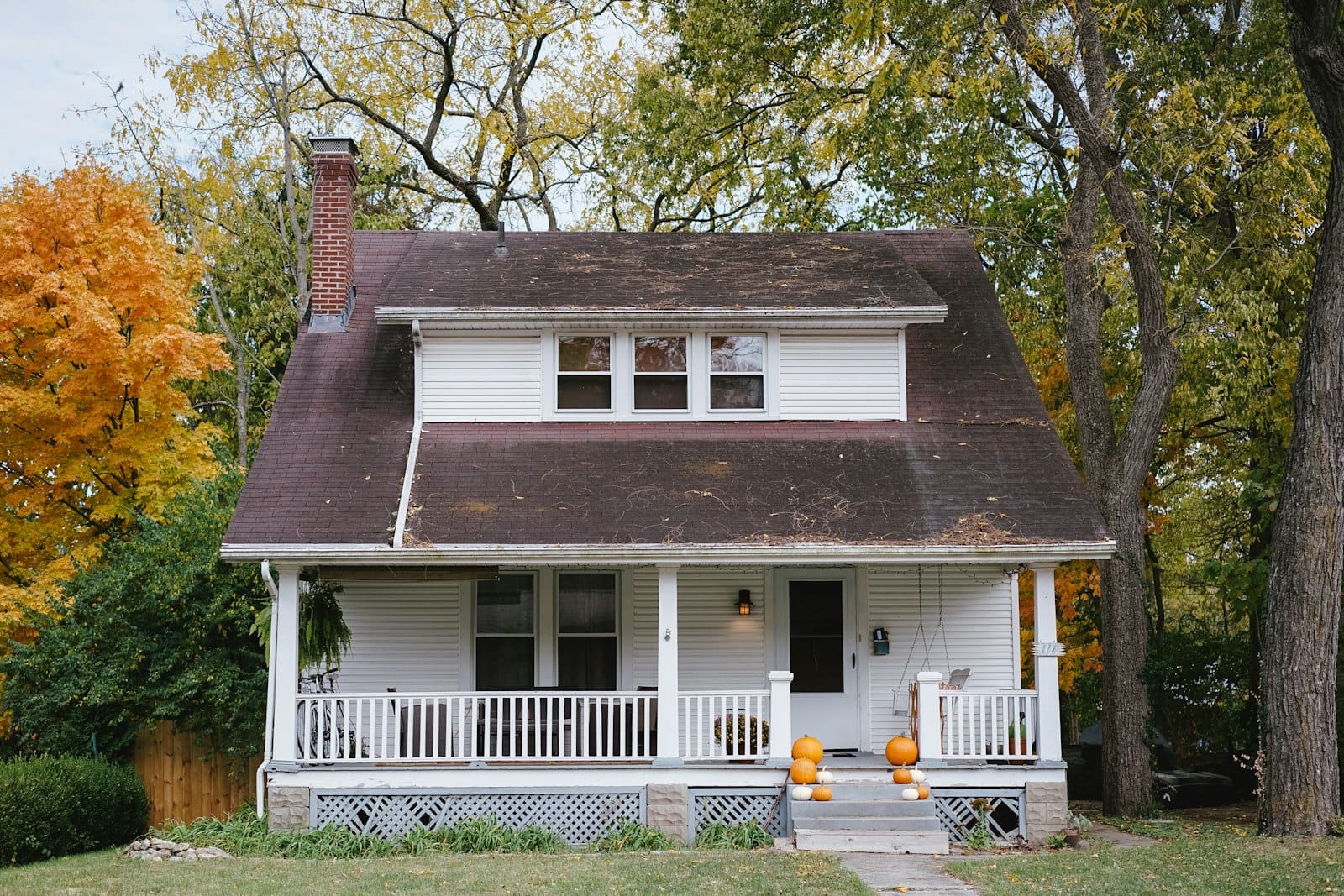
The table gives a realistic starting point by house size. Wall area is the painted surface of the exterior walls, not the floor square footage, which is always smaller. These figures assume two coats of a quality vinyl-safe exterior paint and primer only where the surface is chalky or badly faded.
| House size | Wall area (approx) | Paint needed (2 coats) | Primer |
|---|---|---|---|
| Small ranch (1,000 sq ft) | 1,300 to 1,500 sq ft | 4 to 5 gallons | 0 to 1 gallon |
| Medium 1-story (1,500 sq ft) | 1,800 to 2,100 sq ft | 6 to 7 gallons | 1 gallon |
| Large 2-story (2,500 sq ft) | 2,800 to 3,200 sq ft | 8 to 10 gallons | 1 to 2 gallons |
| Extra-large 2-story (3,500 sq ft) | 3,600 to 4,200 sq ft | 11 to 12 gallons | 2 gallons |
The coverage math
Every paint estimate comes down to one formula: total wall area divided by the spread rate of the paint, then multiplied by the number of coats. The spread rate is how many square feet one gallon covers. On a smooth, sealed surface a gallon of quality exterior paint covers roughly 350 to 400 square feet. Vinyl siding behaves close to that ideal because it is non-porous and does not drink paint the way raw wood or masonry does.
Use 350 square feet per gallon for vinyl to stay safe, since the slight ridges and the locking edges of each panel add a little surface area. So a 2,000 square foot wall area at 350 square feet per gallon needs about 5.7 gallons for one coat, or about 11.4 gallons for two coats before rounding. The cornerstone guide on how much does a gallon of paint cover breaks down spread rates by sheen and surface if you want the full picture.
It is worth separating the two coats in your head, because they do not behave identically. The first coat does the heavy lifting of changing the color and sealing the surface, and on a clean vinyl panel it lays close to the rated spread. The second coat goes on over paint, not bare vinyl, so it flows a little further and evens out the sheen. That is why painters who measure carefully often find the second coat uses slightly less paint than the first, even though most estimates simply double the single-coat figure for simplicity. Doubling is the safe approach for a homeowner buying paint, since any surplus becomes touch-up stock.
Spread rate is also a label claim, not a guarantee. Manufacturers print a range like 350 to 400 square feet per gallon based on a smooth test panel under ideal conditions. Real walls have dirt, slight texture, temperature swings, and an applicator who is human, so the working spread on a job site almost always lands at the low end of the printed range or just below it. Estimating with the low number rather than the high one is what keeps you from running short two-thirds of the way up the last wall.
How to measure your vinyl siding area
You do not need anything fancier than a tape measure and a notepad. Walk the house and capture each wall:
- Measure each wall plane: height times width for every elevation (front, back, left, right).
- Add the four wall numbers together to get the gross wall area.
- Subtract large openings: a standard door is about 20 square feet and a typical window is 12 to 15 square feet. Skip small openings, the overlap is cushion.
- Add gable ends: for each triangular gable, multiply width by height and divide by two.
- Remember painters bill by wall area, not the floor footprint, so a 1,500 square foot home can have 2,000 square feet of wall to paint.
If you would rather skip the arithmetic, the walkthrough on how to estimate exterior painting shows the same steps with photos, and the how much paint for a house exterior hub pulls every surface together for a whole-house total.
A quick reality check helps before you shop. Take your finished wall-area number and compare it to the home’s listed square footage. On most one-story homes the wall area runs a little above the floor footprint, and on two-story homes it can be roughly double, because you are stacking two levels of wall. If your measured wall area comes out smaller than the floor footprint, you almost certainly missed a wall or forgot the gables, so go back and recount. This sanity check catches the single most common measuring mistake, which is dropping an entire elevation because it faces a fence or a neighbor and is awkward to reach with a tape.
What changes how much vinyl needs
Color change. Going from a light vinyl to a dark color, or covering a dark panel with a lighter shade, often needs a heavier second coat or even a third pass in spots. Plan for the top of the gallon range when the color shift is dramatic.
Panel condition. New or recently cleaned vinyl takes paint smoothly at the full 350 square feet per gallon. Faded, chalky vinyl grabs more paint and usually needs a bonding primer first, which adds a gallon or two but protects your topcoat from peeling.
Profile and texture. Dutch-lap and beaded vinyl profiles have more surface per square foot than flat panels because of the deeper grooves. A spray-and-backroll application also lays paint a touch heavier than brushing, so factor a little extra if you are spraying.
Sheen and quality of paint. A flat or low-sheen finish tends to spread a hair further than a satin or semi-gloss, and a premium paint with higher solids hides in fewer coats than a budget line that needs an extra pass to look even. Spending a little more per gallon on a true vinyl-safe product can actually lower your total gallon count, because better coverage per coat means you are not chasing thin spots with a third application. On a full house that difference can be a gallon or two either way.
Weather during application. Painting in heat or direct sun makes the paint skin over faster, which pulls the working spread rate down because the applicator has to move quicker and lay it a touch heavier to keep a wet edge. Cool, overcast days let the paint flow and stretch to its rated coverage. None of this changes the surface itself, but it does shift how far your gallons go, so a job painted in midsummer sun may use slightly more than the same house painted in mild spring weather.
Do not forget primer
Sound, clean vinyl in good shape does not need a separate primer coat. A quality vinyl-safe exterior paint bonds directly. You only reach for primer when the panels are chalky, faded, or you are making a big color jump. In those cases a bonding primer at roughly 300 to 350 square feet per gallon seals the surface so the topcoat sticks. For a 2,000 square foot wall that is about 1 to 2 gallons of primer. The guide on how much primer do I need spells out when to prime and how much to buy.
A worked example
Take a medium two-story with 2,400 square feet of measured wall area after subtracting doors and windows and adding the gables. The vinyl is sound but a little faded, so we prime the worst panels and use a vinyl-safe topcoat at 350 square feet per gallon.
Two coats means 2,400 times 2, or 4,800 square feet of coverage. Divide by 350 and you get 13.7 gallons. That seems high for this size, so check the spread: if the paint actually lays at 375 square feet per gallon, 4,800 divided by 375 is 12.8 gallons. Round up to 13 gallons of topcoat, then add 2 gallons of bonding primer for the faded sections. Keep one quart aside for touch-ups after the scaffolding comes down.
Notice how the result swings a full gallon just by changing the assumed spread rate from 350 to 375. That sensitivity is exactly why measuring matters more than guessing, and why most painters round up rather than down. A leftover quart costs a few dollars and sits in the garage. Running out two coats deep on the last wall costs a special trip, a possible color mismatch from a new batch, and an afternoon of lost momentum. Given that trade, rounding up to the next whole gallon and keeping a sealed quart is always the smarter call on a job this size.
Buy a little extra
- Roller and spray waste: some paint stays in the tray, the hose, and the roller nap.
- Second-coat reality: thin first coats often need a heavier second coat than the math predicts.
- Texture grab: locking edges and deep panel profiles soak up more than a flat wall.
- Future touch-ups: keeping a sealed quart means you never have to repaint a whole wall over one scuff.
- Dye-lot matching: buying all your paint at once keeps the color identical, since later batches can shift slightly.
Adding about 10 percent on top of your calculated gallons covers all of these without leaving you with shelves of leftover paint. A practical way to apply the cushion is to round every line up to the next whole gallon first, then add the 10 percent only if the rounding did not already get you there. On a mid-size vinyl house that usually means one extra gallon of topcoat and, if you are priming, a spare quart of primer. That small buffer is the difference between finishing the job in one clean weekend and pausing to chase down a matching can on Monday.
Once you know the gallons, price the whole job in a minute with the painting estimate calculator or get a free painting estimate that includes labor. To budget the full project, see the cost to paint vinyl siding, plan your schedule with how long it takes to paint vinyl siding, and compare nearby surfaces in how much paint for aluminum siding, how much paint for wood siding, and how much paint for a brick house.
Frequently asked questions
How many gallons of paint do I need for vinyl siding?
Most homes need 4 to 12 gallons for two coats, depending on size. A small ranch lands near 4 to 5 gallons, a medium one-story around 6 to 7, and a large two-story 8 to 12. Measure your wall area, divide by 350 square feet per gallon, then multiply by two coats to get your exact number.
Does vinyl siding need more paint than wood siding?
No, vinyl usually needs less. Vinyl is smooth and sealed, so it covers near 350 square feet per gallon. Bare or weathered wood drinks the first coat and spreads closer to 300 to 350 square feet per gallon, plus it often needs a full prime coat. For the same house size, wood typically uses more paint and primer than vinyl.
How much primer do I need for vinyl siding?
Sound, clean vinyl needs no separate primer because vinyl-safe paint bonds directly. Only chalky, faded panels or a big color change call for a bonding primer, at roughly 300 to 350 square feet per gallon. For a typical home that means 1 to 2 gallons of primer applied only where the surface is compromised, not across the whole house.
Can I paint vinyl siding with one coat?
One coat rarely looks even, especially over a color change. A single coat can leave streaks where the old shade shows through. Two coats give uniform color and the durability vinyl-safe paint is rated for. Budget your gallons for two coats. The small extra cost prevents an early repaint and a patchy finish.
What kind of paint should I use on vinyl siding?
Use a vinyl-safe exterior acrylic latex rated for the material. These paints flex with vinyl as it expands and contracts and stay within the panel’s heat-tolerance range, so they will not warp the siding. Avoid colors darker than the original vinyl unless the paint is specifically formulated for vinyl, since dark shades absorb more heat.
Picking the product? See the best paint for vinyl siding.