In this article
- Why railings eat hours
- Measuring by the foot and by the picket
- Condition decides the method
- Rust removal and the tools
- Old coatings on old iron
- Primer and finish as a materials line
- Brush, mitt or spray on site
- Shop finishing and powder coating
- Railings at height and on stairs
- Loose railings are not a paint problem
- The railing estimate line by line
- Apartment, condo and commercial railings
- Why a short railing carries a long price
- Cold metal, hot metal and morning dew
- Maintenance and repaint cycles
- Frequently asked questions
A metal railing looks like a small item on a painting job. A few runs along the porch, a stair rail, a balcony. Then the crew starts, and every picket has four faces, every scroll has a dozen more, and the rust underneath the old paint turns a morning into two days.
Railings are one of the most commonly underpriced items in exterior painting, because their length is easy to measure and their surface area is not. This guide covers how to price them from the work they actually involve.
Why railings eat hours
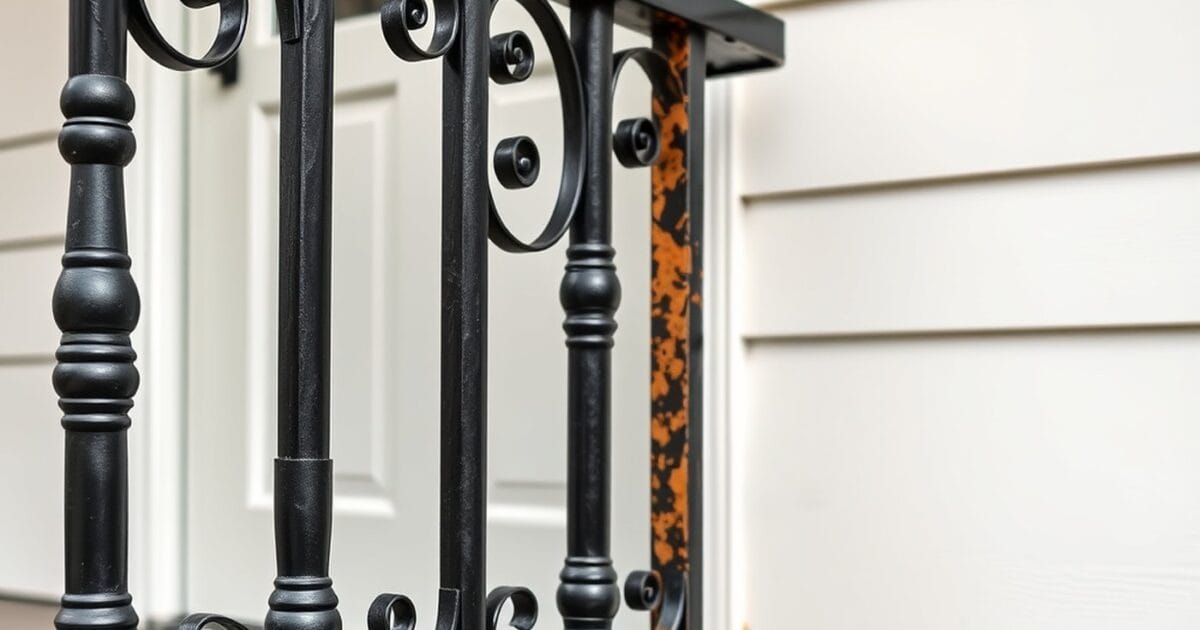
A wall is a flat surface that a roller covers quickly. A railing is a collection of narrow parts, each with several sides, many joints and hidden faces. The brush has to reach around every picket, into every joint and under every rail.
The surface area of a railing can be many times what its length and height suggest, especially with closely spaced pickets or decorative work. And much of the time goes into the preparation, not the painting: removing rust and loose paint from every face, cleaning, priming bare metal and masking what is around it.
The geometry of railings, and why they are awkward to paint, is covered in how to paint exterior railings. For pricing, the lesson is that length alone is a poor measure.
Measuring by the foot and by the picket
The most common unit is the linear foot of railing. It is easy to measure and easy for customers to understand. On its own, it hides the differences that matter.
Improve it by grouping railings by type. A simple railing with widely spaced plain pickets is one band. A railing with closely spaced pickets is another. Decorative railings with scrolls, castings or twisted bars form a third. Each band has its own rate per linear foot.
For very ornate work, counting pickets or panels can be more accurate than measuring length. A short run of elaborate cast work can take longer than a long run of plain bars.
Measure stair rails along the slope, not the horizontal run, and note posts, newels and gates separately. Gates have hinges, latches and two faces that both need attention, and they are often in worse condition than the railing beside them.
Condition decides the method
The condition of the metal matters more to the price than its length. A practical grouping looks like this.
Sound. The existing paint is intact apart from minor wear. Clean, lightly abrade, spot prime and paint.
Localized rust. Rust is present at joints, feet and edges. Remove rust and loose paint in those areas, prime bare metal and paint.
Widespread rust. Rust and loose paint cover much of the surface. Extensive removal is needed before priming and painting.
Structural concern. Metal is badly corroded, joints are broken, posts are loose or the railing moves. That is no longer a painting job, and it is covered below.
Assess each run and note its band at the walkthrough. Look closely at the feet of posts, the bottom rail and anywhere water collects, because that is where rust usually starts.
Rust removal and the tools
Rust removal ranges from hand tools such as wire brushes and scrapers to power tools such as wire wheels and abrasive discs. Power tools are faster on large areas but harder to use in tight spaces, and they bring their own hazards: flying debris, noise and dust. OSHA covers the safe use of hand and power tools.
Chemical rust converters and strippers are sometimes used. They have their place, but they add dwell time, cleanup and product costs. The methods for removing coatings from metal are covered in how to remove paint from metal.
Abrasive blasting removes rust and old coatings thoroughly, but it needs specialist equipment, containment and disposal. Most painters refer blasting or arrange it through a specialist, especially on site.
Price the preparation by the method and the band. The difference in hours between a sound railing and a heavily rusted one is large, and it is where most underpricing happens.
Old coatings on old iron
Railings on older buildings have usually been painted many times, and older paint on metal may contain lead. Removing it by scraping, wire brushing or power tools can create lead dust and chips, which is hazardous to workers and to anyone nearby.
OSHA covers worker protection on its lead page, and the EPA explains when its Renovation, Repair and Painting program applies to work on older homes and child occupied facilities. Test or presume lead on older railings, and price the containment, protective equipment, work practices and cleanup that follow.
Historic cast and wrought iron deserve care beyond lead. The National Park Service guidance on the maintenance and repair of architectural cast iron explains why some cleaning methods damage it and how it should be protected.
This is general information about how painting businesses price railing work, not legal or safety advice. Lead requirements and railing safety standards vary, so confirm what applies with the relevant authority and qualified professionals before starting.
Primer and finish as a materials line
Metal needs a primer suited to its condition. Bare steel usually needs a rust inhibiting primer. Galvanized metal and aluminum need primers made for them. Existing sound coatings may need only a compatible primer on repaired areas.
The finish coat has to suit exterior metal and the level of exposure. Some systems use two finish coats for durability. Choose the system before quoting, since the number of coats and the primer type both change the price. The protective gear the preparation calls for is listed in the painting safety equipment checklist.
Railings use less paint per linear foot than their surface area suggests, because thin parts hold little product, but brushes and mitts wear quickly and waste is higher. Price the materials from experience rather than from wall coverage figures.
Brush, mitt or spray on site
Brushing is the most common method on site. It is slow on complex railings but gives good control and works in wind.
Painting mitts, worn like gloves, can be faster on round pickets because they coat all sides at once. They are messy and need care to avoid runs.
Spraying is fast on complex shapes, but overspray is a serious problem outdoors. Everything nearby has to be masked, and wind can carry paint onto cars, walls and neighboring property. On site spraying often takes as long in masking and protection as it saves in painting.
Choose the method before quoting, and include the masking and protection it requires.
Shop finishing and powder coating
Railings that can be removed can sometimes be finished in a shop, by blasting and powder coating or by painting under controlled conditions. That can produce a more durable finish, but it involves removal, transport, reinstallation and a period without a railing.
Removing a railing leaves an open edge, which is a fall hazard. Temporary protection is required while the railing is away, and reinstallation must be secure. These tasks usually belong to a fabricator or metalworker rather than a painter.
Painters can offer shop finishing by partnering with specialists. The painter keeps the customer, coordinates the work and often handles the on site painting of anything that stays in place.
Railings at height and on stairs
Balcony railings, upper floor railings and long exterior stairs add access time and risk. Painters may need to work from the outside of the railing, from ladders or platforms, or from lifts.
OSHA explains the principles of fall protection on job sites. Access equipment and the time to use it safely belong in the price, and the pricing of access is covered in how to price access equipment for painting jobs.
Never lean on or tie off to a railing whose strength is in doubt. Railings under repair are exactly the ones that may not hold.
Loose railings are not a paint problem
Railings and guards exist to stop people falling. A railing that moves, has broken welds, has corroded posts or has missing parts is a safety issue, and paint will hide the problem rather than fix it.
Building codes set requirements for guards and handrails, such as the International Residential Code for many homes, and local rules vary. Repairs to guards are usually work for a fabricator, welder or carpenter.
When a railing looks unsafe, tell the customer in writing and recommend repair before painting. Do not include structural repair in a painting price unless the business is qualified to do it. The line between painting and repair is covered in how to price repairs on a painting job.
The railing estimate line by line
A railing estimate usually includes these lines.
Preparation. By linear foot and condition band, with the method stated.
Lead safe work. Where it applies, as its own line for containment, protection and cleanup.
Priming and painting. By linear foot and railing type, with the number of coats stated.
Protection. Masking of adjacent surfaces, especially for spraying.
Access. For railings at height.
Gates and posts. As separate items.
Small railing jobs carry setup and travel costs that do not shrink with length, so a minimum often applies. Your own recorded hours on each railing type are what make the rates reliable, and the method is described in how to track painting job costs.
Apartment, condo and commercial railings
Multi unit buildings often have long runs of identical balcony and stair railings. Repetition helps, because the crew gets faster on each unit, but access, occupants and building rules slow things down. Balconies may only be reachable through the units, which means scheduling with each resident.
Price these jobs per unit or per balcony as well as per linear foot, so the building manager can see the cost of each and adjust the scope. Include the time spent arranging access, and agree in advance what happens when a resident is not home on the scheduled day.
Why a short railing carries a long price
Customers often compare a railing price with the length of the railing and find it surprising. A short explanation helps: every picket has several faces, rust has to come off each of them, bare metal needs its own primer, and the brush work is slow. Showing the customer a rusted foot or joint up close usually makes the point better than any description. The broader approach is in how to handle painting price objections.
Cold metal, hot metal and morning dew
Metal is sensitive to temperature and moisture. Paint on cold metal can fail to cure properly, and metal in direct sun can become too hot to paint well. Dew on metal in the morning is common and can ruin adhesion.
Schedule railing work for suitable conditions, and allow for delays. Primed bare metal should be top coated within the time the product allows, because primer left exposed too long can lose its protection.
Maintenance and repaint cycles
Painted metal needs regular attention. Chips and scratches let water reach the metal, and rust spreads under paint. A railing touched up regularly lasts far longer than one left until it fails.
Offer customers a periodic inspection and touch up. It keeps railings in good condition, it keeps the business in contact with the customer, and it is often easier to price than a full restoration. The approach is covered in painting maintenance contracts.
Every extra service deserves its own line.
PaintPricing builds itemised estimates from your own rates, so washing, repairs, coatings and consultations sit on the quote as separate lines instead of disappearing into the paint price. Free for your first 3 quotes, no card required.
Frequently asked questions
How do painters price metal railing painting?
Usually by the linear foot, with separate rates for railing type and condition. Ornate work may be priced by the picket or panel. Gates, posts, lead safe work and access are separate lines.
Why do railings take so long to paint?
Each picket and rail has several faces, and ornate work has many more. Preparation of rust and loose paint on every face often takes longer than the painting.
Do old metal railings contain lead paint?
They can. Older railings have usually been painted many times. Test or presume lead, use safe work practices where required and price the extra time and cleanup.
Should railings be sprayed or brushed?
Brushing is common on site because it avoids overspray. Spraying is faster on complex shapes but needs extensive masking and calm weather. Mitts can speed up round pickets.
What should a painter do about a loose railing?
Tell the customer in writing and recommend repair by a qualified fabricator or carpenter before painting. Guards are safety items, and paint does not fix structural problems.
How often should metal railings be repainted?
It depends on exposure and the coating. Regular inspection and touch up of chips and rust spots extend the life of the finish and delay a full repaint.