In this article
- Why built ins are cabinet work, not wall work
- Counting boxes, shelves, doors and drawers
- Interiors are the decision that doubles the job
- The existing finish sets the preparation
- Brushed in place or sprayed
- Built ins in mudrooms, offices and family rooms
- Emptying the shelves
- Dry time, cure time and the shelf that sticks
- Materials and the higher grade of product
- Presenting the built in line to the customer
- Learning from the cabinet side of the business
- Frequently asked questions
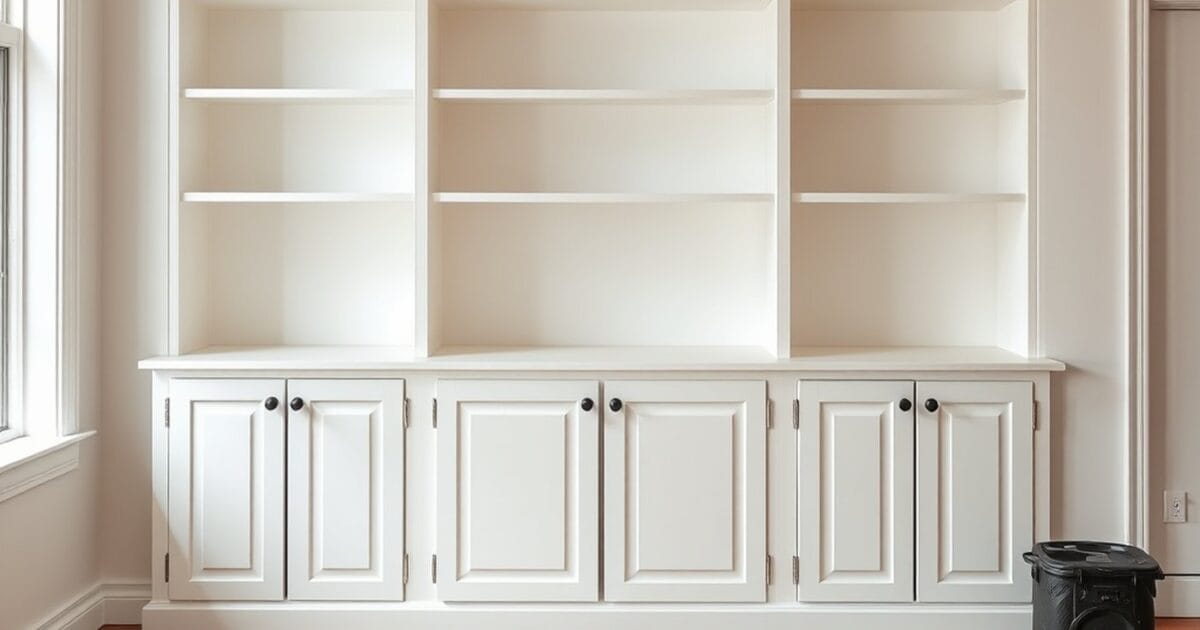
Built in bookcases, entertainment walls, window seats, mudroom lockers and office cabinetry are some of the most requested and most underpriced items in residential painting. On the walkthrough they read as a wall with shelves. On the job they behave like a set of kitchen cabinets that cannot be removed, with every shelf edge, face frame, back panel and door needing the same standard of finish.
This guide explains how painting contractors can price built ins properly. It covers what to count, how the existing finish and the desired finish change the method, how to handle shelves and doors, and how to present the price so that the customer understands why a single piece of furniture costs as much as a room.
Why built ins are cabinet work, not wall work
The mistake most painters make with built ins is to think of them as a surface. A bookcase wall has a front face that can be measured, and a painter can multiply that face by a rate and feel reasonably safe. But the front face is a small part of what gets painted. Each open box has a top, a bottom, two sides and a back, and each shelf has a top, a bottom and a front edge. The paintable area inside a bookcase can be many times larger than the face.
The finish standard is also higher. Built ins are seen close up, touched often and lit from above, which shows brush marks, drips and poor edges. Customers expect a finish closer to furniture than to a wall. That means more preparation, better products and more careful application, all of which add time.
Kitchen cabinet painters already know this. The methods and pricing logic in how much to charge to paint kitchen cabinets carry over well to built ins, with a few differences that this guide deals with.
Counting boxes, shelves, doors and drawers
A built in should be described on the estimate by its parts. A useful inventory includes:
- The number of open boxes or bays, and whether their interiors are being painted.
- The number of fixed shelves and adjustable shelves.
- The number of doors, noted as flat, shaker or raised panel, with or without glass.
- The number of drawer fronts.
- Face frames, crown, base and any applied moldings, measured by run.
- Back panels, noted as flat, beadboard or open to the wall.
- Countertops, seats or benches, and whether they are painted, stained or excluded.
The difference between adjustable and fixed shelves matters. Adjustable shelves can be taken out, laid flat and painted on both sides like cabinet doors, which is faster and gives a better finish. Fixed shelves have to be painted in place, reaching into corners and working around the shelf pin holes or supports.
Doors and drawers are the same items a cabinet painter already prices. Count them the same way and use the same rates, adjusted for any difference in profile or finish method.
Interiors are the decision that doubles the job
The single largest variable on a built in is whether the interiors are painted. Some customers only want the outside faces refreshed. Others want every surface of every box. Some want the backs painted a contrast color, which adds cutting in along every inside corner.
Settle this on the walkthrough and write it down. An estimate that says paint the built in without saying which surfaces invites a dispute at the end. Where the customer is unsure, pricing the exterior faces as the base and the interiors as an option lets them choose with the difference in front of them. The logic of offering options without muddying the price is covered in how to price painting jobs in tiers.
Interiors are also harder to reach and to see. Painting the inside top of a low box means working upside down with a small brush, and the inside back corners collect runs if the paint is applied too heavily. These surfaces take longer per unit of area than any other part of the unit.
The existing finish sets the preparation
Built ins arrive in every condition. Some are previously painted and only need cleaning, scuffing and a fresh topcoat. Some are stained and lacquered, and the customer wants them painted for the first time. Some are new, raw wood or medium density fiberboard straight from the carpenter, and need priming and sealing of edges.
Painting over factory lacquer or a clear finish needs thorough cleaning, deglossing or scuff sanding, and a primer that bonds to the old finish. Raw fiberboard edges soak up paint and swell if they are not sealed properly. Previously painted units may have old latex over oil, which can peel if the new coating does not bond. The general question of what goes over what is covered in do I need primer before painting.
Knots in raw pine, tannin in some hardwoods and old water stains on shelves all bleed through ordinary primer. They need a stain blocking primer, sometimes more than one coat, and that is time the estimate should allow for.
Brushed in place or sprayed
The finish method is the biggest single choice after scope. Built ins can be brushed and rolled in place, sprayed in place with the room masked, or partly removed so that doors, drawers and adjustable shelves are sprayed off site while the carcass is brushed in place.
Brushing and rolling in place is the least disruptive and needs the least protection, but it leaves some texture and takes longer on large units. Spraying in place gives the smoothest finish and is fast once the masking is done, but the masking of the room, the floor, the walls and anything else nearby is a substantial job in its own right. Removing doors and drawers for spraying gives the best finish on those parts and keeps overspray out of the house, but adds labeling, transport, hardware handling and a return trip to reinstall.
Many cabinet painters use a hybrid: doors, drawers and loose shelves sprayed in the shop, the carcass brushed or sprayed on site. Whichever method is used, name it in the estimate. The same built in can reasonably have two prices if the customer chooses between a brushed finish and a sprayed one.
Built ins in mudrooms, offices and family rooms
The room around the built in affects the job. A mudroom locker unit takes daily abuse from boots, bags and sports equipment, so it needs a hard wearing enamel and possibly an extra coat on benches and hooks. Pricing a mudroom with built ins is covered in how much to charge to paint a mudroom, and the locker unit is the item that most often makes that room more expensive than its size suggests.
A home office wall unit may hold electronics and cables that have to be disconnected and moved. A family room entertainment wall may include a television mount, speaker cutouts and lighting. Library shelving may run floor to ceiling and need a ladder or platform. Each of these is a condition to note and price rather than discover on the day.
Emptying the shelves
Bookcases are full of books, photos, collections and electronics. Somebody has to empty them before painting and fill them again afterward, and it should not silently fall to the crew. A large library wall can take a significant amount of time just to clear, and the customer will want their items handled carefully and replaced in order.
Decide in advance whether the customer empties the unit or the painter does. If the painter does, price it. The broader principles are in how to charge for moving furniture when painting, and the same logic applies to the contents of shelves.
Dry time, cure time and the shelf that sticks
Paint on a shelf can feel dry within a short time and still be soft enough that books or ornaments stick to it or leave marks. This is known as blocking, and it is one of the most common complaints after a built in is painted. Products formulated for cabinets and trim resist it better, but every paint needs time to cure before it takes weight.
Tell the customer in writing how long to wait before reloading the shelves, based on the product data for the paint being used. If the schedule requires the unit back sooner, that may mean a different product, which may carry a different materials cost.
Materials and the higher grade of product
Built ins usually justify premium products: a bonding primer, a stain blocker where needed, and a hard drying enamel designed for cabinets and trim. These products cost more than wall paint and often need more careful application. Spraying uses more material than brushing because of overspray.
Price materials by the product actually specified rather than by a generic allowance. The principles are in how to estimate paint and material costs. For sundries, include tape, masking film, fillers, caulk, sanding abrasives and any shop supplies used for off site spraying.
Presenting the built in line to the customer
Customers are often surprised by the price of a built in, because they see one piece of furniture. The estimate can help by listing what is included: the number of boxes, shelves, doors and drawers, which surfaces are painted, the preparation and primer, the number of topcoats and the method. When the customer can see that a bookcase wall contains more painted surface than the room around it, the number makes sense.
It also helps to separate the built in from the room. A room line and a built in line let the customer decide to paint the room now and the built in later, rather than rejecting the whole estimate. The approach of pricing items so they can be accepted separately is covered in painting bid alternates and unit prices.
Learning from the cabinet side of the business
Painters who already offer cabinet painting have most of the systems built ins need: a way to count doors and drawers, a spray setup, a labeling method for removed parts and a record of how long each part takes. Those who do not may find built ins a natural way into that work. The business side of cabinet refinishing is covered in starting a cabinet painting business.
For the application itself, including cleaning, sanding, priming and topcoating cabinetry, how to paint kitchen cabinets sets out the method that also works on most built ins. The pricing in this guide sits on top of that method.
When spraying on site, protect the air in the home as well as the surfaces. The EPA explains how volatile organic compounds affect indoor air quality, and OSHA provides guidance on spray operations, including ventilation and the equipment involved.
Detail work is where square foot pricing loses money.
PaintPricing builds itemized estimates from your own rates, so balusters, windows, built ins and caulk sit on the quote as counted lines instead of disappearing into the wall price. Free for your first 3 quotes, no card required.
Frequently asked questions
How do painters price built in bookcases?
Most count the parts: boxes, shelves, doors, drawers and trim, and price each from their own timed history, with factors for interiors, the existing finish and the finish method. A single number per unit works only when the units are very similar.
Why do built ins cost so much to paint?
The paintable area inside a bookcase is much larger than its front face, every shelf edge and inside corner needs attention, and customers expect a furniture grade finish. The work is closer to cabinet painting than to wall painting.
Should the inside of bookcases be painted?
That is the customer choice, and it is the biggest variable in the price. Painting the interiors can roughly equal the work of the outside faces or exceed it. Offer interiors as an option so the difference is visible.
Can built ins be sprayed in a finished home?
Yes, with thorough masking of the room. Many painters remove doors, drawers and loose shelves to spray them off site and brush or spray the carcass in place.
How long before books can go back on painted shelves?
Longer than the paint takes to feel dry. Paint needs time to cure or items can stick to it. Follow the product data for the paint used and tell the customer the wait in writing.
Who empties the shelves before painting?
Agree it in advance. If the customer empties the unit, say so in the estimate. If the crew does it, price the time, because large library walls can take a long time to clear and refill.