In this article
- A row of lockers is hundreds of small doors
- Single tier, double tier, box and wardrobe lockers
- What the factory finish needs before new paint
- Rust in locker rooms and dents in corridors
- Locks, number plates, handles and vents
- Spraying lockers in place
- Emptying lockers and working in occupied buildings
- Benches, bases and the area around the lockers
- Timing the job around school breaks and seasons
- The locker line on a commercial estimate
- Counting doors and hours on every locker job
- Frequently asked questions
Rows of metal lockers line school corridors, gym locker rooms, factory break rooms, fire stations and employee areas. Over the years they fade, chip, rust and collect dents and stickers. Replacing them is expensive, so facility managers ask painters whether they can be refinished. They usually can, and the result can transform a tired corridor, but only if the painter prices the job as what it is: hundreds of small doors, vents, handles and edges, not a flat wall of steel.
What follows is written for contractors quoting in place refinishing of metal lockers. It explains how to count and band lockers, what prep and products they need, how to handle locks, number plates and vents, and how to price a job that has to fit school breaks and locker room schedules. The locker room side of gym work is covered in fitness center painting projects, and the choice between spraying, rolling and brushing on detailed items is compared in paint sprayer versus roller versus brush. This post is about the lockers and the number.
A row of lockers is hundreds of small doors
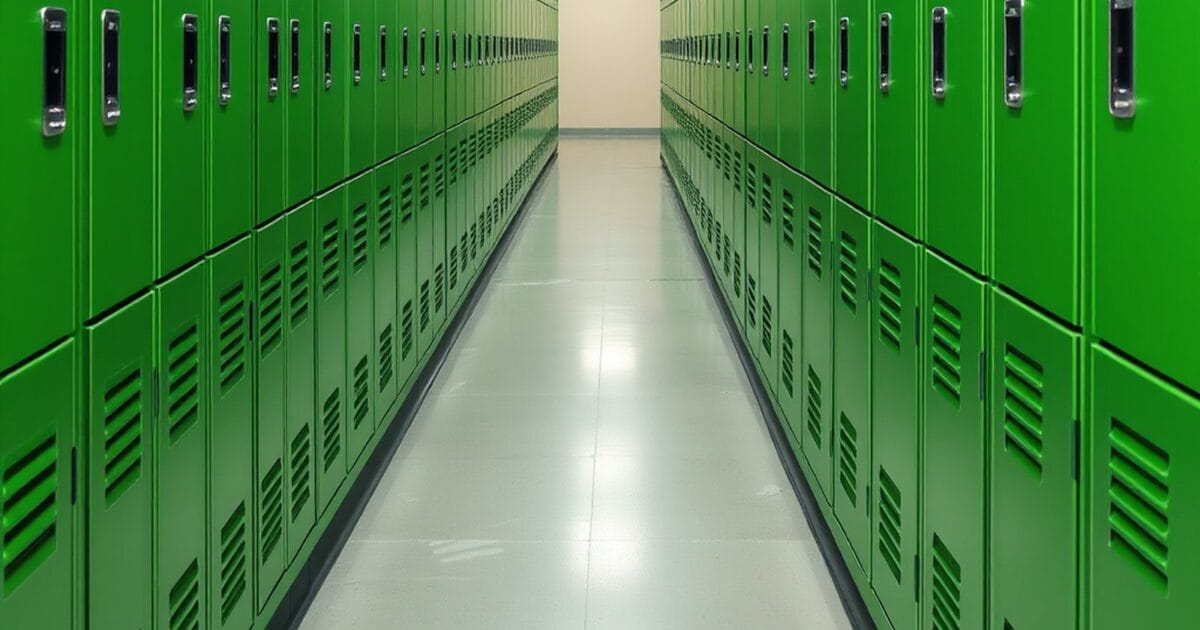
Looking at a bank of lockers from the corridor, it is easy to see one large steel surface. A painter who measures it as area will be badly short. Each locker has a door with edges, a handle or latch, ventilation louvers or perforations, a number plate and hinges. The frame between doors has its own edges. The top, the ends and sometimes a sloped top or base need attention too.
The time on a locker job is in those details. Louvers must be painted without filling them, handles and latches masked or removed, edges wrapped, and every door opened and closed at least once to paint the frame and the door edges. Multiply that by every locker in the building and the true size of the job becomes clear.
For that reason, lockers are priced by the door, not by the area. A count of doors by type is fast to take on the walk, easy for the owner to check, and much closer to how the crew will spend its time.
Single tier, double tier, box and wardrobe lockers
Lockers come in different configurations, and each paints differently. Single tier lockers have one tall door per unit. Double and triple tier lockers stack two or three shorter doors in the same height. Box lockers stack many small doors in a grid. Wide wardrobe or athletic lockers have larger doors and sometimes open mesh fronts. Each door has similar detail regardless of size, so a wall of box lockers takes far longer than the same area of single tier lockers.
A practical banding counts doors by type and adds a factor for detail. A single tier door with a plain face is one band. Doors with heavy louvers or perforated faces, which are slow to paint without filling the holes, are another. Mesh or expanded metal lockers, which have more in common with railings, are a third. Residential louvers are banded the same way in how to price painting plantation shutters and louvered doors.
The painter also has to decide with the owner whether only the exterior faces are painted, or the interiors as well. Exterior only refinishing is the most common, covering the doors, frames, visible ends and tops. Interior painting multiplies the time, because each compartment has shelves, hooks and corners, and it requires every locker to be emptied.
What the factory finish needs before new paint
Most steel lockers leave the factory with a baked enamel or powder coat finish. That finish is hard and smooth, and new paint will not stick to it without preparation. The surface needs cleaning to remove grease, fingerprints, sticker residue and tape, then abrading to give the primer something to grip, then a bonding primer suited to hard finishes.
Stickers, tape and adhesive residue are a bigger part of the prep than most painters expect. School and team lockers often carry years of decals and name tags, and removing them and their adhesive is slow work. Some owners want those removed; others ask the painter to paint around team graphics. Either way, the estimate should state what is included.
The topcoat is usually a durable enamel or urethane suited to heavy use and cleaning. Enamel and urethane tradeoffs are part of latex versus oil based paint, and the general logic of primers on metal is in the best paint for metal.
Rust in locker rooms and dents in corridors
Locker room lockers live in damp air, splashed with water and exposed to wet towels and gear. They rust, usually at the bottom of the doors, around the vents and at the base where mop water collects. Corridor lockers are dented and chipped by students, carts and bags. Both conditions change the prep.
Surface rust needs cleaning to sound metal and a rust inhibiting primer. Rust through at the bottom of a door or base is a repair or replacement item, not painting. Dents can be filled if the owner wants them hidden, but filling many dents is slow, and paint in a higher sheen will make remaining dents more visible. A condition banding of sound, lightly worn and heavily rusted or damaged keeps the estimate honest. The general approach to pricing repair as its own work is in how to price repairs on a painting job.
Locks, number plates, handles and vents
Lockers carry small parts that take time. Built in combination locks, latches, handles, padlock hasps and number plates all sit on the door face. Some can be removed with a screwdriver, some are riveted, and some belong to a lock system the owner does not want disturbed. Number plates are especially important in schools and gyms, because they must go back on the right locker.
The estimate should say which parts are removed and which are masked. Removing number plates and handles gives a cleaner finish and may be faster than masking dozens of small parts, but it requires a system to label and reinstall every piece. Built in locks are usually masked. Vents must be painted carefully so the paint does not bridge the openings, and spraying at a low build or backbrushing the louvers is often needed.
Spraying lockers in place
Lockers are usually sprayed. An airless or fine finish sprayer lays down an even coat on the flat faces and gets into the louvers, and it is far faster than brushing hundreds of doors. But spraying lockers in place means masking the floor, the walls around the lockers, the ceiling above, any benches, and any lockers or areas not being painted. In a corridor, that masking is a large part of the job.
Some contractors use electrostatic spraying on lockers, in which the paint is charged so that it wraps around the metal and reduces overspray. It needs specialized equipment and training, and it is a service some firms offer as a specialty. For most painters, conventional spraying with careful masking is the practical method.
Spraying indoors brings ventilation and respiratory protection needs, described on the OSHA pages for spray operations and respiratory protection page. In a school or gym, the owner will also want to know about odor, and the EPA explains the indoor effects of solvents and other volatile compounds on its VOC page.
Emptying lockers and working in occupied buildings
Lockers belong to people. Before painting, especially if interiors or door edges are included, the lockers need to be emptied or at least left unlocked and open. In a school that usually means summer or a long break. In a gym or factory, it means coordinating with members or staff, which the facility manager has to arrange.
Doors must dry before they are closed, or they will stick to the frames and tear the new paint. That means leaving doors open overnight, which may be a security problem in some buildings. The painter should agree with the owner how lockers are emptied, who is responsible for contents, and how long doors must stay open. The segment posts on school painting contracts and fitness center painting cover the scheduling realities of those buildings.
Benches, bases and the area around the lockers
Locker installations often include benches, base platforms, end panels, filler panels, sloped tops and trim. Some of these are steel and paintable, and some are wood or plastic. The concrete or wood base under the lockers often looks worse than the lockers themselves once they are painted.
Some of these belong in the locker price and some are better quoted as extras; the estimate should say which. Painting the wall behind or above the lockers is also a separate item, and often worth quoting at the same time because the masking is already done.
Timing the job around school breaks and seasons
Locker jobs cluster around school breaks, which means many facilities want the work done in the same few weeks. A painter who can price and schedule locker work reliably can fill those weeks, but must allow for the crush: several jobs at once, limited time in each building, and no chance to extend into the school year.
That pressure affects price. Work that has to be finished by a fixed date with no slack is worth more than work that can move, and the crew size needed to hit the date may be larger than usual. The general principles of capacity and scheduling are covered in painting business capacity planning, and the pricing of compressed schedules is in how to price a rush painting job.
The locker line on a commercial estimate
The locker line should give a door count for each type and band, and then spell out whether exteriors only or interiors too, the prep, the products and coats, which hardware is removed and which masked, how number plates are handled, and what is excluded, such as rusted through panels, broken locks and bench replacement. It states the schedule, when lockers must be emptied, and how long doors must stay open to dry.
For large buildings, a price per door by band lets the owner decide which banks to refinish now and which later. Owners who phase work by bank can be given unit prices, explained in painting bid alternates and unit prices.
Counting doors and hours on every locker job
Lockers are among the easiest items to time, because the unit is clear and repeated many times. Log every locker job: door counts per band, condition, method, and time spent masking, prep, priming and each coat, along with hardware removal. Within a handful of jobs, the log produces per door rates for the painting estimate rate card, and the reasoning behind timed rates is in painting production rates.
With those rates, a locker refinish becomes a reliable summer product for school and gym customers, and a natural add on to any commercial repaint that passes a row of tired lockers.
Commercial pieces get counted, not buried in the wall price.
PaintPricing builds itemized estimates from your own rates, so doors, lockers, partitions and lift days sit on the quote as counted lines a general contractor can check. Free for your first 3 quotes, no card required.
Frequently asked questions
How do painters price painting metal lockers?
Most count the locker doors by type and detail band, then multiply by a per door rate drawn from their records, adding interiors, hardware removal, heavy rust repair and extra masking as separate items.
Can metal lockers be painted without removing them?
Yes. Most lockers are refinished in place, usually sprayed, with careful masking of floors, walls, ceilings and benches around them.
What prep do lockers need before painting?
Cleaning to remove grease and sticker residue, abrading the hard factory finish, rust treatment, and a bonding primer before a durable enamel or urethane topcoat.
Do locker interiors have to be painted too?
No. Exterior only refinishing is the most common. Interiors multiply the time and require every locker to be emptied, so they are priced as an optional item.
How long must locker doors stay open after painting?
Long enough for the paint to dry so the doors do not stick to the frames. The product data sheet gives dry times, and the painter should agree an open door plan with the owner.
Why are box lockers more expensive to paint than tall lockers?
Every door has similar edges, handles, vents and number plates regardless of size, so a wall of many small doors takes far longer than the same area of fewer tall doors.