In this article
- How tilt up panels are made and why it matters
- New panels and the residue on their faces
- Repainting an older tilt up building
- Panel joints, sealant and the long caulk line
- Reveals, patches and the panel face
- Choosing the coating for a large concrete wall
- Spraying and backrolling acres of wall
- Lifts, height and the site around the walls
- Wash water, dust and the rules on a big site
- Scheduling tilt up work with the general contractor
- Measuring and pricing the whole building
- Recording the numbers on each tilt up job
- Frequently asked questions
Tilt up concrete buildings are some of the largest painting jobs a commercial painter will see. Distribution centers, warehouses, big box stores, offices and schools are built from concrete panels cast flat on site and tilted into place. On paper, a tilt up building is a painter dream: huge walls, few windows, and a sprayer that can run all day. In practice, the money on a tilt up job is made or lost in the parts that are not flat wall.
This guide is for the painting contractor pricing tilt up walls, on new construction or repaint. It explains what makes tilt up panels different from other masonry, how to test and prepare them, why the joints matter so much, and how to build a price for walls measured in large areas. The coating side of thick film masonry products is covered in elastomeric coating, and the full exterior sequence from conditions to inspection is set out in the exterior painting checklist. This post is about the tilt up price.
How tilt up panels are made and why it matters
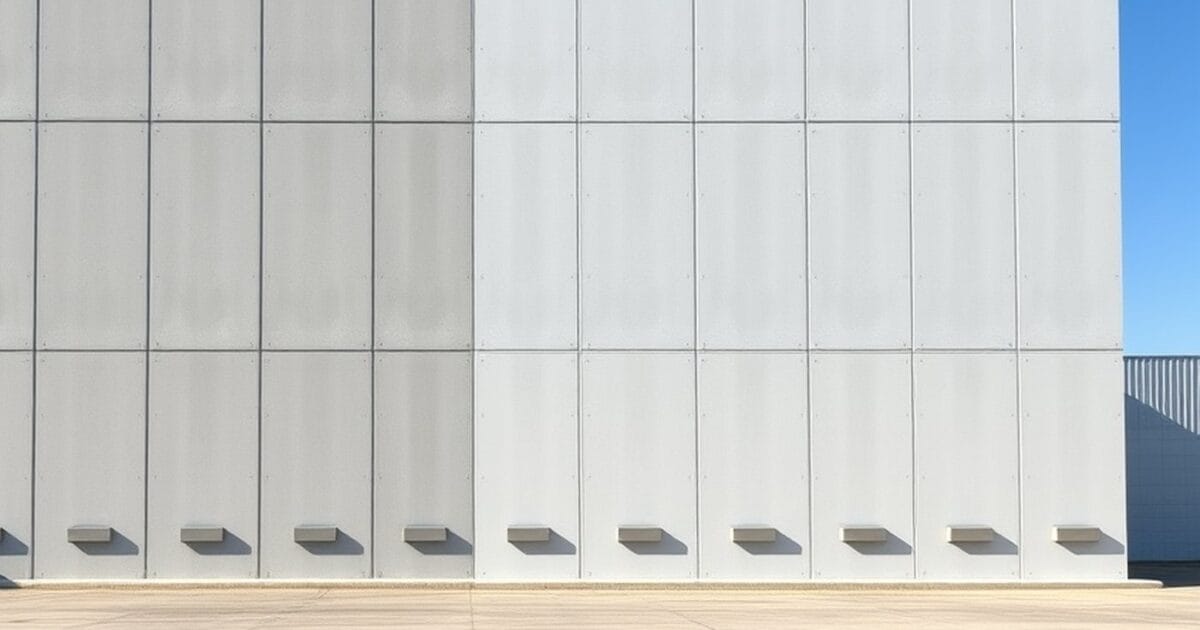
A tilt up panel is cast flat on the building slab or a casting bed, using forms around the edges and a bond breaker or release agent so that it separates from the slab. Once it has cured enough, a crane lifts it into position and it is braced and connected to the structure. The finished building is a series of large panels with joints between them, often with reveals, which are grooves cast into the face for decoration.
That process leaves marks that matter to the painter. The face that was against the slab may carry bond breaker residue, curing compound and a smooth, dense surface that paint struggles to grip. The face that was on top may have trowel marks, patches and variations in texture. Lifting inserts and brace anchors leave holes that have to be patched. The Tilt Up Concrete Association discusses finishing options for panels in its article on creative forming and finishing of tilt up concrete, which shows how much the surface varies from project to project.
New panels and the residue on their faces
On new construction, the biggest risk is adhesion. Bond breakers, form release agents and curing compounds are designed to stop things sticking to concrete, and they can stop paint sticking too. New concrete is also highly alkaline and holds moisture, and some coatings fail if applied too soon.
The painter should find out which bond breaker and curing products were used, ask for the manufacturer guidance on painting over them, and test adhesion on the actual panels before committing to a product. Some residues need removal by pressure washing with a cleaner, others by mechanical abrasion, and some coatings are designed to tolerate them. The specification often sets the requirements, and the painter should read it carefully. Tests for moisture and alkalinity may also be required before the first coat goes on, and the coating maker data sheet usually says which.
These tests and any residue removal are items in the price, not free steps. If the specification requires them, they are part of the base bid. If it does not, the painter should either include them or state clearly that adhesion depends on the panels being paintable.
Repainting an older tilt up building
An older tilt up building is a different job. The panels have been painted before, often with an acrylic or elastomeric coating. The questions are about the existing coating: is it sound, chalking, peeling or faded, and what is it? A chalky or peeling coating needs heavier prep, and some older elastomeric coatings are thick and can be difficult to paint over with a different product.
Pressure washing is the standard first step, removing dirt, chalk and mildew. Peeling areas need scraping and spot priming. Cracks in the panels need filling with a flexible filler. The existing coating determines the new one, and an adhesion test is worth doing on a building of any size. A wash priced on its own line is easier to defend, as set out in how to price pressure washing before painting.
Panel joints, sealant and the long caulk line
Every tilt up building has joints between panels, and every joint has sealant. The sealant keeps water out of the building and lets the panels move. On a large building, the joints add up to a very long line, running the full height of every panel on every elevation.
Joints are a major part of the price. On new construction, the sealant may be installed by a sealant contractor rather than the painter, and the painter needs to know which is the case. On a repaint, failed sealant may need to be cut out and replaced, which is slow and may be a separate trade. Painting over sealant also needs care, because some sealants do not accept paint and some paints crack over moving joints.
Contractors who have priced tilt up work consistently point to the joints as the part that takes longer than expected. The painter should measure the total joint length, decide whether sealant replacement is in scope, and price it by length as its own item. Sealant priced by the foot is explained in how to price caulking on a painting job.
Reveals, patches and the panel face
Reveals are the recessed grooves cast into tilt up panels to break up the flat face. They are often painted in an accent color, which means cutting a straight line along every reveal, or masking it. A building with many reveals in a contrasting color is far slower than one painted in a single color.
Patches at lifting inserts, brace anchors and damaged edges show through paint if they are not treated. A textured coating hides patches and variations better than a smooth one, which is one reason many architects specify textured coatings on tilt up buildings. The painter should count or measure the reveals, note the patches and damaged areas, and price them as items. The same principle of banding a surface by texture and detail is explored in how to price painting textured walls.
Choosing the coating for a large concrete wall
Tilt up walls are commonly coated with acrylic masonry paint, elastomeric coatings or textured coatings. Acrylic paint is the simplest and cheapest per area. Elastomeric coatings are applied thicker to bridge hairline cracks and keep water out. Textured coatings add body and hide surface variations. Each has a different coverage, labor rate and number of coats.
The coating choice changes the material cost dramatically on a large wall, because a thick coating uses far more gallons than a thin one. It also changes the labor, because thick coatings are slower to apply and may need special equipment. The specification usually names the product and coats, and the painter should price exactly what is specified, not a cheaper substitute. The general method for estimating material is in how to estimate paint and material costs.
Spraying and backrolling acres of wall
Tilt up walls are sprayed, often with large airless rigs, and the first coat is often backrolled to work the material into the concrete surface. A good crew on a large flat wall can apply a lot of material in a day, but the pace depends on the weather, the access and the crew. Contractors on painting forums describe large tilt up jobs where the crew sprays very high volumes each day, and those same threads warn that not every painter can keep that pace.
Spraying outdoors on a large building brings overspray risk. Cars in the parking lot, neighboring buildings, loading docks and landscaping all need protection, and wind can stop spraying altogether. The price should allow for masking, for days lost to wind and weather, and for moving vehicles and equipment away from the walls. Airless setup and technique are explained in how to use a paint sprayer.
Lifts, height and the site around the walls
Tilt up walls are tall, often several stories, and most painters use boom lifts or scissor lifts to reach the upper parts. On a large building, the lifts are on site for weeks, and moving them around the building is part of every day. The ground around the building decides which lifts can be used: new construction sites may have mud, trenches and stored materials, while existing buildings may have landscaping, parking and loading docks in the way.
Lift rental is a major cost on a tilt up job, and it runs for every day of washing, prep, coating and weather delay. OSHA covers scissor lift hazards in its scaffolding eTool, and access costs can be carried as their own item using how to price access equipment for painting jobs.
Wash water, dust and the rules on a big site
Washing a large concrete building produces a lot of water, carrying cleaners, chalk, old coating and dirt. On many sites, that water cannot simply run into storm drains, and the federal side of that is described on the EPA stormwater program page. Local rules vary, and the painter should find out what is required before pricing the wash.
Mechanical prep on concrete, such as grinding high spots, removing coatings or abrasive cleaning, can release crystalline silica dust, which OSHA regulates in construction and explains on its silica page. If the job involves that kind of prep, the dust controls and protection belong in the price.
Scheduling tilt up work with the general contractor
On new construction, tilt up painting fits into a schedule set by the general contractor. Panels are painted after they are erected and the joints are sealed, but often before landscaping and paving are finished. The painter may be working around other trades, cranes and deliveries, and the painting window can be squeezed by delays earlier in the project.
The price should reflect the schedule risk: whether the painter has a clear window, whether the work can be done in one continuous run or in pieces, and what happens if the panels are not ready when planned. Commercial scheduling and the protections a painter needs in the subcontract are covered in commercial painting subcontract clauses, and delays in how to handle painting job delays.
Measuring and pricing the whole building
A tilt up estimate starts with the wall area by elevation, with large openings such as dock doors and storefronts deducted. The area is multiplied by the rate for the specified coating and coats. Then the separate items are added: washing, residue removal or adhesion testing, sealant by length, reveals by length if in an accent color, patching by count, access by the day or week, masking and protection, and weather allowance.
The estimate should state the coating system, the number of coats, the assumptions about the panel surface, whether sealant is in scope, and what is excluded, such as structural repairs, sealant replacement by others and damage from other trades. On large jobs, the general contractor will compare these items across bidders, so clarity wins work. The broader commercial bid structure is covered in how to bid commercial painting jobs.
Recording the numbers on each tilt up job
Tilt up jobs are large enough that small errors in rate multiply into large losses or gains. On each job, record the wall area, coating system, gallons used, crew size, hours for washing, prep, joints, reveals and each coat, lift days and weather days. Those records turn into rates for the painting estimate rate card and make the next tilt up bid far more accurate than a rule of thumb.
Over time, those records show where tilt up work really makes money for a particular crew. For many painters, it is the flat walls. For almost all, the joints, the lifts and the weather are where the risk sits.
Commercial pieces get counted, not buried in the wall price.
PaintPricing builds itemized estimates from your own rates, so doors, lockers, partitions and lift days sit on the quote as counted lines a general contractor can check. Free for your first 3 quotes, no card required.
Frequently asked questions
How do painters price painting tilt up concrete walls?
Most price the wall area by elevation at a rate for the specified coating system, then add washing, adhesion testing, joint sealant by length, reveals, patching, lifts, masking and weather days as separate items, using rates from their own jobs.
Can new tilt up panels be painted right away?
Not always. New concrete is alkaline and may carry bond breaker and curing compound residue that affects adhesion. The painter should test and follow the coating maker guidance before painting.
Why are the joints so important on a tilt up job?
Every panel joint has sealant running the full height of the wall. On a large building that is a very long line, and replacing or painting over sealant takes far longer than its area suggests.
What coating is used on tilt up buildings?
Acrylic masonry paint, elastomeric coatings and textured coatings are common. The specification usually names the product and coats, and each has different material use and labor.
Is sealant replacement part of a painting price?
Only if the estimate says so. On many jobs, a sealant contractor installs or replaces joint sealant. The painter should confirm and price it as its own item if included.
How does weather affect a tilt up price?
Large exterior walls are sprayed, and wind, rain and temperature limits stop work. A realistic allowance for weather days, and for lift rental during those days, belongs in the price.