In this article
- The textures painters meet
- What texture does to the numbers
- Banding texture on the walkthrough
- Rollers, sprayers and back rolling
- Cutting in against texture
- The patch that never disappears
- Older textures and what may be in them
- Removing texture or skimming smooth
- Textured ceilings and the ceiling line
- New construction and fresh texture
- Sheen and the look of texture
- Writing the texture line
- Timing textured walls on real jobs
- Frequently asked questions
Textured walls are everywhere in residential painting. Orange peel, knockdown, skip trowel and heavy hand troweled finishes are standard in many regions and many decades of construction. Most painters price them the same way they price smooth walls, perhaps with a small allowance for extra paint. That works on light textures and fails on heavy ones, where the texture changes the material, the labor, the repairs and even what the customer thinks is possible.
This guide is for painting contractors pricing textured walls and ceilings. It covers the main types, how texture changes the numbers, how to band it, the repair problem, the option of removing texture, and how to write the line.
This guide is general information and not legal or safety advice. Testing and handling rules for older wall and ceiling materials are set locally and can change, so confirm them for the job in front of you.
The textures painters meet
The common wall and ceiling textures, from lightest to heaviest, are roughly:
- Orange peel: a fine, even spatter that looks like the skin of the fruit.
- Splatter or light knockdown: larger spatters flattened slightly with a knife.
- Knockdown: heavier spatters flattened into a mottled pattern.
- Skip trowel: a hand applied texture with irregular flat patches.
- Sand texture: fine grit mixed into paint or compound.
- Heavy hand trowel, Santa Fe or Spanish lace: deep, irregular textures with ridges and valleys.
- Stipple and popcorn: mostly on ceilings, with raised peaks or clumps.
Each paints differently. Light textures roll much like smooth walls. Heavy textures have deep valleys that a standard roller skips and ridges that catch the roller edge. Popcorn ceilings are a separate subject with their own pricing, covered in how to price popcorn ceiling removal.
What texture does to the numbers
Texture changes three things. First, it increases the actual surface. A heavily textured wall has more surface than its flat measurement, and it absorbs more paint. Second, it slows application. A thicker nap roller, more pressure, more passes and sometimes back brushing are needed to cover the valleys. Third, it slows cutting in. A clean line along a ceiling or trim is much harder to cut against a textured surface, because the brush cannot follow a flat edge.
The first effect is material, and it can be handled with a factor on the paint quantity. The principles of allowing for extra material are in the painting material waste factor and how to estimate paint and material costs. The second and third effects are labor, and they need a factor on the production rate for each texture band.
Banding texture on the walkthrough
The practical approach is to band texture into a few groups: smooth, light, medium and heavy, for example. Each band gets a material factor and a labor factor, taken from timed records of real jobs. The walls are still measured by area in the usual way, and the band adjusts the number.
Consistency matters more than precision. Two estimators should put the same wall in the same band. Photographs of each band, taken on real jobs and kept with the rate card, help new estimators recognize them. The method of pricing by area with adjustments is covered in how to price painting jobs per square foot, and texture is one of the adjustments that belongs there.
Note where textures change within a house. It is common for walls to be orange peel and ceilings to be knockdown, or for an addition to have a different texture from the original house. Each area should be banded separately.
Rollers, sprayers and back rolling
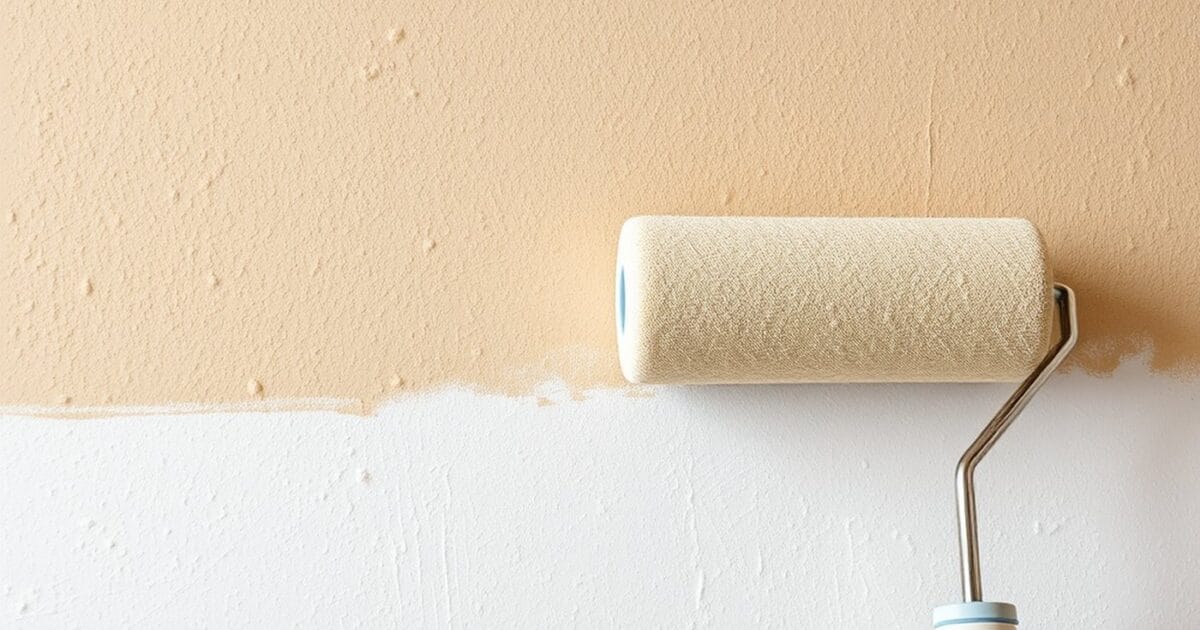
The right roller cover makes a large difference on textured walls. Light textures take a medium nap. Heavy textures need a thicker nap that can push paint into the valleys. Using the wrong roller leaves the valleys bare or produces an uneven sheen. The choice of roller is set out in how to choose a paint roller, and on heavy textures it is one of the biggest factors in both speed and finish.
Spraying textured walls is common, particularly in empty houses and new construction. Spraying covers the valleys quickly, and back rolling afterward evens the finish and works the paint in. In occupied homes, the masking needed for spraying may outweigh the speed. Price the method actually used.
Cutting in against texture
Cutting in is where heavy texture costs the most time. A smooth wall gives the brush a clean surface to follow. A heavily textured wall gives it a series of ridges and valleys, and the line wanders unless the painter works slowly. Ceiling lines on textured ceilings are especially difficult, because both surfaces may be textured.
Many painters use a slightly different approach on heavy texture: cutting in with a smaller brush, working the paint into the texture along the line, and accepting a line that follows the texture rather than a perfectly straight edge. Discuss the expected line with the customer, particularly where two colors meet on a textured surface. A perfectly crisp line is not realistic on every texture.
The patch that never disappears
Repairs on textured walls are harder than on smooth ones. A patch on a smooth wall can be sanded flat and disappears under paint. A patch on a textured wall has to be retextured to match, and matching an existing texture takes skill, the right tools and sometimes several attempts. Even a good match may show under raking light.
Tell the customer before the job that patches on textured walls may remain visible. Price texture matching separately from ordinary patching, because it takes longer and needs different materials. The general approach to repairs is in how to price repairs on a painting job. Small repairs can often be blended with spray texture from a can, while larger areas may need a hopper gun and a practiced hand.
Touch ups on textured walls also flash more than on smooth walls, because the texture changes how light hits the surface. Whole wall repainting is often needed for an invisible result, which affects how warranty touch ups are handled later.
Older textures and what may be in them
Some older wall and ceiling textures and joint compounds were made with asbestos. Sanding, scraping, removing or drilling into them can release fibers. The EPA explains how to protect a household from asbestos exposure and gives an overview of where asbestos was used.
For ordinary repainting that does not disturb the texture, the question is less pressing. For any job that involves sanding, scraping, removing or heavily repairing an older texture, recommend testing before work begins, and exclude disturbance of untested older texture from the scope. The same question arises with painted surfaces in older homes, where the approach in how to test for lead paint applies.
Removing texture or skimming smooth
Some customers want the texture gone. Removing it usually means either scraping it off, where it will come off, or skim coating over it to create a smooth wall. Both are major jobs, far larger than painting. Skim coating over heavy texture may take several coats of compound, sanding between each, before the wall is ready for primer.
Price texture removal as a separate job, with its own method and its own schedule. The pricing of skim coating is covered in how to price skim coating, and the principles carry over to smoothing a textured wall. For older textures, the testing question above comes first.
The homeowner guide to painting over texture, including the option of leaving it, repairing it or smoothing it, is how to paint over textured walls, and it is a useful reference for customers deciding what to do.
Textured ceilings and the ceiling line
Ceilings are textured more often than walls, and the texture is often heavier. Knockdown and stipple ceilings are common, and they are harder to paint than textured walls because the work is overhead and the texture holds dust and cobwebs. Rolling a heavily textured ceiling can also loosen texture that has not been painted before, particularly soft sprayed textures that were never sealed. A small test area shows whether the texture holds under a wet roller.
Where ceiling texture is loose or crumbling, painting it may bring it down in patches. That becomes a repair or removal job rather than a paint job, and the customer should know before the first roll. The pricing of standard ceilings is covered in how much to charge to paint a ceiling, and a textured ceiling needs its own band on top of that.
New construction and fresh texture
On new construction, texture is applied by the drywall contractor and the painter paints over it. Fresh texture is porous and absorbs primer unevenly, so a good primer coat is essential for an even finish. Heavy fresh texture may also hide unfinished joints or tool marks that show once the first coat goes on.
Agree with the builder or general contractor who is responsible for texture defects discovered at primer. A painter who fixes every texture flaw for free on a new house can lose the margin on the job. The approach to builder work generally is in how to get painting jobs from general contractors, and texture repairs belong in the same conversation about scope and back charges.
Sheen and the look of texture
Sheen changes how texture looks. Higher sheens make texture more prominent by catching light on every ridge. Flat and matte finishes make it less noticeable. Customers who dislike their texture but do not want to pay for removal may be happier with a lower sheen than they expected. The tradeoffs between sheens are in the paint sheen guide.
Lower sheens are harder to clean, which matters in kitchens, halls and rooms used by children. Discuss the choice rather than defaulting to what was on the walls before.
Writing the texture line
A clear estimate for textured walls states the texture band for each area, the paint quantity with the texture factor included, the method, and any repairs with texture matching as a separate item. It notes that patches on textured walls may remain visible, and that disturbance of untested older texture is excluded. If texture removal is an option, it appears as its own alternate with its own price.
With that detail, the customer understands why a heavily textured house costs more than a smooth one of the same size, and the crew knows what finish is expected. The broader principles are in what should a painting estimate include.
Timing textured walls on real jobs
Record the texture band, area, method and hours for every textured job. After a few jobs in each band, the labor and material factors will be clear, and they can go onto the painting estimate rate card alongside the smooth wall rates. Over time, those factors turn texture from a guess into a line that prices itself.
Detail work is where square foot pricing loses money.
PaintPricing builds itemized estimates from your own rates, so balusters, windows, built ins and caulk sit on the quote as counted lines instead of disappearing into the wall price. Free for your first 3 quotes, no card required.
Frequently asked questions
Do painters charge more for textured walls?
For medium and heavy textures, usually yes. Texture adds surface, uses more paint, slows rolling and makes cutting in harder. Light textures such as orange peel often paint much like smooth walls.
How is texture factored into a painting estimate?
Walls are measured by area as usual, and a texture band adjusts the paint quantity and the labor rate. Each band has factors taken from timed jobs.
What roller is used on textured walls?
A thicker nap than on smooth walls, matched to the depth of the texture. Heavy textures may need the thickest covers, or spraying followed by back rolling.
Can patches on textured walls be made invisible?
Not always. Patches have to be retextured to match, and even good matches may show under raking light. Customers should be told this before the job.
Is it worth removing wall texture before painting?
It depends on the customer. Removal or skim coating is a much larger job than painting and should be priced separately. A lower sheen can make texture less noticeable at no extra cost.
Can old wall texture contain asbestos?
Some older textures and joint compounds did. Testing is recommended before sanding, scraping or removing older texture, and disturbing untested older texture should be excluded from the scope.