In this article
- A plant is paid by what it makes, so downtime is the real price
- Planned shutdowns and the work that must fit inside them
- Safety orientation, permits and the plant rules
- Lockout, confined spaces and hazards that are not paint
- Forklifts, racking and a warehouse that keeps moving
- Steel, machinery guards and surfaces that rust
- Concrete that has absorbed years of oil
- Food, pharmaceutical and clean production areas
- High bays and open structure
- Specifications, submittals and the plant engineer
- Building the industrial price
- Is industrial work right for your business
- Frequently asked questions
- How is industrial painting priced differently from commercial painting?
- What is a plant shutdown and why does it matter to painters?
- Do painters need lockout and tagout training?
- Can a general painting contractor do confined space work?
- Why do industrial floor coatings fail?
- How do I get on a plant approved contractor list?
Industrial work is where many commercial painters go looking for bigger jobs. Manufacturing plants, warehouses, distribution centers and processing facilities have large surfaces, regular maintenance needs and owners who understand that coatings protect assets. The work can be steady and well paid.
It is also a different world from offices and stores. The building exists to make or move things, every hour of downtime has a cost the plant can measure, and the safety rules are written for hazards that have nothing to do with paint. This guide covers how a painting contractor should approach industrial buyers, where the hours go and how to price the job without losing money to the plant around it.
It is written for general painting contractors doing maintenance painting in industrial buildings: walls, ceilings, structure, doors, rails, equipment guards and floors. Heavy industrial coatings on tanks, pipelines, bridges and process equipment are specialized work with their own certifications and are beyond its scope.
A plant is paid by what it makes, so downtime is the real price
In an office, the painter competes for space with desks. In a plant, the painter competes with production. Every area the painter needs is an area that is not making or shipping product, and plant managers think about painting mainly in terms of how much production it will interrupt.
That changes what the buyer values. A slightly higher price that fits inside a planned shutdown may be worth far more to the plant than a lower price that needs a line stopped for an extra day. A painter who can explain how the work will fit around production, and then deliver it that way, wins work that cheaper competitors cannot.
Ask about production early. Which areas run continuously, which run on shifts, and which can be released at particular times? The answer shapes the whole estimate.
Planned shutdowns and the work that must fit inside them
Many plants schedule maintenance shutdowns, when lines stop and trades move in to service equipment, repair buildings and paint. Shutdowns are planned well ahead, crowded with contractors and fixed in length. The painting has to be finished when the shutdown ends, whatever happened along the way.
Shutdown work is priced differently from ordinary work. Crews are larger, shifts are longer, and several trades compete for the same space and the same lifts. Painting is often last in the sequence, which means the painter inherits every delay that happened before. Price for the crowding, the premium labor and the risk of arriving to find the area not ready.
Work outside shutdowns is also common, in areas that can be isolated while production continues. That work is slower, because the crew is working around live operations. The approach to pricing work split across several windows is in how to price a painting job done in phases.
Safety orientation, permits and the plant rules
Industrial sites have safety programs, and contractors are expected to follow them. Before starting, crews usually attend a site orientation, sometimes for every worker and sometimes renewed at intervals. Many plants use permit systems for hot work, work at height, confined spaces and work near energized equipment. Some require specific personal protective equipment everywhere on site, whatever the painting task.
All of this costs time and money. Orientation hours are paid hours, permits take time to obtain each day, and plant specific protective equipment may be more than the crew would normally wear. The general list of protective equipment a painting crew should carry is in the painting safety equipment checklist, but the plant rules come first.
Many industrial buyers also prequalify contractors on their safety record, written safety program and training. A painter without a written program will struggle to get on the list. The OSHA overview of hazard communication is a sensible place to start building one, because chemical labeling and safety data sheets matter both for the plant and for the coatings the painter brings in.
Lockout, confined spaces and hazards that are not paint
The most serious hazards in a plant usually belong to the plant, not the painting. Machinery that starts unexpectedly, energized electrical equipment, pressurized lines, moving conveyors and enclosed spaces with poor air can injure a painter who is focused on the wall.
Where painting takes place on or near equipment, the equipment must be isolated and its energy controlled before work begins. OSHA explains the principles on its page on control of hazardous energy, often called lockout and tagout. The plant usually runs its own procedure, and the painter must follow it, not improvise one.
Some areas count as confined spaces: pits, tanks, vaults, ducts and enclosed rooms with limited entry. Painting inside them can create dangerous atmospheres quickly, and entry may require permits, monitoring and rescue arrangements. The OSHA page on confined spaces sets out why. Many painting contractors decline confined space work entirely, which is a legitimate decision.
Forklifts, racking and a warehouse that keeps moving
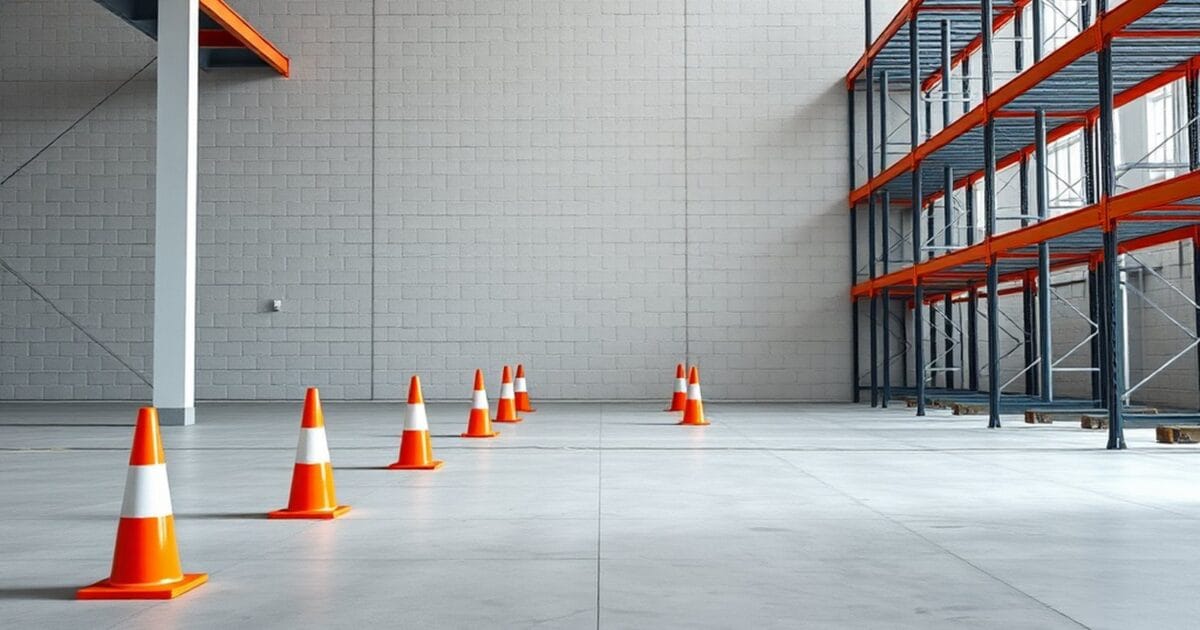
Warehouses and distribution centers rarely stop. Forklifts, order pickers and trucks move constantly, often at speed, often with limited visibility. A painter on a lift in an aisle is a hazard to them and they are a hazard to the painter.
Agree traffic management before work starts: which aisles are closed, when, and how the closure is marked. Barriers, spotters and signage are part of the job. The OSHA overview of powered industrial trucks explains the hazards that the facility is managing, and why it will insist on control of the work area.
Racking is its own problem. Painting walls behind full racking may be impossible, and painting the racking itself is usually a separate specialty. Clarify in writing which surfaces behind or above racking are included, and whether stock will be moved. The access question, including lifts in narrow aisles, is covered in how to price access equipment for painting jobs.
Steel, machinery guards and surfaces that rust
Much of the paintable area in a plant is metal: columns, beams, stairs, rails, doors, guards, ducts and equipment housings. Metal in industrial settings often carries rust, mill scale, oil and years of old coatings of unknown type.
Preparation is the job. Cleaning oil off, removing loose rust, feathering edges and priming bare metal take far longer than applying the finish, and the choice of primer and topcoat depends on what the metal is exposed to: humidity, chemicals, washing or heat. The general choices are set out in best paint for metal, and for a plant they should be confirmed against the manufacturer technical data for the actual exposure.
Safety colors are a special case. Guards, rails, piping and hazard areas are often painted to a color code the plant uses to warn workers. The painter must match that code exactly. Rails and stairs in particular are priced much like the approach in how to price metal railing painting, with every picket, bracket and joint counted.
Concrete that has absorbed years of oil
Industrial floors and lower walls often have years of oil, coolant, grease and chemicals soaked into them. Coatings do not stick to contamination, and a floor that looks clean can still hold enough oil to cause failure.
Cleaning and profiling are therefore the largest parts of any floor job. Degreasing, mechanical preparation and testing whether the surface is ready take time, and they need the right equipment. Removing old coatings adds more; the methods are compared in how to remove paint from concrete. Grinding concrete creates silica dust, which has its own rules; the OSHA page on crystalline silica explains why.
Floor coatings and floor markings are both covered elsewhere in detail: the pricing of coatings in how to price epoxy floor coatings, and marking in floor marking paint. On an industrial job, they are usually separate lines with separate crews, sequenced so that coatings cure before marking starts.
Food, pharmaceutical and clean production areas
Plants that make food, drinks, pharmaceuticals or sensitive products have extra rules about what may enter production areas. Coatings may need to be suitable for the environment, contamination must be prevented, and workers may need to follow hygiene rules such as hair covers, clean clothing and restrictions on jewelry, food and glass.
These rules come from the plant and from the regulators that oversee it, and they differ by product and location. Ask for them before pricing, because they can change the product, the method and the schedule. Painting may be allowed only during full shutdowns, and cleanup may have to meet a standard far beyond ordinary commercial work.
The time spent following hygiene procedures, changing clothing and moving through controlled entrances is real, and it should be counted as part of each shift.
High bays and open structure
Warehouses and plants often have high open ceilings with exposed structure, deck and services. Painting them is specialized work, usually sprayed with products designed to dry before the overspray reaches the floor. The pricing of that work is covered in how to price dryfall ceiling painting.
For the industrial estimate, the key questions are what is below the ceiling and whether it can be moved or protected. Stock, machinery and finished product all need covering, and the plant may not be able to clear areas large enough to spray efficiently. Covering and uncovering production equipment can take as long as the painting itself.
Specifications, submittals and the plant engineer
Larger industrial jobs often come with a written specification prepared by an engineer or a coatings consultant. It may name products, preparation standards, number of coats and inspection points. Smaller jobs may come with nothing more than a walkthrough and a verbal request.
When there is a specification, read it closely before pricing. The approach is in how to read painting specifications. Expect to submit product data for approval, to have work inspected at stages, and to be asked for records of conditions and application. When there is no specification, write one into the proposal, so the plant knows what it is getting and the painter has something to point to later.
Building the industrial price
Start by dividing the job by area and by window: shutdown work, work in isolated areas during production, and work that can be done at any time. Each has a different productivity and a different labor cost.
For each area, price preparation separately from application, because preparation dominates on industrial surfaces. Add orientation, permits, plant protective equipment, traffic management, equipment protection, access and cleanup to the plant standard. Add the time lost to waiting for permits, for areas to be released and for other trades to finish.
Then add a clear statement of assumptions: what the plant will provide, what happens if an area is not released, and how extra work found during preparation will be priced. The logic of making assumptions visible is in painting bid exclusions and clarifications, and it matters more in a plant than almost anywhere else.
Is industrial work right for your business
Industrial work suits painting businesses with a written safety program, disciplined crews, the right equipment and the patience to fit into another organization system. It rewards reliability over speed, and plants that trust a contractor tend to keep using it for years.
It does not suit a business that is still building its basic systems, because the prequalification alone can be demanding. It also carries real risk if the crew is careless around machinery, forklifts or confined spaces. Start with simpler work in warehouses and light manufacturing, build the record and the program, and grow into more demanding sites from there.
This is general information about how painting businesses approach industrial work, not legal or safety advice. Plant safety programs, permit systems and regulatory requirements differ between sites and jurisdictions, so confirm them with the facility before pricing.
Every kind of building takes hours away from painting. Price them.
PaintPricing builds itemized estimates from your own rates, so night shifts, containment, escorts, access and protection sit on the quote as lines the client can see, not a guess inside one number. Free for your first 3 quotes, no card required.
Frequently asked questions
How is industrial painting priced differently from commercial painting?
Around downtime and preparation. The plant values fitting the work into its production schedule, and preparation of oily concrete and rusted steel dominates the hours. Orientation, permits, traffic control and equipment protection add further time.
What is a plant shutdown and why does it matter to painters?
A planned period when production stops so trades can maintain the plant. Painting inside a shutdown must finish on time, alongside other trades, often with longer shifts and larger crews, which changes the labor cost.
Do painters need lockout and tagout training?
When they work on or near equipment that could start or release energy, the equipment must be isolated under the plant procedure. The plant usually runs the procedure, and the painter must follow it and train the crew to do so.
Can a general painting contractor do confined space work?
Only with the permits, monitoring, training and rescue arrangements required. Many painting contractors decline it, which is a reasonable decision. Clarify early whether any part of the scope is a confined space.
Why do industrial floor coatings fail?
Most often because oil and chemicals soaked into the concrete were not fully removed, or because the surface was not properly prepared. Preparation and testing are the largest parts of an industrial floor job.
How do I get on a plant approved contractor list?
Usually by meeting its prequalification: insurance, a written safety program, a safety record and training. Starting with smaller warehouse and light manufacturing jobs builds the record larger plants ask for.