In this article
- The signature point: floor area is not paintable area
- Cost by scope
- Labor versus materials
- A worked example: the paintable-area math
- The exterior side of a 3000 square foot home
- What pushes a 3000 square foot job up or down
- DIY versus hiring a pro at this size
- How to budget your own 3000 square foot house
- Frequently asked questions
- How much does it cost to paint a 3000 square foot house interior?
- Why is the paintable area larger than 3000 square feet?
- Is it cheaper per square foot to paint a bigger house?
- How much does it cost to paint the exterior of a 3000 square foot house?
- What raises the cost of painting a large house the most?
- Should I paint a 3000 square foot house myself?
Quick answer: Painting a 3000 square foot house is a large job, so plan for a large total even though the price per square foot often drops on a job this size. As broad, verify-locally ranges, a full interior repaint of a 3000 square foot home commonly lands somewhere around 7,000 to 18,000 dollars, a full exterior repaint around 6,000 to 16,000 dollars, and doing both together roughly 12,000 to 32,000 dollars. These are wide on purpose. Your real number swings with your region, the condition of the surfaces, ceiling height, siding material, how many colors you want, and how much prep and repair the house needs. Get three local quotes and price your own rooms before you trust any single figure.
Three thousand square feet puts your home solidly in the large-house tier, and that changes the math in two directions at once. The total climbs because there is simply more surface to cover, but the cost per square foot frequently eases because crews spread their setup, travel, and mobilization over a bigger job. This guide breaks the 3000 square foot house down by scope, walks the paintable-area math that most estimates hinge on, splits labor from materials, and shows a worked example. For the shared framing that applies to every size in this series, start at our cost to paint a house hub, and if your home is a touch smaller, our cost to paint a 2500 square foot house guide sits right next door. Before anything else, run your actual rooms and walls through the painting cost calculator so your budget starts from your house, not an average.
The signature point: floor area is not paintable area
The most important idea in pricing any house by its square footage is that the 3000 square foot number describes the FLOOR, not the surface you are actually painting. Painters do not roll paint across your floor. They coat walls, ceilings, trim, doors, and closets, and the area of all those surfaces is much larger than the footprint the number names. As a rough rule, the paintable surface area of a home runs somewhere in the range of 2.5 to 4 times the floor area, depending on ceiling height, how the space is divided into rooms, and how much trim and how many doors there are. A 3000 square foot home can easily present 7,500 to well over 10,000 square feet of paintable surface once every wall and ceiling is counted.
This is why two 3000 square foot homes can be quoted thousands of dollars apart. A house with nine-foot or ten-foot ceilings, lots of small rooms, and elaborate trim has far more surface than an open-plan house with eight-foot ceilings and few walls, even though the floor number is identical. When you read any per-square-foot price, always ask whether it refers to floor area or paintable area, because the two are very different numbers and mixing them up throws an estimate off badly. Our interior painting cost hub digs deeper into how the surface count drives the interior price.
Cost by scope
The single biggest lever on your total is scope: whether you are painting the inside, the outside, or both, and how complete each of those is. The ranges below are typical and vary widely by region, condition, height, and finish, so treat them as a starting frame rather than a quote.
| Scope for a 3000 sq ft home | Typical range | What mostly moves it |
|---|---|---|
| Walls only, interior | 5,000 to 12,000 | Ceiling height, number of rooms, color changes |
| Full interior (walls, ceilings, trim, doors) | 7,000 to 18,000 | Trim detail, ceilings included, prep and repair |
| Full exterior (siding, trim, soffits, fascia) | 6,000 to 16,000 | Siding material, stories, prep and scraping |
| Interior and exterior together | 12,000 to 32,000 | Combined scope, access, total condition |
| Single large room refresh | 500 to 1,500 | Size, ceiling, trim, number of coats |
Notice that the whole-house numbers are not simply the room number multiplied out. A large job carries economies of scale: the crew mobilizes once, masks and sets up in bulk, and buys paint in larger quantities, so the effective rate per square foot on a 3000 square foot repaint is often lower than on a single room. You pay more in total because there is more house, but each square foot can cost a little less than it would in isolation.
Labor versus materials
On almost any repaint, labor is the larger share of the bill, and that holds true at 3000 square feet. Paint, primer, caulk, tape, and sundries are a real cost, but the hours spent moving furniture, masking, patching, cutting in edges, rolling, and doing multiple coats add up to the majority of what you pay. A common way to think about it is that materials are the minority of the total and labor is the majority, with the labor share tending to climb when the work is fussy: high ceilings, heavy prep, lots of trim, or many color changes that force extra cutting in and extra coats.
Because labor dominates, anything that saves the crew time saves you money out of proportion to the material involved. Clearing rooms yourself, choosing fewer colors, keeping ceilings the same color, and accepting the existing trim color all trim labor hours. A gallon of paint is a fixed cost, but the hours to apply it are where a 3000 square foot job gets expensive or stays reasonable. Our guide on how much painters charge to paint a house interior unpacks how pros build those labor hours into a price.
A worked example: the paintable-area math
Picture a two-story 3000 square foot home with nine-foot ceilings on the main level. To sketch the interior surface, you do not use the 3000 figure directly. Instead you estimate the paintable surface. Apply a middle multiplier, say roughly 3 times the floor area for a home with average room division and trim, and you arrive at an estimate on the order of 9,000 square feet of paintable interior surface once walls, ceilings, and trim are counted.
That 9,000 square foot surface, not the 3000 square foot floor, is what a painter mentally prices. If a crew works at a rough interior rate that includes prep and two coats, multiplying that rate across 9,000 square feet is how the full-interior range in the table above takes shape. Push the ceilings to ten feet, add wainscoting and crown molding, or split the plan into many small rooms, and the surface multiplier climbs toward 3.5 or 4 times, pushing the total up. Open the plan up, drop to eight-foot ceilings, and keep trim simple, and the multiplier eases toward 2.5, pulling the total down. This is the whole reason two identical floor numbers produce different quotes, and it is why measuring your own paintable surface, or letting the calculator do it, beats any rule of thumb.
The exterior side of a 3000 square foot home
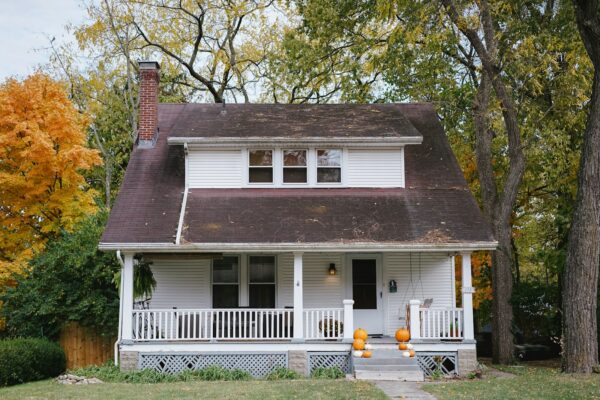
Outside, the price of a 3000 square foot house depends heavily on how tall it is and how the crew reaches the walls, not just on square footage. A sprawling single-story ranch of 3000 square feet is mostly reachable from the ground and short ladders, which keeps the exterior toward the lower end of its range. The same 3000 square feet stacked into two stories forces ladder and sometimes scaffold work, slower and safer cutting in at height, and extra time on gables and dormers, all of which raise the exterior number. We cover that height and access premium in detail in our companion guides on the cost to paint a one story house exterior and the cost to paint a two story house exterior, and it is worth reading both if your 3000 square foot home is more than one level.
Siding material matters too, because different surfaces drink paint and take prep differently. Rough or porous surfaces need more paint and more labor than smooth ones, and any peeling or chalking adds scraping and priming time. When you want to estimate the exterior properly, our how to estimate exterior painting guide walks through measuring wall area, and the U.S. Department of Energy’s guidance on home exteriors and weatherization background at https://www.energy.gov is useful context on why the outer shell is worth maintaining.
What pushes a 3000 square foot job up or down
Beyond scope and height, a handful of factors reliably move the total, and knowing them helps you read a quote and control your budget.
- Condition and prep. Smooth, sound, recently painted surfaces cost less. Cracked plaster, water stains, peeling exterior paint, or heavy patching add prep hours, which are labor, which is the majority of the bill.
- Ceiling height. Nine and ten-foot ceilings and any two-story foyer add surface and require taller ladders or scaffolding, raising both material and labor.
- Number of colors. Every color change means more cutting in, more masking, and sometimes more coats. A whole house in one or two colors paints faster than a rainbow of accent walls.
- Trim, doors, and detail. Elaborate crown molding, wainscoting, many doors, and detailed trim all add slow, careful brush time out of proportion to their square footage.
- Coats and coverage. Dark-to-light color changes and porous surfaces often need an extra coat, adding both paint and labor across a 3000 square foot surface.
For a sense of how the interior total is assembled room by room, our per-room guides help you build it up: see the cost to paint a living room, the cost to paint a kitchen, and the cost to paint a bedroom, then add them toward the whole-house figure.
DIY versus hiring a pro at this size
A 3000 square foot house is a big undertaking to paint yourself, and honesty helps here. The interior is doable for a determined DIYer with time, but it is a lot of surface, and at nine or ten-foot ceilings you are on ladders for the cut-in, which is slow and tiring across a house this size. Your savings are mostly the labor, since you still buy the paint, and on a job this large those hours are substantial, so weigh whether you can realistically finish before the disruption wears the household down.
The exterior of a large home is where DIY gets genuinely risky, especially if the house is two stories. Working from tall ladders around the full perimeter, cutting in at gable peaks, and reaching soffits and fascia are height-work tasks where a fall is a serious injury, not a scuff. For a single-story exterior, ground-level and short-ladder work is more approachable. For a two-story exterior, hiring a pro is the sensible call for both the finish and your safety. The U.S. Federal Trade Commission’s guidance on hiring contractors at https://consumer.ftc.gov is worth reading before you sign with any crew, so you know how to compare bids and avoid the common traps.
How to budget your own 3000 square foot house
The path to a number you can trust is straightforward. First, decide your scope honestly: interior, exterior, or both, and how complete each is. Second, estimate your paintable surface rather than leaning on the 3000 floor figure, using the 2.5 to 4 times multiplier as a guide or letting the calculator measure it from your rooms. Third, factor your real conditions: ceiling height, siding, prep, colors, and trim detail. Fourth, get three local quotes and compare them against your own estimate so you can spot an outlier in either direction. A 3000 square foot house is a large job with a large total, but it is a predictable one once you price the surface instead of the floor, and once you match the scope to what your home actually needs. Start with the painting cost calculator for a baseline, then generate a shareable figure with our free painting estimate tool before you call the first painter.
Frequently asked questions
How much does it cost to paint a 3000 square foot house interior?
As a broad, verify-locally range, a full interior repaint of a 3000 square foot home commonly falls around 7,000 to 18,000 dollars, covering walls, ceilings, trim, and doors. The wide spread reflects ceiling height, number of rooms, trim detail, colors, and how much prep the surfaces need. Because the paintable surface is much larger than the 3000 floor figure, measure your own rooms or use the calculator, and get three local quotes before you trust any single number.
Why is the paintable area larger than 3000 square feet?
Because 3000 square feet describes the floor, not the surface being painted. Painters coat walls, ceilings, trim, and doors, and the total of those surfaces runs roughly 2.5 to 4 times the floor area depending on ceiling height, room division, and trim. So a 3000 square foot home can present 7,500 to over 10,000 square feet of paintable surface. Pricing the surface rather than the floor is the key to an accurate estimate.
Is it cheaper per square foot to paint a bigger house?
Often yes, on a per-square-foot basis, because a large job spreads setup, travel, and mobilization over more surface and lets the crew buy paint in bulk. That said, the total still climbs because there is more house to cover. So a 3000 square foot repaint usually carries a bigger overall bill than a smaller home but a slightly lower effective rate per square foot. The economy of scale lowers the rate, not the total.
How much does it cost to paint the exterior of a 3000 square foot house?
A full exterior repaint of a 3000 square foot home typically ranges around 6,000 to 16,000 dollars, but height and access swing it hard. A single-story home of that size is mostly ground-reachable and sits lower in the range, while a two-story version needs ladders and scaffolding, slower work at height, and gable and dormer time, pushing it higher. Siding material and prep also matter. See our one-story and two-story exterior guides for the access details.
What raises the cost of painting a large house the most?
Labor-heavy factors move it most: extensive prep and repair, high or two-story ceilings that add surface and require ladders or scaffolding, many color changes that multiply cutting in and coats, and detailed trim and molding that demand slow brush work. Since labor is the majority of the bill, anything that adds hours raises the price more than the paint itself does. Smooth, sound surfaces in one or two colors keep a 3000 square foot job toward the lower end.
Should I paint a 3000 square foot house myself?
The interior is possible for a committed DIYer with time, though it is a lot of surface and involves ladder work at taller ceilings. The exterior is where hiring a pro makes the most sense, especially on a two-story home, because height work around the full perimeter carries a real fall risk. Your savings are mostly labor, since you still buy paint, so weigh those hours and the safety before taking on a job this large yourself.
Planning the schedule too? See how long it takes to paint a 3000 square foot house.
Pricing this job as a pro? See how much to charge to paint a 3000 square foot house.
Need the paint quantity too? See how much paint for a 3000 square foot house.