In this article
- What You Are Actually Measuring
- Step One: Measure the Perimeter and Wall Height
- Step Two: Add the Gables and Other Triangles
- Step Three: Subtract the Large Openings
- Step Four: Handle Soffit, Fascia, and Trim Separately
- The Footprint Times a Multiplier Shortcut
- Step Five: Convert Area to Gallons
- Worked Example: A Simple One Story Rectangle
- Common Mistakes That Throw Off the Total
- When to Skip the Tape and Use the Calculator
- Frequently asked questions
Quick answer: Multiply the perimeter of the house by the wall height for each story, add the gable triangles (half base times height), subtract large openings like the garage door, then divide by roughly 350 to 400 square feet per gallon and multiply by your coats. Or skip the math with the paint calculator.
Measuring a house for exterior paint feels bigger than measuring a single room, but it is the same idea scaled up. You are working out the paintable wall area, which is the surface the roller and brush actually touch, and then converting that number into gallons. The house has more sides, a few triangles up in the gables, and separate elements like soffit, fascia, and trim, so the trick is to break the building into simple rectangles and triangles you can measure one at a time. Get those pieces right and the total takes care of itself. This guide walks through the full method, a worked example, and the mistakes that make people buy two gallons too few or three too many.
What You Are Actually Measuring
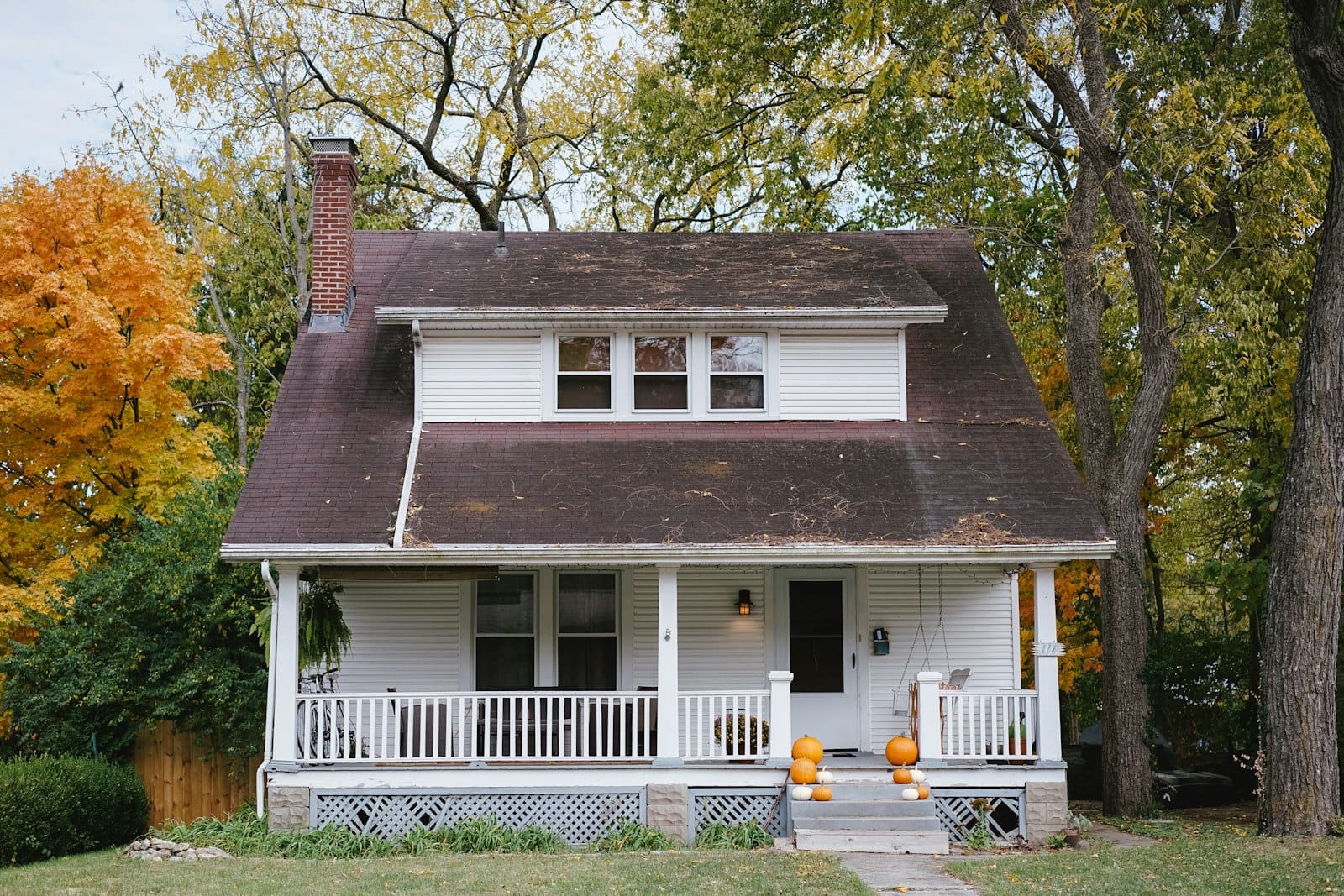
The number that matters is paintable wall area, not the floor area or the listed square footage of the home. A house advertised as 2,000 square feet of living space might have far more or far less wall to paint depending on its shape, its height, and how many windows and doors punch holes in the walls. A tall, narrow two story home has more exterior wall than a sprawling single story ranch of the same living area, because wall area grows with height and perimeter, not with the floor plan.
So you measure the actual walls. Walk the outside of the house, measure the length of each wall at ground level, and note the height from the foundation to the eaves. Multiply length by height for each rectangular wall section. Then handle the gable ends, which are the triangular sections of wall under a pitched roof, separately. Add the rectangles and triangles together, subtract the openings you decide are worth subtracting, and you have your paintable area. The same core method appears in our guide to calculating paint needed, and it scales from a single wall to a whole house.
Step One: Measure the Perimeter and Wall Height
Start with the footprint. Measure the length of every exterior wall and add them together to get the perimeter. For a plain rectangular house that is just two lengths plus two widths. For a home with bump outs, an attached garage, or an L shaped plan, measure each straight run and total them. A long tape, a measuring wheel, or even pacing off the distance and checking one pace against a tape will get you close enough for a paint estimate.
Next, measure the wall height for one story, from the top of the foundation to the bottom of the eaves. A typical single story wall runs somewhere around 8 to 10 feet, and each additional story adds roughly the same. For a two story house you can often measure the first story and double it, then adjust for any difference. Multiply the perimeter by the total wall height and you have the area of the rectangular wall band that wraps around the house. This is the biggest single piece of the puzzle.
Step Two: Add the Gables and Other Triangles
Most houses with a pitched roof have gable ends, the triangular walls that rise to the roof peak. The area of a triangle is one half times the base times the height, so measure the width of the gable at its base and its vertical height to the peak, multiply them, and take half. A house usually has two gable ends, and a home with dormers, a complex roofline, or multiple wings can have several more triangles to account for. Measure each one and add them to your running total.
If you cannot safely reach the peak to measure its height, you can estimate it from the roof pitch or simply eyeball a conservative number and round up. Gable area is real wall that needs paint, and skipping it is one of the most common reasons an exterior job runs short on the last gallon. When in doubt, add a little rather than a little too little.
Step Three: Subtract the Large Openings
Now subtract the openings that are big enough to matter. A double garage door, a large picture window, a set of sliding glass doors, or a wide entry can each represent a meaningful chunk of area you will not paint with wall paint. Measure those, add them up, and subtract them from your wall total.
Do not bother subtracting every small window and standard door. The time it takes to measure a dozen small openings usually is not worth the gallon fraction you save, and that small margin gets eaten by the extra paint you use cutting in around all those frames anyway. A good rule is to subtract openings larger than roughly one standard door and ignore the rest, letting them quietly pad your waste allowance. This is the same logic we use in the wall measuring guide, just applied to a whole facade.
Step Four: Handle Soffit, Fascia, and Trim Separately
The body of the house is only part of the job. Soffit (the underside of the roof overhang), fascia (the board running along the eave), and trim around windows, doors, and corners are usually painted in a different color or a different sheen, and often a different product. Because of that, you count them as their own area rather than folding them into the wall total.
Trim area is hard to measure precisely, so many people estimate it as a percentage of the wall area or run a rough linear count. For example, you might measure the total linear feet of fascia and trim boards, multiply by an average board width, and treat that as a small separate bucket of square footage. Keep body paint and trim paint as two separate quantities so you buy the right amount of each. Our post on how much paint a house exterior needs breaks down how body and trim usually split out.
The Footprint Times a Multiplier Shortcut
Pros sometimes skip the wall by wall measuring and use a shortcut: take the ground floor footprint square footage, multiply by a factor that accounts for wall height and stories, and use that as a fast estimate of paintable area. It is quick and it is fine for a ballpark, especially when someone has measured hundreds of similar homes and knows what multiplier their local housing stock tends to follow.
The catch is that the shortcut assumes an average shape. A house with tall walls, steep gables, lots of trim, or an unusual footprint will not match the typical multiplier, and the estimate can drift high or low. Measuring the actual walls, gables, and openings takes longer but tracks the real surface, which is why it is more accurate for your specific house. Use the multiplier to sanity check the number you get from real measuring, not to replace it. If the two land close together, you can trust your total.
Step Five: Convert Area to Gallons
Once you have paintable area, gallons is a division problem. A gallon of paint covers roughly 350 to 400 square feet of smooth surface per coat, and less on porous, textured, or thirsty surfaces. Exterior walls are often rougher than interior drywall, so it is common to plan on the lower end of that range or below. Divide your area by the spread rate, multiply by the number of coats, add about 10 percent for waste and touch ups, and round up to the next whole can. Our square feet to gallons guide walks through that conversion in detail, and the gallon coverage reference explains why the spread rate moves around.
Worked Example: A Simple One Story Rectangle
For example, picture a plain one story rectangular house measuring 40 feet long by 30 feet wide, with walls 10 feet tall. The perimeter is 40 plus 30 plus 40 plus 30, which is 140 feet. Multiply the 140 foot perimeter by the 10 foot wall height and you get 1,400 square feet of rectangular wall.
Say the roof gives you two gable ends, each 30 feet wide at the base and 6 feet tall to the peak. Each triangle is one half times 30 times 6, which is 90 square feet, so the two gables add 180 square feet. That brings the running total to about 1,580 square feet. Now subtract a large garage door, say 16 feet by 7 feet, which is roughly 112 square feet, leaving about 1,470 square feet of paintable body.
At a hedged spread rate of 350 square feet per gallon, one coat needs about 4.2 gallons. Two coats double that to roughly 8.4 gallons. Add 10 percent for waste and you are near 9.2 gallons, which rounds up to 10 gallons of body paint, plus a separate quart or gallon or two for the soffit, fascia, and trim depending on how much there is. These numbers are illustrative only; your house will differ, so run your real measurements through the calculator or get a free painting estimate to pin it down.
Common Mistakes That Throw Off the Total
The biggest error is using the home’s listed square footage or floor area instead of measuring the walls. Living area and wall area are different things, and confusing them can be off by a wide margin. The second most common mistake is forgetting the gables, then wondering why the last wall ran short. Third is buying paint for a single coat when the color change, the surface, or the fading old finish clearly calls for two.
People also forget that exterior surfaces drink more paint than smooth interior drywall, so an optimistic spread rate leaves them short. And many buy the exact calculated amount with no margin, which fails the moment a can is spilled or a section needs a third pass. Always round up to whole cans and keep that waste allowance. For a full walkthrough of the whole house workflow, our estimate paint for a whole house guide ties the interior and exterior methods together, and the by size posts for a one story exterior and a two story exterior show typical ranges.
When to Skip the Tape and Use the Calculator
Measuring a house by hand is completely doable, but it is also the kind of job where a tool saves you from arithmetic slips across a dozen wall sections and gable triangles. If you would rather enter your perimeter, wall height, story count, and openings and let the math run, the paint calculator does the division and rounding for you and keeps your body and trim quantities separate. When you want a labor and materials figure rather than just a paint count, a free painting estimate turns the measurements into a real number for your home.
Frequently asked questions
Do I use my home’s square footage to estimate exterior paint?
No. The listed square footage describes floor area, not wall area. You need to measure the actual exterior walls, which means perimeter times wall height per story plus the gable triangles, then subtract the large openings.
How do I measure a gable end?
A gable is a triangle, so its area is one half times the base times the height. Measure the width of the gable at its base and its vertical height to the roof peak, multiply them, and take half. Most homes have at least two gable ends to add in.
Should I subtract windows and doors?
Subtract only the large openings like a garage door, picture window, or sliding doors. Skip the small windows and standard doors, because the fraction of a gallon you save is not worth the measuring time and gets used up cutting in around the frames.
How many gallons does an average house exterior take?
It depends entirely on wall area, coats, and surface. As a rough illustration, a small one story home might land near 8 to 12 gallons for two coats of body paint, while a large two story home needs considerably more. Measure your walls and run the numbers rather than trusting an average.
Is the footprint times a multiplier method accurate?
It is a fast ballpark that assumes an average house shape. It works as a sanity check, but tall walls, steep gables, and unusual footprints can push the estimate high or low. Measuring the actual walls tracks your specific house more accurately.
Do soffit, fascia, and trim count in the wall total?
Keep them separate. They are usually a different color, sheen, or product, so you count them as their own area and buy that paint on its own. Folding trim into the body total makes it hard to buy the right amount of each.