In this article
- Why a Single Wall Is the Easiest Measurement
- Step One: Measure Width and Height
- Step Two: Subtract Any Opening
- A Worked Accent Wall Example
- Choosing Between a Quart and a Gallon
- The Variables That Change One Wall
- How One Wall Scales Up to a Room
- Common Single Wall Mistakes
- Why Accent Colors Behave Differently
- Measuring Partial and Half Walls
- When to Skip the Math
- Frequently asked questions
Quick answer: Measure the wall’s width and height, multiply them, then subtract any door or window on it to get the paintable area. Divide by roughly 350 to 400 sq ft per gallon, multiply by your coats, and add about 10 percent. A single accent wall usually needs a quart to a gallon. Or skip the math with the paint calculator.
A single wall is the simplest paint measurement there is, which makes it the perfect place to learn the method. Width times height gives the surface, subtract any opening, and you have the paintable area. That is the whole calculation, and it is the same building block you repeat four times to size a room. This guide walks through measuring one wall, a worked accent wall example, the small quantity you usually need, and how the single wall scales up.
Think of this as the smallest unit of the master method in how to calculate paint needed. When you are ready for the full room, how to measure a room for painting stacks four of these together, and how to calculate square footage for painting covers the broader math.
Why a Single Wall Is the Easiest Measurement
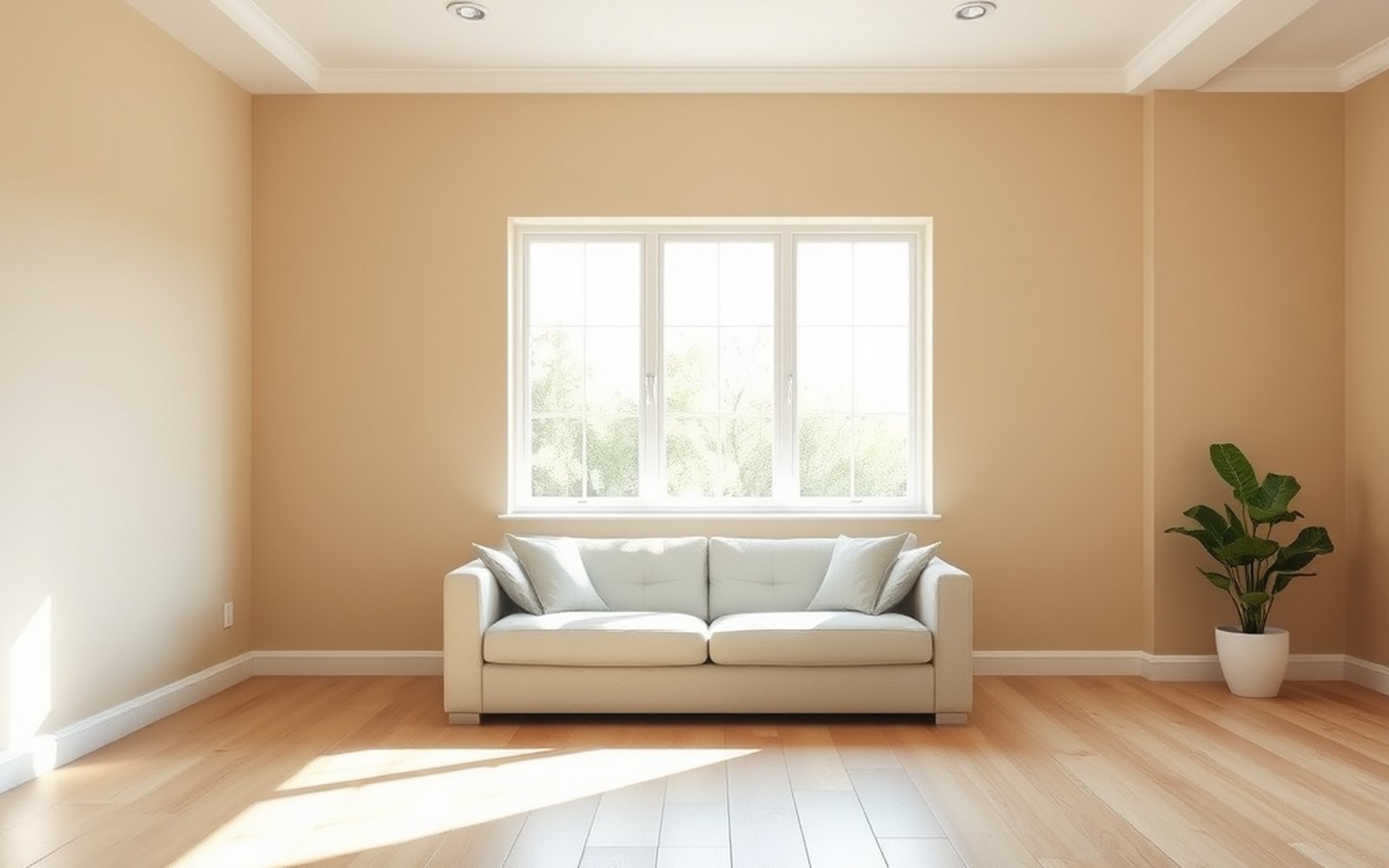
Most paint estimates feel complicated only because a room has four walls, a ceiling, and trim all at once. Strip that away and a single wall is just a rectangle. You measure two numbers, multiply them, and remove any opening. There is no perimeter to walk and no shape to puzzle over, which is why an accent wall is the ideal first project for anyone learning to size paint.
Even so, the same honesty rule applies. You are measuring the paintable surface of the wall, not guessing from the room’s floor size. Width times height gives the real surface area, and that is the number that drives how much paint you buy. For the coverage side of the equation, see how much a gallon of paint covers.
Learning on a single wall also builds the habit that keeps larger estimates honest. Because there is only one surface and one or two measurements, you can see exactly how each number feeds the paint formula: the width and height make the area, any opening comes off the top, the spread rate turns area into gallons, and the coats and waste margin finish the job. Master that flow on a rectangle and every bigger room is just the same steps repeated, which is why this is the guide the rest of the cluster points back to for the basics.
Step One: Measure Width and Height
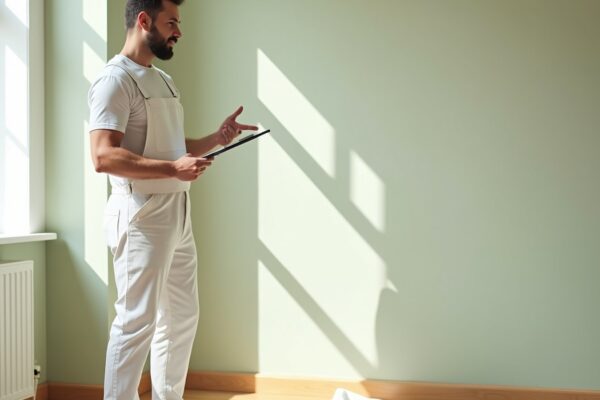
Measure the wall’s width along the floor and its height from floor to ceiling. Use a tape measure or a laser measure and round to the nearest half foot. On a standard wall the height is often around eight feet, but measure rather than assume, especially with nine or ten foot ceilings or a sloped section.
Multiply width by height to get the gross wall area. For example, a wall that is 12 feet wide and 8 feet tall is 12 times 8, which is 96 square feet. That single multiplication is the heart of the whole measurement.
Step Two: Subtract Any Opening
If the wall has a door, a window, or a large fixed opening, subtract it. A standard door is roughly 20 square feet and an average window is often around 12 to 15, so measure the opening and remove it from the gross area. A clean accent wall with no openings needs no subtraction at all, which is part of why feature walls are so easy to size.
As with any surface, ignore small openings under about 15 to 20 square feet, since cutting in around them uses up the paint you would save. Subtract the real door or window; leave outlets and switch plates alone.
A Worked Accent Wall Example
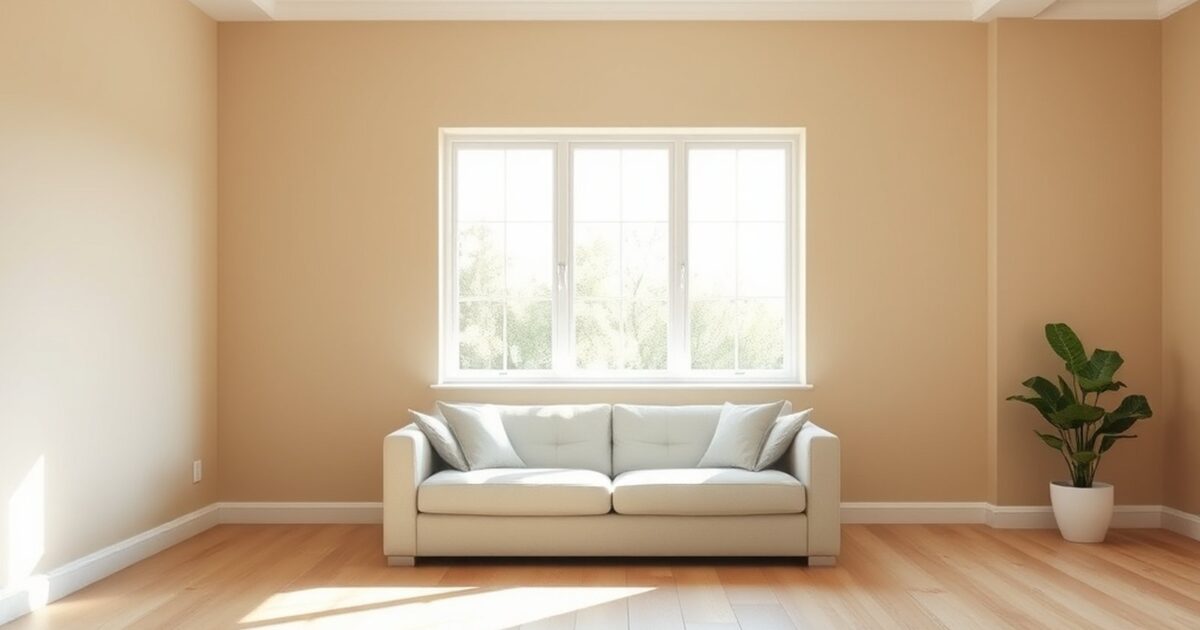
Let us size a feature wall with clean, clearly hypothetical numbers. For example, take an accent wall that is 12 feet wide and 8 feet tall with no windows or doors on it.
Gross area is 12 times 8, which is 96 square feet. With no openings, the paintable area is also 96 square feet. Now apply the paint formula. A gallon covers roughly 350 to 400 square feet of smooth wall per coat, so 96 square feet is well under a single gallon per coat. For two coats you are covering about 192 square feet total, still comfortably inside one gallon.
Because the number is small, a quart becomes worth considering. A quart typically covers about 90 to 100 square feet in one coat, so two quarts, or one quart per coat, could cover this example wall with a little margin, and a full gallon would leave you plenty for touch ups. Add roughly ten percent for waste and round up to whole cans however you buy it. These are example figures to show the method; a dark accent color or a textured wall would pull coverage down and might push you to a full gallon. For the small unit math, see how much area a quart of paint covers.
Choosing Between a Quart and a Gallon
Single walls sit right at the boundary where the smaller can makes sense. A quart covers roughly 90 to 100 square feet per coat and costs less than a gallon, so for a modest accent wall in a light color it can be the economical choice. But two things push you back toward a gallon: deep or vivid accent colors that need an extra coat to hide, and textured surfaces that drink more paint. When the wall is large, dark, or rough, a gallon is the safer buy. The convert square feet to gallons guide shows exactly where that line falls.
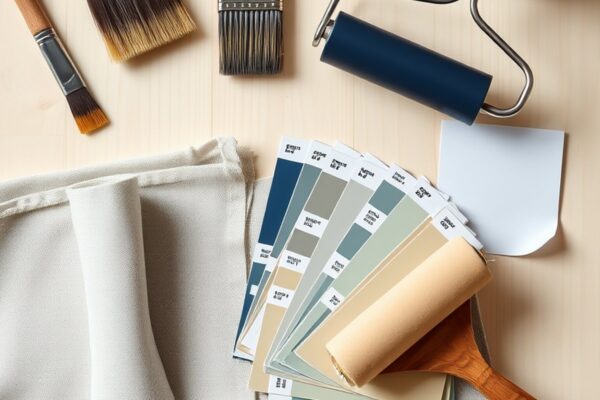
Primer is a separate decision. A bold accent color, a bare patch, or a glossy existing surface may call for a primer coat, sized on its own. See whether you need primer before painting and how to prep walls for painting so the color coat goes on evenly.
The Variables That Change One Wall
Two inputs move even a single wall’s paint. Spread rate is the first: smooth, previously painted wall sits near the top of the 350 to 400 range, while textured or bare wall covers less, and a dark color reduces effective coverage because it needs fuller, sometimes extra coats. The second is coat count: two coats is the default, and accent colors, which are often deep or saturated, are among the most likely to need a third. Our coats guide explains when to plan for that, and the paint sheen guide helps you pick a finish that suits a feature wall.
How One Wall Scales Up to a Room
The reason a single wall is worth mastering is that a room is just four of them. Measure each wall as width times height, add the four together, subtract the doors and windows, and you have the room’s paintable area, exactly the process in how to measure a room for painting. From there the paint formula is identical: divide by the spread rate, multiply by coats, add ten percent, round up.
Once you can size a room, you can size a floor and then a house by repeating and adding, which is what how to estimate paint for a whole house walks through. Every one of those bigger jobs is built from the single wall measurement you just learned. To sanity check a room result against a normal range, how much paint for a room gives the typical answer.
Common Single Wall Mistakes
The main errors are buying a full gallon when a quart would do, or a quart when a dark or textured wall really needs a gallon, forgetting the second coat, skipping primer under a bold accent color, and rounding down. Measure width times height, subtract any opening, use an honest spread rate for your color and surface, plan two coats, add ten percent, and round up to whole cans.
Why Accent Colors Behave Differently
Feature walls are usually painted in a bolder color than the rest of the room, and bold colors change the math in a way a plain rectangle does not. Deep reds, saturated blues, and rich greens often use tinted bases and highly loaded pigments that hide unevenly, so they can need an extra coat, sometimes over a tinted primer, to look solid. That means a wall you sized as a quart in a soft neutral might genuinely be a gallon in a dramatic accent color once you count the extra coat.
The honest move is to plan for a possible third coat on any strong color and to size primer separately if the color chart or the surface calls for it. See how much a gallon of paint covers for why dark colors reduce effective coverage, and how many coats you need for when to plan on three. Choosing the right sheen also affects how a feature wall reads under light, which the paint sheen guide covers.
Measuring Partial and Half Walls
Not every accent wall runs floor to ceiling. Half walls, wainscot height sections, and the wall above a fireplace or a stair are partial rectangles, so measure only the portion you will paint. Width times the actual painted height gives the true area, which keeps you from buying for a full height wall when you are only covering part of it. For a section broken by a mantel or a built in, measure the paintable rectangle and subtract the built in the same way you would a window. The same width times height rule scales cleanly to any partial surface, which is exactly why it is worth learning on a single wall first.
When to Skip the Math
A single wall is easy enough to do by hand, and doing it once teaches you the method the rest of the house uses. After that, the paint calculator sizes any wall or room in seconds and adjusts for your surface and color, and a free painting estimate turns your measurements into a full cost if you are pricing the job rather than just the paint.
Frequently asked questions
How do I measure a wall for paint?
Measure the wall’s width and height, multiply them for the gross area, then subtract any door or window to get the paintable area. Divide that by your paint spread rate, multiply by the number of coats, add about 10 percent for waste, and round up to whole cans.
How much paint do I need for an accent wall?
Usually a quart to a gallon. As a worked example, a 12 by 8 foot wall is about 96 square feet, which two coats can cover with roughly a gallon, or two quarts in a light color. A dark or textured wall drinks more and leans toward a full gallon, so confirm with the calculator.
Should I buy a quart or a gallon for one wall?
A quart covers about 90 to 100 square feet per coat and suits a modest, light colored accent wall. Choose a gallon when the wall is large, the color is deep or vivid, or the surface is textured, since those need more paint and often an extra coat.
Do I subtract windows and doors on a single wall?
Yes, subtract the large openings. Remove a real door at about 20 square feet or a window at roughly 12 to 15 from the gross area. A clean accent wall with no openings needs no subtraction, and you can ignore anything under about 15 to 20 square feet.
How does measuring one wall help me paint a whole room?
A room is four walls, so you measure each as width times height, add them together, subtract the doors and windows, and you have the room’s paintable area. The single wall is the building block, and the same paint formula then applies to the whole room and, by repeating, the whole house.
Is it faster to use the calculator for one wall?
A single wall is quick by hand, but the paint calculator is even faster and adjusts for your color and surface automatically. Do one wall yourself to learn the method, then let the tool size the rest of the room and house without redoing the arithmetic.