In this article
- Sectional doors, rolling steel doors and the rest
- Why a coiling curtain changes the paint
- Springs, motors and parts the painter leaves alone
- Measuring doors by count and size band
- Condition bands for faded, dented and rusted doors
- Hoods, jambs and the wall around the door
- Spraying or rolling a big steel door
- Keeping the building working while doors are painted
- Access, lifts and tall doors
- Writing the overhead door line
- Building rates from the doors you paint
- Frequently asked questions
Every warehouse, fire station, storage facility, auto shop and loading dock has overhead doors, and sooner or later the owner wants them painted. They are big, flat and highly visible, so a fresh coat changes how the whole building looks. They are also machines. They roll, fold, coil and lift, and paint that ignores how a door moves can crack, peel, or stop the door working.
This guide is for the painting contractor pricing commercial roll up and overhead doors. It explains the main door types, what the painter can and cannot touch, how to measure and band each door, and how to build a price that covers masking, access, downtime and the door that has to keep working. The residential version of this item, a single garage door on a house, is covered in how to paint a garage door and priced in how much to charge to paint a garage door. Commercial doors are larger, heavier and more varied, and they deserve their own method.
Sectional doors, rolling steel doors and the rest
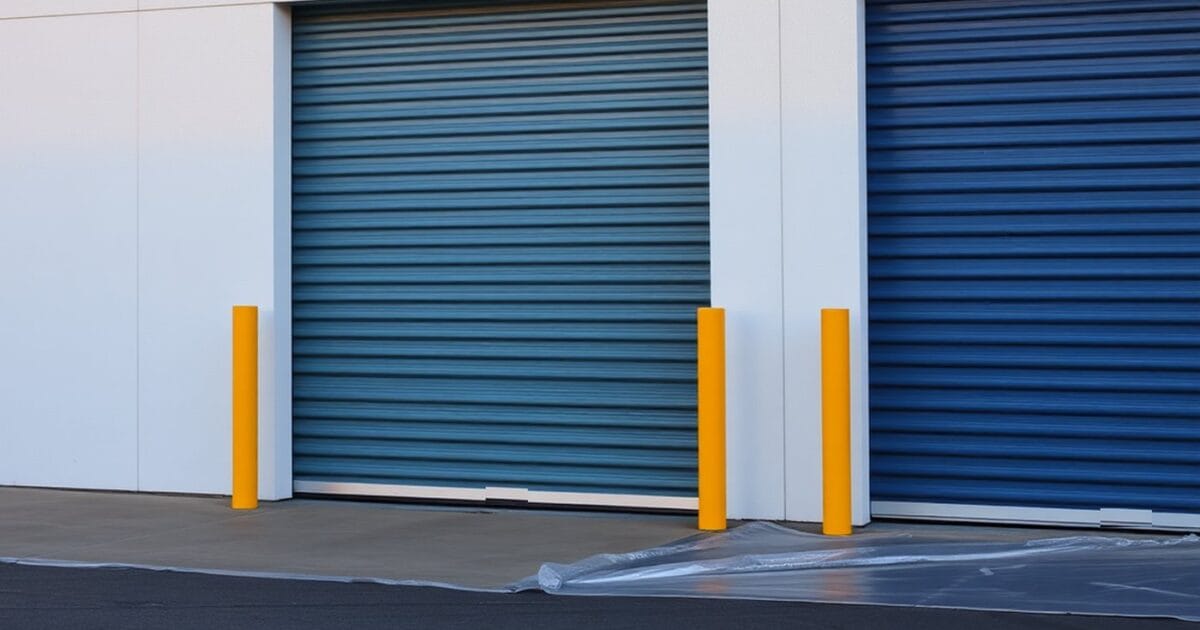
Commercial overhead doors come in a few main types. Sectional doors are made of horizontal panels hinged together that run up tracks and sit flat under the ceiling when open. They are common on loading docks and shops. Rolling steel doors, often called roll up doors, are made of interlocking steel slats that coil around a drum above the opening, usually inside a hood. They are common on storage units, storefronts, service counters and warehouses. High speed fabric doors, counter shutters and grilles are other types that turn up on commercial jobs.
Each type paints differently. A sectional door has flat or ribbed panels with joints between them, and it behaves much like a large garage door. A rolling steel door has a curtain of slats that bend around the drum every time the door opens, so the paint has to flex. Grilles and open shutters have many small members and are closer to railing work. Fabric doors are generally not painted at all.
The first step on the walk is to identify every door by type, size and material, and note which ones the owner actually wants painted. A dock with ten sectional doors, a storage row with dozens of small roll up doors and a fire station with a few tall glass panel doors are three very different jobs.
Why a coiling curtain changes the paint
A rolling steel curtain is designed to wrap tightly around its drum. Each slat interlocks with the next, and the joints slide and rotate as the door coils. Paint that builds up in those joints can stiffen them, and a thick or brittle film can crack as the curtain bends. Paint on the edges of the slats can also bind in the guides at each side of the opening.
This does not mean rolling doors cannot be painted, but it means the painter should use a product suited to the flexing, apply it thinly and evenly, keep material out of the interlocks as far as possible, and avoid painting the guides and the bottom seal. Many rolling doors come from the factory with a baked or galvanized finish, and the door manufacturer or service company is the right source for what the curtain can accept. Where the curtain is galvanized, preparation follows the same logic as other galvanized steel, which the American Galvanizers Association explains on its painting over galvanizing page.
The practical effect on the price is care and time. A rolling curtain is painted in sections, with the door raised and lowered to expose each part, and each move has to wait until the paint is dry enough not to transfer. That makes rolling doors slower per unit area than their flat faces suggest.
Springs, motors and parts the painter leaves alone
Overhead doors are counterbalanced by springs under high tension, and many are driven by electric operators. Springs, cables, drums, tracks, rollers, operators, safety sensors and bottom seals are not painting surfaces. They should be protected and left alone. A spring or cable disturbed during painting can fail violently, and a painted safety sensor can stop a door reversing when it should.
When a door has to be raised and lowered repeatedly during painting, the painter needs to agree with the owner who operates it and how it is kept from moving unexpectedly while someone is working under it. Where a door must be locked in position, the general principles of controlling hazardous energy apply, and OSHA sets them out on its lockout page. The painter should never adjust springs or operators; that belongs to a door service technician.
The estimate should list what is painted and what is excluded. Painting the door face, the exterior of the hood and the jambs is common. Painting the tracks, springs, drum, operator, guides and seals is not, and should be written as an exclusion.
Measuring doors by count and size band
Overhead doors are best priced by the door rather than by area. Count each door, note its type and size band, and price by the unit. Area still matters within a band, because a very tall dock door takes longer than a small storage door, but pricing by band keeps the estimate simple and checkable.
A practical set of bands might be small roll up doors of the kind found on storage units, standard dock and shop doors, and large or tall doors such as those on fire stations and hangars. Within each type, the painter can add a second band for features such as windows, heavy ribs or insulated panels. Faces matter too: some owners want only the outside painted, others want both faces, and the inside face of a dock door is often dirty with forklift marks and grease.
The same count and band approach is used across this batch for commercial components, and the reason it beats area pricing on detailed items is explained in painting production rates.
Condition bands for faded, dented and rusted doors
Commercial overhead doors take a beating. Dock doors are hit by trucks and forklifts. Storage doors fade and chalk in the sun. The bottom sections rust where water and road salt collect. Some doors have been painted several times already and carry peeling layers. Each condition changes the prep.
A good condition banding might be sound and faded, chalked or lightly rusted, and heavily damaged or peeling. Sound doors need a wash, a scuff and finish coats. Chalked and lightly rusted doors need thorough cleaning, rust treatment and primer. Heavily damaged doors may need panel replacement, which is door repair and not painting. The painter should not promise that paint will hide dents; paint makes dents more visible, especially in gloss.
Where older doors carry many coats of paint, the age of the building matters. Older coatings may contain lead, and sanding or scraping them brings worker protection rules. OSHA summarizes those on its lead page.
Hoods, jambs and the wall around the door
The door itself is only part of the opening. Rolling doors have a hood or coil box above the opening, which can be painted on the exterior face but should not be opened by the painter. Both types have jambs and headers, often steel angle or wood, and sometimes bollards or guards in front of them. Dock doors have bumpers, seals and shelters that are not painted.
The estimate should decide which of these are included in the door price and which are separate items. Many painters include the hood exterior and jambs with the door, and price bollards and guards separately. The parking and site side of safety yellow on bollards and curbs is covered in how to price painting parking garages, and steel railings and stairs beside a dock are priced as covered in how to price metal railing painting.
Spraying or rolling a big steel door
Sectional doors can be sprayed, rolled or both. Spraying gives an even finish on ribbed panels and is fast once the masking is done, but outdoors it brings overspray risk to trucks, cars and other doors. Rolling with a good roller and brushing the edges is slower but safer beside busy docks and parked vehicles.
Rolling steel curtains are often sprayed lightly or rolled thinly to keep material out of the interlocks. Either way, the door has to be moved to paint the whole curtain, and each move waits for the paint to dry. On a row of storage doors, a painter can work down the row and return to each door for the next section, which keeps the crew moving while the paint dries.
The product is usually a direct to metal acrylic or an industrial enamel suited to the substrate and exposure. Primers and topcoats for steel are compared in the best paint for metal. Gloss and color also matter: dark colors on a sunny wall make steel doors hotter, and some door makers limit colors for that reason.
Keeping the building working while doors are painted
A dock door is often the busiest part of a building. A warehouse cannot stop shipping because a painter needs a door closed, and a storage facility cannot tell tenants they cannot reach their units. The schedule has to fit the building.
Common approaches include painting doors one or two at a time, working early or late when the dock is quiet, painting storage doors on weekdays when fewer tenants visit, and agreeing with the owner which doors can be out of service each day. A door that must stay closed while wet stops trucks, and a door that must stay open while wet may be a security problem. These constraints add visits and time, and belong in the price. The broader method for pricing staged work is in how to price a painting job done in phases, and the operational side of working in a busy plant is in industrial painting projects.
Access, lifts and tall doors
Small roll up doors can be reached from the ground or a short ladder. Standard dock doors need a ladder or a small lift for the top section. Tall doors on fire stations, hangars and large warehouses need a lift, and so do hoods mounted high on the wall. The lift is a cost, and moving it from door to door is time.
Inside, the tracks and header of an open sectional door can be close to the ceiling, which makes the inside face awkward to reach. Outside, a lift may need to stand where trucks park, which brings the scheduling back into play. Lift rental can be priced as a separate item using how to price access equipment for painting jobs.
Writing the overhead door line
A clear overhead door line lists the doors by type and band, with the count in each. It states which faces are painted, what is included with each door such as the hood exterior and jambs, the prep assumed, the products and coats, and what is excluded, such as springs, tracks, operators, seals, guides and door repair. It states how the doors will be scheduled and what the owner must do to make them available.
For a building with many similar doors, a unit price per door by band is useful, because owners often add or remove doors from the scope after seeing the price. Unit pricing on commercial bids is explained further in painting bid alternates and unit prices, and the general wording of exclusions is in painting bid exclusions and clarifications.
Building rates from the doors you paint
Overhead doors are easy to count, which makes them easy to time. On each job, record the doors by type and band, the condition, the method and the hours for washing, prep, each coat and moving the door. Record time lost waiting for the dock or for the paint to dry. After a few jobs, those records become rates for the painting estimate rate card.
With real rates, a storage facility with a long row of doors becomes a predictable, profitable job rather than a guess, and a dock repaint can be priced with confidence alongside the walls of the same building.
Commercial pieces get counted, not buried in the wall price.
PaintPricing builds itemized estimates from your own rates, so doors, lockers, partitions and lift days sit on the quote as counted lines a general contractor can check. Free for your first 3 quotes, no card required.
Frequently asked questions
How do painters price painting roll up doors?
Most count the doors, band them by type, size and condition, and apply a rate per door from their own timed jobs. Hoods, jambs, bollards and heavy prep are added as defined items, and mechanical parts are excluded.
Can a rolling steel door be painted?
Often yes, with care. The curtain flexes as it coils, so the paint must suit that movement, be applied thinly and be kept out of the slat interlocks and guides. The door manufacturer or service company can confirm what the curtain accepts.
Should the springs and tracks be painted?
No. Springs, cables, tracks, rollers, operators, sensors and seals are mechanical parts. They should be protected and left alone, and any adjustment belongs to a door service technician.
Why does painting a roll up door take longer than its size suggests?
The curtain has to be raised and lowered to expose each section, and each move waits for the paint to dry. The door also has to fit around the building schedule, which adds visits.
Will paint hide dents in an overhead door?
No. Paint, especially in gloss, tends to make dents more visible. Damaged panels need repair or replacement by a door company, which is outside a painting price.
Is the inside face of a dock door included?
Only if the estimate says so. Many owners want only the outside painted. The inside face is often dirty with grease and forklift marks and is harder to reach, so it should be priced as its own item.