In this article
About the cost figures on this page
Any cost ranges shown here are illustrative estimates, not a quote. What you actually pay varies widely with your location and local labour rates, the size and condition of the surfaces, access and setup, the products specified, how much prep the job needs, and the time of year. Use these numbers to sanity check a quote you have been given and to understand what drives the total, then get written quotes from local contractors before you budget. You can also build an estimate around your own project with the free calculator.
Quick answer: In 2026, most US painters charge $1.75 to $4.00 per square foot to paint aluminum siding, putting a typical house in the $3,500 to $11,000 range. Aluminum quotes more than vinyl because oxidation and chalking force a heavy pressure-wash and de-chalk before a drop of paint goes on. Price that prep honestly, because skipping it is the number one cause of a peeling callback on aluminum.
This guide is for the contractor writing the bid, not the homeowner reading it. To turn a measured house into a number quickly, run it through the painting estimate calculator or build a clean free painting estimate. Below is how the price comes together so your aluminum quotes win the job and still clear a profit.
How much to charge to paint aluminum siding
Aluminum has roughly the same surface area as vinyl on a comparable house, so the wall measurement drives the total. The difference is in the prep line: aluminum oxidizes and chalks, and that chalk has to come off before you paint. Here is a realistic 2026 pricing grid.
| House size | Per sq ft (low to high) | Typical job total | Notes |
|---|---|---|---|
| Small single-story (1,000 to 1,400 sq ft) | $1.75 to $2.75 | $3,500 to $6,000 | Light chalk, accessible |
| Average two-story (1,500 to 2,200 sq ft) | $2.25 to $3.50 | $5,500 to $9,000 | Moderate de-chalk |
| Large two-story (2,500 sq ft and up) | $2.75 to $4.00 | $8,000 to $11,000 | Heavy oxidation, high walls |
| Heavily chalked or peeling | $3.00 to $4.00 | Add 15 to 25 percent | Extra wash plus primer |
That per-square-foot figure is per square foot of wall surface, not floor area. Measure the wall planes and bill what you coat. For the method, see how to price painting jobs per square foot. To position your bid against what the customer expects, cost to paint aluminum siding shows what homeowners are budgeting, so you can land inside that window with a quote that still pays for the real prep.
Three ways to price it
Aluminum can be priced three ways, and the chalking question decides which is safest.
- Per square foot. Works when the chalk is light to moderate and predictable. Measure, pick a rate from the grid, multiply. Bake an honest prep allowance into the rate so a per-foot price still covers the de-chalk labor.
- Per hour. The safer method on heavily oxidized siding, where you cannot fully see the prep until you start washing. Quote $40 to $75 per painter-hour plus materials so the de-chalk time does not eat a fixed price.
- Flat rate. What the customer signs. You calculate per foot or per hour internally, then present one number with the scope written out. Spell out that the price includes a full pressure-wash and de-chalk, so the value is visible.
For aluminum, lean toward the hourly method whenever the chalk is heavy. The prep is the variable that blows up a flat bid, so price it where you can see it.
The bottom-up formula
Build every aluminum quote from the bottom up so the prep never gets swallowed by a low number.
Quote = (labor hours x crew rate) + materials + materials markup + overhead + profit margin
- Labor hours. From production rates, but with a fatter prep block than vinyl: pressure-wash, de-chalk, spot-prime, then two coats.
- Crew rate. Your fully loaded hourly cost per painter, including insurance and taxes, not just wages.
- Materials. Bonding primer, 100 percent acrylic exterior paint, masking, and wash supplies. Bare or peeling spots need a primer made to grip metal.
- Materials markup. Mark up paint and supplies 15 to 30 percent. See painting contractor markup percentage for where to set it.
- Overhead. Truck, insurance, software, and office time spread across the job.
- Profit margin. The number that has to survive after costs. Build a target into your painting business profit margin rather than hoping it is there.
On aluminum, the labor-hours line is where the money is won or lost, because the de-chalk prep is real time. Estimate it generously and the rest of the formula holds.
What makes aluminum siding different to quote
Aluminum is the prep-heavy cousin of vinyl. Three specifics change the quote, and the prep is the whole story.
Chalking and oxidation mean a heavy pressure-wash and de-chalk. Old aluminum develops a powdery, chalky surface as the original finish oxidizes. Run your hand down a faded panel and it comes away white. Paint will not bond to that chalk, period. You have to pressure-wash thoroughly, and on heavily chalked siding you often need to hand-scrub or use a chalk-removing cleaner until a wiped panel comes back clean. That is real labor, sometimes a full extra day on a big house, and it belongs in your hours. This is the single biggest reason aluminum quotes higher than vinyl.
Bonding primer is not optional on bare or chalky metal. After de-chalking, any spots where you reached bare aluminum, or any panel still showing residual chalk, need a bonding primer made for metal. Skip it and the topcoat peels in sheets within a year or two. Spec the primer and price it, because it is what makes the job last.
Peeling-callback risk if prep is skipped. This is the margin trap. A painter who underprices aluminum is almost always the painter who shaved the de-chalk and primer to win the bid. The paint looks great on day one and starts peeling within a season, and now you are back on site redoing it for free. Aluminum is unforgiving: the prep is the job. Price it fully, explain to the customer why the wash and primer matter, and you turn a callback risk into a durable, profitable repaint.
A worked quote example
Run the numbers on an average two-story house with about 2,400 square feet of moderately chalked aluminum siding, two coats, no color change.
- Labor. Two coats at about 200 square feet per painter-hour is roughly 24 hours, but add a solid de-chalk and wash block of 12 hours and a spot-prime block of 6 hours. Call it 42 crew-hours. At $55 per hour loaded, that is $2,310.
- Materials. Bonding primer, 16 gallons of acrylic exterior paint, plus wash and masking supplies, about $800.
- Materials markup. 20 percent on $800 is $160.
- Overhead. Allocate $400 to this job.
- Subtotal. $2,310 + $800 + $160 + $400 = $3,670.
- Profit margin. Add 25 percent: $3,670 divided by 0.75 is about $4,895.
So you quote roughly $4,900, which on 2,400 square feet is about $2.04 per square foot. Notice the de-chalk and prime added about 18 hours over a comparable vinyl job, which is exactly why the per-foot rate runs higher. Price that prep and you are profitable. Bury it to look cheap and you are funding the callback. For the full method, see how to estimate exterior painting.
Do not underbid
Aluminum punishes the painter who treats it like vinyl. Here is where margins die.
- Underpricing the de-chalk. The single biggest error. Removing chalk and oxidation is real, billable labor. Estimate it generously, because it always takes longer than a glance suggests.
- Skipping the bonding primer. No primer on chalky or bare metal means peeling within a year or two. Spec it, price it, do not value-engineer it out.
- Eating the callback. Aluminum that fails comes back to you. A free redo on a two-story house can wipe out the profit from three good jobs.
- Forgetting height and access. Two-story aluminum means ladder and possibly scaffold time. Access is labor, so it goes in the hours.
- Chasing the lowball bid. Someone will always skip the de-chalk to undercut you. Let them earn the callback. Your customer comparing against cost to paint aluminum siding expects a real range, so sell the prep that makes the job last.
On aluminum the prep is the product. Price the wash, the de-chalk, and the primer like the load-bearing work they are, and the job is both competitive and genuinely profitable.
Regional and access factors that move your rate
The per-square-foot grid above is a starting point, not a fixed price. Two jobs with identical aluminum siding can carry very different quotes once you factor in where the house is and how hard it is to reach. Read these before you commit to a number.
- Region and local labor cost. A painter in a high-cost metro carries higher wages, insurance, and overhead than one in a rural market, and the rate reflects it. The same aluminum house might quote $2.00 per square foot in a low-cost area and $3.50 in a major city. Price to your own loaded costs, not a national average, and never undercut your region to match an online number.
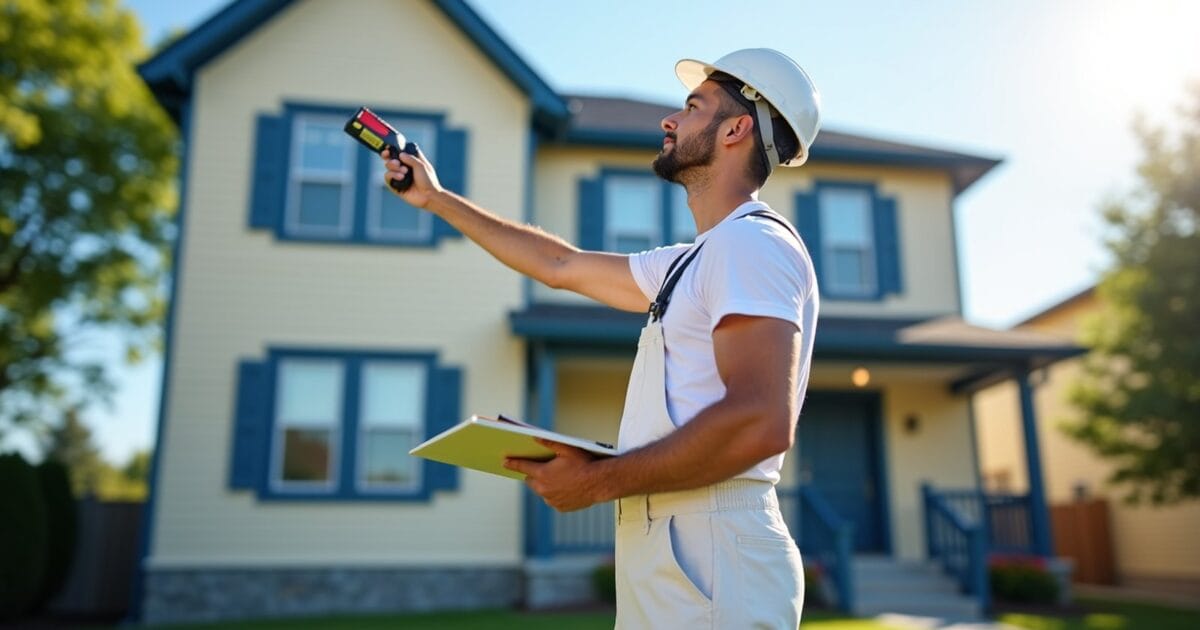
- Two-story and multi-story access. Aluminum on a two-story or split-level means ladder and sometimes scaffold time, plus the slower, more careful pace of working at height. That access is real labor, so build it into your hours rather than absorbing it into a flat single-story rate.
- Grade and obstacles. Steep yards, tight setbacks against a neighbor, decks, AC units, and dense landscaping all slow ladder placement and force extra masking. A house you can walk around freely is faster to paint than one boxed in by a fence and a hillside.
- Condition variance across the house. One elevation may be sun-baked and heavily chalked while the shaded north side is nearly clean. Walk all four sides before you quote, because pricing off the good wall and discovering the bad one mid-job is how a flat bid goes underwater.
- Color change versus repaint. Matching the existing color is straightforward. Going lighter over a dark old finish, or covering a bold color, can demand an extra coat. Price the coverage you can actually see being needed, not the best case.
The honest way to handle all of this is to quote from a walk-around, not a phone call. Measure the walls, check the chalk on every elevation, note the access, and then apply your rate. That five-minute discipline is the difference between a profitable aluminum job and one you regret on day two. For the structured version of that walk, see how to estimate exterior painting and lock your scope before you send the number.
Ready to price your next aluminum job? Size it fast with the painting estimate calculator, or build a clean free painting estimate for the customer. For how it fits a whole-house bid, see how much to charge to paint a house exterior, and compare rates against vinyl siding, wood siding, and a brick house.
Stop rebuilding this quote from scratch every time.
PaintPricing turns the numbers you just worked out into a clean, branded quote in minutes, so you can send it before your competitor calls back. Free for your first 3 quotes, no card required.
Frequently asked questions
How much should I charge per square foot to paint aluminum siding?
Most painters charge $1.75 to $4.00 per square foot of wall surface to paint aluminum in 2026. The reason the floor is higher than vinyl is the mandatory de-chalk prep. Lightly chalked, accessible houses sit low, while heavily oxidized or two-story homes needing extensive washing and primer push to the top. Always build the per-foot rate up from labor, materials, and margin.
What is a typical total to paint an aluminum-sided house?
A typical aluminum repaint runs $3,500 to $11,000. A small single-story lands near $3,500 to $6,000, an average two-story around $5,500 to $9,000, and a large or heavily chalked job can reach $11,000. The biggest swing factor is how much oxidation and chalk you have to remove before painting, since that prep is pure labor.
Why does aluminum cost more to paint than vinyl?
Because the prep is heavier. Aluminum oxidizes and develops a chalky surface that paint cannot bond to, so it needs a thorough pressure-wash and de-chalk, plus bonding primer on bare or chalky spots. That extra labor, sometimes a full extra day on a big house, is why aluminum quotes higher per square foot than the lighter-prep vinyl on a comparable home.
Do I need to prime aluminum siding before painting?
Any bare metal or panels still showing chalk after washing need a bonding primer made for metal. Without it, the topcoat peels off in sheets within a year or two, and that callback is on you. Spec and price the primer rather than cutting it to win the bid. The primer is what lets the finish actually grip the aluminum and last.
What causes peeling callbacks on aluminum siding jobs?
Almost always skipped or rushed prep. Painting over chalk, oxidation, or without a bonding primer means the paint never bonds, and it starts peeling within a season. The fix is a free redo that erases your profit. Price the full de-chalk and primer, explain to the customer why they matter, and you avoid the most common margin-killer on aluminum.
Scheduling the crew? See how long it takes to paint aluminum siding.
Ribbed steel panels on pre engineered buildings are priced differently from house siding, with panels, trim, doors and roof as separate lines. See how to price painting metal buildings.
Want to speed up your quotes? See which estimating app fits your shop.