In this article
- Block is a wall that drinks paint
- Bare block, painted block and sealed block
- Block filler is its own coat and its own line
- Measuring block walls and what to deduct
- Mortar joints, split face and textured units
- Efflorescence, moisture and the wall that is wet from behind
- Cracks, patching and the mason scope
- Roll, spray and backroll on block
- Height, gyms and warehouse walls
- Grinding, cutting and silica dust
- Putting the block wall on the estimate
- Records that make the next block wall easier
- Frequently asked questions
Concrete block walls are everywhere in commercial work. Gyms, warehouses, schools, stairwells, corridors, mechanical rooms and the backs of retail stores are built from them. On a walkthrough they look like simple flat walls, and a painter used to drywall can be tempted to price them the same way. That is how block walls lose money, because a block wall behaves nothing like drywall once the roller touches it.
This guide is for the painting contractor pricing CMU walls, bare or previously painted, inside or out. It explains why block takes more material and labor than its area suggests, why block filler deserves its own line, how to measure and band block, and what to put on the estimate. The homeowner side of painting block in a garage is covered in how to paint a garage, and product choices for masonry surfaces are compared in the best paint for concrete. This post is about the price.
Block is a wall that drinks paint
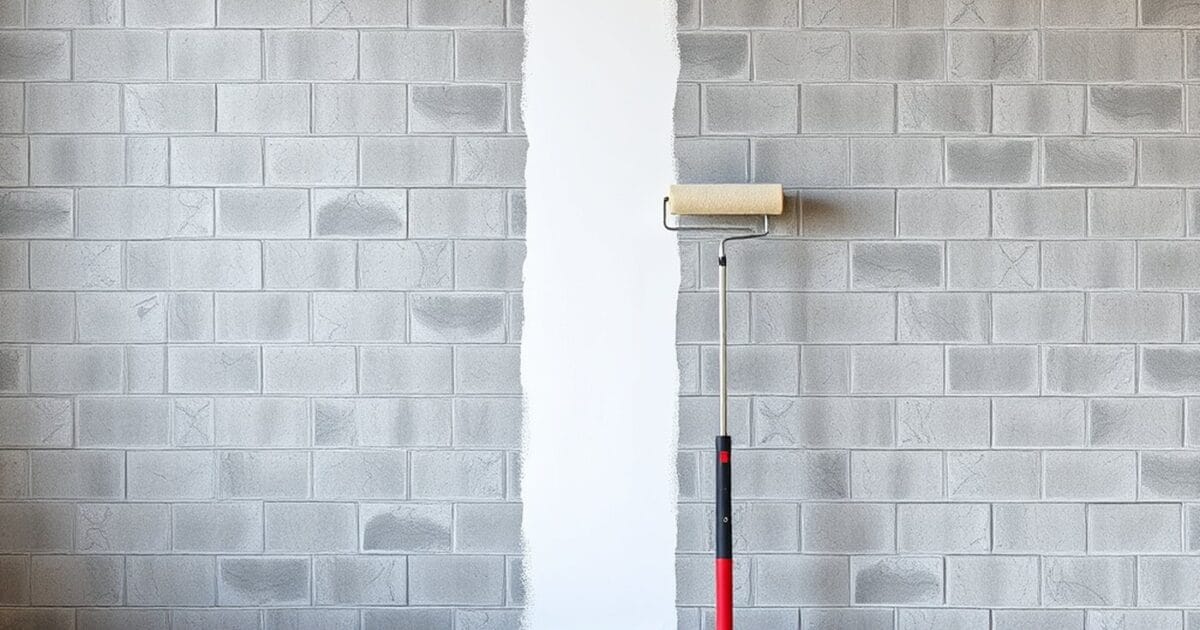
Bare concrete masonry units are porous and full of pinholes, voids and rough texture. A roller pushed across bare block leaves paint on the high points and misses the holes. The first coat soaks in, the second coat still shows pinholes, and a wall that looks finished from across the room shows a field of tiny dark spots up close. The material that disappears into the block is paint the estimate has to pay for.
Texture also slows the labor. A roller on block needs a thick nap and more pressure, it loads more often, and the painter has to work the material into the surface rather than lay it on. Cutting in against a rough block edge is slower than cutting against smooth drywall. The mortar joints add their own depth. All of this means the same area of block takes more time and more gallons than drywall, and a wall rate built on drywall will fall short.
Material estimating on porous surfaces is where many painters underestimate. The general method is in how to estimate paint and material costs, and the extra allowance for loss on rough surfaces is covered in the painting material waste factor. On bare block, both matter more than on almost any other interior surface.
Bare block, painted block and sealed block
The first question on any block wall is what is on it now. Bare block has never been coated and needs a filler or masonry primer before finish coats. Previously painted block has already been filled, at least partly, and usually needs cleaning, spot repair and finish coats. Sealed block, coated with a clear water repellent, may resist new paint entirely and needs testing before anything is promised.
These are three different jobs with three different prices. A painter who prices a painted block repaint as if it were bare will be too high and lose the bid. A painter who prices bare block as a repaint will run out of material and time. The walkthrough should identify which condition each wall is in, and the estimate should say which condition the price assumes. When bare and painted block sit side by side, which is common after additions or remodels, they should be measured separately.
Clear sealers are a particular trap. Many masonry walls, especially exterior walls, have been treated with a water repellent that is invisible. A simple water test, splashing water on the wall and watching whether it soaks in or beads, is a useful check on the walk. The sealer side of masonry work is covered from the other direction in how to price masonry sealing.
Block filler is its own coat and its own line
Block filler is a thick, high solids coating designed to fill the pores and pinholes of bare block so that the finish coats can form a continuous film. It is applied heavily, usually with a thick nap roller or sprayed and backrolled, and worked into the surface. On a wall that needs a smooth, pinhole free finish, the filler is the most important coat on the job.
Because it is heavy, slow and uses a lot of material, block filler should be priced as its own coat with its own rate, not folded into a primer allowance. The coverage of filler on bare block is far lower than the coverage of finish paint, and the labor to work it in is higher. Specifications on commercial jobs often name the filler and sometimes require a certain number of coats or a pinhole free finish, which should be read carefully before pricing.
Some owners want to skip the filler to save money. The honest answer is that a block wall painted without filler will look rough and show pinholes, and may need more finish coats to approach the same look. If the owner still chooses to skip it, the estimate should record that choice and the finish it will produce, so the result is not a surprise.
Measuring block walls and what to deduct
Block walls are measured by area like any wall, but a few habits help. Measure each wall by its condition and finish, not as a single total. Separate walls above a height where access changes, such as the upper part of a gym wall. Deduct large openings such as overhead doors and storefronts, but not small ones, since cutting around a small opening takes as long as painting the area it removes.
Block walls often have features that should be counted rather than measured: pilasters, bond beams, lintels, control joints and bullnose corners. Each adds edges and cutting. Where the drawings show a block wall, a takeoff from plans can give the area and the features before the walk, which is covered in painting takeoff from plans. On an existing building, a measured walk is still worth doing, because block walls in older buildings are often patched, painted in bands, or partly covered by equipment.
Mortar joints, split face and textured units
Not all block is the same. Standard smooth face block is the easiest. Split face block, which has a rough, fractured face made to look like stone, has far more surface area and deep texture, and takes much more material and labor. Ribbed or fluted block has deep grooves that the roller cannot reach without extra work. Glazed block is not meant to be painted at all and should be excluded unless the owner has a specific plan.
Mortar joints can be flush, concave or raked. Deep raked joints hold shadow and need the painter to push material into them, which slows every coat. A good banding for block might be smooth face with flush joints, smooth face with deep joints, and split face or ribbed units. Each band carries its own rate from the painter records. The same idea of banding a surface by texture rather than area is explored for drywall in how to price painting textured walls.
Efflorescence, moisture and the wall that is wet from behind
Block walls, especially exterior walls and walls below grade, often carry moisture. Efflorescence, the white powdery salt deposit on masonry, is the visible sign that water is moving through the wall and leaving minerals behind. Paint applied over efflorescence will fail, and paint applied to a wall that is wet from behind will blister and peel no matter how well it is applied.
The painter should clean efflorescence off, find out whether the moisture source has been addressed, and price accordingly. If the owner has not fixed a leak or a drainage problem, the estimate should say that the finish depends on it and exclude responsibility for failures caused by moisture. The diagnosis of damp masonry below grade, and why it must come before product choice, is set out in how to paint a basement.
Moisture also changes the product. Some walls need a breathable masonry coating rather than a film forming paint. Others need a waterproofing product, which is a different scope with different claims. The painter should never promise that paint will stop water coming through a wall.
Cracks, patching and the mason scope
Block walls crack along mortar joints and through units, and they have holes where anchors, conduit and old fixtures used to be. Small holes and hairline cracks can be filled with a masonry patch or a flexible filler as part of prep. Structural cracks, displaced units and failed mortar are mason work and should not be in a painting price.
The estimate should separate the two. A prep allowance covers small patching, and anything larger is either excluded or priced as a separate repair line with the condition described. Control joints, which are designed to move, should be caulked with a flexible sealant rather than filled with rigid patch. The pricing of caulk as its own item is covered in how to price caulking on a painting job, and the general approach to repairs is in how to price repairs on a painting job.
Roll, spray and backroll on block
Block can be rolled, sprayed, or sprayed and backrolled. Rolling alone is slow on block and struggles to fill the pinholes. Spraying alone lays down material quickly but can leave voids and bridge over pores without filling them. Spraying followed by backrolling is common on large block areas because it combines the speed of the sprayer with the pressure of the roller to work material into the surface.
The choice changes both labor and material. A spray and backroll crew uses two painters working together, which is efficient on long walls and wasteful on short ones broken up by doors and equipment. Overspray on a block wall in a finished building needs masking, and in an occupied building it may not be allowed at all. Spray work indoors carries ventilation and respiratory protection requirements that belong in the price.
Height, gyms and warehouse walls
Many block walls are tall. Gym walls, warehouse walls and stairwell walls often run far above ladder height, and the upper part needs a lift or scaffold. The height changes the rate, because a painter on a lift moves more slowly and spends time repositioning, and the lift itself is a cost. Measuring upper and lower wall separately makes this visible on the estimate.
Lifts and scaffolds bring their own rules and costs. OSHA sets out the requirements for scaffolds used in construction on its scaffolding page, and the method for pricing access as its own line is in how to price access equipment for painting jobs. In a school or gym, the floor may also need protection from the lift, which is another item. School calendars shape gym work, as school painting contracts explains, and warehouses bring their own rules, set out in industrial painting projects.
Grinding, cutting and silica dust
Block prep sometimes involves grinding off high spots, cutting out failed patches or mechanically removing old coatings. Concrete and masonry contain crystalline silica, and cutting, grinding or abrasive cleaning can release it as dust. OSHA has specific requirements for silica exposure in construction, set out on its silica page, including dust controls and, in some cases, respiratory protection.
For pricing, the point is that dusty prep on block is not just more time. It may need tools with dust extraction or water, respirators, a written plan and cleanup. If the job involves grinding or mechanical removal on block, those controls belong in the estimate, and respiratory protection rules are summarized on the OSHA respiratory protection page. This is general pricing information, not legal or safety advice, and what a given job requires depends on the task and the regulator.
Putting the block wall on the estimate
A clear block wall line separates the parts that behave differently. Measure the area of each condition band: bare, painted and sealed, and within those, smooth, deep joint and split face. Price the filler as its own coat on bare block. Price finish coats by band. Add access for tall walls, patching and caulk as prep items, and any dust controls or surface cleaning.
The estimate should state the assumptions: the products and number of coats, whether the finish is expected to be pinhole free, what patching is included, what happens if the wall is sealed or wet, and what is excluded, such as structural repair and moisture problems. Clear exclusions protect the painter when a block wall turns out to have a hidden problem. The general structure of a clear estimate is in what should a painting estimate include.
Records that make the next block wall easier
Block rates are worth recording carefully, because block varies so much. On the next few block jobs, record the area in each band, the products and coats, the gallons used, the method, and the hours for filler and each finish coat. Record the material separately from the labor, because material is where block surprises most painters. After a handful of jobs, the numbers become rates that can go onto the painting estimate rate card.
Those records turn block walls from a guess into a strength. A painter who knows what filler and finish actually cost on smooth block and on split face can bid school and warehouse work with confidence, while competitors who price block like drywall either lose money or lose the job.
Commercial pieces get counted, not buried in the wall price.
PaintPricing builds itemized estimates from your own rates, so doors, lockers, partitions and lift days sit on the quote as counted lines a general contractor can check. Free for your first 3 quotes, no card required.
Frequently asked questions
How do painters price painting CMU block walls?
Most measure the wall area by condition and texture band, price block filler as its own coat on bare block, price finish coats by band, and add access, patching and caulk as separate items, all from their own timed records.
Does bare block need block filler before paint?
For a smooth, pinhole free finish, yes. Block filler fills the pores so the finish coats can form a continuous film. Without it, the wall usually looks rough and shows pinholes even after several coats.
Why does block use so much more paint than drywall?
Bare block is porous and full of pinholes and texture, so a large share of the first coats soaks into the surface. Split face and deep mortar joints add even more surface area.
Can painted block be repainted without filler?
Usually yes. Block that was filled and painted before generally needs cleaning, spot repair and finish coats. Any areas worn back to bare block may need spot filling.
Will paint stop water coming through a block wall?
No. Paint is not a waterproofing system. The moisture source has to be fixed first, and the estimate should exclude failures caused by moisture moving through the wall.
Is split face block priced differently from smooth block?
Yes. Split face block has deep texture and far more surface area, so it takes much more material and labor than smooth face block of the same wall area and belongs in a higher band.